

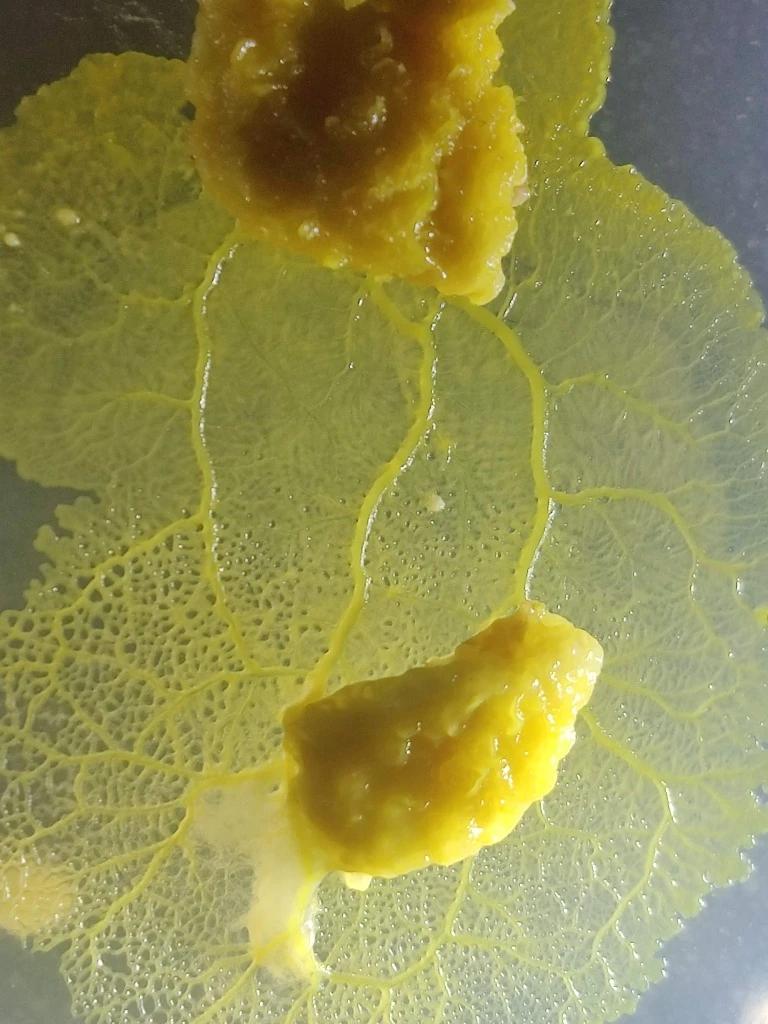
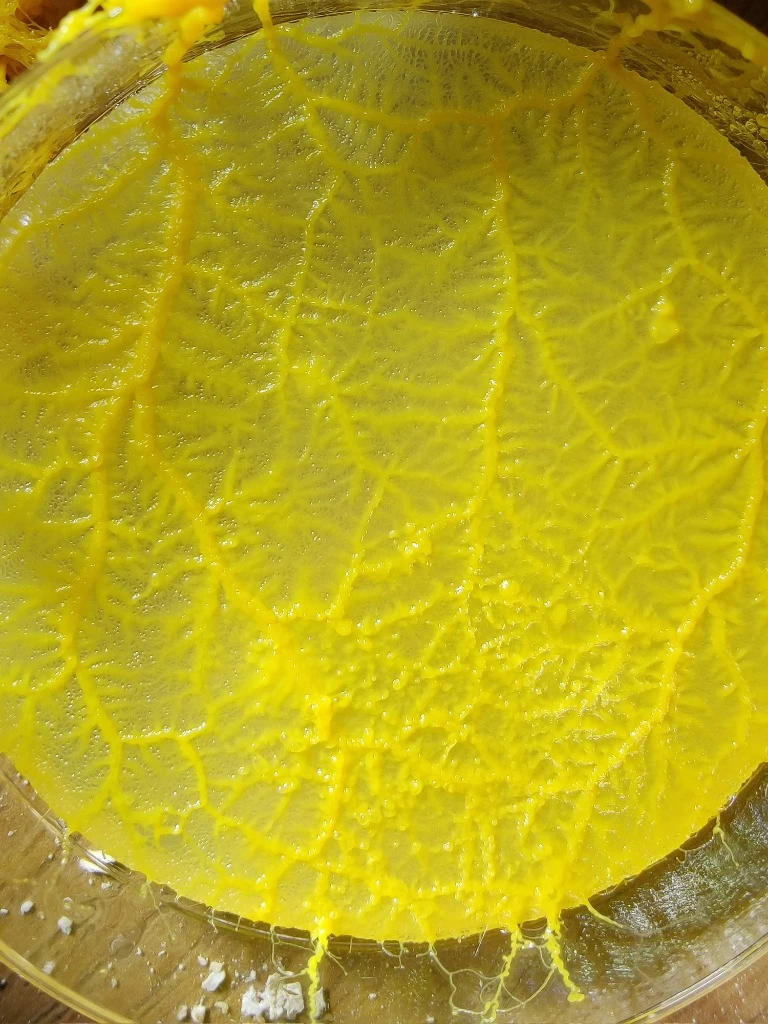


Slime Mold Physarum polycephalum Monster
Leave feedback on the product

Select product variant:
Individual variants may differ in price
Ask about the product

Administratorem danych osobowych jest PHU Krystian Solga. Przetwarzamy je w celu przesłania odpowiedzi na zapytanie. Więcej informacji dotyczących przetwarzania danych osobowych znajduje się w polityce prywatności.
Share the product card



Shipping cost for the selected product
The shipping cost applies to this product (in the selected variant - if applicable). It may change after adding other products to the cart.
Description
Physarum polycephalum 'Monster' Slime Mold - The Legendary "Le Blob" and American Aggressor from CNRS Research
Introducing the Physarum polycephalum 'Monster' strain - the undisputed record-holder for growth rate and vitality among slime molds. Known globally as "Le Blob", this legendary single-celled organism from the Amoebozoa group is neither animal, plant, nor fungus. Instead, it is a giant multinucleate single cell (coenocyte/plasmodium) exhibiting astonishing biological intelligence without a brain or nervous system.
- Explosive biomass growth: With a constant food supply, it can triple its mass within just 24 hours, vastly outperforming other laboratory strains in substrate colonization speed.
- Live superfood for microfauna: Serves as the sole accepted food source for specialized mucivorous springtails (including Rambutanura and Neanuridae) and an ideal vehicle for bio-enrichment (gutloading).
- Dormant resting stage (Sclerotium): Shipped safely in a dormant state of anhydrobiosis, guaranteeing complete cell resistance to freezing temperatures, summer heatwaves, and postal delays.
- Complete starter kit: Includes a sterile Petri dish with nutrient agar and a generous portion of rolled oats for the first weeks of culturing.
| Scientific name | Physarum polycephalum 'Monster' (laboratory line LU352 / Wis-1) |
| Genetic origin | American strain popularized by CNRS (France) and the ISS space mission |
| Primary phenotypic trait | Triples biomass in 24h, thick cytoplasmic veins, high error tolerance |
| Plasmodium color | Vibrant canary yellow |
| Optimal temperature | 20-25°C (68-77°F) (room temperature) |
| Thermal limits | Metabolism slows below 15°C (59°F), overheating risk above 30°C (86°F) |
| Required humidity | 85-95% (consistently moist agar or substrate, avoid standing water) |
| Recommended substrate | Microbiological agar, moist paper, damp bark, or vivarium soil |
| Base diet | Dry rolled oats |
| Terrarium role | Live food and gutloading for springtails (mucivores) and biological study organism |
Choosing a Variant and First Steps with Your Culture
Choosing the right sclerotium size depends on your breeding scale and current biomass needs - from small starter portions to larger cultures for expansive microfauna colonies. The dimensions listed in the variants indicate the surface area of active plasmodium measured immediately prior to inducing dormancy. During dehydration, the cell shrinks substantially into a dry, orange flake that returns to its full active dimensions upon rehydration.
- Step 1: Dish preparation. Open the included Petri dish with pre-poured agar in a clean room away from direct sunlight at room temperature 20-25°C (68-77°F). The substrate is sterile and requires no cooking.
- Step 2: Sclerotium placement. Place the dry sclerotium flake onto the agar surface with the orange side facing upward.
- Step 3: Precise rehydration. Apply 1-2 drops of clean water (bottled spring water or cooled boiled water) directly onto the sclerotium. Avoid flooding the dish - excessive liquid suffocates the cell.
- Step 4: Awakening in the dark. Close the dish lid and place it in a shaded spot. Within 4-12 hours, the sclerotium will absorb moisture, turn bright yellow, and branch out its first pulsating veins.
- Step 5: First feeding. Place 1 rolled oat flake 2-3 mm away from the advancing edge of the plasmodium. Never drop food directly onto the center of the cell.
Why Was the Monster Strain Dubbed a Laboratory Aggressor?
The 'Monster' strain is a selected American lineage studied by the French National Centre for Scientific Research (CNRS). It stands out for its extraordinary vigor, forming the thickest cytoplasmic trunk veins and tripling its mass in just 24 hours under continuous feeding, outcompeting other varieties.
The definitive source on this strain is the ground-breaking scientific monograph by Dr. Audrey Dussutour, Research Director at CNRS Toulouse, titled "Everything you ever wanted to know about the blob but were afraid to ask" (fr. Tout ce que vous avez toujours voulu savoir sur le blob..., Éditions des Équateurs, 2017, Prix Le Goût des Sciences).
In her book, Dr. Dussutour dedicated entire chapters to comparing Physarum strains from different continents:
- Australian strain: Characterized as slow and sensitive to rapid temperature shifts.
- Japanese strain: Known for methodical but slow spatial exploration.
- American strain (foundation of the 'Monster' line): Dr. Dussutour explicitly named it a ruthless laboratory aggressor and voracious feeder. It colonizes substrate at breakneck speed, builds colossal veins, and wins every feeding trial.
From the Laboratory to Orbit: The ISS Space Mission and 4,500 French Schools
This unique laboratory line entered the history of science education and astrobiology through two monumental initiatives organized by CNRS and CNES in 2021-2022:
- "Élève ton blob" Project (2021): Dormant sclerotia of this strain were flown to the International Space Station (ISS), where French astronaut Thomas Pesquet revived them to investigate plasmodium behavior in microgravity. Simultaneously, over 350,000 students in 4,500 schools across France conducted matched ground experiments with clones of the exact same line.
- "Derrière le blob, la recherche" Citizen Science Project (2022): CNRS mobilized 15,000 volunteers in a nationwide citizen science initiative, stress-testing this strain's thermal limits under domestic conditions and confirming its exceptional resilience to environmental fluctuations.
In vivarium keeping, the Monster strain has become a prized, self-renewing factory of protein-rich cytoplasm. Keepers seeking more restrained growth also choose the 'Day Walker' strain or Slime Mold sp. for springtails.
Essential Live Food for Specialized Springtails (Mucivores)
For select rare, collectible specialized springtails, live slime mold is not an optional supplement, but their sole accepted food source. These species possess specialized reduced mouthparts evolved exclusively to suck liquid cytoplasm from the plasmodium:
- Rambutanura sp. Thai Red Spiky and the related Vietnam Spiky (Le Petit Dragon)
- Neanuridae sp. "Santa Claus" (Redford White)
- Neanuridae sp. "McDo" and related species
For these obligate dietary specialists, lacking live plasmodium leads to colony decline. The robust growth rate of the Monster strain ensures an effortless, self-replenishing supply of fresh nourishment.
Bio-Enrichment (Gutloading) - Nutrient Booster for Microfauna
Slime mold excels as an organic carrier of minerals and vitamins (gutloading) for many microfauna species, including demanding Rambutanura.
By feeding the slime mold our nutrient-dense springtail food or calcium supplements, the cell directly stores these compounds within its pulsating cytoplasm. Offering enriched plasmodium to your springtails provides an immediate infusion of bioavailable nutrients, accelerating growth rates, easing molting, and triggering abundant reproduction.
Common Culturing Mistakes and How to Avoid Them
- Feeding slime mold directly inside the springtail enclosure: The Monster strain grows exceptionally fast. Never feed it rolled oats directly within the microfauna container, as uncontrolled plasmodial expansion can trap delicate springtails. Propagate the slime mold in a separate Petri dish and feed only excised portions of agar with plasmodium to the springtails.
- Delayed removal of uneaten food: Any oat flakes not colonized by the slime mold within 24-48 hours must be removed promptly. Rapid removal prevents mold or bacterial growth. Transfer a fresh plasmodium snippet to clean substrate every 7-10 days.
- No backup sclerotium (Missing backup culture): Even experienced keepers occasionally face sudden mold contamination on agar. Never rely on a single active culture. Always store 1-2 dry sclerotium flakes in a cool, dark place. If an active culture fails, a single drop of water revives the line in hours.
- Flooding sclerotium with standing water: Slime molds require high relative humidity and a moist surface, but submerging them in standing water causes suffocation. For reactivation, apply only 1-2 drops directly onto the dry tissue.
Frequently Asked Questions (FAQ)
How does the Monster strain differ from the Day Walker variety?
The 'Day Walker' strain was selectively bred by hobbyists for high ambient light tolerance and features moderate, steady growth. In contrast, the 'Monster' strain is a historic laboratory lineage with maximum metabolic vigor. It grows several times faster, develops thicker cytoplasmic veins, thrives in shaded environments, and produces the largest volume of feeding biomass in the shortest time.
Does a slime mold possess neurons or a brain?
No. Physarum polycephalum is a single multinucleate cell devoid of neurons. Yet, it exhibits complex biological memory, optimizes maze-solving networks, habituates to harmless chemical deterrents, and transfers acquired knowledge to other cells upon cytoplasmic fusion.
How do I return excess plasmodium to dormancy?
To produce your own backup sclerotium, transfer a piece of active plasmodium onto clean, damp filter paper in a Petri dish and withhold all food. Crack the dish lid slightly to let the paper dry slowly in a dark room. Over 36-48 hours, the slime mold condenses its cytoplasm into a hard orange sclerotium that can be stored for months.
Ready to explore the wonders of this fascinating unicellular organism or supply top-tier live superfood to your springtails? Choose your desired sclerotium size, add Physarum polycephalum to your cart, and embark on culturing your own living Blob at home!
Safe Shipping of Dormant Stages
The slime mold is shipped in its safe sclerotium form (anhydrobiosis). In this dormant state, the cell requires no food or substrate during transit.
The sclerotium displays complete tolerance to extreme ambient temperatures and postal delays during transit.
Reviews
If you've added a review and it doesn't appear on the list, it may be pending moderation.
Leave feedback on the product

