

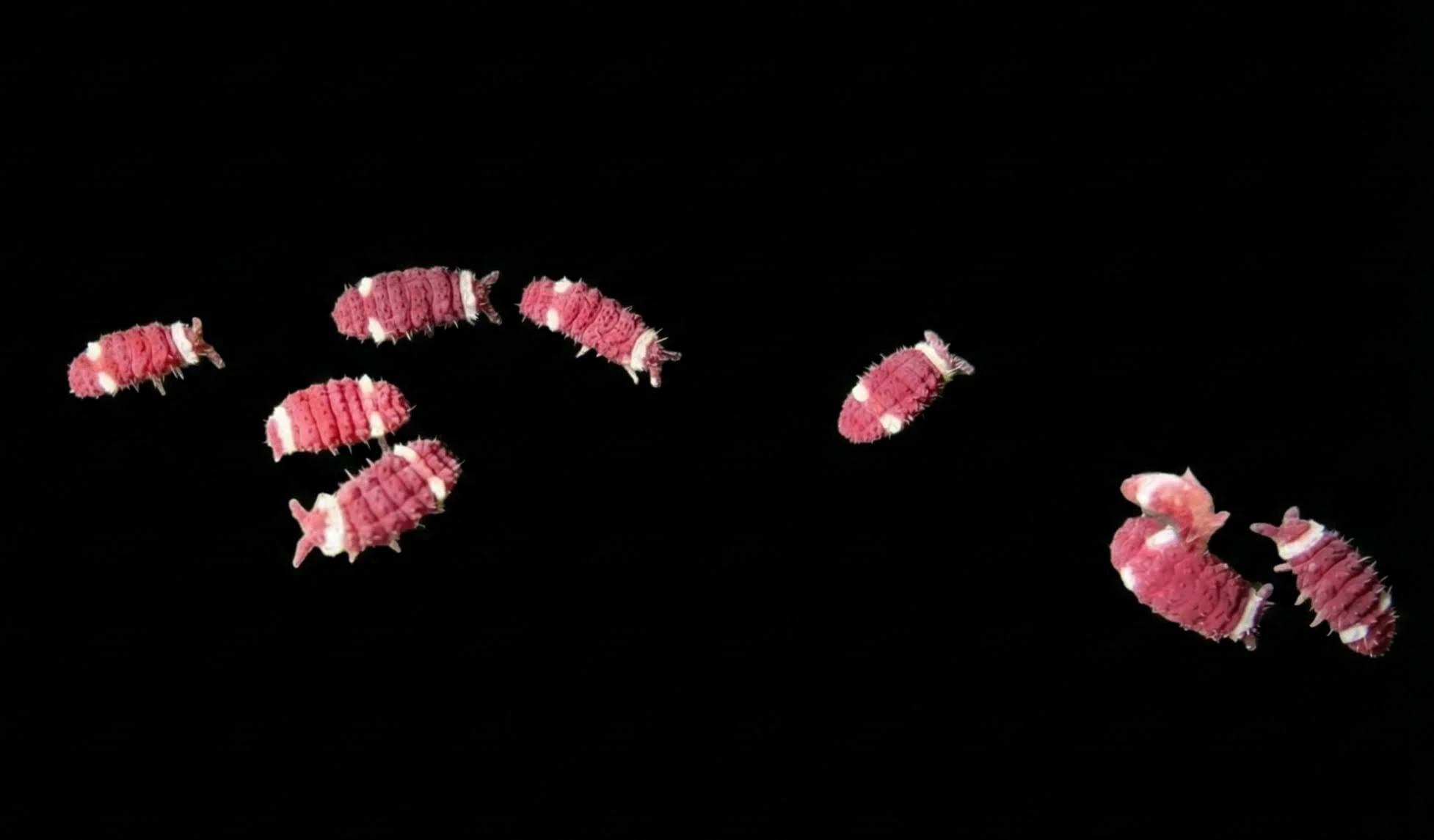
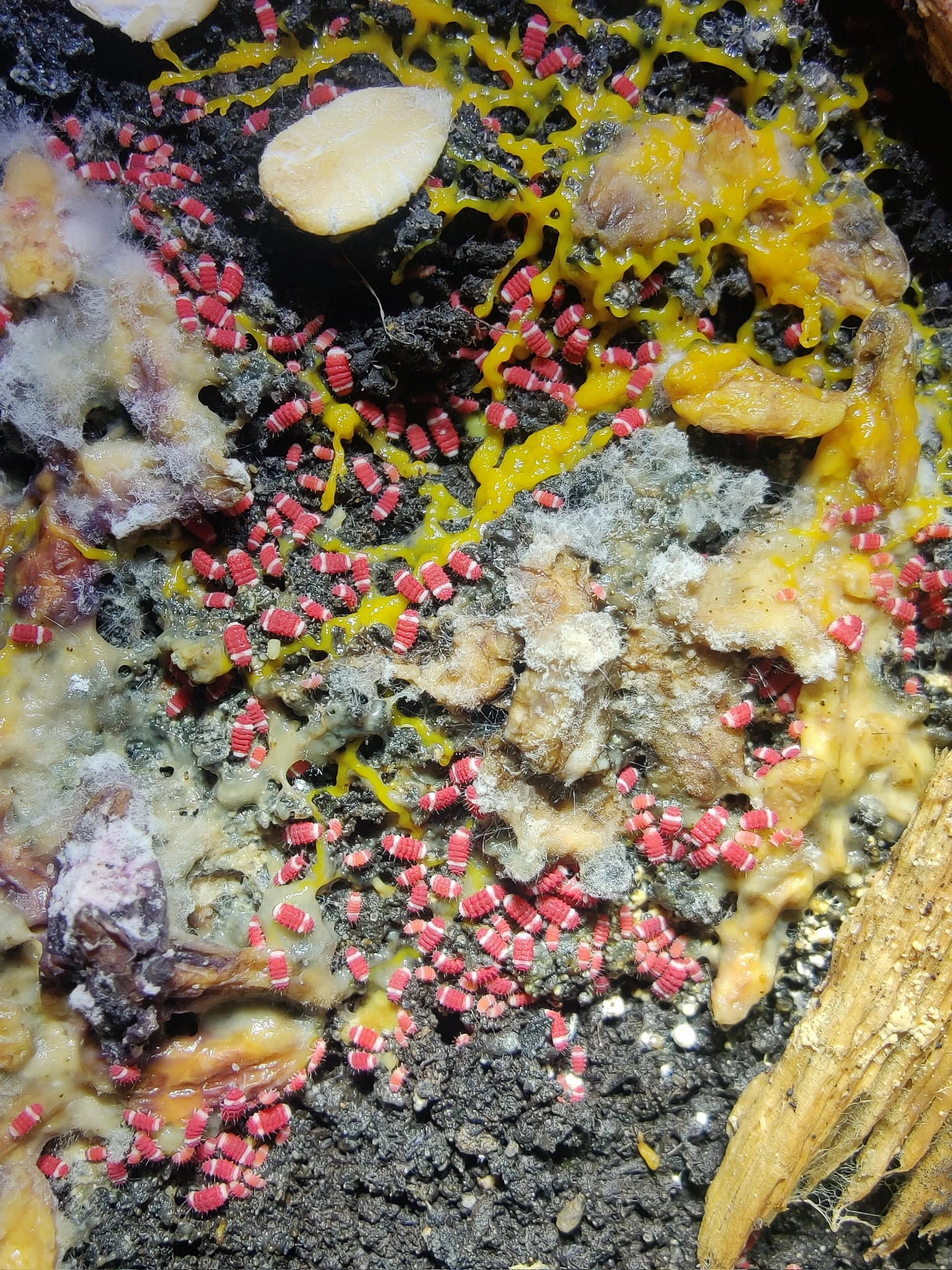


Neanuridae sp. "Santa Claus" (Redford White)
Leave feedback on the product

Select product variant:
Individual variants may differ in price
Ask about the product

Administratorem danych osobowych jest PHU Krystian Solga. Przetwarzamy je w celu przesłania odpowiedzi na zapytanie. Więcej informacji dotyczących przetwarzania danych osobowych znajduje się w polityce prywatności.
Share the product card



Shipping cost for the selected product
The shipping cost applies to this product (in the selected variant - if applicable). It may change after adding other products to the cart.
Description
Neanuridae sp. "Santa Claus" (Redford White)
Neanuridae sp. "Santa Claus", also known as "Redford White", is an absolute phenomenon in the world of micro-terrarium keeping. This extraordinary species from the Neanuridae family redefines the concept of a springtail - it is not just a useful "cleanup crew", but a fully-fledged display animal that delights with its appearance and behavior. Originating from the humid rainforests of the Philippines, this species combines exotic biology with unique aesthetics.
This is a proposition for connoisseurs and enthusiasts looking for a "micro-gem" for their bioactive tanks, mossariums, or rare isopod cultures.
| Feature | Description |
|---|---|
| Trade name | Neanuridae sp. "Santa Claus" / "Redford White" |
| Origin | Philippines |
| Size | Very large (for a springtail): 4-5 mm |
| Appearance | Red, "plush" body with white spots |
| Jumping apparatus | Absent (they do not jump) |
| Diet | Slime molds |
| Temperature | 18-28°C (64-82°F) |
| Humidity | Very high (85-99%) |
| Difficulty level | Very easy, but requires access to slime molds |
Species Characteristics
"Santa Claus" Appearance: The trade name "Santa Claus" perfectly reflects the appearance of this arthropod. Its body is vividly red, with a matte, velvety texture, contrasting with white tubercles and the tip of the abdomen. They resemble small, chubby gummy candies. Importantly, young individuals are often completely white, and the red pigment appears after a few weeks.
A Giant That Doesn't Jump: Reaching up to 5 mm in length, they are giants in their world, perfectly visible to the naked eye. They belong to the Neanuridae family, which means that in the course of evolution, they have reduced their jumping apparatus. These springtails do not jump. They move slowly and with dignity, making their observation easy and pleasant, and terrarium maintenance stress-free (they do not escape when the container is opened).
Husbandry Requirements and Environment
Container and Substrate: A container of at least 300 milliliters with a soil layer of at least 1 cm. Additional decorations like rotten wood, lichen, etc., are optional.
Climate: These are tropical and hygrophilous animals. They require room temperature (18-28°C / 64-82°F) and very high humidity (close to 100% in the microhabitat). They are sensitive to drying out, so the substrate must be constantly moist (but not swampy).
Diet: Specialization and Pickiness
Unlike common springtails, "Santa Claus" has modified mouthparts adapted for sucking and taking in soft food. They will not eat hard granules or dry leaves. Our observations indicate that they are only interested in slime molds, although some say they will also eat various wet mashes.
What to feed?
- According to other sources (they don't eat it with us): High-protein fish flakes (necessarily soaked/moistened to create a "mush").
- According to other sources (they don't eat it with us): Baker's yeast (mixed with water into a paste).
- Slime molds.
Use and Compatibility
It is an ideal species to combine with rare isopods, snails, or in terrariums with dart frogs. Due to their slow metabolism and lack of jumping, they do not stress other inhabitants. Important: Do not combine them in small containers with aggressively feeding species such as Folsomia candida, which can dominate and starve out the slow "Santa Claus" colony.
Reviews
If you've added a review and it doesn't appear on the list, it may be pending moderation.
Leave feedback on the product
 Log in with Google

