



Slime Mold sp. for Springtails
Leave feedback on the product

Select product variant:
Individual variants may differ in price
Ask about the product

Administratorem danych osobowych jest PHU Krystian Solga. Przetwarzamy je w celu przesłania odpowiedzi na zapytanie. Więcej informacji dotyczących przetwarzania danych osobowych znajduje się w polityce prywatności.
Share the product card



Shipping cost for the selected product
The shipping cost applies to this product (in the selected variant - if applicable). It may change after adding other products to the cart.
Description
Slime Mold sp. (Safe for Springtails)
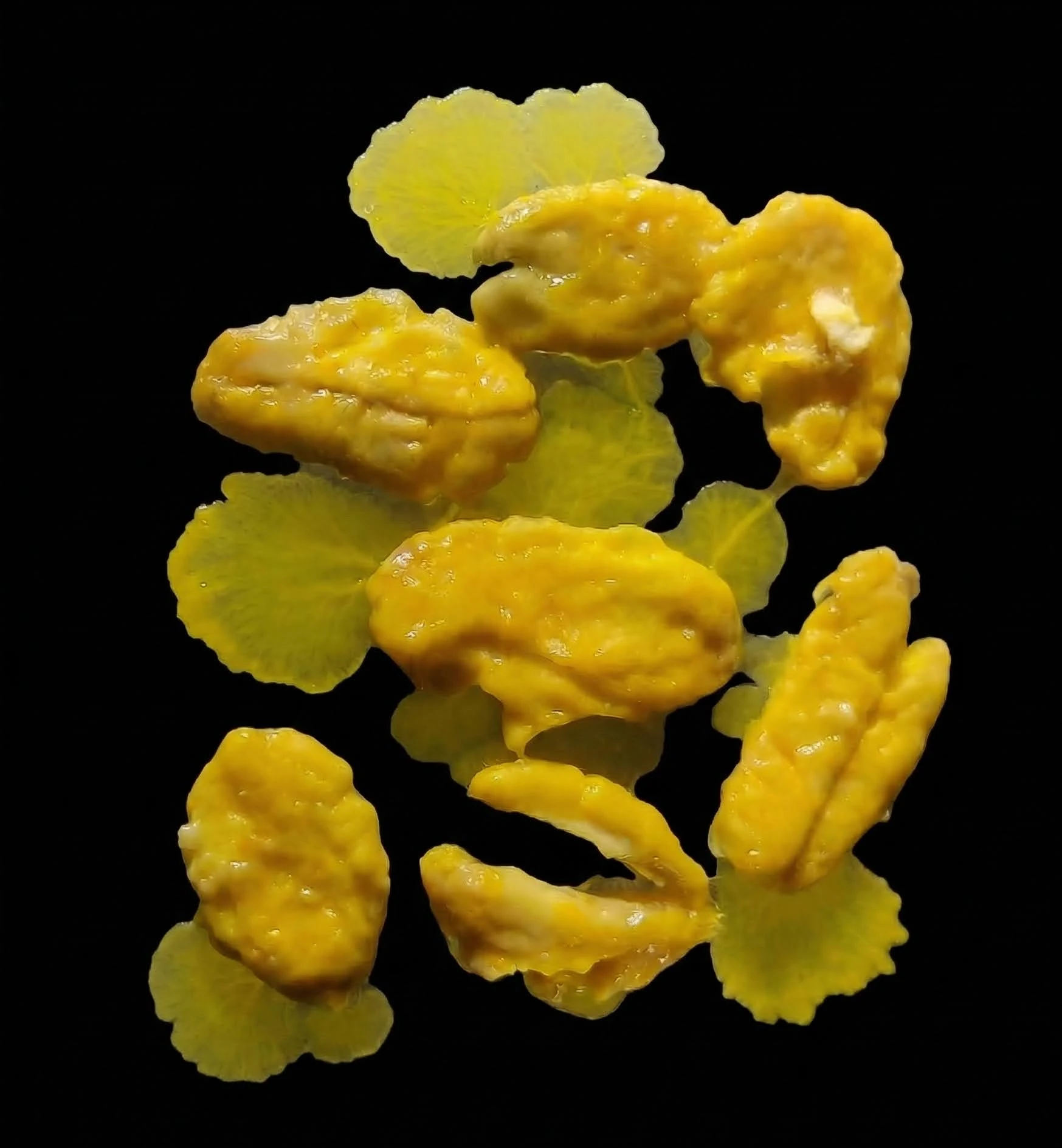
We are introducing an unidentified species of slime mold (Myxomycetes sp.) to our offer, which serves as an excellent alternative to the popular 'Day Walker'. Although it is less spectacular in terms of movement dynamics, it possesses one key feature that makes it irreplaceable in specialized breeding: it is completely safe for springtails.
This product is dedicated primarily as a stable food source for demanding species from the Neanuridae family (e.g., Rambutanura, Lobella) or as a collection supplement for enthusiasts wanting to compare the behaviors of different slime mold species.
| Feature | Description |
|---|---|
| Name | Slime mold sp. (unidentified species) |
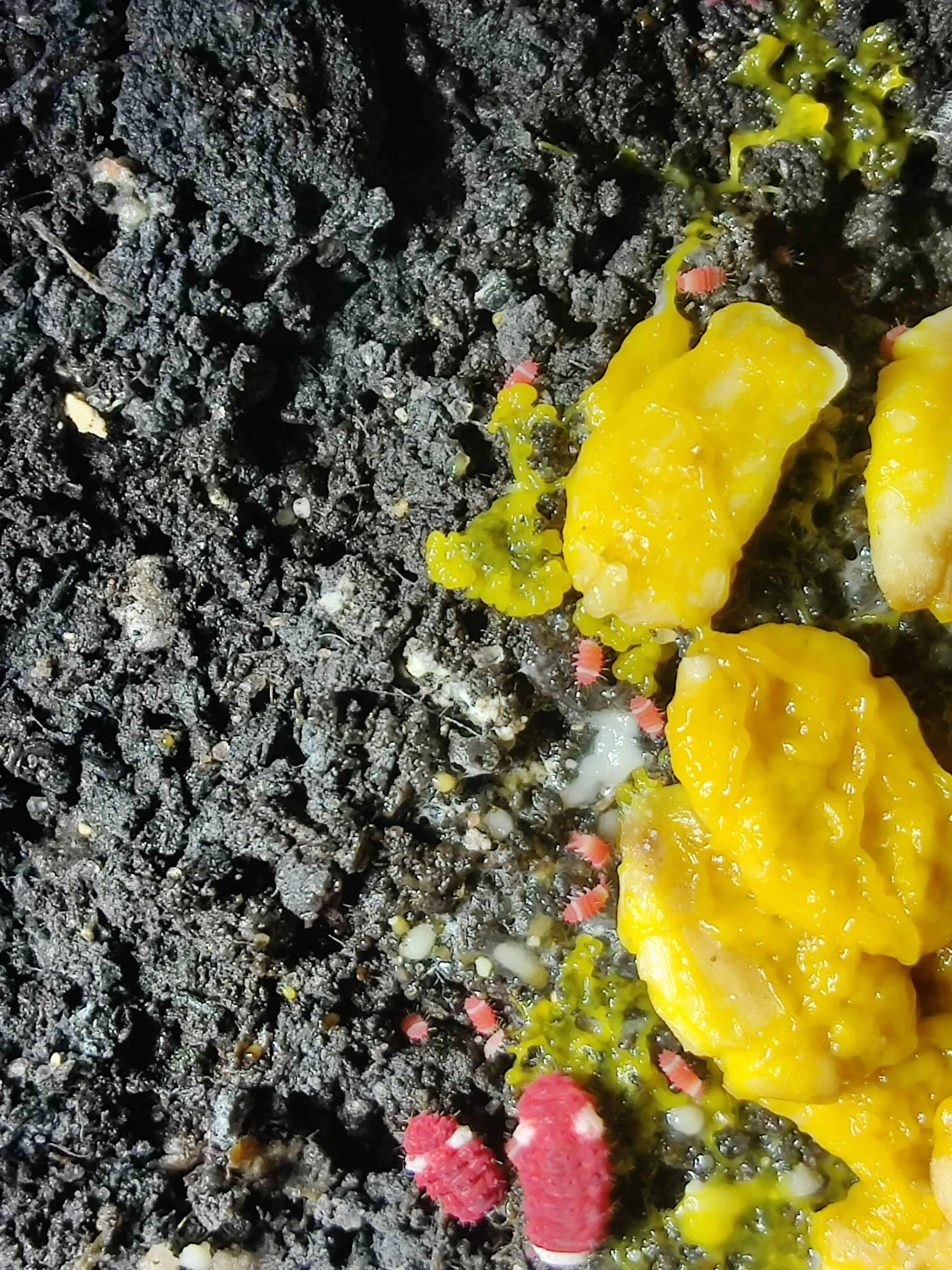
| Color | Orange, brownish (darker than 'Day Walker') |
| Growth rate | Slow (in light), Moderate (in shade) |
| Aggression towards microfauna | None (Safe for Neanuridae) |
| Main application | Food for springtails, comparative observation |
| Diet | Oat flakes, springtail food |
What exactly are you buying?
We ship the slime mold exclusively in its dormant, dried resting state – as a sclerotium (sclerotium). This is a 100% natural resting state that guarantees completely safe transport (total resistance to frost, heat, or shipping delays) and allows you to wake up the culture at any convenient time for you.
Important – Surface area measurements:
The surface area selected at purchase (e.g. 1 cm², 5 cm², 20 cm²) is the surface area of the slime mold measured BEFORE drying. During the process of entering the sclerotium state, the slime mold sheds water and shrinks by a factor of ten to several dozen times, taking the form of a dry scrap. After placing it on moist agar and adding water, within a few to several hours the slime mold absorbs moisture, wakes up, and regains the surface area you purchased.
Included in the set:
- Sclerotium of Slime mold sp. with your selected surface area (measured before drying),
- A Petri dish with ready, pre-poured agar – you don't need to cook or mix anything, the substrate is ready immediately to awaken the slime mold,
- A starter portion of oat flakes, which will last for a long feeding period.
Breeding and Awakening Step by Step
- Awakening (Start): Open the Petri dish with the prepared agar. Place the received sclerotium onto the agar surface and add 1–2 drops of clean water directly onto it (or right next to it).
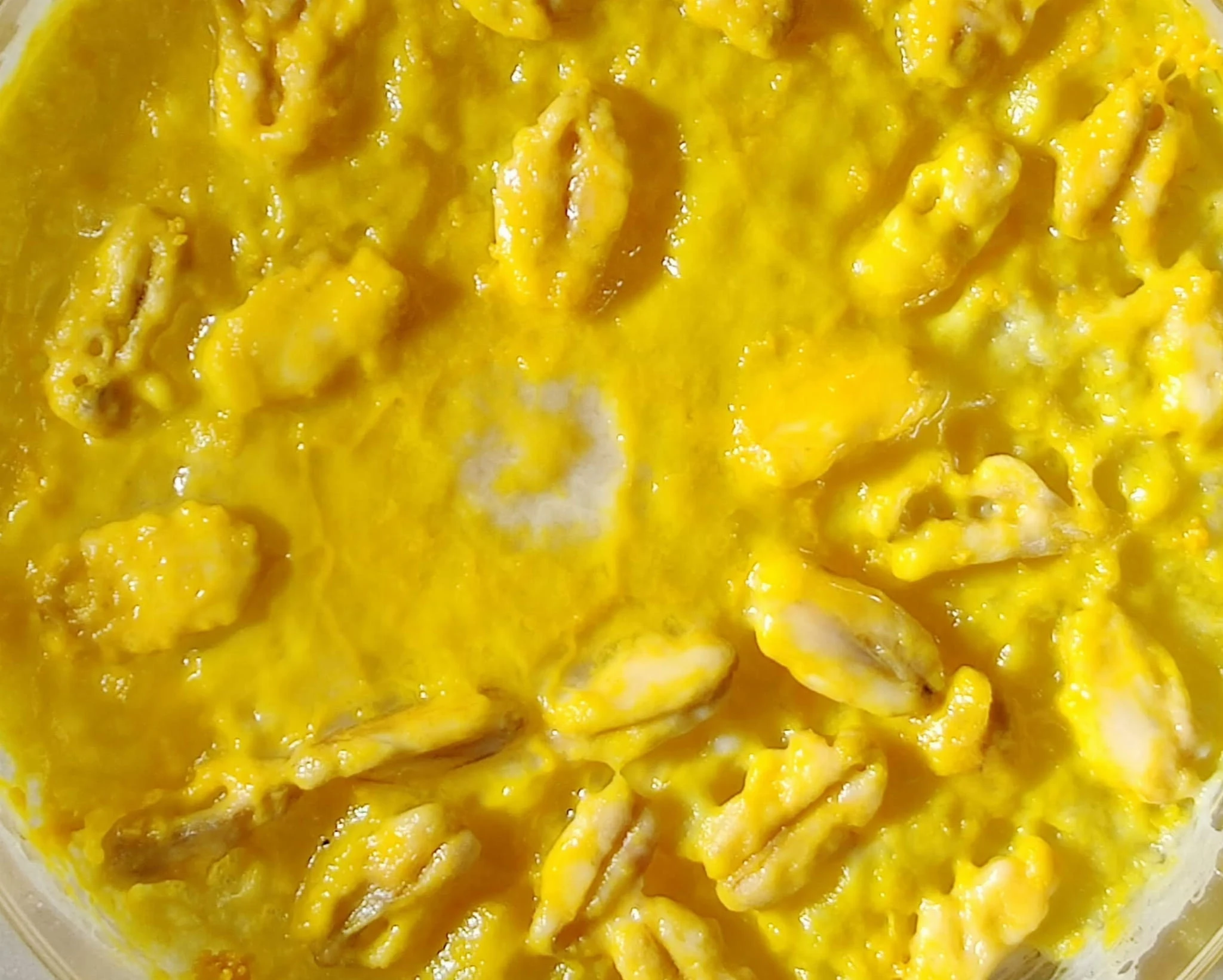
- Waking up: Close the dish. Within a few to several hours, the slime mold will absorb the water, revive, and transform into an active, growing plasmodium of the purchased surface area.
- Feeding: Once the slime mold wakes up, place 1–2 dry oat flakes (or a pinch of our springtail food) right next to its active edge.
- Serving to springtails: After waking up and spreading, you can transfer a colonized oat flake or a cut-out small piece of agar with slime mold directly into your springtail container (e.g. onto a damp piece of bark or lump charcoal).
Key Feature: Breeding Safety
Many breeders have observed that the popular 'Day Walker' strain (Physarum polycephalum) can be aggressive toward slow springtails, attacking, killing, and digesting them. The species offered here shows zero aggression.
This has been repeatedly tested on sensitive species such as Rambutanura sp. and other Neanuridae sp. Because of this, this slime mold can be kept directly inside the springtail enclosure. This eliminates the need for manual supplementary feeding every few days – springtails have constant, unlimited access to fresh, living food ("self-service"), which significantly simplifies colony management.
Bio-enrichment (Gut-loading) and Calcium
A unique advantage of this system is the ability to enrich the springtails' diet through the slime mold. By feeding the slime mold our dedicated springtail food (instead of just plain oat flakes), you allow it to absorb the vitamins and minerals contained within. Such a "well-fed" slime mold becomes a nutritional powerhouse for your colony.
The result? Springtails grow faster, stay in better condition, and lay significantly more eggs.
You can also experiment with your own diet for the slime mold. Keep in mind, however, the crucial additive: calcium carbonate. Springtails absolutely require calcium to build their exoskeleton and molt regularly. Our ready-made food already contains it, but with your own mixtures, you must ensure proper supplementation.
Characteristics and Behavior
- Growth and Light: This species is sensitive to light. In a normal day/night cycle, it develops approximately 5–6 times slower than 'Day Walker'. Keeping it in shade or darkness accelerates its metabolism, but slower growth is an advantage when used as feeder food – it will not rapidly overgrow the entire enclosure.
- Appearance: It is distinctly darker than the bright yellow 'Day Walker'. It takes on orange and sometimes even light brownish tones.
- Stability: It feeds on provided oat flakes significantly longer before abandoning them in search of new food.
Who is this slime mold for?
Due to its slower development and reduced activity under light, it is less "showy" than 'Day Walker'. If you are looking for your very first slime mold to observe its "intelligence" and rapid movement – choose the 'Day Walker' strain.
We recommend this species in two specific scenarios:
- As feeder food: For breeders of specialized slime-mold-eating springtails (e.g., Rambutanura, Lobella) seeking a safe and maintenance-free food source inside the terrarium.
- For comparisons: For hobbyists who want to keep two distinct species and compare their contrasting life strategies, growth rates, and light responses.
Visual comparison: Click here to see a side-by-side comparison photo of this species with 'Day Walker'.
Reviews
If you've added a review and it doesn't appear on the list, it may be pending moderation.
Leave feedback on the product

