

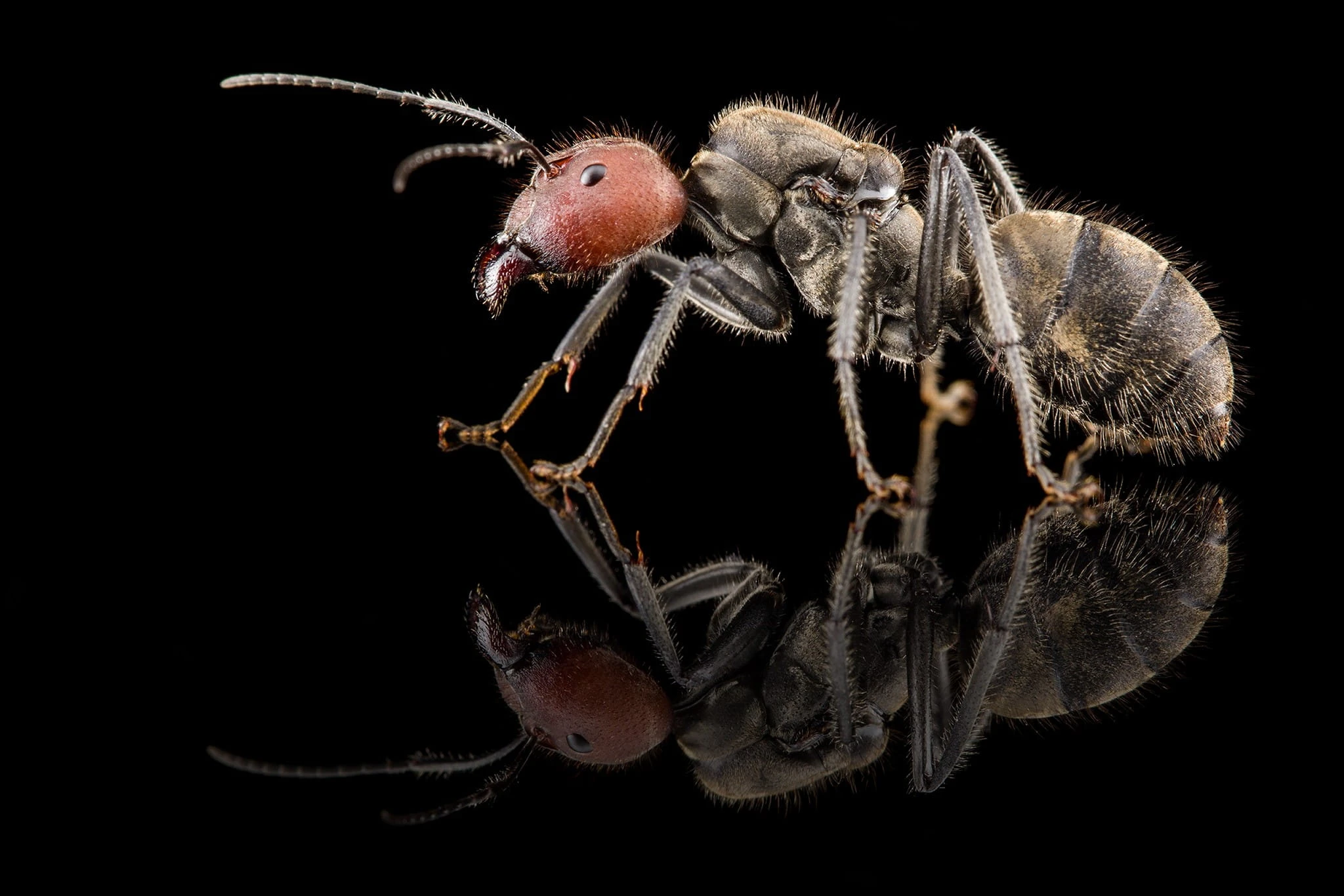


Camponotus singularis
Leave feedback on the product

Select product variant:
Individual variants may differ in price
Ask about the product

Administratorem danych osobowych jest PHU Krystian Solga. Przetwarzamy je w celu przesłania odpowiedzi na zapytanie. Więcej informacji dotyczących przetwarzania danych osobowych znajduje się w polityce prywatności.
Share the product card



Shipping cost for the selected product
The shipping cost applies to this product (in the selected variant - if applicable). It may change after adding other products to the cart.
Description
Camponotus singularis - Asian giant carpenter ants with massive, blood-red heads
Camponotus singularis is one of the most spectacular and sought-after exotic ant species in antkeeping worldwide. This species stands out with powerful soldiers featuring vibrant red, massive heads and a striking colouration combining jet-black bodies with the silky sheen of golden bristles. It is an exceptional choice for any antkeeper looking for majestic, year-round active carpenter ants with fascinating colony dynamics.
- Extreme caste polymorphism: massive soldiers (majors) measuring 15-19 mm with enormous, blood-red heads.
- Year-round activity: a tropical species requiring no hibernation, active 365 days a year.
- Majestic queen: an impressive founding queen reaching 18-22 mm, living up to 15-20 years in captivity.
- Unique biology: a remarkable minty-floral scent released during alarm behaviour and completely stingless.
| Scientific name | Camponotus singularis |
| Care difficulty | Intermediate (requires stable warmth and patience during the founding stage) |
| Soldier caste (majors) | Prominently developed, 15-19 mm (massive reddish-orange head capsule) |
| Queen size | 18-22 mm |
| Worker size (minors) | 6-15 mm |
| Hibernation (diapause) | None, continuous year-round development |
| Nest temperature | 24-28°C (75-82°F) (optimally a stable 25.5-27°C (78-81°F)) |
| Outworld temperature | 26-32°C (79-90°F) |
| Nest humidity | 60-80% (moisture gradient with a dry resting chamber) |
| Outworld humidity | 50-70% (well-ventilated) |
| Primary diet | Carbohydrates (nectars, natural honey, sugar water) + protein (feeder insects) |
| Recommended nest | Reinforced gypsum nests, aerated concrete (Ytong), or wooden nests with deep chambers (min. 15 mm chamber height) |
| Outworld barrier | Talcum powder applied to the upper rim of the walls |
Colony variant selection and first steps with your chosen stage
When selecting a Camponotus singularis colony from the dropdown list, you decide on the starting stage of your antkeeping journey. A queen only setup lets you guide the founding process right from the very first laid egg, offering enormous satisfaction but demanding patience and absolute calm. Choosing a colony variant with workers provides an immediate biological buffer, faster outworld exploration, and a more dynamic start.
Step 1: Thermal acclimatisation after travel - after carefully unpacking the parcel, leave the test tube in a dark, quiet place at room temperature of 20-22°C (68-72°F) for a minimum of 24 hours. Strictly avoid heating the tube immediately with a heat mat or heating cable, as a sudden temperature spike intensifies transit stress and excessively accelerates metabolic rates.
Step 2: First adaptive feeding - after 24 hours have passed, offer the ants a micro-drop of honey water on the edge of the cotton plug or on a small piece of aluminium foil. For colonies that already have workers, also provide a single pre-killed, cut-open feeder insect (such as a small mealworm) so the workers can easily feed their larvae with protein-rich hemolymph.
Step 3: Nest move-in timing - a young colony should remain in a test tube setup with a water reservoir for as long as possible. Plan moving the colony into a formal nest only once worker numbers exceed 20-30 workers and the first larger soldiers begin to emerge. Make sure the new nest features chambers and tunnels with a height of at least 15 mm, allowing large soldiers to pass each other comfortably without getting stuck.
What formicarium and conditions are best for Camponotus singularis?
Camponotus singularis requires living space designed around the massive body size of its soldier caste, particularly tunnels with a minimum height of 15 mm. The optimal nest temperature is 24-28°C (75-82°F) with a distinct thermal gradient, while humidity should remain at 60-80%. The outworld must be warm (26-32°C (79-90°F)), well-ventilated, and secured with talcum powder.
In the wild, this species inhabits humid tropical rainforests from the Himalayan foothills across to the Malay Archipelago, nesting in rotting timber, beneath rocks, or in soil around tree roots. In home setups, standard shallow formicaria do not work due to the enormous heads of the majors. This species requires deep aerated concrete (Ytong), gypsum, or wooden nests with chamber heights of at least 15 mm, or long-term housing in spacious test tubes connected to an outworld. Connecting a test tube to the foraging area is made easy with flexible vinyl tubing. To prevent escapes up the vertical walls, coat the upper perimeter of the outworld with a thin layer of talcum powder, which forms a reliable, completely non-toxic physical escape barrier.
What to feed Camponotus singularis and how to plan their diet?
The diet of Camponotus singularis relies on continuous access to easily digestible liquid carbohydrates alongside regular portions of animal protein. Adult workers need energy from honeys and nectars for their daily activity, while the queen and developing brood require fresh feeder insects. For small colonies, always pre-kill and slice open insect prey.
A quick boost of carbohydrates is readily provided by natural honey offered in micro-drops inside the outworld or in specialized ant liquid feeders that prevent drowning. For protein, mealworms, red runner cockroach hatchlings, and small crickets work exceptionally well. When caring for a young colony, always feed insects pre-killed and cut in half, which simplifies feeding for the minors and avoids unnecessary disturbance. Remove leftover insect chitin from the outworld within 24-48 hours to maintain pristine hygiene.
Most common care mistakes and how to avoid them
- Overheating a founding queen with a heat mat: a founding queen should not be heated aggressively. High temperatures drastically accelerate metabolic burn, prematurely exhausting her body reserves before the first workers emerge. Keep her at a stable 20-22°C (68-72°F) during initial claustral founding.
- Offering live, struggling feeder insects to a young colony: dropping a struggling cricket into the outworld causes panic in small colonies, triggering formic acid spraying inside the test tube and brood cannibalism. Always offer pre-killed and freshly sliced insect parts at the beginning.
- Cramped, low-ceiling nest chambers: majors with massive heads cannot pass each other in shallow acrylic nests, paralyzing colony logistics and risking suffocation from trapped acid fumes during alarms. Choose nests with chamber heights of at least 15 mm.
- Lack of a nest humidity gradient: soaking the entire nest evenly or letting it dry out completely halts egg and larval development. The formicarium must provide a hydrated zone near the moisture system alongside a dry resting area.
Taxonomy, evolutionary placement, and the subgenus Myrmosaulus
The species Camponotus singularis was scientifically described in 1858 and belongs to the subgenus Myrmosaulus, often referred to in myrmecological literature as monster-head carpenter ants. This vivid name stems from the evolutionary specialization of the soldier caste, which developed dramatically enlarged head capsules. Unlike many other carpenter ant groups, polymorphism in this species exhibits a distinct dimorphic jump, reflecting highly specialized colony labor division. Its natural zoogeographic distribution covers diverse biomes - ranging from the upland regions of Nepal at elevations up to 830 metres above sea level, through southern China and the Indochinese Peninsula, to the humid lowlands of the Malay Archipelago.
Bioactive terrariums and symbiotic housing with myrmecophytes
Experienced antkeepers successfully maintain this species in large bioactive terrariums recreating a slice of tropical rainforest. A drainage layer, separating mesh, and well-draining loam-peat substrate allow the ants to excavate stable subterranean chambers. To prevent mold growth under high humidity levels reaching 80%, a dedicated cleanup crew consisting of springtails and tropical isopods is introduced. Another fascinating technique involves planting living myrmecophytes (such as Myrmecodia tuberosa), inside which the carpenter ants willingly establish satellite chambers, forming a completely balanced living ecosystem.
Frequently Asked Questions (FAQ)
Is Camponotus singularis suitable for beginner antkeepers?
This species is best suited for keepers who already have basic experience in ant care. While a mature colony is hardy and adaptable, the founding phase requires patience due to slow initial brood development and the founding queen's sensitivity to vibrations and excessive disturbance.
Is the formic acid of Camponotus singularis dangerous to humans?
No, these ants pose no danger to human health and are completely stingless. When threatened, they defend themselves by gripping with their mandibles and spraying formic acid, which produces a distinctive, refreshing minty-floral scent. Standard long feeding tweezers are more than adequate for safe outworld maintenance.
Does a Camponotus singularis colony require cold winter hibernation?
No. Because Camponotus singularis originates from tropical and subtropical climates, it does not undergo winter diapause. The colony remains fully active throughout the year, developing continuously when kept at comfortable room temperatures or provided with supplementary outworld heating.
How large does a mature colony grow in captivity?
In captivity, mature colony sizes typically reach between 1,000 and 3,000 workers. Despite this moderate worker count, the massive physical bulk of the queen and giant soldiers results in substantial biomass, making this species a breathtaking centrepiece in any antkeeping room.
Looking for a spectacular species that will amaze any observer with giant soldier ants? Select the colony variant tailored to your experience, add the ants to your cart, and create your own slice of Asian rainforest with our guaranteed safe delivery!
Shipping and Live Arrival Guarantee
During cold weather, we include a professional HeatPack warming pad to maintain the proper transit temperature.
Live animals are shipped exclusively Monday through Thursday to prevent parcels from being held over the weekend.
We take full responsibility for safe transit, guaranteeing that your animal arrives healthy and in top condition.
Reviews
If you've added a review and it doesn't appear on the list, it may be pending moderation.
Leave feedback on the product
