

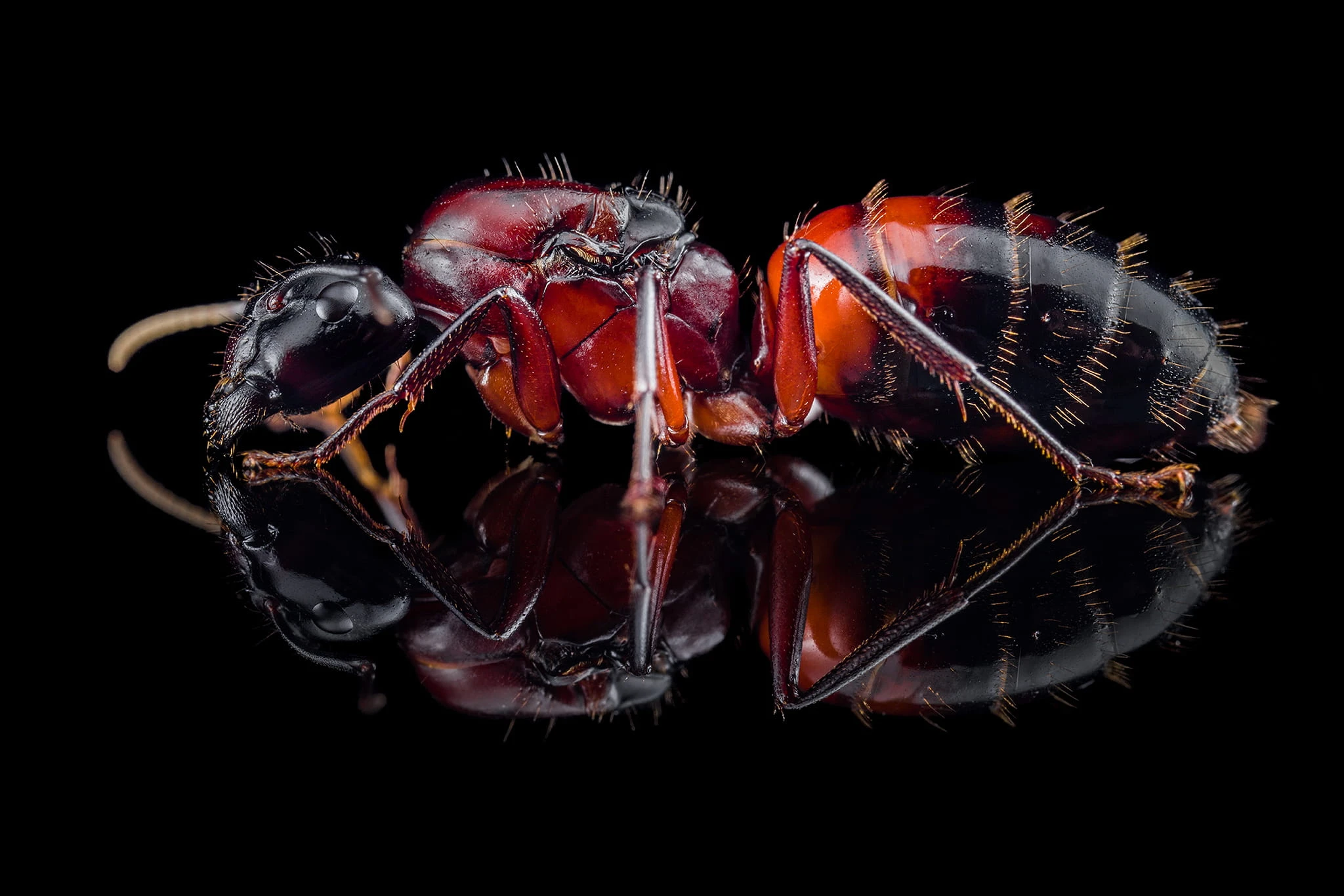


Camponotus ligniperda
Leave feedback on the product

Wybierz wariant produktu:
Individual variants may differ in price
Ask about the product

Administratorem danych osobowych jest PHU Krystian Solga. Przetwarzamy je w celu przesłania odpowiedzi na zapytanie. Więcej informacji dotyczących przetwarzania danych osobowych znajduje się w polityce prywatności.
Share the product card



Shipping cost for the selected product
The shipping cost applies to this product (in the selected variant - if applicable). It may change after adding other products to the cart.
Description
Description:
One of the most beautifully colored Camponotus species and the largest ant in Europe. Queens measure 16-19mm, while workers range from 3-14mm. The soldiers resemble small tanks and, given a moment of peace, they can bite into the skin of an adult male's finger. However, they are generally gentle towards humans and larger animals, only attacking in defense of their nest. They make an incredible impression when marching in a column. Queens and larger workers have a red spot on their abdomen and often on their "back".
In the wild, they are mainly found in deciduous forests, preferring shady areas. They nest primarily in wood that is hard inside and decaying outside, as well as in the ground under wood and rocks. They are aggressive only towards certain ant species, primarily Formica and Camponotus ants in Poland. The soldiers use their enormous mandibles to cut enemy ants into pieces.
This species is relatively easy to keep, although it initially develops rather slowly. Therefore, it is recommended for patient breeders or those who already have other ants for observation. Alternatively, it suits individuals who are afraid that the first ants will develop too quickly and overwhelm them. Their pupae are highly sought-after items.
- Species: Camponotus ligniperda
- Difficulty: low
- Soldiers: yes
- Size: queen 16-19mm, workers 3-14mm
- Coloration: black and red
- Distribution: Central Europe
- Nutrition: honey water and feeder insects
- Hibernation: yes, around 4-8°C (39-46°F) for 2-3 months
- Temperature: 20-25°C (68-77°F)
- Recommended formicarium: preferably wooden (e.g., Foranto) or cork, alternatively 3D printed, acrylic)
Reviews
If you've added a review and it doesn't appear on the list, it may be pending moderation.
Leave feedback on the product
 Log in with Google
