



Camponotus herculeanus
Leave feedback on the product

Wybierz wariant produktu:
Individual variants may differ in price
Ask about the product

Administratorem danych osobowych jest PHU Krystian Solga. Przetwarzamy je w celu przesłania odpowiedzi na zapytanie. Więcej informacji dotyczących przetwarzania danych osobowych znajduje się w polityce prywatności.
Share the product card



Shipping cost for the selected product
The shipping cost applies to this product (in the selected variant - if applicable). It may change after adding other products to the cart.
Description
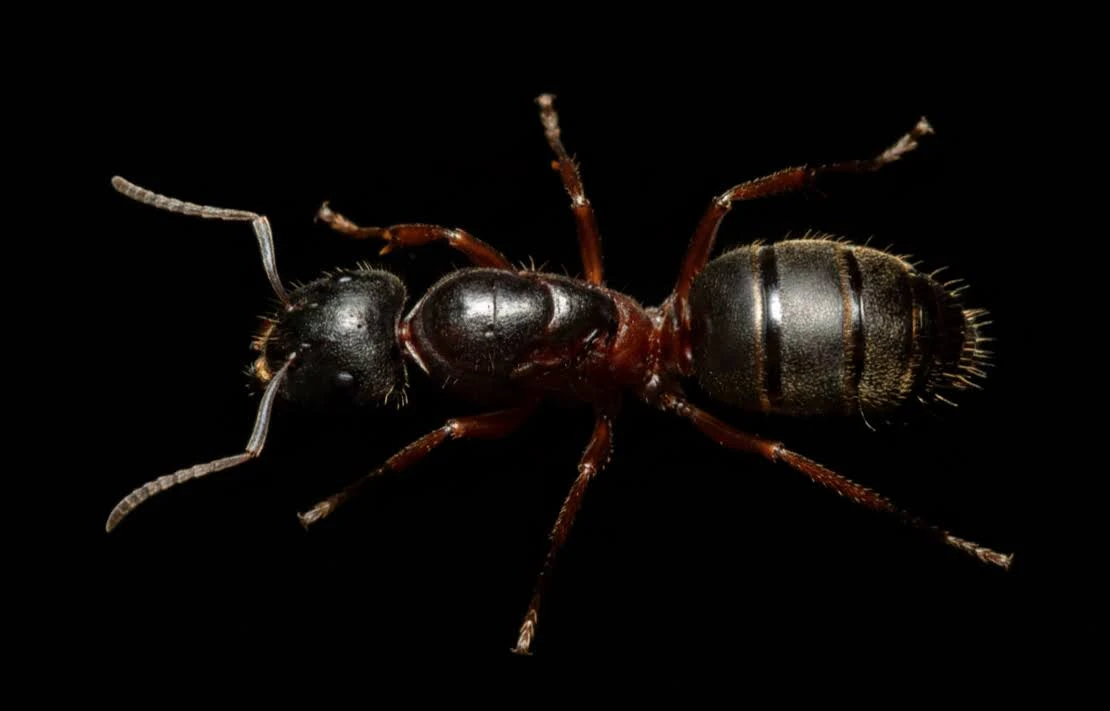
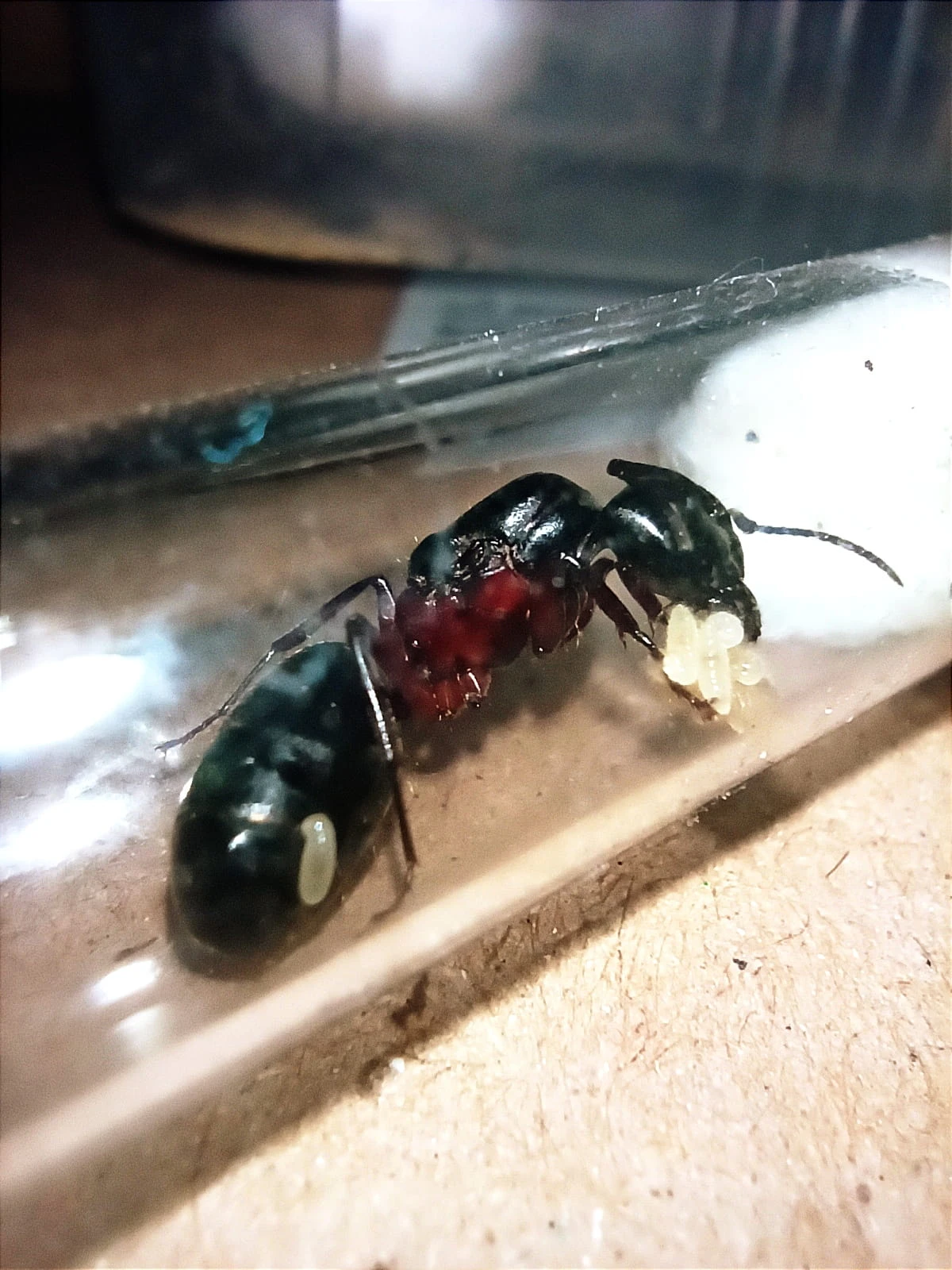
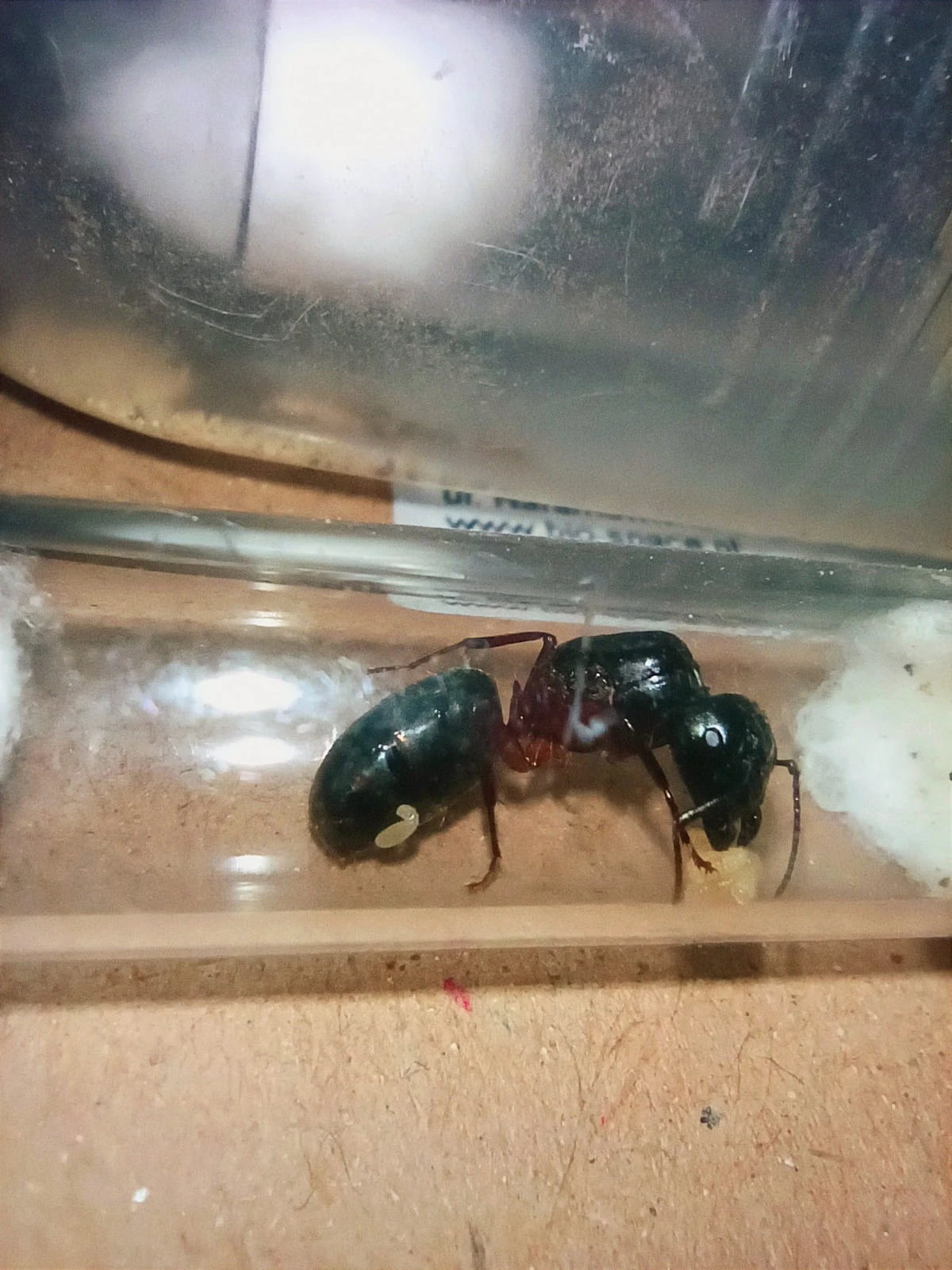
Camponotus herculeanus (Hercules Ant)
Meet Camponotus herculeanus, the gentle Hercules of Europe. This is one of the largest ant species in Europe. This majestic species will reward a patient keeper with an incredible caste of soldiers, whose size almost matches the queen herself. Be warned, however, that keeping this "ant bonsai" is a challenge for patient people - their development is quite slow (although compared to Camponotus ligniperda it is a significantly faster-growing species), often taking 2-3 years before the colony fully blooms. It is, however, an ideal species for someone who can appreciate the long-term process of building an impressive ant empire.
As one of the few professional places (as an ant shop), we catch our queens of this species personally during the nuptial flight in the Polish mountains. That is where we most often observe long, bustling trails with huge, beautiful majors. Camponotus herculeanus is a true colossus - one of those ants that can proudly be described as the fascinating largest ant species in Europe. Their powerful mandibles can carve impressive corridors in wood, and their calm, non-aggressive character makes observing them a pure pleasure.
| Feature | Description |
|---|---|
| Common name | Hercules Ant / Great Carpenter Ant |
| Queen size | 14 - 18 mm (one of the largest in Europe) |
| Worker size | 5 - 14 mm (extreme polymorphism: smaller nurses and powerful soldiers) |
| Hibernation | Mandatory (approx. 3-5 months at 5-8°C) |
| Diet | Sugars (e.g. sugar water or honey) and protein (e.g. feeder insects, roaches) |
| Temperature (nest) | Optimally stable 21-26°C (preferably providing a temperature gradient) |
| Natural habitat | Boreal forests, coniferous forests, mountains (carves corridors in wood) |
Physical characteristics and polymorphism
This species is extremely polymorphic. In a mature colony there are distinct castes: small nurses taking care of the nest, medium workers and huge soldiers, reaching up to 14 mm. The coloring of the queen and workers is generally dark (black-brown), but often you can see transparent, red-brown shades on the thorax and legs. In contrast to the brighter Camponotus ligniperda, the Hercules ant has a more subdued, matte color, and there is only a very small red spot on its abdomen.
Ant colony development and behavior
Unlike its more aggressive cousins, the Hercules ant is a "gentle giant". It has a relatively low-activity temperament, rarely showing aggression during routine opening of the outworld. However, ant colony development can be a big test for an enthusiast. Although it grows faster than ligniperda, it still takes time to reach impressive numbers. Because of this, it may not be the ideal choice as ants for beginners for someone expecting immediate action in huge numbers. However, for those looking for a challenge - it is a wonderful reward. Their characteristic trails and building a strong "army" is a sight that fascinates.
Proper colony diet
Carpenter ants are insects that carve in wood, but contrary to some rumors, they do not eat it. Their endosymbionts (special microflora in the digestive tract) need support from the outside. The standard carbohydrate diet - Sugars (e.g. sugar water or honey) - must be regularly supplemented with live food for ants. Because symbionts may need uric acid to synthesize amino acids, Dubia roaches are a very good source of protein for them, but the colony also develops well on other feeder insects.
Hibernation and formicarium requirements
This is a species dominated by an "endogenous biorhythm" which literally commands them to rest in winter. Proper, cold hibernation (5-8°C for a minimum of 3-5 months) is an absolute necessity. Skipping this step will almost certainly lead to queen stagnation. Considering that these ants live by carving in wood, wooden, cork, Ytong or strong acrylic models will work best as a professional formicarium, which will resist their strong mandibles. The nest should be heated in zones to create a delicate thermal gradient, giving the ants the opportunity to choose the best temperature.
Reviews
If you've added a review and it doesn't appear on the list, it may be pending moderation.
Leave feedback on the product
 Log in with Google

