

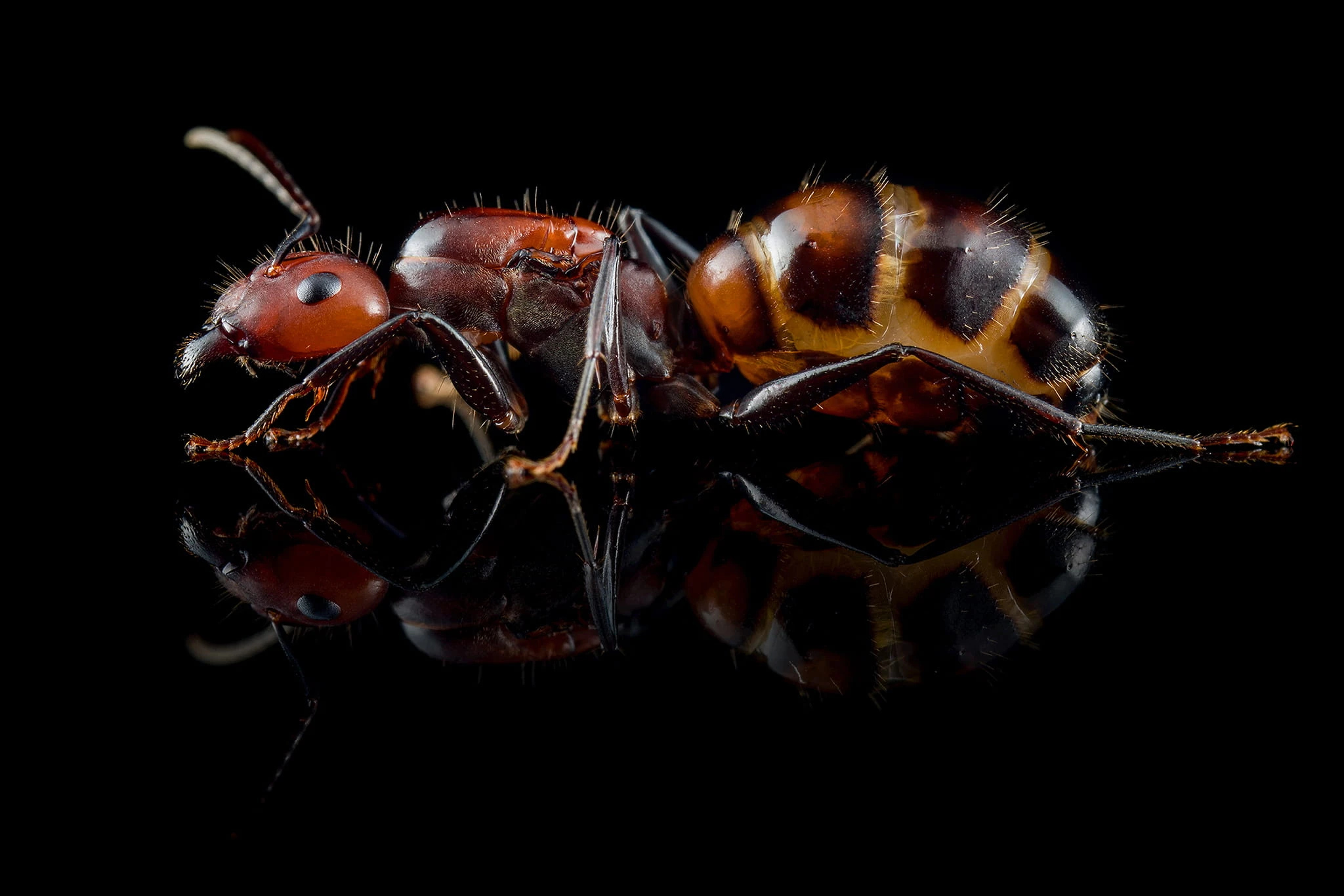


Bought a single queen that arrived really healthy looking. When I got her I also saw that 2 workers had emerged and that they have some really big larvae! Very satisfied with everything. 10/10 would recommend.
Camponotus nicobarensis
Leave feedback on the product

Camponotus nicobarensis
€15.96
Price
€15.96
Regular price:
€15.96
0%
The lowest price during 30 days prior to the reduction:
€18.24
-13%
€15.96
Price
€15.96
Regular price:
€15.96
0%
The lowest price during 30 days prior to the reduction:
€18.24
-13%
Select product variant:
Individual variants may differ in price
in stock
Ask about the product

Camponotus nicobarensis
Administratorem danych osobowych jest PHU Krystian Solga. Przetwarzamy je w celu przesłania odpowiedzi na zapytanie. Więcej informacji dotyczących przetwarzania danych osobowych znajduje się w polityce prywatności.
Share the product card



Shipping
from
€2.26
-
InPost Courier
(Poland)
from
€2.26
-
InPost Courier
(Poland)
Shipping cost for the selected product
The shipping cost applies to this product (in the selected variant - if applicable). It may change after adding other products to the cart.
Description
Description
Camponotus nicobarensis - Exotic Carpenter Ant with Rapid Growth and No Hibernation
Discover one of the most spectacular and forgiving tropical ant species in the world. Camponotus nicobarensis stands out with its striking contrast of a copper thorax against a pitch-black gaster, paired with remarkable colony development speed. Active for all 365 days of the year without any need for refrigerator hibernation, they build a thriving, vibrant empire right on your desk.
- No hibernation: tropical species active year-round without tedious diapause.
- Mighty soldiers: full caste polymorphism ranging from tiny minor workers to powerful major workers / soldiers with massive heads.
- Record development speed: growth from egg to adult worker completes in approximately 28 days.
- High resilience: exceptionally adaptable ants that forgive minor beginner keeper mistakes.
| Feature | Description |
|---|---|
| Scientific name | Camponotus nicobarensis |
| Dimensions | Queen 14-17 mm, minor workers 5-7 mm, media workers 7-9 mm, major workers / soldiers 9-13 mm, males 8-10 mm |
| Coloration | Copper-red or honey-brown thorax, pitch-black head and gaster with a satin gloss |
| Hibernation | None (year-round species, no obligatory diapause) |
| Temperature | Nest 25-28°C (77-82°F) day and 22-24°C (72-75°F) night, outworld 21-30°C (70-86°F) |
| Humidity | Nest 50-70% (humidity gradient), outworld 30-50% (dry) |
| Colony type | Monogyne or polygyne (from one to multiple fertile queens) |
| Development time | Approx. 28 days from egg to worker at 28°C (82°F) |
| Colony size | 5,000 - 20,000 workers in a mature colony, queen lifespan up to 20 years |
| Diet | Carbohydrates (honey, sugar water) and insect protein |
| Difficulty level | Easy - ideal exotic species for beginners |
Choosing Your Variant and First Steps with Your Colony
Our store offers both traditional monogyne colonies with a single queen and spectacular polygyne colonies with two, three, or four queens. Choosing a multi-queen variant delivers rapid establishment, explosive egg-laying dynamics, and greater colony security. Available packages with workers let you enjoy outworld activity right away.
Upon receiving your shipment, provide your ants with 24-48 hours of rest in a dark, quiet location at room temperature of 20-22°C (68-72°F). Never heat the test tube with a heating mat during acclimatization or during claustral foundation with a solitary queen, as this exhausts her fat reserves before the first workers arrive. Once the test tube houses 5-10 workers, connect a compact mini arena, and plan the move into a nest only when the colony reaches at least 15-20 workers.
Which Formicarium and Setup Are Best for Camponotus nicobarensis?
A modular formicarium with a gypsum chamber works best for Camponotus nicobarensis, providing a clear humidity gradient of 50-70% in the nest and 30-50% in the outworld. Heat the nest locally up to 25-28°C (77-82°F), leaving a cooler zone. A dry outworld prevents mold growth on organic food scraps.
In nature, these ants nest in decaying wood, bamboo stems, and rock crevices, making them exceptionally adaptable when choosing housing. For captive ant keeping, a 3D nest 6x6 with a gypsum insert is unmatched for young colonies, while a larger modular 3D nest 10x10 suits growing colonies. High-grade 3D printed setups guarantee precise airflow, stable hydration, and seamless modular expansion without stressful nest moves.
What to Feed Camponotus nicobarensis and How to Plan Their Diet
The core diet for Camponotus nicobarensis consists of carbohydrates such as honey or sugar syrups, alongside feeder insect protein. While workers survive on sugars alone, abundant feeder insects are essential for larvae to develop into massive soldiers and to sustain explosive colony growth rates.
Daily foraging energy comes from natural honey or sugar water served in small feeders. Excellent protein sources include small feeder insects like runner roach nymphs, red runner roaches, or mealworms. For a young colony, always crush or pre-cut insects to make feeding effortless. Workers store liquid sugars in their social stomach and distribute nutrients to nestmates via trophallaxis.
Common Keeper Mistakes and How to Avoid Them
- Heating during claustral foundation: placing a heating mat under a test tube housing a solitary queen accelerates metabolism and triggers catabolic exhaustion of fat reserves before nanitic workers arrive. Always keep a solitary queen at room temperature of 20-22°C (68-72°F).
- Premature expansion into a large nest: a small colony in an oversized nest piles food scraps in empty chambers, inviting mold and pest mites. Begin in a test tube setup and expand gradually as the worker force grows.
- Moist outworld substrate: damp arena substrate combined with leftover protein triggers rapid fungal growth. The outworld must remain bone-dry, with hydration supplied strictly inside the nest chambers or via an external water feeder.
- Neglecting escape barriers: workers climb vertical glass and plastic with ease. Apply dry talcum evenly along the top rim of the outworld and inspect boundaries regularly.
Click to expand: Discovery history, taxonomy, and natural habitat
The scientific history of Camponotus nicobarensis began during the famous Novara 1857 circumnavigation expedition of the Austrian naval frigate Novara. Naturalists explored the remote Nicobar Islands in the Indian Ocean, collecting distinctive ant specimens featuring a pronounced arching thoracic profile. The generic name derives from the Greek words kampé (curved) and nôton (back), while the specific epithet denotes the Nicobar Islands type locality.
Renowned Austrian myrmecologist Gustav Mayr 1865 formally described the species, and original syntypes from that voyage are preserved in CAS/MHNG collections at the California Academy of Sciences and the Natural History Museum of Geneva. The ant belongs to the subgenus Tanaemyrmex, a group of slender carpenter ants. Subsequent research delineated subspecies including C. n. monticola and C. n. rabbani, the latter described by Carlo Emery in 1925 from Myanmar.
In the wild, the species spans vast ranges across the Oriental biogeographic realm, including India, Bangladesh, Thailand, Vietnam (such as Cat Tien National Park), Laos, Myanmar, Malaysia, Singapore, southern China, and Taiwan. As a dendrophilous opportunist, it nests in rotting logs, dead wood, hollow bamboo shoots, and rock crevices, explaining its remarkable adaptability to various nest designs in captivity.
Click to expand: Fascinating biology: endosymbiosis, alarm drumming, and communication
A key secret behind the evolutionary success of this species is an obligate endosymbiosis with intracellular bacteria from the genus Candidatus Blochmannia. These specialized microorganisms inhabit midgut epithelial cells (bacteriocytes) and pass vertically to offspring directly within eggs. Armed with metabolic pathways acquired in part through horizontal gene transfer (HGT), these bacteria synthesize essential amino acids from simple nitrogen compounds and dietary sugars. This enables colonies to endure periods of protein scarcity, although plentiful feeder insects remain vital for rearing soldier larvae.
The mechanical colony alarm system is equally fascinating. Under acute threat, sudden shock, or disturbance, major workers strike their gasters rhythmically against hard nest surfaces. Known in myrmecology as gaster drumming, this acoustic signaling generates substrate vibrations that travel through formicarium walls, audible to the human ear as rapid tapping. For this reason, keep the setup away from audio speakers or heavy vibration sources.
Chemical communication relies on a dual-layer pheromone system consisting of volatile alarm pheromones lasting around 30 minutes alongside long-lasting recruitment trails forming multi-day pheromone highways. In the outworld, workers also stack upon one another over liquid droplets to maximize sugar intake, constantly sharing food and cuticular hydrocarbons (CHC) via trophallaxis.
Click to expand: Social structure, Warsaw teapot case study, and biosecurity
Colonies demonstrate exceptional sociobiological versatility. In Yunnan monogyny predominates in northern populations, whereas polygyny thrives in southern Yunnan, alongside captive colonies displaying oligogyny where multiple fertile queens share an outworld workforce while inhabiting distinct chambers.
The outstanding plasticity and resourcefulness of this species were documented in the Warsaw teapot escape study 2025 published by researchers G. Trigos-Perala and W. Czechowski from the Upper Silesian Museum in Bytom. The study detailed an accidental escape inside a Warsaw apartment, where the ants established a colony in a flowerpot saucer before relocating into a ceramic teapot on the kitchen counter, successfully rearing brood inside.
In competitive laboratory trials, Camponotus nicobarensis demonstrated remarkable resource defense and Solenopsis invicta dominance over aggressive invasive fire ants, as well as over Wasmannia auropunctata. Such tenacity highlights the vital need for strict biosecurity: maintaining reliable escape barriers, securing enclosures, and strictly prohibiting any release of non-native ants into the wild.
Click to expand: Do these ants have a stinger or dangerous venom?
No, ants of the subfamily Formicinae lack stingers. For defense, they rely on an acidopore to spray formic acid and powerful mandibles on major workers. A pinch from a large worker may startle, but it is completely harmless to humans and household pets.
Click to expand: Does this species truly require no cold hibernation?
Yes, as a tropical ant it has no obligatory diapause and must never be placed in a refrigerator. During winter months (December - January), you can simply unplug the heating mat, allowing colony activity to gently slow at standard room temperature of 20-22°C (68-72°F).
Click to expand: When will the first soldiers (majors) appear in the colony?
The first major workers typically emerge once the colony surpasses 30-50 workers, provided they receive regular and generous feeder insect protein. Access to fresh feeder insects is the primary trigger stimulating the growth of large castes.
Click to expand: Can unrelated queens be combined together?
Combining unrelated queens after brood rearing begins carries high risk and usually leads to fatal fighting. Stable polygyne colonies form during nuptial flights and pleometrosis, which is why we recommend choosing our pre-established multi-queen packages.
Looking for spectacular ants with rapid colony growth and impressive soldiers? Choose a colony with workers or select a multi-queen package, add Camponotus nicobarensis to your cart, and enjoy year-round observation of a thriving tropical ant nest from the comfort of your home!
Shipping and Live Arrival Guarantee
Every animal is professionally secured for transit, and during cold weather the package is equipped with a HeatPack heating element. We guarantee live arrival. Live animals are shipped from Monday to Thursday to ensure safe delivery before the weekend.
Reviews
Reviews
Number of ratings: 106
If you've added a review and it doesn't appear on the list, it may be pending moderation.
Leave feedback on the product

Noa