

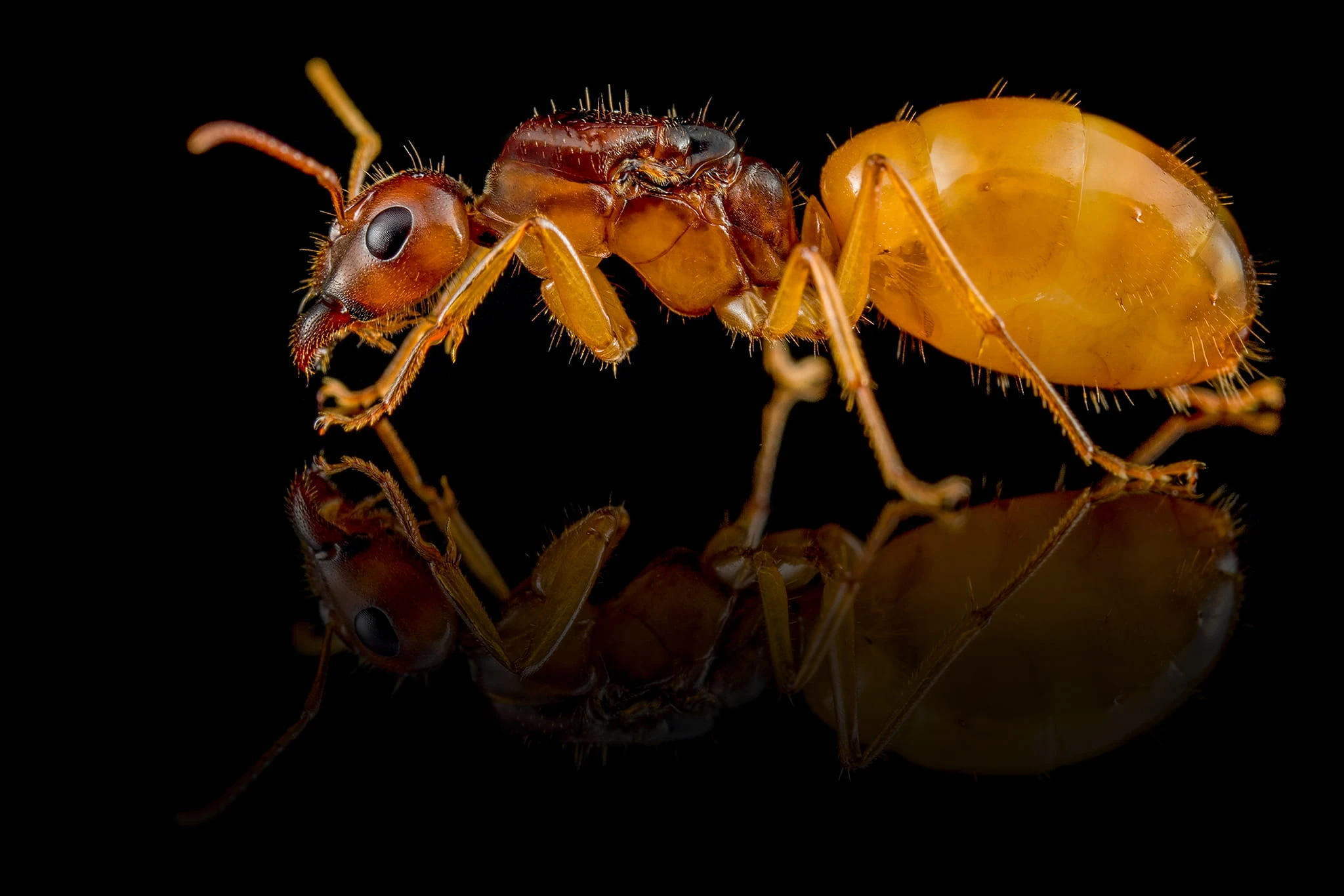


Camponotus fedtschenkoi
Leave feedback on the product

Select product variant:
Individual variants may differ in price
Ask about the product

Administratorem danych osobowych jest PHU Krystian Solga. Przetwarzamy je w celu przesłania odpowiedzi na zapytanie. Więcej informacji dotyczących przetwarzania danych osobowych znajduje się w polityce prywatności.
Share the product card



Shipping cost for the selected product
The shipping cost applies to this product (in the selected variant - if applicable). It may change after adding other products to the cart.
Description
Camponotus fedtschenkoi (Yellow Carpenter Ant / Amber Carpenter Ant)
Imagine the boundless steppes of Central Asia, where harsh winds sweep across the sun-drenched, arid plains of Kazakhstan and Mongolia. It is in this seemingly hostile environment, deep within rocky slopes and semi-desert scrublands, that one of the greatest treasures of modern myrmecology lies hidden. Camponotus fedtschenkoi, widely celebrated as the Yellow or Amber Carpenter Ant, is a species whose first impression is truly unforgettable - a thriving colony of shimmering, golden-amber ants contrasting boldly with dark, armored heads, resembling living jewels within your formicarium.
This is undeniably one of the most visually stunning exotic ant species ever introduced to the European hobby. Its extraordinary appeal stems from a combination of unique characteristics: striking polymorphism, vivid color contrasts, and above all, the translucent, "ghost-like" minor workers whose gasters light up like a living lava lamp when fed colored liquids. A professional formicarium transforms into a mesmerizing, vibrant spectacle that no artificial decor can replicate. If you are looking for exotic pets at home that will continuously fascinate you for over a decade - you have just found them.
While not strictly recommended for absolute beginners due to their heating requirements, they serve as the perfect second species in any collection. They also make an extraordinary gift for any ant keeper who has mastered the basics and seeks a rewarding challenge combined with unmatched aesthetic beauty.
⚠️ Important note regarding color morphs: We occasionally offer two color selections of this species - amber and yellow. Reference photos for both morphs are available in the product gallery. Please note that Camponotus fedtschenkoi exhibits natural color variation - every queen and colony is unique, and actual hues may vary by approximately +/- 10% from photographs. A specific exact shade cannot be guaranteed.
| Characteristic | Description |
|---|---|
| Scientific name | Camponotus fedtschenkoi |
| Origin | Central Asia (Kazakhstan, Mongolia, Uzbekistan, NW China) - steppes and semi-deserts |
| Difficulty level | Medium (ideal second species - requires active heating) |
| Colony form | Monogyne (single queen) |
| Queen size | 12-15 mm |
| Worker size | 4-15 mm (strong polymorphism: minors, media, majors) |
| Colony founding | Claustral - queen does not require feeding until first workers emerge |
| Nest temperature | 24-28°C (75-82°F) - optimal 25-27°C (77-81°F). Solitary founding queen: 20-22°C (68-71°F, room temperature) |
| Outworld temperature | 23-30°C (73-86°F), tolerates spikes up to 35°C (95°F) |
| Nest humidity | 50-70% (humidity gradient required) |
| Outworld humidity | 30-50% (dry outworld) |
| Diet | Sugars (e.g. sugar water or honey water), feeder insects (protein) |
| Hibernation / Diapause | No fridge hibernation required - mild diapause at 15-18°C (59-64°F) for 2-4 months |
| Queen lifespan | 12-14 years |
| Mature colony size | 2,000 - 5,000 workers |
| Recommended nests | 3D printed nest, Ytong / aerated concrete, gypsum, acrylic, cork, wood |
A Colony of Three Castes - Polymorphism in Action
Very few ant species offer such a rich visual experience. The pronounced polymorphism of C. fedtschenkoi means that the colony is divided into three distinct worker castes, each with its own size, morphology, and behavioral role.
Minors (4-5 mm) - "Ghosts of the Nest": The smallest and most extraordinary workers. Their gasters are almost entirely transparent and whitish, looking like luminous shadows darting through the nest. By offering colored liquid food (such as red or blue sugar syrup), you can observe their gasters taking on the vivid color of the fluid - creating a fascinating "lava lamp effect". Through trophallaxis (mouth-to-mouth food exchange), this colored nourishment quickly spreads across the entire colony.
Media (6-9 mm) - Golden Foragers: The backbone of the colony's daily workforce. Shimmering from bright yellow to rich amber gold, they handle food transport, brood care, and nest maintenance.
Majors (10-15 mm) - Armored Guardians: The most imposing caste. Their massive black or dark brown heads and powerful mandibles provide a breathtaking contrast against their golden-amber thoraxes and gasters. Reaching sizes comparable to the queen herself, they defend the nest and crush tougher food items.
Care Guide and Environmental Setup
Camponotus fedtschenkoi originates from continental steppe climates with hot, dry summers. While they can survive at 20°C (68°F), development accelerates significantly at higher temperatures. A heating mat or heating cable is highly recommended to stimulate healthy brood growth.
Temperature: For colonies with workers, maintain the nest at 24-28°C (75-82°F). The outworld can range between 23-30°C (73-86°F). Always establish a temperature gradient by heating only one side of the nest. A solitary founding queen must NEVER be actively heated - keep her at a stable room temperature of 20-22°C (68-71°F) to avoid metabolic burnout.
Humidity: The nest requires 50-70% humidity with a clear gradient, but must never be waterlogged. The outworld should remain dry (30-50%). Aerated concrete (Ytong), gypsum, and modular 3D printed nests provide optimal moisture regulation.
Feeding and Nutrition
Carbohydrates: Carbohydrates fuel daily activity. Sugars (sugar water or honey water) should be provided regularly. Feeding colored syrups allows you to clearly witness trophallaxis in real time.
Protein: Essential for larval growth and egg production. Offer feeder insects such as mealworms, crickets, or roaches. For small founding colonies, always offer pre-killed, crushed insects to ensure easy access without stressing the young colony.
Colony Development and Winter Rest
C. fedtschenkoi exhibits a slow initial growth rate, which is entirely normal for this species.
- Year 1: 50-100 workers. Young colonies can be timid - provide calm conditions with minimal disturbance.
- Year 3: ~500 workers. The colony gains confidence and exhibits its full behavioral repertoire.
- Mature size: 2,000-5,000 workers.
- Queen lifespan: 12-14 years.
Diapause (Not Hibernation): This species does not require cold hibernation in a refrigerator. They only need a mild winter rest (diapause) at 15-18°C (59-64°F) for 2-4 months. During this period, simply turn off the heating mat, keep sugars and water accessible, and reduce protein feedings. Resume heating in spring to trigger renewed egg laying.
Distinguishing C. fedtschenkoi from C. turkestanus
These two species have historically been confused in the hobby. C. turkestanus is completely orange without dark pigmentation, forming smaller colonies. C. fedtschenkoi features a striking contrast between dark heads and golden-amber bodies. Note that our yellow variant possesses a very light body coloration and looks remarkably similar to C. turkestanus, whereas the amber variant exhibits the pronounced dark head contrast.
Common Mistakes and How to Avoid Them
- Heating a solitary founding queen: Accelerates metabolism and exhausts the queen before her first brood hatches. Keep her at 20-22°C (68-71°F).
- Over-saturating the nest: Excess moisture causes mold. Maintain a strict humidity gradient.
- Offering live prey to small colonies: Live insects cause stress and injury. Always offer pre-killed insects to young colonies.
- Excessive vibrations: Founding queens are sensitive to disturbance. Keep the test tube in a quiet, dark spot.
- Cold fridge hibernation: Temperatures below 10°C are harmful. They only require a mild room-temperature diapause at 15-18°C (59-64°F).
- Inadequate outworld barrier: Apply a smooth talcum powder barrier along outworld edges to prevent escapes.
Reviews
If you've added a review and it doesn't appear on the list, it may be pending moderation.
Leave feedback on the product

