

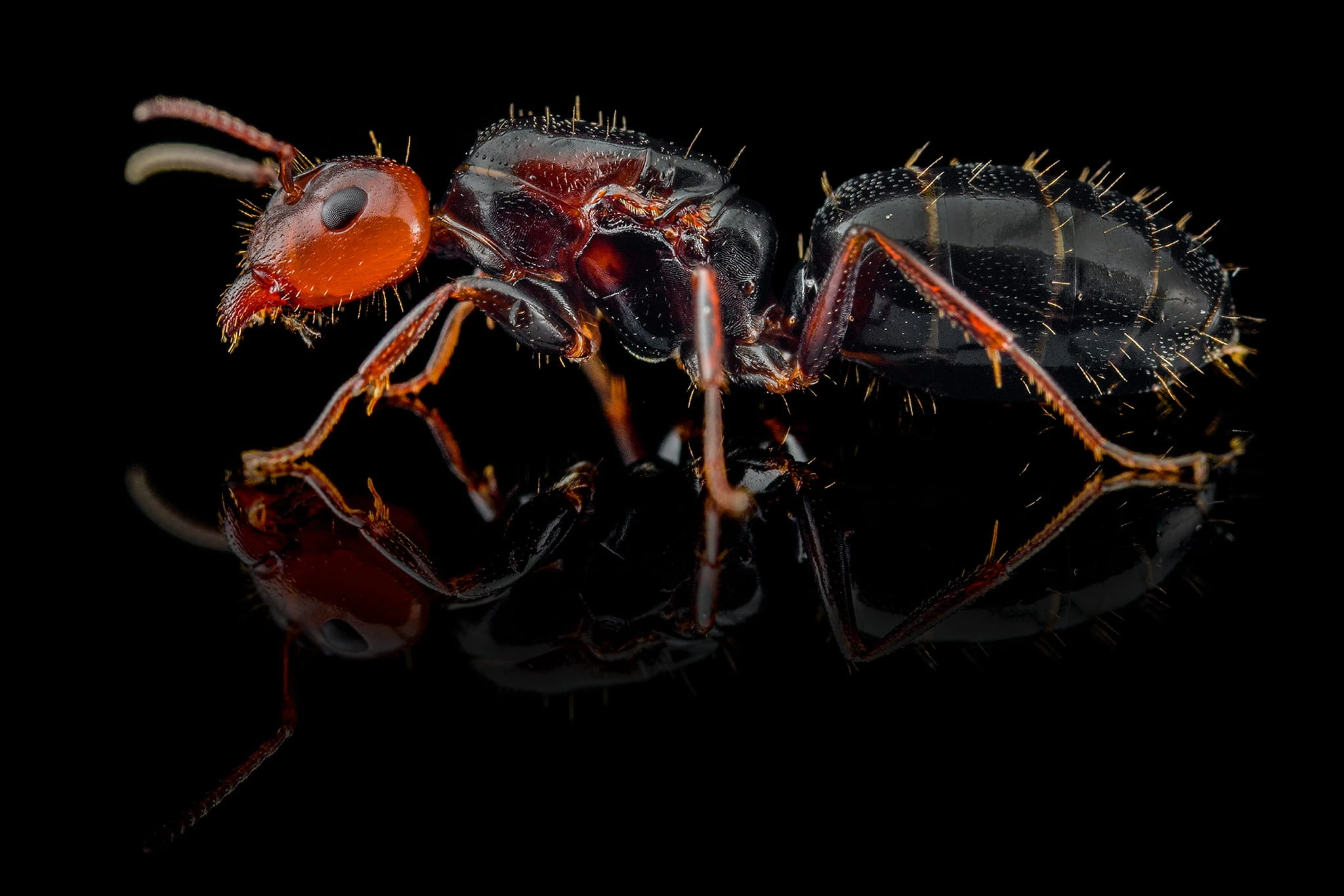


Camponotus lateralis
Leave feedback on the product

Wybierz wariant produktu:
Individual variants may differ in price
Ask about the product

Administratorem danych osobowych jest PHU Krystian Solga. Przetwarzamy je w celu przesłania odpowiedzi na zapytanie. Więcej informacji dotyczących przetwarzania danych osobowych znajduje się w polityce prywatności.
Share the product card



Shipping cost for the selected product
The shipping cost applies to this product (in the selected variant - if applicable). It may change after adding other products to the cart.
Description
Camponotus lateralis - Arboreal Masters of Mimicry and Bioactive Setups
Imagine sun-drenched Mediterranean olive groves, cypress-covered hills, and ancient oak woodlands. Right there, inside warm deadwood crevices and beneath dry bark, thrives a truly extraordinary species. Camponotus lateralis, commonly known as the Mediterranean carpenter ant, is a species that captivates from the very first glance. Its vivid, contrasting coloration - a rusty-red head paired with a jet-black, glossy gaster - turns every observation in the outworld into a captivating spectacle. If you are looking for fascinating pets with rich behavior, these are ideal ants for beginners and experienced enthusiasts aiming to establish a thriving living ecosystem.
| Feature | Description |
|---|---|
| Scientific name | Camponotus lateralis (Olivier, 1792) |
| Common name | Mediterranean carpenter ant |
| Difficulty level | Easy (resilient and forgiving species) |
| Geographic distribution | Mediterranean Basin, Southern and Central Europe, Caucasus, North Africa |
| Queen size | 8.5 - 12 mm (massive, dark body with subtle mahogany accents) |
| Minor worker size | 4.0 - 5.0 mm (agile nurses and brood tenders) |
| Media worker size | 5.0 - 7.0 mm (backbone of the outworld foraging force) |
| Major worker size | 6.0 - 9.0 mm (powerful heads, nest defense, and living honeypot storage - repletes) |
| Nest temperature | 20 - 25°C (68 - 77°F) (thermal gradient recommended) |
| Outworld temperature | 22 - 28°C (72 - 82°F) (broad ambient range simulating direct sunlight) |
| Nest humidity | 40 - 60% (moderate; substrate must not be wet) |
| Outworld humidity | 30 - 50% (outworld should remain completely dry) |
| Hibernation (diapause) | Yes, mild diapause for 4 months at 10 - 15°C (50 - 59°F) |
| Primary diet | Sugars (e.g. sugar water or honey water) and feeder insects |
| Recommended formicarium | 3D printed nests, wooden nests, and cork nests |
| Escape prevention | Talcum powder (talc) |
Batesian Mimicry - An Evolutionary Masterpiece
The most spectacular biological trait of Camponotus lateralis is its relationship with the ant species Crematogaster scutellaris. In the Mediterranean ecosystem, Crematogaster are notorious for extreme territorial aggression and potent chemical defenses - irritating venomous repellents that cause predators to avoid them. Their red head and dark body serve as a universal warning signal in nature.
Camponotus lateralis, being docile and stingless, evolved an identical color pattern. Field studies demonstrate that natural predators, such as common wall lizards, consistently avoid attacking the red-headed carpenter ant, mistaking it for the noxious, unpalatable model. Furthermore, these ants can decipher and exploit trail pheromones laid down by Crematogaster, following their highways straight to rich nectar sources and aphid colonies. Equipped with longer antennae and larger, more convex eyes, Camponotus lateralis foragers detect oncoming hosts from a safe distance and instantly adjust their trajectory to avoid physical clashes. By choosing this species, you invite a true master of evolutionary deception into your collection.
Caste Polymorphism and Living Honey Reservoirs
In a mature colony, a sophisticated division of labor thrives:
- Queen (Gyne): A robust mother reaching up to 12 mm in length, capable of living up to 15 years under optimal care and sustaining steady colony growth.
- Minor Workers (4 - 5 mm): Compact, dedicated nurses that care for eggs and larvae deep within the nesting chambers.
- Media Workers (5 - 7 mm): The primary foraging and exploration force, actively scouting the outworld for food resources.
- Major Soldiers (6 - 9 mm): Heavy-jawed soldiers with massive rusty-red heads. Beyond nest defense, they serve as remarkable living storage tanks (repletes). After drinking copious amounts of liquid nectar, their gasters expand visibly, revealing pale intersegmental membranes. During times of scarcity, they distribute stored nourishment to nestmates through trophallaxis (mouth-to-mouth liquid food exchange).
An Invisible Amino Acid Factory - Blochmannia Endosymbiosis
In arboreal habitats, access to fresh insect protein can be erratic. To thrive under these conditions, Camponotus lateralis maintains an obligate, intracellular mutualism with symbiotic bacteria of the genus Blochmannia. These microscopic helpers reside within gut epithelial cells and operate like a miniature biochemical reactor - synthesizing essential amino acids directly from carbohydrate-rich honeydew and recycling nitrogenous waste products. This cellular partnership provides adult workers with exceptional vitality and resilience during temporary protein shortages.
Engineering Potted Plant, Bonsai, and Bioactive Setups
The Mediterranean carpenter ant is the premier choice for anyone passionate about building a bioactive habitat from scratch. In modern terraristics, this species excels in open, potted plant outworlds featuring live bonsai trees (such as Ficus microcarpa), succulents, stonecrops, or aromatic lavender.
The secret to long-term success lies in resolving the moisture conflict: live plants require moist root zones, whereas xerophilic arboreal ants demand dry surfaces. To harmonize both requirements in a single display, use a proven multi-layer layout:
- Root Zone: Moist planting substrate with a bottom drainage layer of expanded clay (leca).
- Mechanical Barrier: A fine stainless steel mesh (0.3 - 0.4 mm aperture) is installed tightly across the moist soil and sealed at the edges. This allows air and water exchange while preventing ants from digging into the wet root mass.
- Dry Surface Outworld: A clean layer of sterile gravel or desert sand is spread over the mesh, drying out rapidly.
- Sub-Surface Bottom Watering: Water the plant strictly from below via a saucer or an integrated pipe, keeping the top outworld completely dry.
- Cleanup Crew: Introduce beneficial springtails into the moist soil beneath the mesh to break down organic plant matter and protect against mold.
Microclimate - Mediterranean Warmth and Dryness
Because this species originated in warm, sunlit habitats across Southern Europe, captive conditions must mirror its natural ecology:
- Outworld (30 - 50% humidity): The foraging area must remain strictly dry to prevent mite outbreaks and food spoilage. Ambient temperatures should sit between 22 - 28°C (72 - 82°F).
- Nest (40 - 60% humidity): The nest should offer subtle moisture in a dedicated hydration zone. Warm only one side of the nest to 20 - 25°C (68 - 77°F) to establish a thermal gradient, enabling the colony to position developing brood in the optimal temperature zone.
Balanced Diet for the Ant Colony
A wholesome diet for the colony relies on two fundamental pillars:
- Carbohydrates (foraging energy): Offer sugars (e.g. sugar water or honey water) as the primary fuel for active workers. Serve liquids on cotton wicks or through capillary drinkers. This species does not consume seeds.
- Protein (brood development): Essential for egg production by the queen and rapid larval growth. For a young founding colony, offer pre-killed feeder insects (such as cut or crushed roaches, fruit flies, or crickets) for effortless feeding. For a large, established colony, offering live feeder insects provides engaging enrichment and showcases the hunting capabilities of the major caste. Remove uneaten prey remains within 24 - 48 hours.
The Founding Queen and Early Colony Care
Early colony development requires calm and patience. The queen establishes her nest claustrally - meaning she seals herself in a chamber and raises her first batch of tiny workers (nanitics) solely using metabolic energy derived from her wing muscles.
Crucial Husbandry Rule: A solitary founding queen should never be actively heated with a heating mat! Artificial heating accelerates her metabolism while she has no worker support, rapidly depleting her vital reserves. Keep her test tube setup at room temperature (20 - 22°C / 68 - 72°F) in complete darkness and avoid feeding until the first workers emerge.
Formicarium Selection and Escape Prevention
Keep your young colony in its test tube until worker numbers reach 15 - 30 individuals. Moving a tiny colony into a spacious nest prematurely can cause stress and lead to garbage accumulation in unused chambers.
When the colony is ready to move, choose a quality formicarium:
- 3D Printed Nests: Our top recommendation. They offer precise chamber geometry, escape-proof construction, and optimal humidity control.
- Wooden Nests: Beautifully replicate natural arboreal habitats.
- Cork Nests: An outstanding choice, allowing the colony to carve and expand chambers naturally as population increases.
Camponotus lateralis are agile climbers on glass and acrylic. To secure the outworld, apply a clean barrier of talcum powder along the upper rim, completely preventing escapes.
Hibernation - A Mild and Rejuvenating Diapause
To preserve long-term health and the queen's natural fertility cycle, provide an annual mild diapause for 4 months.
Step-by-step wintering procedure:
- Digestive Cleansing: Stop feeding protein 2 - 3 weeks prior to cooling. Provide only sugars (e.g. sugar water or honey water) during this period to ensure the digestive tract is empty, preventing internal decay during cold storage.
- Cooling: Move the setup to a stable location maintained at 10 - 15°C (50 - 59°F) (such as an unheated pantry, cool cellar, or garage).
- Winter Maintenance: Maintain a constant supply of fresh drinking water and offer an occasional droplet of sugar water.
Common Mistakes and How to Avoid Them
- Heating a solitary queen: Depletes essential energy reserves prematurely. Keep her comfortable at 20 - 22°C (68 - 72°F).
- Premature nest expansion: Introducing a few workers into a large nest causes stress. Wait patiently until at least 15 - 30 workers are present.
- Excessive moisture: Overwatering the nest or outworld invites mold. Remember this is a xerophilic, wood-dwelling species.
- Hibernating with full protein guts: Failing to withhold feeder insects prior to diapause can trigger fatal bacterial issues during winter.
Begin Your Adventure with This Extraordinary Carpenter Ant!
Keeping Camponotus lateralis is an incredible journey into the heart of Mediterranean nature. Their striking coloration, impressive major soldiers, captivating trophallaxis, and adaptability to bioactive planted setups offer unmatched fascination every single day.
Our store ensures safe, professional packaging and expert advice throughout your ant-keeping journey. Choose Camponotus lateralis, equip yourself with the right ant keeping accessories, and build your thriving micro-kingdom today!
Reviews
If you've added a review and it doesn't appear on the list, it may be pending moderation.
Leave feedback on the product
 Log in with Google
