

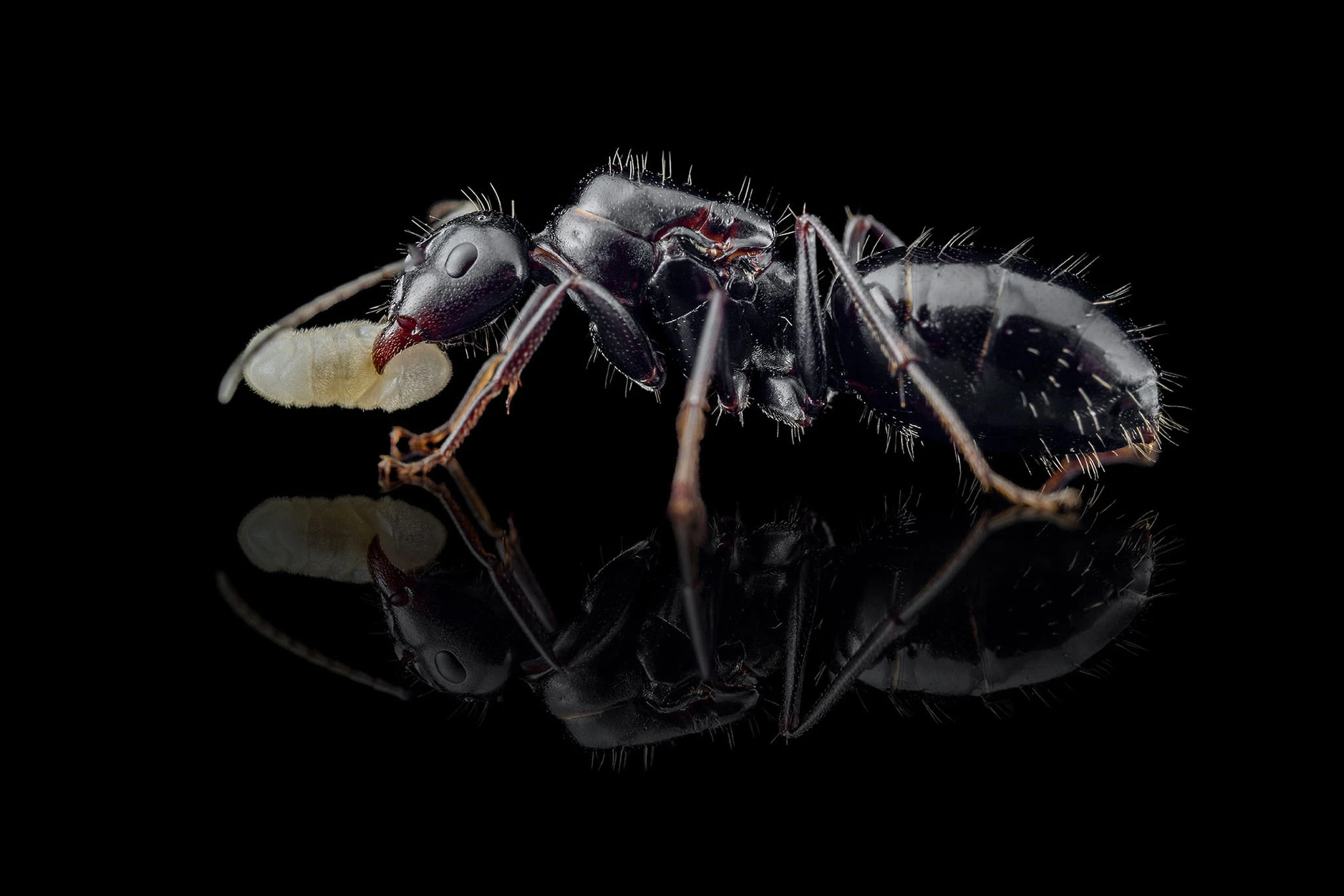


Camponotus foreli
Leave feedback on the product

Wybierz wariant produktu:
Individual variants may differ in price
Ask about the product

Administratorem danych osobowych jest PHU Krystian Solga. Przetwarzamy je w celu przesłania odpowiedzi na zapytanie. Więcej informacji dotyczących przetwarzania danych osobowych znajduje się w polityce prywatności.
Share the product card



Shipping cost for the selected product
The shipping cost applies to this product (in the selected variant - if applicable). It may change after adding other products to the cart.
Description
Camponotus foreli – Glossy Elegance in a Compact Size
Fascinating jewel of home breeding
Camponotus foreli are ants that delight with their intense, glossy black color and extraordinary grace. As one of the smaller representatives of their genus, they are an ideal choice for people who want to observe impressive polymorphism – with a clear division into minor, media and powerful major castes – without fear of overpopulation. They are excellent exotic ants for home breeding, especially for those looking for beauty in a manageable, compact format.
| Feature | Description |
|---|---|
| Difficulty | Easy (but requires patience due to slow development) |
| Colony Size | Small (up to 300-500 workers) |
| Colony Form | Monogyne (one queen) |
| Queen Size | 11-13 mm (intense glossy black) |
| Worker Size | 5-10 mm (distinct polymorphism with minor, media and major castes) |
| Diet | Sugar water or honey and dead feeder insects |
| Temperature | Nest 22-26°C (arena 20-28°C). Do not heat until the first workers emerge. |
| Humidity | Nest 50-70%, arena 30-50% (keep dry) |
| Hibernation | Yes, exactly 4 months at 10-15°C required |
Calm nature and diurnal activity
Unlike many other insects that become active only after dusk, Camponotus foreli show diurnal activity, depending on heat and light. This makes them a species perfectly suited for observation. These are extremely calm ants, avoiding conflicts and skittish in unnatural surroundings. For this reason, it is so crucial to provide them with peace and eliminate unnecessary vibrations from the outside.
Environmental conditions and specific diet
As a thermophilic species originating from dry, southern biotopes, this species prefers a warm but dry environment. The nest requires delicate heating, while regarding humidity, you must remember that the arena itself should remain quite dry. 3D formicariums, as well as cork and wooden ones that can breathe, will work best. Acrylic or plaster nests, on the other hand, may require greater skill in watering, due to their susceptibility to excessively high humidity. As a protective barrier to prevent the bravest units from escaping, use proven talcum powder.
The basic food in the arena is, of course, sugar water or honey, because these ants are very eager to collect nectar. Protein food, on the other hand, which is necessary for proper development and reproduction, is given exclusively in a dead form (e.g. crushed or cut fruit flies) so as not to stress this timid colony with live feeder insects.
Slow initial colony development
Although Camponotus foreli is a relatively easy species to keep, it is worth arming yourself with a bit of patience. From the founding of the colony (remember that a lone queen does not require feeding until the first generation is raised, and she should not be heated during this time) to the first months, we observe a slow development of the ant colony. In the first year, we most often get 10-20 workers. The growth in the nest accelerates only in the second and third season, which guarantees us a multi-year adventure without a quick and unexpected change of the formicarium.
Most common mistakes and how to avoid them
- Overfeeding and mold in the arena: Keep the arena dry and regularly remove food leftovers. Any backlog will quickly lead to the development of mold or mites, especially when feeding nectars.
- Stressing the queen: Providing the nest with a secluded, quiet place and eliminating continuous peeking at the colony in its earliest stage significantly increases the chances of success. Avoid transmitting vibrations to the arena.
- Feeding live insects to a tiny colony: Aggressive, live prey can arouse huge panic in these delicate and gentle workers, which will block their willingness to eat. Kill all insects and cut them into small portions before feeding.
- Skipping hibernation: These ants absolutely require hibernation lasting exactly 4 months. Lack of hibernation reduces activity and slows down the reproduction process.
Discover the world of Camponotus in your own home!
Start a fascinating adventure and create a bustling run on your desk. Complete the appropriate formicarium equipment, provide the ants with reliable care, and they will easily reward you with many years of spectacular existence at a high level. Choose the right accessories and one of the ant variants right now and enjoy the magic of observation straight from your armchair.
Reviews
If you've added a review and it doesn't appear on the list, it may be pending moderation.
Leave feedback on the product
 Log in with Google
