

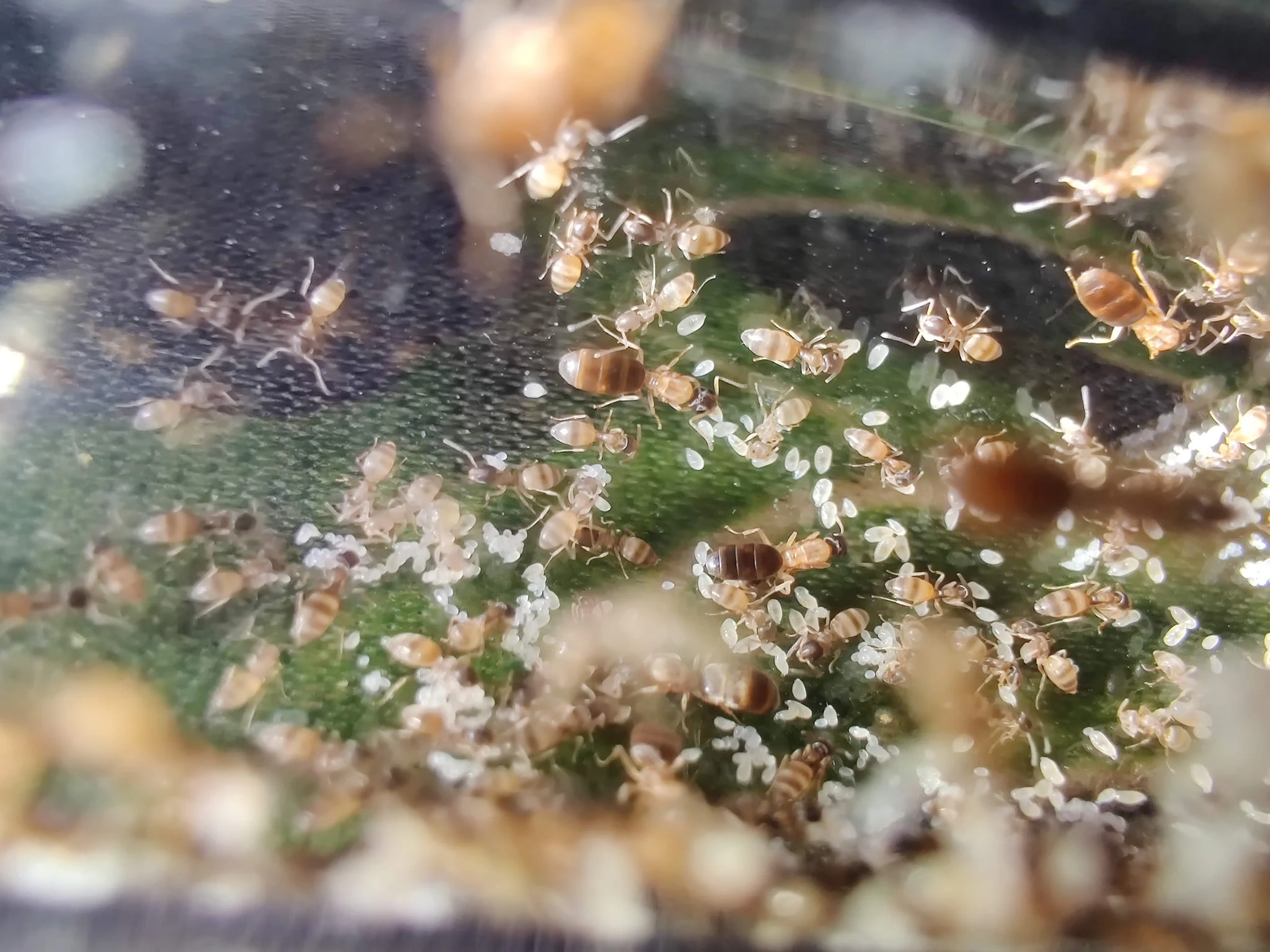


Tapinoma melanocephalum (Ghost Ants)
Leave feedback on the product

Wybierz wariant produktu:
Individual variants may differ in price
Ask about the product

Administratorem danych osobowych jest PHU Krystian Solga. Przetwarzamy je w celu przesłania odpowiedzi na zapytanie. Więcej informacji dotyczących przetwarzania danych osobowych znajduje się w polityce prywatności.
Share the product card



Shipping cost for the selected product
The shipping cost applies to this product (in the selected variant - if applicable). It may change after adding other products to the cart.
Description
Tapinoma melanocephalum - Ghost Ants
Tapinoma melanocephalum, commonly known as the "Ghost Ant", is one of the most fascinating ant species for home ant keeping, characterized by its microscopic size and unique coloration – their head and thorax are dark brown, while the gaster and legs remain translucent, almost "ghostly". This transparency offers incredible observation opportunities. By feeding the ants colored liquids (e.g., sugar water or honey water with a drop of food coloring), you can watch the process of food sharing (trophallaxis) live inside the colony as their gasters instantly light up in the given color!
These are extremely dynamic and "high-energy" insects. Their fast, erratic, and virtually unpredictable movements make the formicarium burst with life, offering a truly captivating display. Crucially: all Ghost Ants sold by us come from our own stable colony, founded in 2018 and fully adapted to captivity. This is essential information, as wild-caught colonies of this species handle acclimatization very poorly and often collapse quickly. By choosing ants bred in our ant shop, you are guaranteed to receive a healthy, well-established colony.
Warning – The Difficulty Paradox: Tapinoma melanocephalum is a species that forgives many beginner keeping mistakes, but can be challenging to contain. They are an invasive and synanthropic ant species, meaning that in the event of an escape inside a heated home, they can establish indoor nesting sites and become a persistent household pest. Standard escape barriers such as Fluon (PTFE) are ineffective against them. Fortunately, dry pure talc powder (baby powder without additives) works surprisingly well, even for large colonies. While they do not require nests as escape-proof as Floricola, for absolute safety it is highly recommended to consider our modular 3D printed nests with guaranteed escape-proofing, ensuring secure connections between the nest and the outworld.
| Feature | Description |
|---|---|
| Difficulty Level | Keeping: Easy / Containment: Medium |
| Size | Queen: 2.5 - 4 mm, Worker: 1.3 - 2 mm |
| Colony Structure | Extreme Polygyny (multiple cooperating queens) |
| Colony Founding | Budding / In-nest mating (no nuptial flights) |
| Temperature | 24 - 30°C (75 - 86°F) (Constant heating required) |
| Hibernation | None – tropical ants not requiring hibernation (cold temperatures are fatal) |
| Humidity | 50-70% in the nest (or constant access to a very moist water source) |
| Diet | Carbohydrates (e.g. sugar or honey water), Protein (small feeder insects) |
| Nest (Recom.) | Our escape-proof modular nests, bioactive box, or a 100% escape-proof test tube |
| Barrier (Recom.) | Talc (dry talcum powder) |
Unique Biology of a "Superorganism"
Tapinoma melanocephalum lives in a supercolony structure characterized by extreme polygyny (presence of thousands of cooperating queens). Fascinatingly, this species does not engage in traditional nuptial flights. The entire reproductive cycle, including strong inbreeding (to which these ants are remarkably resistant), takes place directly inside the mother nest, from where newly mated queens together with worker groups "bud" off to form satellite nests. Thanks to this, the colony is effectively "immortal" – the ants readily replace aging queens with young ones without issues. If you crush or rub a worker between your fingers (not recommended!), it will release a distinctive defensive odor reminiscent of rotten coconut.
Diet for Ant Colonies
These ants have a very fast metabolic rate and a relentless appetite, which is why a balanced diet is essential. Carbohydrates serve as their primary energy source (e.g. sugar or honey water provided in micro-droplets to prevent drowning). For healthy larval development, protein feeder insects are required (large colonies can easily handle live prey, whereas small colonies should be offered pre-killed, cut, or crushed insects). Important note: these ants can be selective about protein and strongly prefer tiny feeder insects such as fruit flies (Drosophila) or pinhead crickets. They also thrive remarkably well on silverfish. However, they generally ignore common mealworms.
Formicarium and Hygiene (Why Bioactive?)
In nature, this species does not build permanent structured nests. When their nesting spot becomes soiled with waste or food debris, the colony simply buds and relocates to a fresh, clean site. In a closed, sterile formicarium, this nomadic behavior can quickly lead to waste accumulation in unused chambers and dangerous mold outbreaks. Attempts by the keeper to clean the nest are perceived as a threat and trigger escape attempts.
For this reason, a bioactive box is an outstanding choice, though these ants can also thrive in conventional 3D printed nests if you are prepared to thoroughly clean the setup every 6 to 12 months. In a bioactive setup, a bioactive cleanup crew works wonders. Terrarium springtails naturally eliminate mold from nest walls and substrate, while small cleanup crew isopods assist in breaking down larger organic waste. This equipment setup solves hygiene challenges for the ant keeper and eliminates risky nest intrusions. Just ensure absolute airtightness and escape-proofing on all lids and ports!
Reviews
If you've added a review and it doesn't appear on the list, it may be pending moderation.
Leave feedback on the product
 Log in with Google
