



Bought a single queen with 21 - 40 workers. They arrived very healthy and had grew to many more workers. Very satisfied with both service and product. 10/10 would recommend.
Tetramorium bicarinatum
Leave feedback on the product

Tetramorium bicarinatum
€15.91
Price
€15.91
Regular price:
€15.91
0%
The lowest price during 30 days prior to the reduction:
€11.36
+40%
€15.91
Price
€15.91
Regular price:
€15.91
0%
The lowest price during 30 days prior to the reduction:
€11.36
+40%
Select product variant:
Individual variants may differ in price
in stock
Ask about the product

Tetramorium bicarinatum
The controller of your personal data is PHU Krystian Solga. We process them to respond to your inquiry. More information regarding personal data processing can be found in our privacy policy.
Share the product card


Shipping
from
€2.25
-
InPost Courier
(Poland)
from
€2.25
-
InPost Courier
(Poland)
Shipping cost for the selected product
The shipping cost applies to this product (in the selected variant - if applicable). It may change after adding other products to the cart.
Description
Description
Tetramorium bicarinatum - Invasive Ant with Spectacular Swarm Hunts
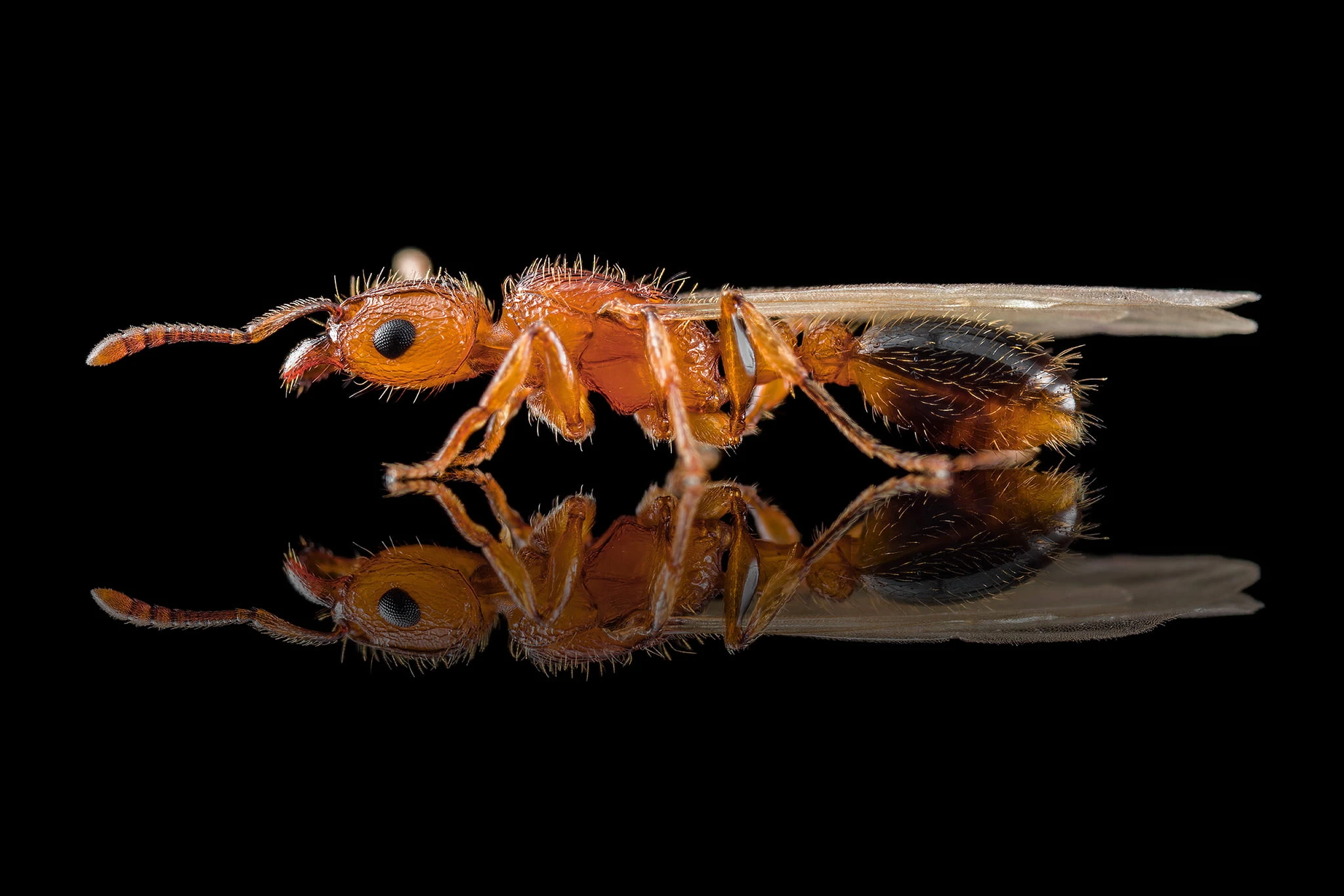
Discover one of the most dynamic and fascinating ant species in global myrmecology. Tetramorium bicarinatum captivates ant keepers with its contrasting, honey-black exoskeleton, unmatched foraging energy, and complete lack of winter dormancy. Thanks to its remarkable intranidal biology, the colony grows continuously year-round, offering spectacular observations of highly coordinated swarm hunts.
- Contrasting coloration: A vivid orange-red head and mesosoma paired with a pitch-black gaster create a striking anatomical contrast.
- No hibernation (diapause): A tropical species that develops dynamically throughout all 12 months of the year at room temperature.
- Spectacular swarm hunting: Within seconds of detecting prey, workers lay dense pheromone trails and rapidly overpower target insects.
- Potentially immortal colony: The ability to rear new queens and mate directly inside the nest (inbreeding) ensures continuous colony renewal for years to come.
| Scientific name | Tetramorium bicarinatum |
| Common name | Bicolored pennant ant, inbreeding ant |
| Distribution | Originally Southeast Asia, currently pantropical |
| Queen size | 5-7 mm |
| Worker size | 3-4.5 mm (monomorphic) |
| Coloration | Bicolored: head and mesosoma orange-red, gaster dark brown to jet black |
| Colony type | Polygynous (multiple queens per nest) |
| Nest temperature | 24-28°C (75-82°F) (optimal: 26-27°C (79-81°F)) |
| Outworld temperature | 22-30°C (72-86°F) |
| Nest humidity | 65-75% (stable moisture gradient) |
| Outworld humidity | 40-55% (dry zone) |
| Hibernation (diapause) | None (year-round species, does not hibernate) |
| Diet | Liquid carbohydrates, small feeder insects, optionally oil seeds |
| Recommended formicarium | 3D printed nest (with an internal chamber or separate modular gypsum hydration system), Ytong (aerated concrete), acrylic, or bioactive vivarium |
| Difficulty level | Intermediate (fast and easy growth, requires reliable outworld escape prevention) |
Variant Selection and First Steps with Your Colony
In our store, we offer healthy, carefully selected ants originating from our private breeding colonies, where we have combined genetic pools from different regions over several years. This genetic diversity ensures exceptional vigor, outstanding vitality, and high disease resistance. Most sellers ship queens at random, often still winged, which in this species makes distinguishing females from males difficult. At Ants Invasion, we ship wingless (dealate) queens, giving you immediate certainty that you are receiving a fully mated, egg-laying queen.
We offer colonies with workers, which are essential for proper nest development. Choosing a variant with 2 or more queens offers a much higher likelihood of rapid colony stabilization and an efficient transition into the inbreeding phase, guaranteeing rapid brood rearing across future generations and immediate foraging activity in the outworld.
Upon receiving your package, acclimate your ants according to the following procedure:
Step 1: Thermal acclimation - Leave the test tube at room temperature of 21-23°C (70-73°F) for 24 hours in a darkened spot without heating mats.
Step 2: First feeding - Using a small piece of aluminum foil or a test tube feeder, offer a microdrop of honey or sugar syrup along with a fresh fruit fly or a tiny piece of mealworm.
Step 3: Connecting an outworld - Once the test tube holds more than 20-30 workers, connect it via tubing to a dry outworld secured with a talcum powder barrier. Plan the move into a permanent nest only when the test tube is densely populated with at least 50-80 workers (the more workers, the safer and cleaner the nest remains).
What Formicarium Is Best for Tetramorium bicarinatum to Start?
For Tetramorium bicarinatum, the ideal housing consists of secure 3D printed formicaria with a hydration chamber (or our modular 3D printed nest paired with a separate modular gypsum hydration system), high-density aerated concrete (Ytong) nests, or tightly sealed natural vivaria. The critical factor for success is strict escape-proofing with gap tolerances under 0.5 mm and maintaining a stable moisture gradient of 65-75% inside the nest.
This species displays remarkable persistence when chewing through substrates, which makes soft formicaria made of natural cork, foam, or soft plaster unsuitable for larger colonies. By choosing our proprietary ant nests crafted with precision 3D printing, you ensure seamless part tolerances and complete escape security.
In the dry outworld, natural decorations like dry cork bark provide scouts with excellent navigation landmarks and shelter during foraging. If you plan to set up a bioactive enclosure, introduce beneficial white springtails into the outworld to continuously break down insect exoskeletons and protect the enclosure against mold.
Feeding Tetramorium bicarinatum and Managing Colony Growth
The diet of Tetramorium bicarinatum relies on continuous access to liquid carbohydrates and a regular supply of fresh insect protein. Microdrops of honey, sugar syrup, or nectar provide the daily energy for adult workers. Protein from small feeder insects stimulates queens to maintain active oogenesis and feed developing larvae.
Excellent feeder insects include flightless fruit flies, Turkestan cockroach (red runner) pinheads, small crickets, and chopped mealworm larvae. For small colonies, always serve protein pre-killed and lightly crushed or sliced open. Large colonies with hundreds of workers quickly overpower live prey, demonstrating spectacular group attacks.
An added advantage of this species is its willingness to accept crushed oil-rich seeds, particularly sesame seeds, poppy seeds, and crushed nuts. In polygynous colonies with multiple queens, protein intake is the primary throttle for managing population size. Feeding feeder insects 1-2 times per week keeps colony numbers at a stable, manageable level. Conversely, heavy daily protein feedings will trigger rapid, explosive colony expansion.
Common Care Mistakes and How to Avoid Them
- Moving colonies into a large nest too early: Introducing a small colony into a spacious formicarium causes the ants to dump waste in unused chambers, promoting fungal growth. Keep the colony in its test tube setup until it reaches at least 50-80 workers.
- Attempting hibernation and temperature drops: As a tropical species, these ants do not undergo diapause. They are ants not requiring hibernation, remaining active and developing year-round. Temperatures dropping below 18-20°C (64-68°F) stall brood development, while cooling below 15°C (59°F) proves fatal to the colony.
- Failing to refresh outworld escape barriers: Tiny workers tirelessly test enclosure perimeters for gaps. Always protect the upper rim of the outworld with a dry talcum powder barrier at least 1-2 cm wide and refresh it regularly.
- Offering liquids in open, deep dishes: Small workers measuring 3 mm easily drown in sticky liquids. Use microdrops on foil or dedicated test tube feeders and outworld feeders.
Venom Biochemistry, Bicarinalin, and Pharmacological Research
Unlike ants of the subfamily Formicinae that defend themselves with formic acid, Tetramorium bicarinatum possesses a functional sting connected to a complex venom gland. Researchers have identified unique bioactive peptides in this species venom, including bicarinalin and the U11 neurotoxin. Bicarinalin is a 20-amino-acid cationic antimicrobial peptide that exhibits powerful membranolytic activity against multi-drug-resistant bacteria such as Staphylococcus aureus and Helicobacter pylori, disrupting their cell membranes while showing minimal toxicity to human cells. Crucially for modern pharmacology, bicarinalin exhibits negligible affinity for the human MRGPRX2 receptor (responsible for mast cell degranulation and pseudo-allergic reactions), making it a revolutionary template for next-generation antimicrobial peptide therapies. Inside the nest, this venom functions as a natural brood chamber sterilizer, while during foraging the U11 neurotoxin rapidly paralyzes target arthropods.
Supercolony Dynamics, Absence of Aggression, and Intranidal Inbreeding
A remarkable biological phenomenon of this species is its capacity for intranidal mating (inbreeding). Young reproductive alates do not need to leave the nest or perform mass nuptial flights in open air. Mating takes place directly within the galleries of the formicarium or on the outworld floor, after which mated queens immediately begin laying eggs within their mother colony. Furthermore, territorial aggression within connected populations is practically non-existent, allowing these ants to form interconnected nest networks characteristic of supercolonies. Thanks to this ongoing recruitment of fertile queens, the colony avoids biological aging and can thrive for many years.
Frequently Asked Questions (FAQ)
Is a Tetramorium bicarinatum sting dangerous to humans?
No. A sting from a single worker produces localized, stinging discomfort comparable to a nettle brush or a minor wasp prick, which subsides within ten to fifteen minutes. For non-allergic individuals, the venom presents no danger.
Do these ants require winter hibernation in a refrigerator?
No. Tetramorium bicarinatum is a tropical species that lacks any biological diapause mechanism. Throughout the year, it requires a stable temperature range of 24-28°C (75-82°F). Attempting to cool the colony in a refrigerator or unheated basement is lethal. However, colonies occasionally enter a brief period of developmental slowdown. If brood production pauses, turning off supplemental heating for about a month and keeping the ants at standard room temperature of 20-22°C (68-72°F) allows them to reset their cycle and resume vigorous egg-laying once warmed back up.
Why do some fertile queens keep their wings while laying eggs?
In this species, retaining wings after mating is a well-documented biological trait that has no negative effect on fertility. You may frequently observe a winged queen actively foraging in the outworld alongside her workers. However, at Ants Invasion we specifically ship dealate (wingless) queens so that customers have immediate confirmation of both gender and mating status.
How do you secure the outworld against escapes by small ants?
The most reliable barrier involves applying a narrow band of dry talcum powder (approximately 1-2 cm) along the upper inner perimeter of the outworld walls with a soft brush. Talc deprives their tarsi of traction on smooth surfaces, causing workers to slide harmlessly back onto the outworld substrate.
Fascinated by the dynamics of tropical superorganisms? Choose a variant with a worker pack for immediate outworld activity, add Tetramorium bicarinatum to your cart, and enjoy uninterrupted, year-round observations of one of the most organized ant species in the world.
Shipping and Live Arrival Guarantee
HeatPack Thermal Protection
During cold weather, we secure shipments with a professional HeatPack heating pad to maintain the ideal temperature throughout transit.
Shipping Monday - Thursday
Live animals are dispatched exclusively Monday through Thursday to eliminate the risk of packages being held in courier hubs over the weekend.
100% Live Arrival Guarantee
We assume full responsibility for transit safety. We guarantee that your ants will arrive healthy and intact.
Reviews
Reviews
Number of ratings: 45
If you've added a review and it doesn't appear on the list, it may be pending moderation.
Leave feedback on the product

Noa