

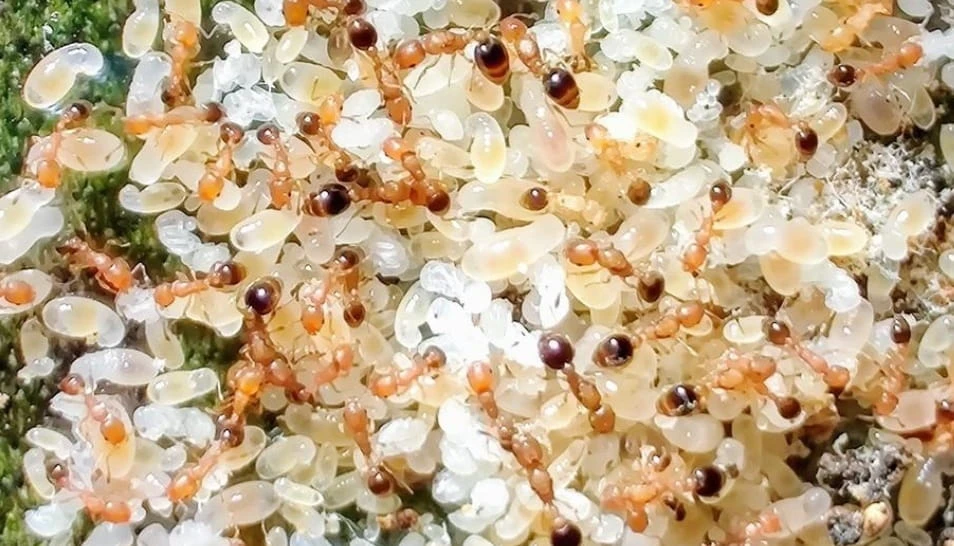


Cardiocondyla obscurior
Leave feedback on the product

Wybierz wariant produktu:
Individual variants may differ in price
Ask about the product

Administratorem danych osobowych jest PHU Krystian Solga. Przetwarzamy je w celu przesłania odpowiedzi na zapytanie. Więcej informacji dotyczących przetwarzania danych osobowych znajduje się w polityce prywatności.
Share the product card



Shipping cost for the selected product
The shipping cost applies to this product (in the selected variant - if applicable). It may change after adding other products to the cart.
Description
Cardiocondyla obscurior is a fascinating species known for its atypical behaviors. This species produces two forms of males: ergatoid males, which are wingless, and males with wings, between which there is continuous fighting within the nest. Studies conducted in 2003 and 2004 revealed that ergatoid males were produced throughout the year, and the ergatoid form required 9 days less for development from egg to adulthood. Cardiocondyla obscurior belongs to two distinct phenotypic and genetic lineages, which can undergo asymmetric hybridization. The first lineage is the Old World lineage, found in Taiwan, Japan, USA, Spain, and in greenhouses in Northern Europe. The second lineage has been discovered only in Brazil. Old World lineage colonies generally contain more queens and exhibit lower intraspecific aggression. This species shows a wide range of colony structures, reproductive behaviors, queen and male lifespans, and habitats. They nest in shrub and tree hollows, at heights ranging from 2 to 5 meters. Colonies do not exceed 500 workers. Cardiocondyla obscurior displays synanthropic tendencies.
- Difficulty: moderate
- Soldiers: no
- Size: queen 2.5 mm (0.1 in), worker 1.5-2 mm (0.06-0.08 in)
- Coloration: yellow-brown
- Distribution: Taiwan, Japan, USA, Spain, India, Brazil
- Nutrition: honey water and feeder insects
- Hibernation: none
- Temperature: 25-30°C (77-86°F)
- Recommended formicarium: preferably wooden (e.g., Foranto)
Reviews
If you've added a review and it doesn't appear on the list, it may be pending moderation.
Leave feedback on the product
 Log in with Google
