

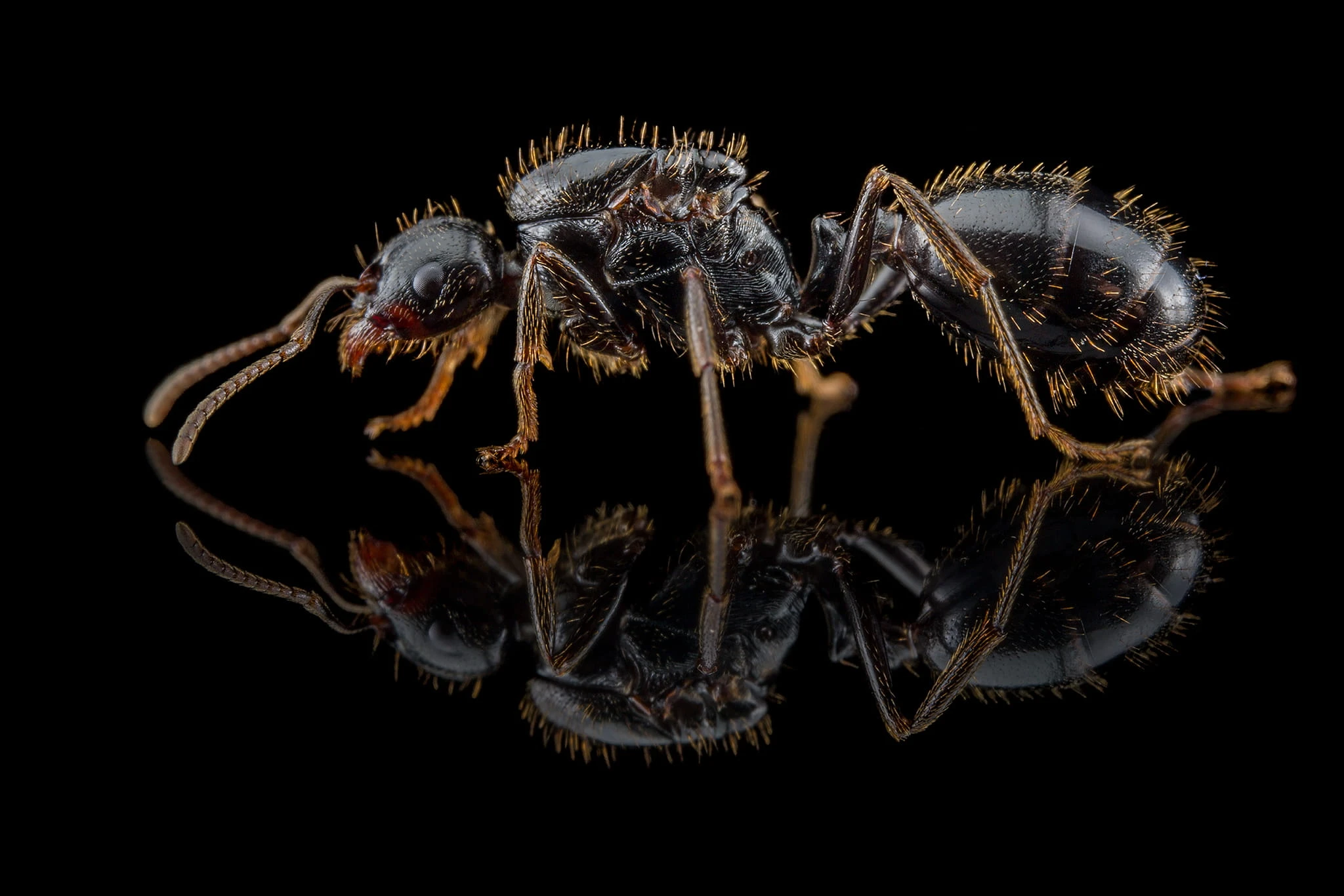


Messor wasmanni
Leave feedback on the product

Wybierz wariant produktu:
Individual variants may differ in price
Ask about the product

Administratorem danych osobowych jest PHU Krystian Solga. Przetwarzamy je w celu przesłania odpowiedzi na zapytanie. Więcej informacji dotyczących przetwarzania danych osobowych znajduje się w polityce prywatności.
Share the product card



Shipping cost for the selected product
The shipping cost applies to this product (in the selected variant - if applicable). It may change after adding other products to the cart.
Description
Messor wasmanni - Mediterranean Harvester Ants with Powerful Soldiers and Zinc-Infused Mandibles
The sun-drenched steppes and rocky hillsides of the Mediterranean basin represent a rugged environment where survival demands iron discipline and masterful subterranean engineering. It is here that Messor wasmanni evolved - a captivating species of harvester ants that has fascinated myrmecologists for generations through its elaborate division of labor, mighty polymorphic soldiers with allometric heads, and unique ability to create extensive underground granaries filled with seeds.
If you are looking for a species that combines spectacular caste polymorphism, straightforward dietary requirements, and exceptional resilience to beginner mistakes, Messor wasmanni is an outstanding choice. In our store, we ensure that every colony comes from verified sources and arrives in peak condition, ready to build a thriving empire in your home. Below is a comprehensive guide to their biology, nutrition, and husbandry requirements.
| Characteristic | Description |
|---|---|
| Scientific name | Messor wasmanni (Auguste Forel, 1890) |
| Difficulty level | Easy (ideal ants for beginners) |
| Distribution | Mediterranean Basin (xerothermic climate: Italy, Greece, Balkans, Near East, North Africa) |
| Queen size | 9-15 mm (0.35-0.59 in) |
| Worker size | Minor: 3-6 mm (0.12-0.24 in), Media: 7-9 mm (0.28-0.35 in), Major: 10-14 mm (0.39-0.55 in) |
| Soldier caste (Major) | Present (massive heads, cutting margins naturally reinforced with zinc) |
| Coloration | Glossy black, smooth gaster; queens and majors feature rich mahogany-red hues on the head and thorax |
| Diet | Seeds (granivory) and insect protein. Liquid sugars are completely unnecessary. |
| Nest temperature | 22-26°C (72-79°F), maximum 28°C (82°F) |
| Founding queen temperature | 20-22°C (68-72°F) in test tube (heating strictly prohibited) |
| Nest humidity | Gradient: brood chambers 50-70%, granary chambers 30-45% (dry!) |
| Outworld humidity | 30-50% (dry environment with a safe water drinker) |
| Hibernation (Diapause) | Recommended at 10-15°C (50-59°F) for 2-3 months (prevents queen reproductive exhaustion) |
| Recommended formicarium | 3D printed nests, modular acrylic nests with a dedicated dry granary |
| Escape barrier | Dry talcum powder |
Impressive Allometry and Zinc-Reinforced Mandibles
Watching a colony of Messor wasmanni develop is a true masterclass in insect biomechanics. This species is strictly monogynous, centered around a majestic queen that reaches 9-15 mm (0.35-0.59 in) in length. She is easily distinguished by her shiny, smooth gaster that lacks erect setae, complemented by deep mahogany-red tones across her head capsule and thorax. Queens can live for up to 20-25 years, nurturing societies that eventually count tens of thousands of workers.
The defining feature of this species is its continuous polymorphism and pronounced head allometry. Labor within the nest is precisely organized across three main castes:
- Minor Workers (3-6 mm / 0.12-0.24 in): The smallest workers, serving as dedicated nurses. They handle the direct care of the queen and tender brood (eggs, larvae, pupae) in the deepest humid chambers.
- Media Workers (7-9 mm / 0.28-0.35 in): Agile scouts and foragers forming the backbone of outworld logistics. They lay scent trails, explore new terrain, and transport gathered seeds back to the nest.
- Major Workers (10-14 mm / 0.39-0.55 in): The heavy tanks of the colony, displaying extreme head allometry. Their disproportionately large heads house powerful muscle bundles that drive their formidable mandibles.
Nanoindentation studies have revealed a remarkable evolutionary adaptation: the masticatory margins of major workers' mandibles are naturally biomineralized with heavy metals, primarily zinc. This zinc incorporation significantly enhances chitin hardness and wear resistance, allowing major workers to crush even the hardest seed coats and land snail shells without dulling their cutting edges.
The Secret of Ant Bread and Nutritional Protocol
Understanding harvester ant biology is the key to preventing common husbandry pitfalls. Because Messor wasmanni evolved in dry Mediterranean steppe habitats with scarce nectar sources, liquid sugars (such as honey or sugar water) are completely unnecessary. Offering sugary liquids carries unnecessary risks of drowning or digestive upsets. A balanced diet for Messor wasmanni rests on two simple pillars:
As seed-eating ants, their primary source of carbohydrates and lipids is a diverse seed mix. Provide both soft, oil-rich seeds (poppy, sesame, chia, flaxseed), easily cracked by smaller castes, and hard carbohydrate seeds (canary grass, millet, sorghum, dandelion seeds), processed by major workers. Workers carry seeds to humid brood chambers, masticating them with saliva rich in amylase enzymes. This enzymatic hydrolysis breaks down complex starches into digestible simple sugars, forming a nutrient-rich paste known as "ant bread" that nourishes the queen and growing larvae.
The second pillar is insect protein, essential for egg production and larval development. Follow these clear guidelines:
- For young colonies: Offer exclusively pre-killed and cut feeder insects (such as mealworms, roaches, or fruit flies) to eliminate stress and risk of injury to small worker forces.
- For mature colonies: Whole insects or live feeder insects can be provided, enabling keepers to observe coordinated group hunting strategies.
Avoid freezing or scalding feeder insects with boiling water, as this degrades essential protein structures and vitamins.
Granary Pharmacy and Symbiotic Defenses
Storing hundreds of seeds in warm subterranean galleries creates significant vulnerability to fungal pathogens. Messor wasmanni solves this challenge through a mutualistic relationship with actinobacteria, specifically Streptomyces globisporus. These beneficial bacteria colonize the ants' cuticle and nest surfaces, synthesizing potent antibiotics (including albomycin) that suppress mold growth and keep stored seeds fresh.
In nature, harvester ant nests also shelter specialized commensal organisms (myrmecophiles), including terrestrial isopods such as Lucasius andalusicus and Porcellionides myrmecophilus, which consume organic waste and help maintain clean conditions within the nest.
Husbandry Parameters - The Ecological "Why"
Recreating the Mediterranean microclimate requires a clear understanding of nest zoning. A proper formicarium must provide a defined moisture gradient:
- Brood Zone (50-70% humidity): Chambers near the hydration system. Adequate moisture prevents egg desiccation and ensures healthy larval molting.
- Granary Zone (30-45% humidity): Chambers furthest from the water reservoir must remain strictly dry. Why? Moisture in the granary triggers premature seed germination, which damages nest walls and produces lethal mold blooms.
- Outworld (30-50% humidity): A dry arena prevents food waste from rotting. Always provide a stable drinker packed with cotton to eliminate drowning risks.
Nest temperatures should be maintained between 22-26°C (72-79°F), with a daytime maximum of 28°C (82°F). Outworld basking spots can reach up to 30°C (86°F).
CRITICAL WARNING: A founding queen in a test tube must NEVER be artificially heated! Elevated temperatures accelerate her metabolism, rapidly depleting vital fat reserves before the first workers emerge. Keep founding queens at a stable room temperature of 20-22°C (68-72°F) in complete darkness.
Hibernation (diapause) is an integral part of their annual rhythm. Providing a 2-3 month rest period at 10-15°C (50-59°F) between November and February protects the queen from reproductive burnout and promotes vigorous colony growth in spring.
Recommended Formicarium and Outworld Setup
For housing Messor wasmanni, 3D printed nests are strongly recommended. They offer superior ventilation for granary chambers and complete resistance to chewing by powerful major workers. High-quality modular acrylic nests with distinct dry chambers are also an excellent choice.
Connect the nest to a spacious, dry outworld via secure vinyl tubing. Use dry talcum powder along the upper rim of the outworld as your primary escape barrier. Apply a thin layer with a soft brush onto clean glass or acrylic surfaces. Avoid PTFE (Fluon) barriers, as they are often ineffective for harvester ants. Complete your setup with quality ant keeping accessories to ensure optimal care.
Common Mistakes and How to Avoid Them
- Heating a founding queen: Keep the test tube at a comfortable 20-22°C (68-72°F) away from heat mats.
- Moving into a large nest too early: Wait until the colony fills the test tube (at least 15-30 workers) before introducing them to a formicarium.
- Flooding granary chambers: Hydrate only the brood section, keeping seed storage areas completely dry.
- Offering liquid sugar syrups: Rely on quality seed mixes and protein feeders, omitting honey and sugar water.
- Skipping winter diapause: Provide 2-3 months at 10-15°C (50-59°F) to ensure long-term queen longevity.
- Using improper escape barriers: Rely on dry talcum powder instead of liquid chemical barriers.
Getting Started with Your Colony
The founding stage requires patience. A newly mated queen needs quiet, dark, and undisturbed conditions. Excessive checking creates stress that may lead to brood cannibalism. Once the first generations of workers emerge and powerful majors join the workforce, the colony transforms into an organized and efficient society.
Are you ready to lead your own Mediterranean empire? Select your colony, choose a suitable 3D printed nest, and order Messor wasmanni today to begin an extraordinary ant keeping journey!
Reviews
If you've added a review and it doesn't appear on the list, it may be pending moderation.
Leave feedback on the product
 Log in with Google
