

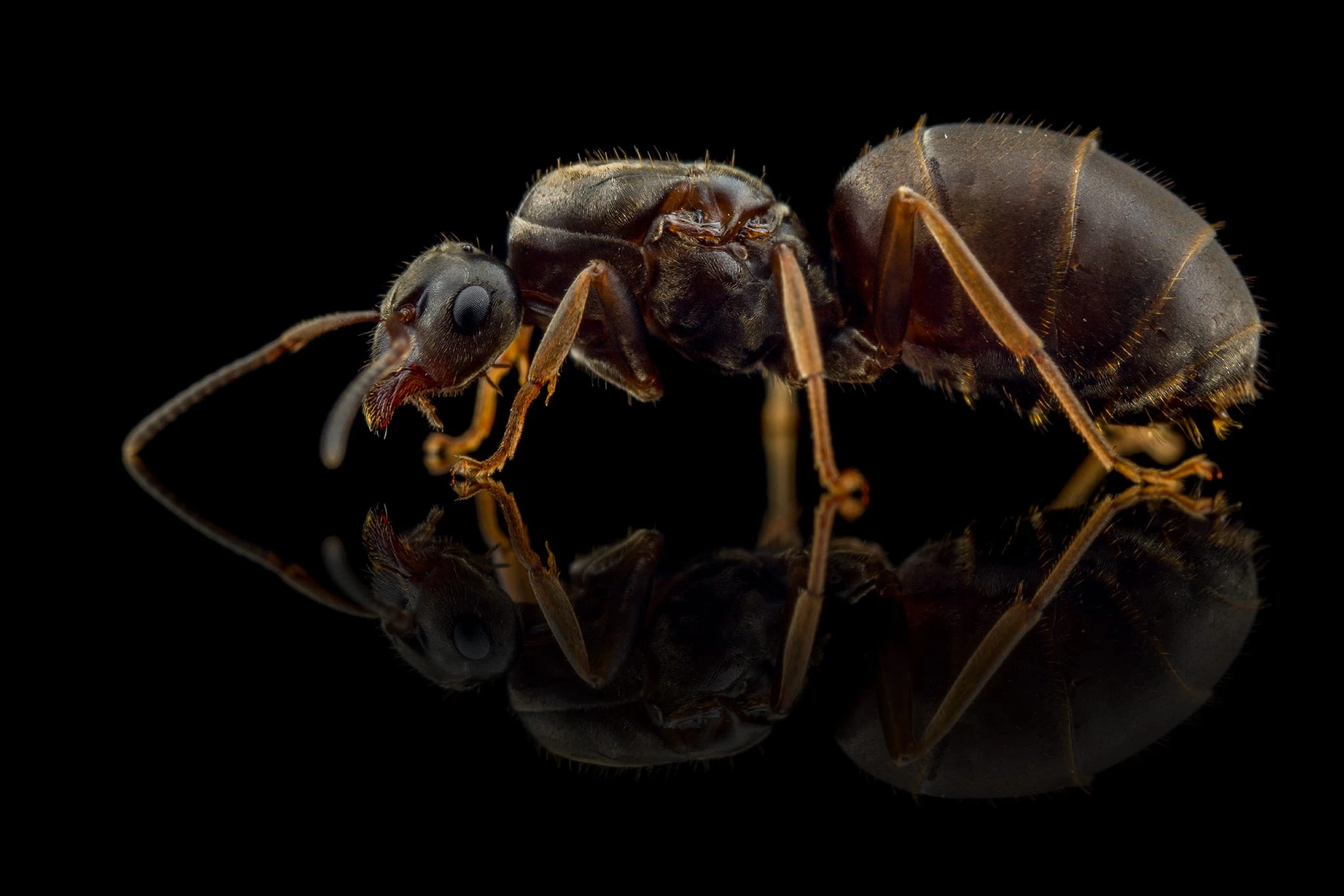


Lasius niger
Leave feedback on the product

Wybierz wariant produktu:
Individual variants may differ in price
Ask about the product

Administratorem danych osobowych jest PHU Krystian Solga. Przetwarzamy je w celu przesłania odpowiedzi na zapytanie. Więcej informacji dotyczących przetwarzania danych osobowych znajduje się w polityce prywatności.
Share the product card



Shipping cost for the selected product
The shipping cost applies to this product (in the selected variant - if applicable). It may change after adding other products to the cart.
Description
Lasius niger (Black Garden Ant)
Lasius niger, commonly known as the Black Garden Ant, is certainly a common species, but its ubiquity is not a sign of mediocrity, rather an evolutionary triumph. It is one of the most successful and adaptable insect species in the world. These synanthropic ants find themselves perfectly at home in human environments. Buying a colony of Lasius niger is not just acquiring "ordinary" ants - it is an investment in the most reliable, resilient, and educational platform to begin your journey deep into the fascinating world of myrmecology. By visiting our ant shop, you receive a product that makes a truly ideal original gift for a beginner ant fan.
The key advantage of this species is its legendary resilience. Lasius niger are the perfect ants for beginners - they can survive fluctuations in conditions and forgive almost all mistakes made by beginner keepers. This species is highly stress-resistant, tolerating a wide range of temperatures and humidity, making it a wonderful choice for people who are just learning how to successfully run an ant farm. Contrary to popular belief, Lasius niger is not a "boring" species. They are incredibly active and curious explorers. Colonies quickly recruit companions to a found food source, creating bustling "highways" in the arena. At the same time, they are completely safe for the keeper - workers do not have a stinger, and their small mandibles are incapable of causing harm.
| Feature | Description |
|---|---|
| Difficulty level | Very low, perfect for beginners |
| Nest type (Start) | Test tube with water reservoir |
| Nest type (Mature) | 3D printed, Dirt, Acrylic, Ytong, Plaster. They do well in any nest. |
| Humidity (Nest) | 50-70% (High) |
| Humidity (Arena) | 30-60% (Low) |
| Temperature (Nest) | 23-26°C (Optimal) / 18-27°C (Room) |
| Temperature (Arena) | 18-28°C (Room) |
| Diet (Carbs) | Sugar water or honey (Constantly available) |
| Diet (Protein) | Feeder insects (2-3x a week) - dead or live food for ants |
| Hibernation | Recommended (2-4 months, in stable temp. 5-10°C) |
| Size (Queen) | 7-10 mm |
| Size (Worker) | 3-5 mm |
| Colony type | Monogynous (One queen) |
| Queen lifespan | 15-29 years |
Biology and Systematics
Understanding the origin of the species is crucial to appreciating its biology. It has a nearly global range (Europe, Asia, America) and is a master of adaptation. The colony consists of specialized castes:
- Queen: The heart of the colony (7-10 mm), shiny dark brown. She is a phenomenon in the insect world, able to live in captivity for up to 15-29 years.
- Workers: They constitute the workforce (3-5 mm). They can live up to 4 years in stable laboratory conditions.
Lasius niger is a monogynous species (one queen), although the colony founding phase can occur through pleometrosis, from which ultimately only the strongest queen survives. Proper ant colony development occurs very quickly after the first hibernation.
Husbandry Instructions - From Test Tube to Formicarium
Founding Phase (Claustral)
The queen raises the first workers from her own reserves - she seals herself in a test tube and does not need feeding until the first workers (nanitics) appear. The most important thing during this time is complete peace and darkness.
Equipment Requirements
When the first workers appear, you can place the test tube opening into a small arena. Moving to a larger formicarium should take place when the colony numbers a minimum of 20-50 workers (the more, the better!). It is worth investing in a professional formicarium. Due to excellent adaptive abilities, Lasius niger do well in any type of nest, e.g., 3D printed nests, dirt, plaster, aerated concrete, or acrylic. Remember to always apply an anti-escape barrier (e.g. talcum powder) on the edges of the arena, as these are agile and curious ants. We have comprehensive formicarium equipment and essential gear for a beginner myrmecologist.
Environmental Conditions (Humidity and Temperature)
Black garden ants prefer a stable nest humidity of 50-70%. A nest that is too dry forces workers to move the brood to the arena towards the water feeder. Maintaining humidity in the formicarium is crucial. A temperature of 23-26°C will significantly accelerate brood growth, however, these ants also do great in lower temperatures (even 18+°C). It is best to use a heating cable or mat under a part of the nest to create a thermal gradient.
Feeding in Captivity
A proper diet for an ant colony is the foundation of its success. In nature, Lasius niger are sophisticated farmers tending aphids for honeydew. In domestic keeping, ants do not need aphids - their carbohydrate diet is fully satisfied by constantly provided sugars (e.g. sugar water or honey). Larval development and egg production by the queen in turn requires protein, so regularly provide feeder insects. A large and efficient colony can successfully be given live food for ants, while for smaller colonies it is definitely recommended to give dead, cut or gently crushed insects.
Hibernation - Time of Rest
This is the most important element of keeping Lasius niger. These ants most often enter a state of dormancy (diapause) in the fall, regardless of the ambient temperature - they are controlled by an internal biological clock. So that the queen can start laying eggs again in the spring and to avoid the colony collapsing in the long run, it is recommended to cool the insects for 2-4 months from the moment they fall into stagnation. Provide them with a stable temperature of 5°C to 10°C (e.g. in a refrigerator) during this period, monitoring only hydration.
Most Common Keeping Problems
- The queen is not laying eggs: This is usually due to stress (frequent checking), the ongoing diapause period, lack of protein, too low a temperature, or too large a nest (a lone queen should stay in a test tube).
- The colony is growing very slowly: Ensure better nest heating (23-26°C) and a larger portion of protein food.
- Ants do not want to move from the test tube to the formicarium: The colony is probably still too small and feels safer in a tighter environment. Be patient, they will relocate on their own in time.
- Workers carry larvae to the arena (to the water feeder): The nest is too dry, you must increase its hydration.
- Appearance of mold: Regularly clean up food leftovers, improve ventilation, and in the case of using cork nests, do not water them as heavily.
Buying Lasius niger is the ideal first step into the extraordinary micro-world. It is a species that wonderfully forgives the mistakes of a beginner myrmecologist, offering the fullness of fascinating social behaviors - from aggressive scouting to systematic and clean husbandry with beautifully arranged brood.
Reviews
If you've added a review and it doesn't appear on the list, it may be pending moderation.
Leave feedback on the product
 Log in with Google
