

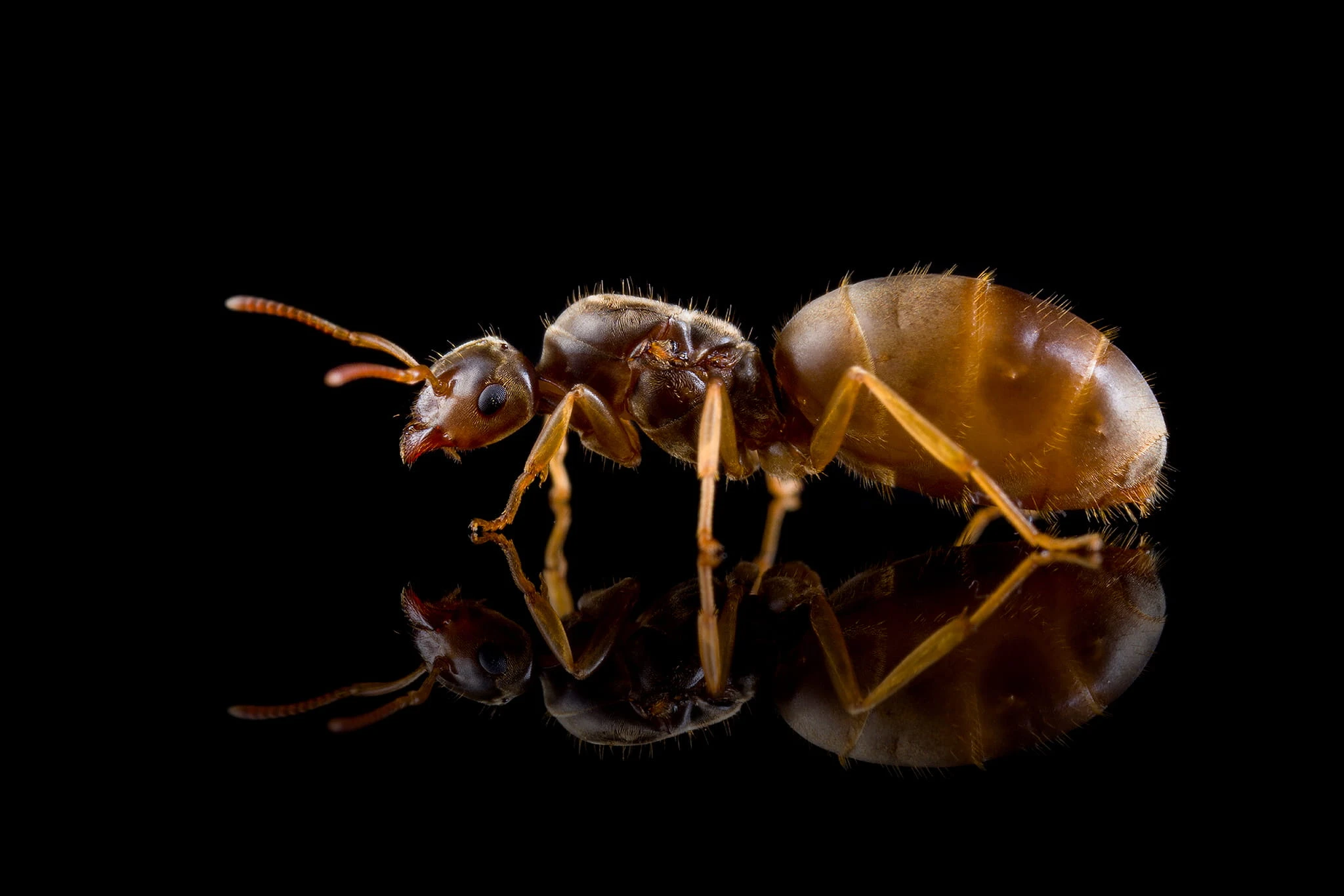


Lasius flavus
Leave feedback on the product

Wybierz wariant produktu:
Individual variants may differ in price
Ask about the product

Administratorem danych osobowych jest PHU Krystian Solga. Przetwarzamy je w celu przesłania odpowiedzi na zapytanie. Więcej informacji dotyczących przetwarzania danych osobowych znajduje się w polityce prywatności.
Share the product card



Shipping cost for the selected product
The shipping cost applies to this product (in the selected variant - if applicable). It may change after adding other products to the cart.
Description
Lasius flavus (Yellow Meadow Ant) - The Hidden Golden Jewel of Meadows
Lasius flavus (Fabricius, 1782), commonly known as the yellow meadow ant, is one of the most fascinating representatives of the ant family (Formicidae) in the Palearctic region. This remarkable organism is a textbook example of evolutionary adaptation to a highly specialized, subterranean lifestyle. Due to their calm nature, great resilience to beginner mistakes, and striking amber-yellow coloration of the workers, they are fantastic ants for beginners who appreciate tranquility and the meditative observation of this captivating superorganism.
| Feature | Description |
|---|---|
| Scientific name | Lasius flavus |
| Difficulty level | Easy (for patient keepers) |
| Hibernation (Diapause) | Yes (from October to March, at 5-10°C / 41-50°F) |
| Dimensions | Queen: 7-9 mm, Workers: 2-4 mm |
| Coloration | Queen chocolate-brown to black with a pale underside, workers amber-yellow to pale gold |
| Nest temperature | 20-25°C (68-77°F), outworld: 18-28°C (64-82°F) |
| Nest humidity | 50-70% (they require high nest humidity!) |
| Diet | Sugars (e.g. sugar-water or honey-water) and prekilled feeder insects |
| Recommended nest type | 3D printed nests work best, as well as soil and gypsum setups. |
Phenomenon of the Subterranean Kingdom
Unlike the well-known and ubiquitous black garden ant (Lasius niger), the yellow meadow ant has almost entirely abandoned above-ground exploration. Despite being widespread across meadows and pastures, most people have never seen a wild worker of Lasius flavus. These ants move almost exclusively through a closed network of subterranean galleries. This ecological retreat underground led to the loss of protective pigmentation in workers, giving them an eye-catching amber color, as well as a severe reduction in compound eyes - these ants are photophobic and rely entirely on sophisticated chemical communication. Queens (which can live up to 22 years!) must leave the nest for mating flights on hot summer days, retaining full vision and dark chitinous armor.
Symbiosis and Advanced Underground Farming
In natural conditions, fully abandoning surface foraging forced these ants to become true farmers. In underground chambers built around exposed grass root systems, colonies cultivate massive, clonal herds of root aphids (such as Geoica utricularia). This trophobiotic relationship mirrors highly organized farming: ants protect aphids from predators, clean them of pathogenic fungal spores, and in winter carry aphid eggs into deep brood chambers for safekeeping. In return, aphids provide nutritious honeydew. For this reason, an adequate ant colony diet in captivity must strictly rely on energy-rich carbohydrate solutions (e.g. honey-water), supplemented with essential protein from feeder insects for developing larvae.
Environmental Requirements and Proper Humidity
Having evolved in groundwater coolness and soil insulation, their bodies lost the thick waxy cuticular layers typical of arboreal insects that prevent desiccation. Because this species naturally lives in deep, damp soil, maintaining nest humidity at 50-70% inside brood chambers is absolutely critical. A dried-out nest can wipe out a colony within just a few dozen hours! Remember never to heat a founding queen during the claustral stage. Raise the temperature to the optimal range of 20-25°C (68-77°F) using small heat mats only once there are enough workers to move the colony from the test tube into the main nest, simulating a sun-warmed soil mound. Keep outworld humidity lower (30-50%).
Evolution Towards Bioactive Terrariums
If you wish to recreate a natural ecosystem with real soil, a bioactive setup with a drainage layer (lava rock, LECA clay, activated charcoal) separated from heavy sand-loam substrate is an exceptional solution. In such setups, adding tiny springtails and small isopods as a cleanup crew is essential. They consume mold, yeasts, and food leftovers, protecting your colony from pathogen outbreaks. In the wild, Lasius flavus frequently lives in commensal symbiosis with Platyarthrus hoffmannseggii (the ant woodlouse). These blind, snow-white isopods inhabit nest tunnels unharmed thanks to chemical camouflage, feeding on ant frass, chitin fragments, and fungal hyphae to maintain nest hygiene.
Common Mistakes and How to Avoid Them
- Heating a solitary queen at the start - Overheating a founding queen rapidly depletes her fat reserves. Start gentle heating only after transferring a developed colony into the main nest.
- Skipping hibernation - Keeping temperate ants requires diapause. Skipping winter rest (October-March at 5-10°C / 41-50°F) severely weakens the queen and impairs brood production.
- Offering overly large live prey - Lasius flavus preys on harmless aphids, and their defenses are geared for retreat. Dropping large, kicking insects causes immense stress. Always offer prekilled (cut or frozen) feeders.
- Drowning in the outworld - Small workers (2-4 mm) easily get trapped by surface tension. Offer liquid sugars on dense feeders or test-tube drinkers secured with cotton.
- Insufficient nest humidity - Deep-soil species cannot tolerate dry nests. Hydrate the substrate steadily and choose escape-proof 3D printed nests to prevent desiccation and escape.
Immerse yourself in the fascinating world of these remarkable underground farming ants! In our ant shop, you will find healthy, carefully selected colonies, top-grade ant keeping accessories, and quality live food. Check out our offer and bring a piece of living nature into your home today!
Reviews
If you've added a review and it doesn't appear on the list, it may be pending moderation.
Leave feedback on the product
 Log in with Google
