

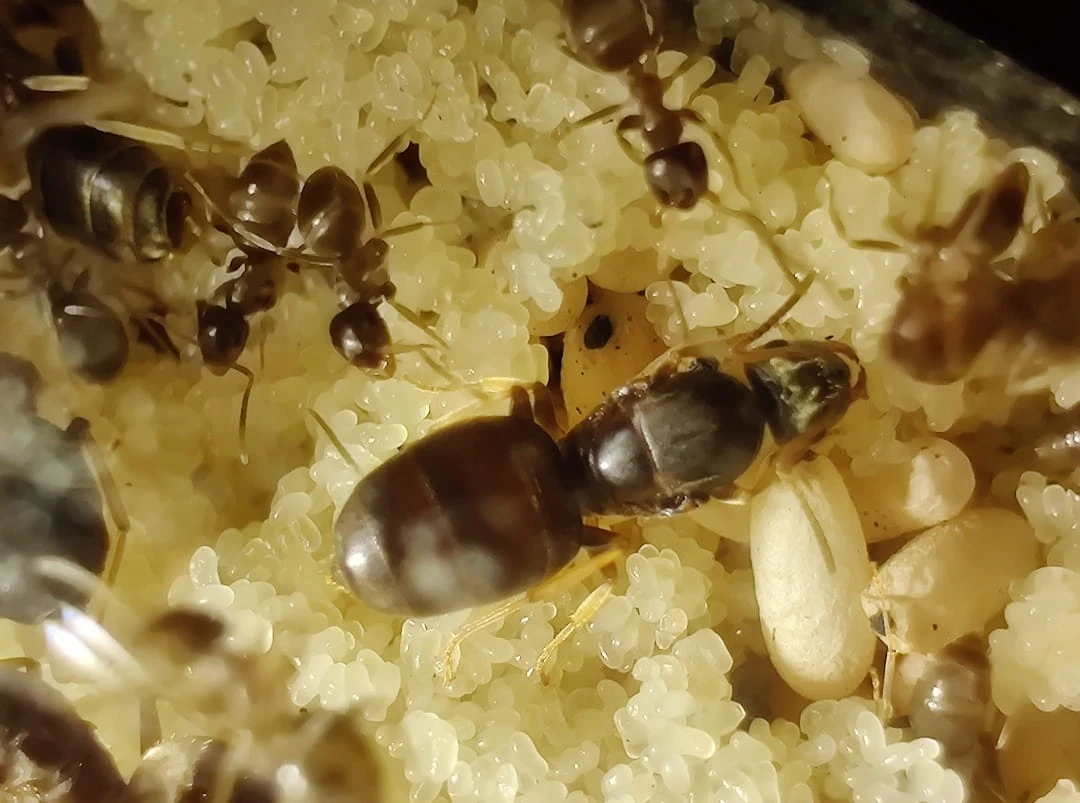
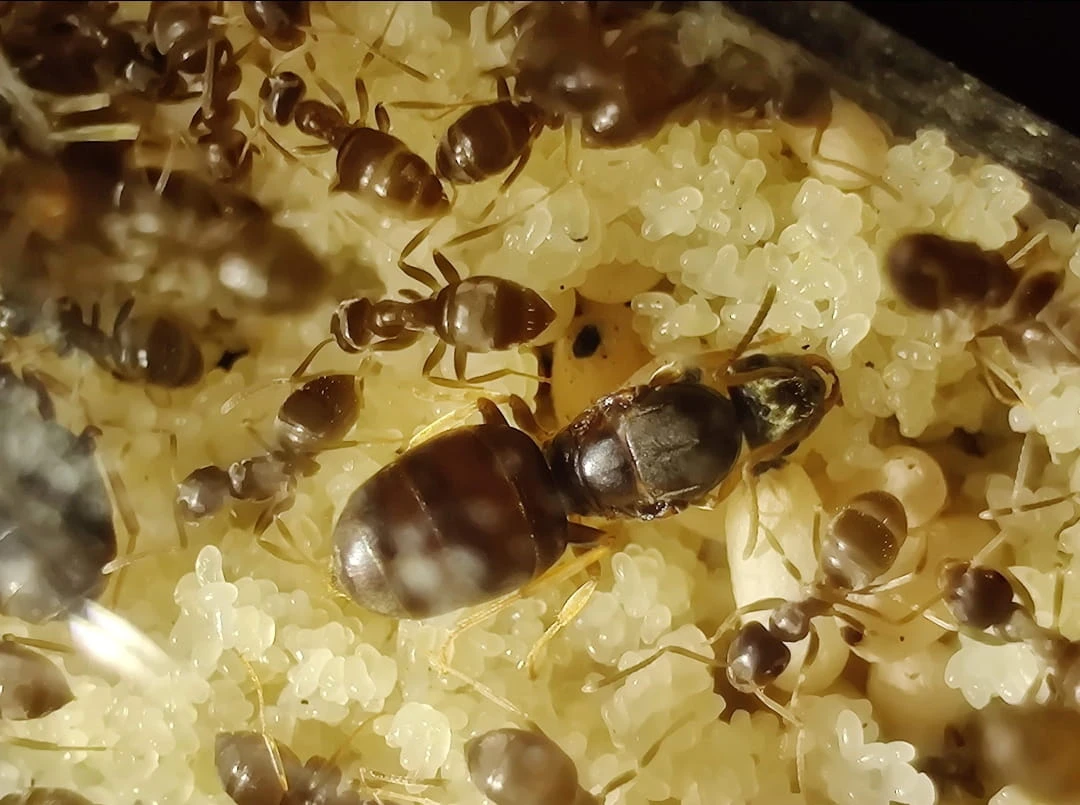
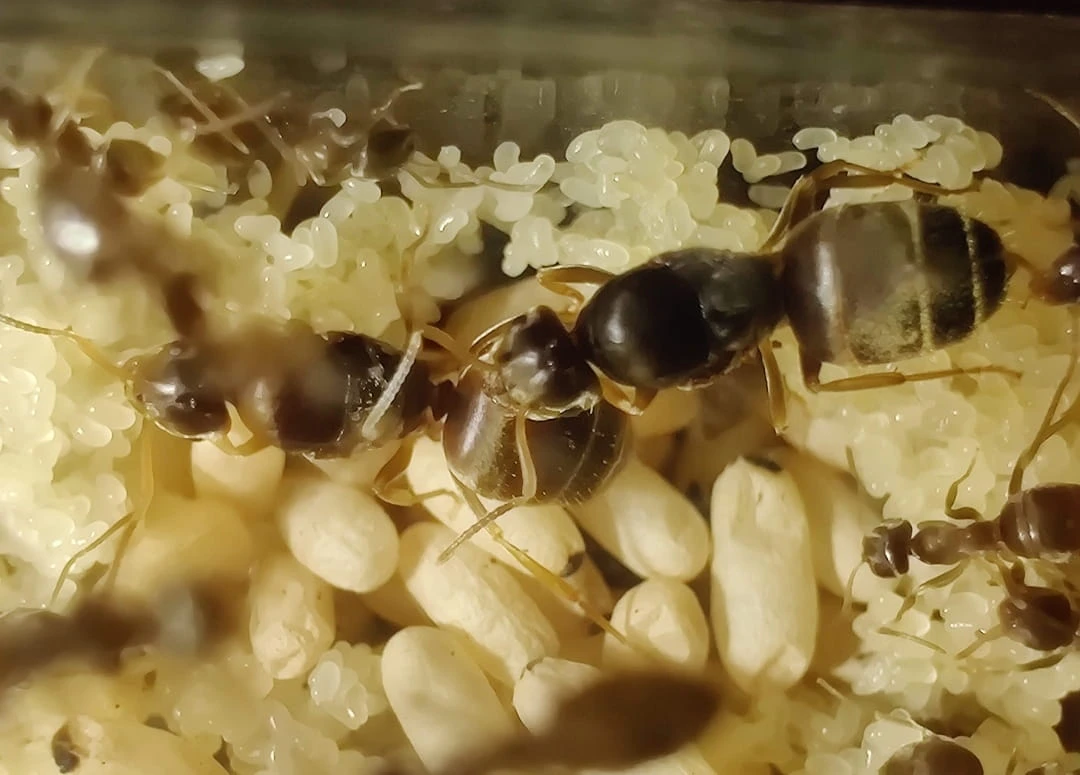
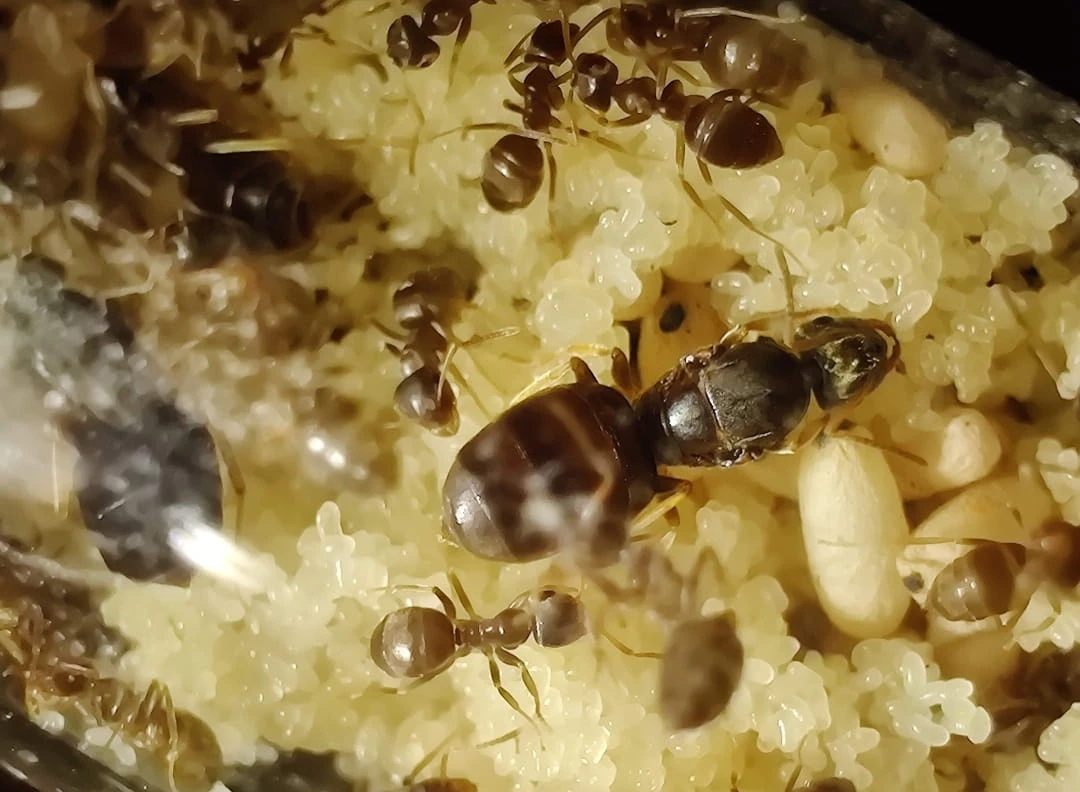


Good morning, the ants arrived in perfect condition. The owner of the site is a wonderful person who responds immediately to any questions. The only complaint is that the courier took 12 days to deliver.
Lasius neglectus
Leave feedback on the product

Lasius neglectus
€18.26
Price
€18.26
Regular price:
€18.26
0%
The lowest price during 30 days prior to the reduction:
€152.23
-88%
The promotion runs until %s
€18.26
Price
€18.26
Regular price:
€18.26
0%
The lowest price during 30 days prior to the reduction:
€152.23
-88%
The promotion runs until %s
Select product variant:
Individual variants may differ in price
in stock
Ask about the product

Lasius neglectus
Administratorem danych osobowych jest PHU Krystian Solga. Przetwarzamy je w celu przesłania odpowiedzi na zapytanie. Więcej informacji dotyczących przetwarzania danych osobowych znajduje się w polityce prywatności.
Share the product card



Shipping
from
€2.26
-
InPost Courier
(Poland)
from
€2.26
-
InPost Courier
(Poland)
Shipping cost for the selected product
The shipping cost applies to this product (in the selected variant - if applicable). It may change after adding other products to the cart.
Description
Description
Lasius neglectus, also known as the invasive garden ant, inhabits Anatolia, a region in Asia Minor encompassing Turkey, Uzbekistan, and adjacent territories. Lasius neglectus has gained prominence as the only invasive ant species known to have successfully and permanently established itself in Poland. In their native habitat, these ants undergo standard nuptial flights and form large, polygynous colonies that actively compete with one another. In newly invaded territories, however, this behavior shifted dramatically: the ants began inbreeding and abandoned intra-species competition, giving rise to massive supercolonies comprising thousands of queens, millions of workers, and spanning vast territories.
This species possesses distinct competitive advantages over native European ant species. A comparative study on aphid farming efficiency between Lasius neglectus and the native Lasius grandis revealed that Lasius neglectus attended significantly larger numbers of aphids, harvesting more than twice the volume of honeydew (exceeding 2 kg from a single tree!). Furthermore, their outstanding foraging recruitment allows them to mobilize masses of workers to food sources far faster than even the common black garden ant (Lasius niger).
Despite being an ecologically significant invasive species, Lasius neglectus generally tolerates neighboring ant colonies. Heightened aggression is primarily directed toward Lasius grandis, Lasius emarginatus, and Lasius cinereus, driven by overlapping ecological niches and differences in worker size. Conversely, well-established native dominant species such as the jet black ant (Lasius fuliginosus) and Liometopum microcephalum are fully capable of defending their territories and holding their ground against Lasius neglectus.
Like many successful tramp ants, they thrive in urbanized environments, frequently nesting inside buildings, beneath paving slabs, and in landscaped gardens where aphid-rich host plants are abundant. In captive setups, they are exceptionally hardy and forgiving, adapting seamlessly to almost any formicarium design, accepting various standard food sources, and tolerating a broad range of temperatures.
Reviews
Reviews
Number of ratings: 50
If you've added a review and it doesn't appear on the list, it may be pending moderation.
Leave feedback on the product
Très content de ma commande. Les fourmis sont arrivées en tres bonne santé. Je recommande!
4 Königinnen mit 400 Arbeiterinnen gekauft. Sind nach 9 Tagen mit DPD angekommen. Keinerlei Verluste, haben sofort Zucker und Honig getankt. Leider ohne Brut. 9/10. Die nächste Bestellung folgt im November
 Log in with Google


Lorenzo Dr.Ferrari