

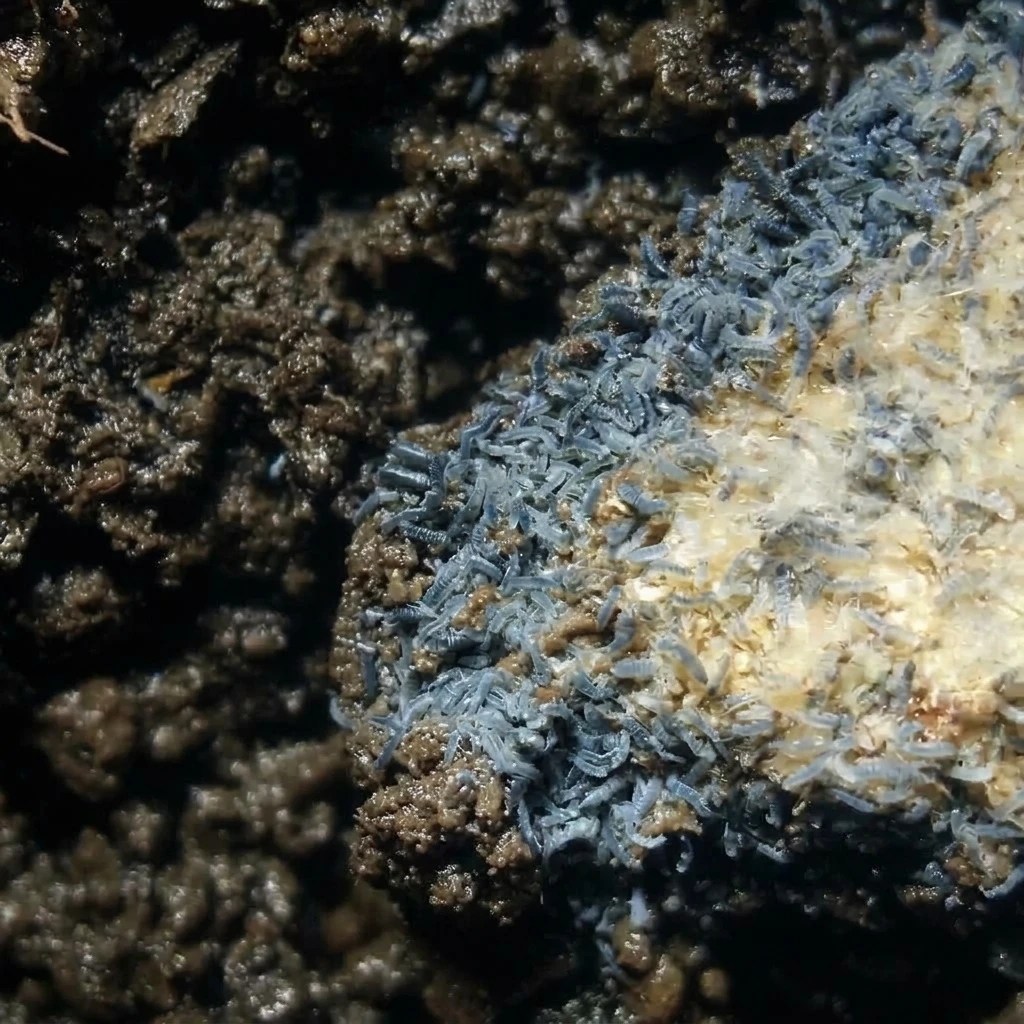
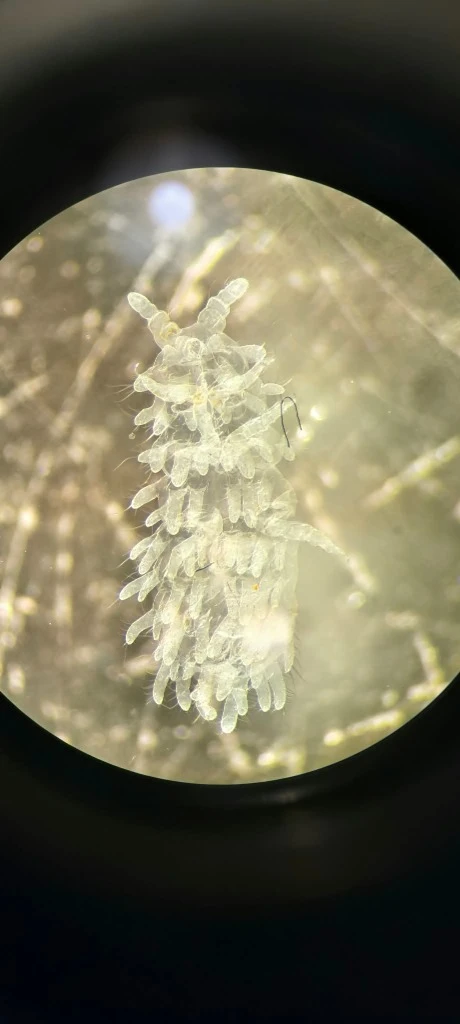


Proisotoma minuta (ex. Blue Podura) blue springtails
Leave feedback on the product

Select product variant:
Individual variants may differ in price
Ask about the product

Administratorem danych osobowych jest PHU Krystian Solga. Przetwarzamy je w celu przesłania odpowiedzi na zapytanie. Więcej informacji dotyczących przetwarzania danych osobowych znajduje się w polityce prywatności.
Share the product card



Shipping cost for the selected product
The shipping cost applies to this product (in the selected variant - if applicable). It may change after adding other products to the cart.
Description
Proisotoma minuta (ex Blue Podura) - Blue Revolution and Resolute Mold Hunter for Bioactive Vivariums
A unique, iridescent steel-blue springtail with a compact body structure that completely redefines biological protection standards in humid microhabitats. Unlike common white species, this highly specialized hexapod displays strict selective mycophagy, actively tracking down and destroying spores and mycelium of destructive soil-borne phytopathogens. Its micro dimensions simultaneously make it the most coveted, safe live micro-food for dart frogs and micro-frogs right after metamorphosis and emergence onto land, micro-reptiles, and early spiderling stages.
- Targeted biocontrol: Preferentially grazes on destructive Rhizoctonia solani mycelium, protecting root systems of orchids, mosses, and tropical flora against fungal rot.
- Ultra Micro phenotype: Adult specimens measuring just 0.8-1.3 mm and young nymphs sized 0.3-0.5 mm offer unbeatable live micro-food for micro-frogs emerging onto land as well as tiny reptile hatchlings and spiderlings.
- Metallic steel-blue sheen: High visual contrast against dark and light substrates alike, facilitating ongoing headcount checks and active feeding observation.
- Stable sexual reproduction: Females deposit eggs in dense, clustered packets of 30-50 eggs, allowing effortless monitoring of colony health.
Taxonomic Identification at the Polish Academy of Sciences
In the terrarium trade under the trade name "Blue Podura", random and unclassified hexapod varieties frequently circulate. Our breeding strain has undergone morphological verification at the Polish Academy of Sciences.
We guarantee the biological purity of our strain - you are purchasing strictly selected Proisotoma minuta with documented capacity in phytopathological studies to suppress Rhizoctonia solani mycelium, completely free from wild or accidental adulterations.
| Origin and distribution | Cosmopolitan species, Holarctic zone, common in nutrient-rich leaf litter and humus across Europe |
| Adult specimen size | 0.8 - 1.3 mm (adults), 0.3 - 0.5 mm (juvenile stages) |
| Coloration and phenotype | Greyish-brown to distinct steel-blue with metallic luster |
| Reproductive model | Strictly sexual (amphigonic with spermatophore transfer) |
| Egg deposition | Dense clusters of 30-50 milky-white eggs visible without magnification |
| Optimal breeding temperature | 18 - 23°C (64 - 73°F, room temperature, optimum 20 - 22°C / 68 - 72°F) |
| Thermal thresholds | Reproduction drops above 24°C (75°F), embryo mortality above 28°C (82°F) |
| Required humidity | 80 - 95% (consistently moist microclimate, cutaneous respiration) |
| Recommended substrate | Any consistently moist substrate (natural soil, specialized springtail substrate, lump charcoal, calcium clay) |
| Diet and ecological role | Consumes mold, destructive soil fungi, decomposing botanical matter, and food leftovers |
| Vivarium role | Bioactive clean-up crew (CUC) and live micro-food (micro-feeders) |
Choosing your variant and first steps with the incoming colony
Selecting the right culture size depends on your enclosure volume and specific breeding goals. Smaller starter portions perform splendidly as laboratory seed cultures for personal propagation or for safe inoculation of humid incubation boxes. Larger colonies are emphatically recommended for immediate release into established tropical setups, where prompt dispersion of hundreds of microscopic custodians eliminates the hazard of rapid mold outbreaks on fresh wood and cork bark.
- Step 1: Temperature adjustment. Upon parcel collection, allow the sealed box to rest at room temperature for roughly 30-60 minutes so springtails recover from transit vibration torpor.
- Step 2: Preparing the inoculation zone. Select the most shaded, humid zone in the terrarium, ideally beneath moist sphagnum moss cushions, under flat cork bark pieces, or right beside plant roots.
- Step 3: Transferring to the vivarium. We usually ship our springtails in moist natural soil. Simply tip and transfer the contents of the shipping tub onto the selected humid area in your terrarium or fresh breeding tub, and you are done.
- Step 4: Initial feeding. Following inoculation, sprinkle a microscopic pinch of specialized springtail food right beside the release zone.
Why was Proisotoma minuta historically called Blue Podura?
For several decades across international hobby forums and commercial reptile trade, this species circulated under the colloquial, confusing trade label "Blue Podura". This trade moniker harkened back to the historic Linnaean genus Podura, which originally grouped nearly all known soil microarthropods. Modern morphological examinations, chaetotaxy analysis of the furca, and full mitogenome sequencing (GenBank MW874475) definitively confirmed that this springtail belongs to the family Isotomidae and subfamily Proisotominae. The genuine taxonomic name assigned by Swedish entomologist Tycho Tullberg in 1871 is Proisotoma minuta. Despite scientific revision, the colloquial label ex Blue Podura endures worldwide as an instantly recognizable emblem of this sought-after blue strain.
How does it conquer hazardous pathogens and selectively consume Rhizoctonia solani?
Proisotoma minuta demonstrates documented selective mycophagy in plant pathology studies, making it an invaluable asset in integrated pest management inside closed vivaria. In strict food choice assays, these springtails aggressively and preferentially graze on hyphae and spores of Rhizoctonia solani - a virulent pathogen notorious for damping-off disease, rhizoctonia root rot, and shoot dieback. Remarkably, a diet based on this pathogen actively stimulates female fecundity. At the same time, these springtails instinctively avoid beneficial symbiotic fungi of the genus Trichoderma, which shield root zones via chemical deterrents. This achieves a sanitary synergy unattainable with ordinary white soil varieties.
Which substrate and enclosure conditions ensure peak population growth?
Virtually any substrate that maintains steady capillary moisture is suitable for housing this species. For springtails themselves, plain natural soil or our moisture-retentive vivarium mix is fantastic. We cultivate our own master colonies directly on soil, as they proliferate quickest and reach peak densities in it. The only trade-off with soil cultures is that retrieving specimens for feeding micro-predators or splitting fresh starter tubs requires a little more patience. If your primary objective is routine, rapid harvesting for live feeder batches, mineralized springtail clay or classic lump charcoal proves exceptionally convenient for tapping or rinsing out specimens. Ambient room temperatures between 18-23°C (64-73°F) and 80-95% humidity deliver superb results.
Why is this an indispensable live micro-food for dart frogs and miniature reptiles?
Thanks to its diminutive body stature, Proisotoma minuta addresses a critical feeding bottleneck in raising the most delicate terrarium predators. Young nymphs measuring mere 0.3 mm and adults capped at 1.3 mm present the ideal introductory prey fraction for micro-frogs and poison dart frogs of the genera Ranitomeya, Oophaga, Andinobates, and Excidobates right after metamorphosis and emergence onto land, for which even petite fruit flies prove too large. They also offer an enticing hunting stimulus for miniature gecko hatchlings like Sphaerodactylus or Lepidodactylus, as well as early spiderling molts (L1-L3). Furthermore, springtails that ingest natural substrate minerals enrich their digestive tracts with calcium (biological gut-loading), shielding developing amphibians from metabolic bone disease (MBD).
Common mistakes in breeding and how to avoid them
- Overfeeding and culture crashes: Large heaps of uneaten food dumped into warm, humid containers ferment swiftly and nurture aggressive anaerobic molds. Carbon dioxide settling on the bottom suffocates the colony within 24-48 hours. Offer tiny dust pinches every 2-4 days, strictly after preceding rations are fully cleared.
- Overheating the culture container: Temperatures climbing past 24°C (75°F) drastically impair oviposition in this sexually reproducing species, while sustained heat above 28°C (82°F) leads to heavy mortality. Keep culture tubs away from heat lamps and direct sunlight.
- Substrate dehydration: These springtails breathe solely across their delicate cuticle (cutaneous respiration), necessitating continuous microscopic moisture films. In dry air, specimens succumb to fatal dehydration within minutes. Maintain gentle, routine substrate misting.
- Lack of regular ventilation: Sealed containers without micro-vents require cracking the lid once or twice weekly for several seconds to release accumulated metabolic carbon dioxide.
How can Proisotoma minuta be identified under a magnifier or microscope?
This species features a complete visual apparatus of 8+8 ocelli on head flanks, readily distinguishing it from eyeless subterranean forms. The furca displays a manubrium with symmetrical 1+1 ventral setae, a dens bearing six ventral setae, and a distinctive mucro terminated by exactly three teeth. The cuticle carries short, smooth setae, and body coloration ranges from steel-grey to deep metallic blue.
Does this species reproduce parthenogenetically like white springtails?
No. In contrast to common Folsomia candida, which reproduces clonally without males, Proisotoma minuta preserves an obligatory sexual reproduction model (amphigony). Males deposit microscopic stalked sperm packets (spermatophores) onto damp ground, which are subsequently retrieved by receptive females. Inseminated females lay eggs in tight, communal clusters of 30 to 50 eggs, simplifying reproductive tracking.
Can Proisotoma minuta coexist with other bioactive clean-up crew species?
Yes, it excels within multi-tiered bioactive teams. It synergizes splendidly with larger white springtails alongside all kinds of isopods and millipedes. Larger detritivores break coarse leaf litter and decaying timber down, while miniature Proisotoma minuta ventures into tightest bark crevices and root fibers, devouring mold spores and debris inaccessible to larger fauna.
What should the culture be fed under home maintenance?
Staples for home culture tubs include inactive brewer yeast powder, powdered spirulina, dried slime mold, and balanced commercial micro-food enriched with minerals. Within established bioactive enclosures, springtails self-sustain completely on inhabitant waste, shed skins, molts, and fungus hyphae.
Seeking uncompromising biological hygiene and reliable live micro-food for your vivarium? Choose your preferred culture volume, add Proisotoma minuta to your cart, and build a self-regulating ecosystem protected against plant-destroying fungal pathogens!
Shipping and Live Arrival Guarantee
During cold weather, we include a professional HeatPack warming pad to maintain the proper transit temperature.
Live animals are shipped exclusively Monday through Thursday to prevent parcels from being held over the weekend.
We take full responsibility for safe transit, guaranteeing that your animal arrives healthy and in top condition.
Reviews
If you've added a review and it doesn't appear on the list, it may be pending moderation.
Leave feedback on the product

