

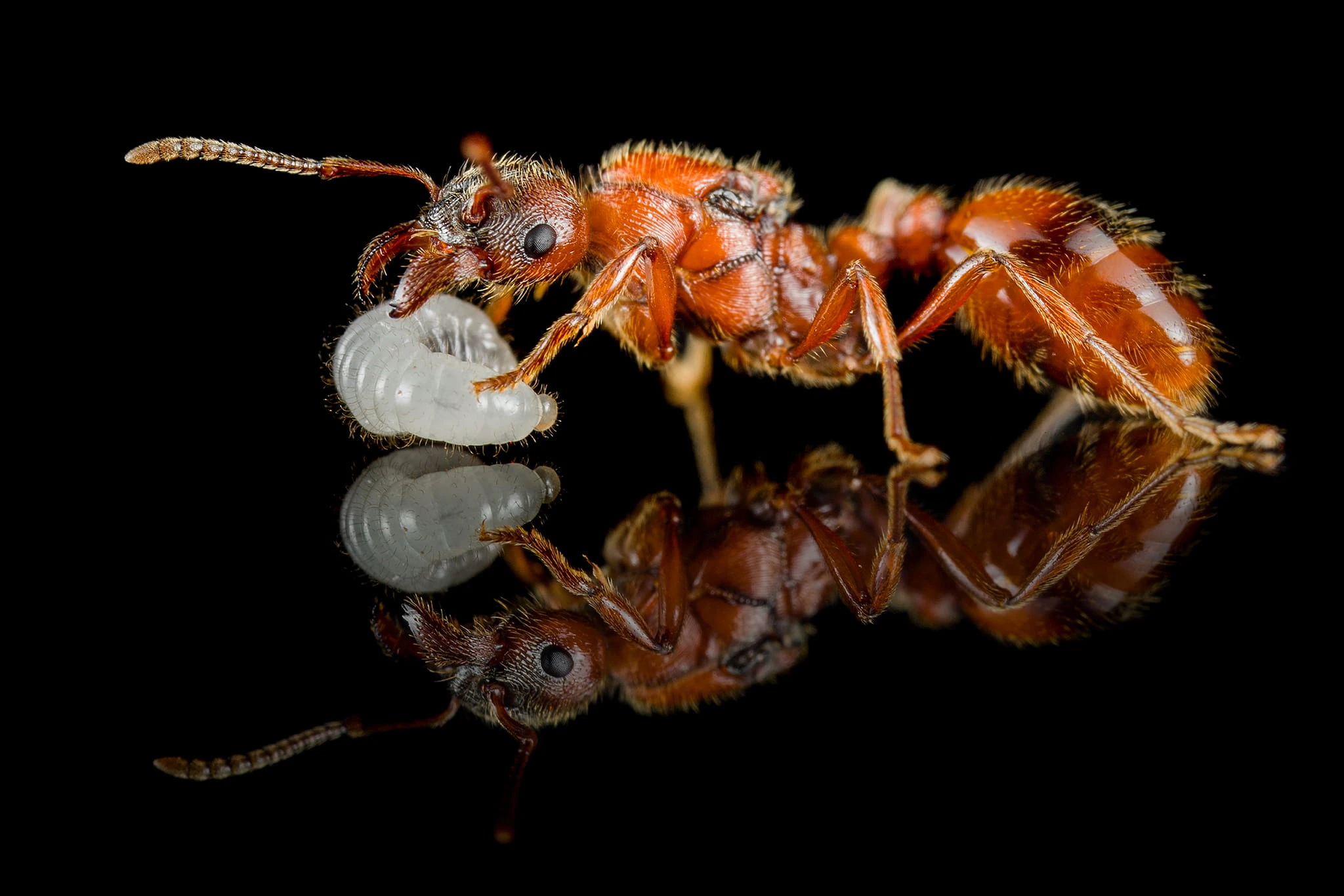


Manica rubida
Leave feedback on the product

Wybierz wariant produktu:
Individual variants may differ in price
Ask about the product

Administratorem danych osobowych jest PHU Krystian Solga. Przetwarzamy je w celu przesłania odpowiedzi na zapytanie. Więcej informacji dotyczących przetwarzania danych osobowych znajduje się w polityce prywatności.
Share the product card



Shipping cost for the selected product
The shipping cost applies to this product (in the selected variant - if applicable). It may change after adding other products to the cart.
Description
The largest red ant and the only representative of its genus in Europe. One of the largest ant species in Poland. It is a mountain species and is found only in the southern part of the country. They inhabit mainly sandy areas and prefer open, sunny habitats. They are often found in parking lots or forest edges, where they usually compete with Formica cinerea. They also like to live near lakes or rivers, although they can be found far from them.
They have a very strong sting, sometimes leaving swelling for several days. Stings are usually painful and can itch or burn. Some even compare their stings to those of hornets. In terms of interactions with other ants, they are highly combative when attacked but rarely initiate the attack themselves. However, they display immense aggression towards animals of any size. They can kill opponents much larger than themselves, engaging in blind fights. Even severely injured workers, literally cut in half or crushed, continue to fight valiantly.
Colonies are typically polygynous and consist of several thousand workers. They often form polydomous systems, and some sources even mention supercolonies. They can host the butterfly Maculinea alcon.
- Species: Manica rubida
- Difficulty: moderate (a bit challenging at the beginning, then it gets easier)
- Soldiers: none
- Size: queen 10-13mm, worker 6-9mm
- Coloration: red or reddish
- Distribution: Central and Southern Europe
- Nutrition: honey water and feeder insects, even tiny colonies can handle a live feeder
- Hibernation: yes, around 6-15°C (43-59°F)
- Temperature: 23-28°C (73-82°F)
Recommended formicarium: any
Reviews
If you've added a review and it doesn't appear on the list, it may be pending moderation.
Leave feedback on the product
 Log in with Google
