

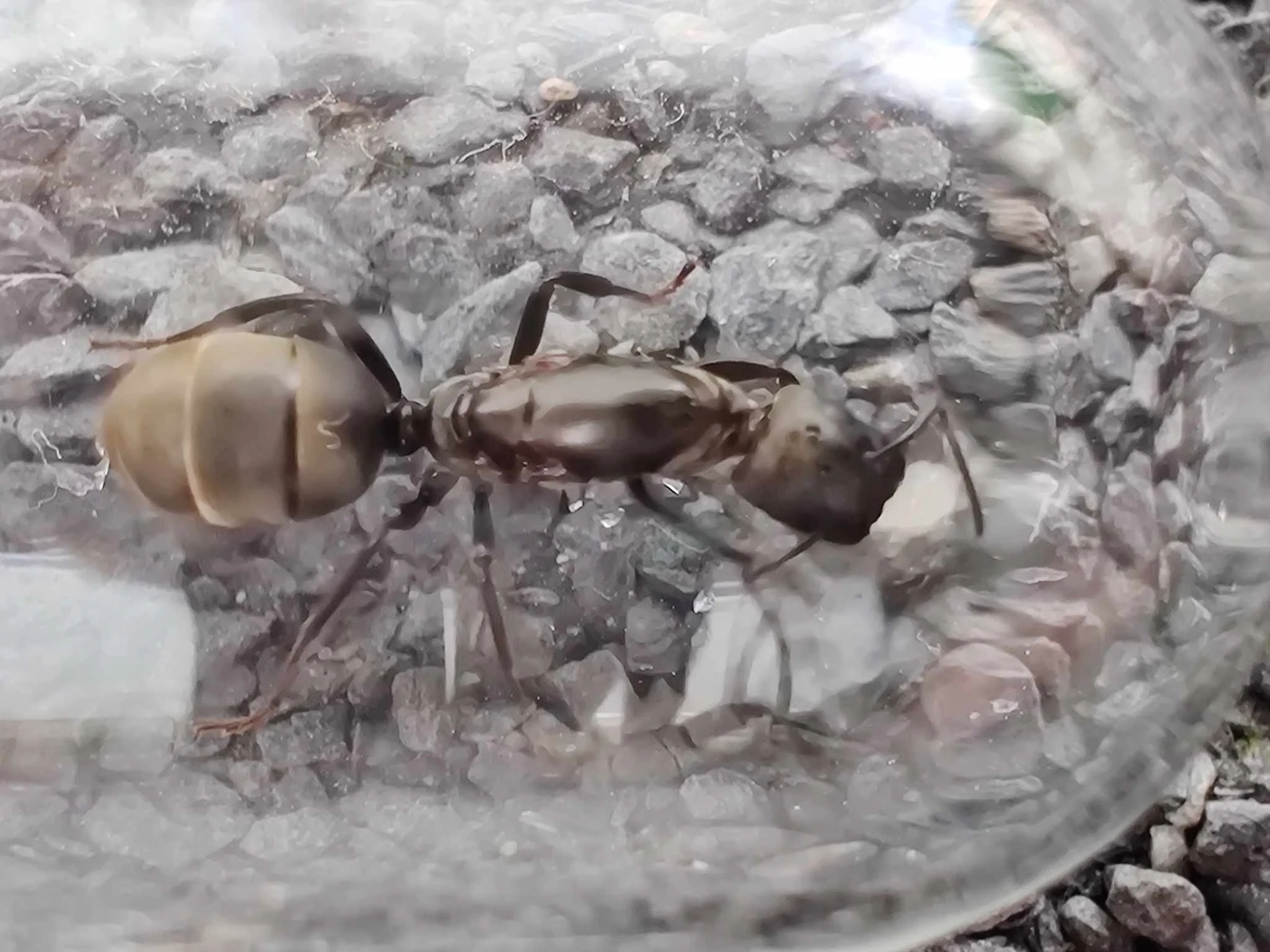
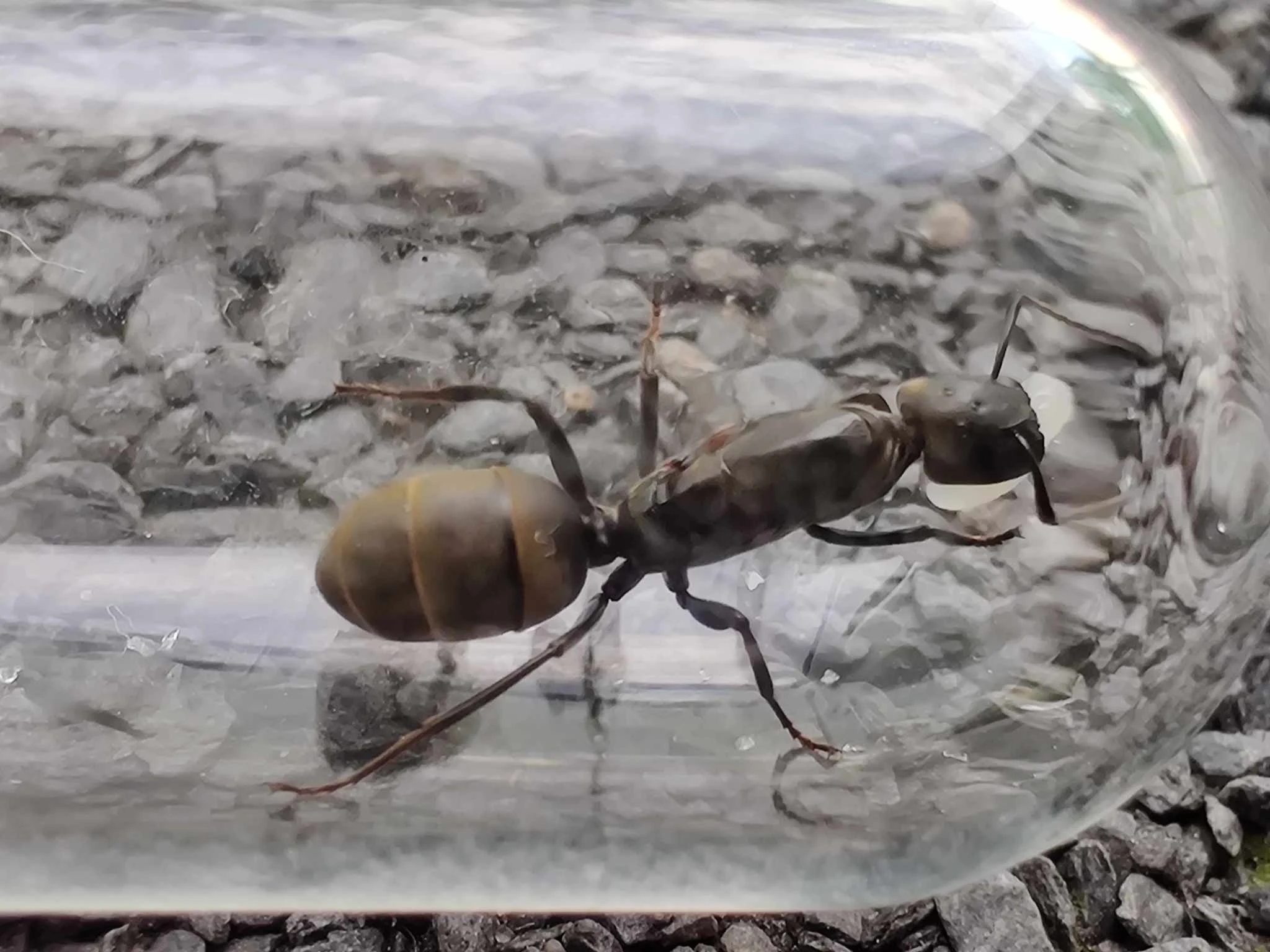
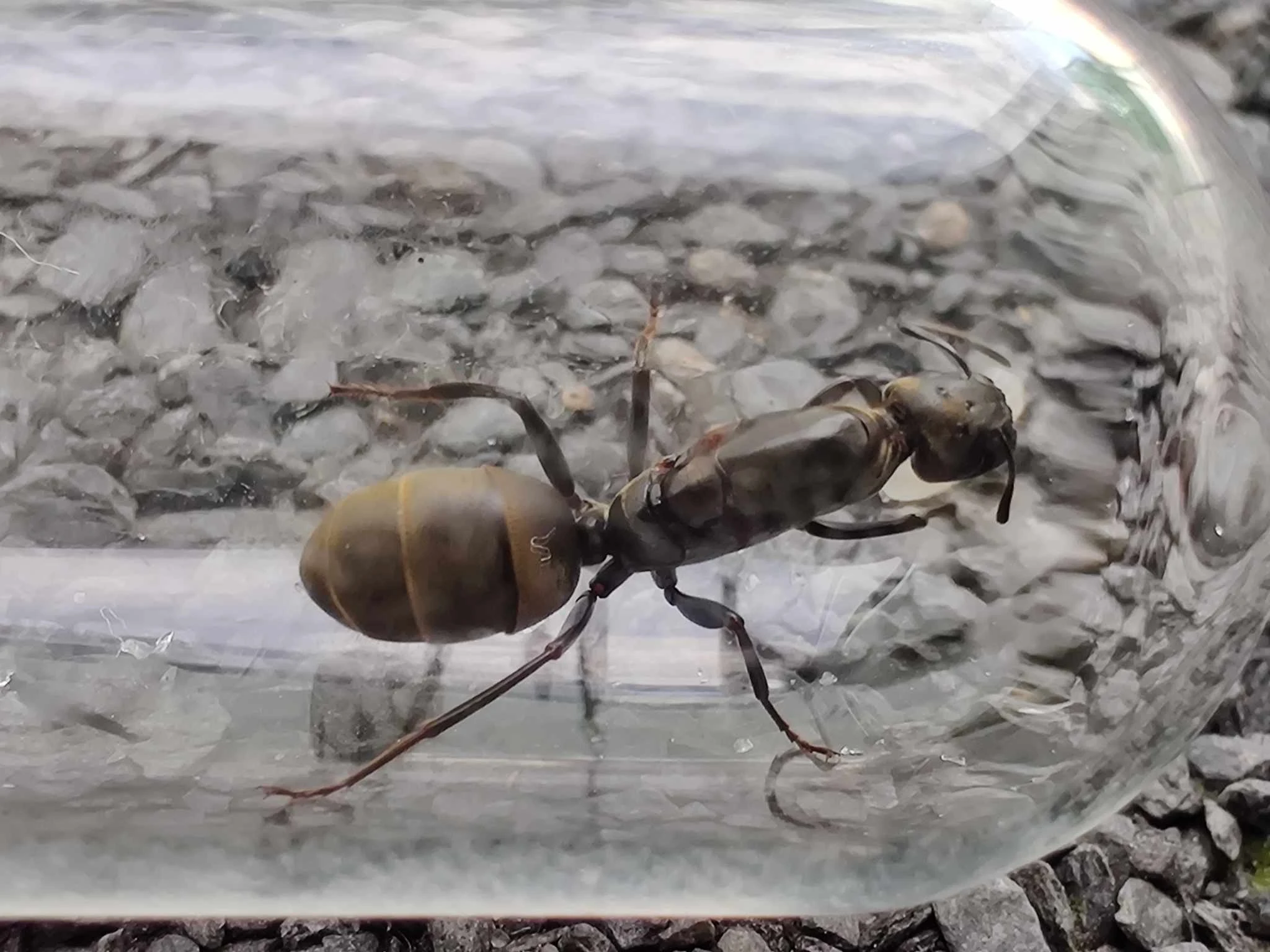


Colobopsis leonardi
Leave feedback on the product

Select product variant:
Individual variants may differ in price
Ask about the product

The controller of your personal data is PHU Krystian Solga. We process them to respond to your inquiry. More information regarding personal data processing can be found in our privacy policy.
Share the product card



Shipping cost for the selected product
The shipping cost applies to this product (in the selected variant - if applicable). It may change after adding other products to the cart.
Description
Colobopsis leonardi - Exploding Asian Ant with Unique Phragmotic Defense
Colobopsis leonardi is one of the most spectacular arboreal ant species from Southeast Asia, combining an elite appearance with extraordinary biological adaptations. The gatekeeper ant caste developed among soldiers uses flattened, heavily sclerotized plug-shaped heads like living door bolts, completely sealing the nest entrance against intruders. The deep, pitch-black exoskeleton with a subtle silky sheen and the compact, manageable colony size make this species a true gem in any exotic ant keeping collection.
- Living door (phragmosis): Major soldiers feature flattened heads that perfectly seal circular nest entrances against uninvited guests.
- Arboreal aristocrat: A dendrophilous species that naturally nests in bamboo shoots and hollow wood, preferring vertical nests with narrow galleries.
- Balanced colony growth: Mature colonies in captivity reach a compact population of 500-2,000 individuals, eliminating the risk of overwhelming formicarium overpopulation.
- Striking dimorphism: A clear division of labor between slender minor workers, robust major soldiers, and a majestic queen reaching up to 14 mm.
| Feature | Description |
|---|---|
| Scientific name | Colobopsis leonardi (Emery, 1889) |
| Origin | Southeast Asian rainforests (Thailand, Malaysia, Borneo, Indonesia) |
| Queen size | 11-14 mm |
| Soldier (major) size | 6-9 mm (exceptionally up to 12 mm) |
| Worker (minor) size | 4-8 mm |
| Coloration | Deep pitch black with a silky, silvery cuticular sheen |
| Colony type | Monogynous (single queen per nest) |
| Colony founding | Claustral (queen raises the first brood independently) |
| Target colony size | 500-2,000 workers under captive conditions |
| Nest temperature | 24-28°C (75-82°F) (optimal: 25-26°C (77-79°F) with gradient) |
| Outworld temperature | 22-28°C (72-82°F) |
| Nest humidity | 60-80% (vapor hydration, zero standing water) |
| Outworld humidity | 40-60% (room humidity, dry outworld) |
| Recommended nest | 3D printed nest with wood insert, cork nest |
| Diet staple | Constant liquid carbohydrates and small feeder insects offered 2-3 times per week |
| Hibernation (diapause) | None - tropical species active year-round |
| Difficulty level | Intermediate |
Choosing a Variant and First Steps with Your Colony
Queens and small colonies with their first workers are available in our offer. Choosing a colony with minor workers provides a smoother start, as the young workers immediately take over brood care and support the queen. As the population grows to a dozen or several dozen workers, the first major soldiers with plug-shaped heads emerge.
Upon receiving your parcel, keep the test tube in a dark, quiet spot at room temperature of 21-23°C (70-73°F) for 24 hours. This allows the ants to settle down after transit and organize their brood. Offer their first meal only after this 24-hour acclimatization period, serving a micro-drop of liquid food on a small piece of foil or in a test tube feeder.
The colony should strictly remain in the test tube for as long as space permits, until reaching at least 15-20 workers. Moving them prematurely into a spacious formicarium causes severe stress, halts egg laying, and leads to organic waste piling up inside empty chambers.
What Nest and Conditions to Choose for Colobopsis leonardi?
For Colobopsis leonardi, the ideal choice is a 3D printed nest with wood insert or a cork nest. It requires a stable temperature of 24-28°C (75-82°F) with gentle heat mat warming and moderate humidity without flooding the chambers with water.
As an arboreal resident of tropical rainforest canopies, this species feels most secure in tight crevices mimicking hollow twigs and branches. An excellent choice is a modular nest with wood insert, which provides the ants with optimal grip and proper air circulation. The initial founding stage should take place in a classic test tube, where a narrow strip of wood or cork can be inserted inside.
The outworld should remain dry, well-ventilated, and equipped with vertical twigs that encourage workers to engage in natural climbing and foraging. The upper perimeter of the outworld must be protected with an escape barrier, applying dry talcum powder or a PTFE fluon coating. These ants possess specialized adhesive arolia on their feet and scale vertical glass with ease.
What to Feed Colobopsis leonardi and How to Balance Their Diet
The dietary foundation of Colobopsis leonardi consists of constantly accessible liquid carbohydrates and fresh feeder insects offered 2-3 times per week. Growing larvae require regular supplies of fresh animal protein, and larger or tougher insects should be halved before feeding to give workers effortless access to nutritious bodily fluids.
Carbohydrates fuel daily worker activity and metabolic energy. Their favorites include natural honey for ants, sugar syrup, and sweet honeydew. Certain workers store liquid sugar reserves in their greatly distended gasters, acting as living repletes and sharing food with nestmates via trophallaxis.
Protein is essential for larval development and continuous egg production by the queen. Ideal feeder options include flightless fruit flies, young Turkish roaches / roach nymphs, small crickets, and halved mealworms. Workers of Colobopsis leonardi forage individually and often drag captured prey into narrow nest entrances abdomen-first, which facilitates smooth transport through tight galleries.
Common Husbandry Mistakes and How to Avoid Them
- Moving colonies too early: Introducing a colony with fewer than 15 workers into a large nest stalls brood development. Keep the ants in a test tube for as long as possible.
- Nest entrance that is too wide: Prevents gatekeeper soldiers from effectively sealing the entryway with their heads. A great solution is narrowing the entrance by inserting two nesting vinyl tubes into each other, for instance inserting a 4x6 mm tube into a 6x8 mm tube, and fitting that into the nest port. Another method is placing tiny decor elements on the outworld, such as fine gravel pebbles or small pieces of lichen, allowing the ants to customize the doorway themselves.
- Flooding the nest with water: Directly soaking wooden chambers causes the material to swell and promotes mold growth. Safe alternatives include external drinkers or hydration modules connected to the nest port, along with continuous access to fresh water in the outworld.
- Leaving organic food waste: Uneaten insect fragments left in a warm outworld can become a breeding ground for mites. Always remove food leftovers within 24 hours of feeding.
- Overheating a founding queen: Attempting to aggressively heat a single founding queen in a test tube before the first workers arrive leads to heat stress. A claustral queen should establish her first brood at stable room temperature, introducing gentle heating only once the first workers are active.
Click to expand: Taxonomic framework and the defense mechanism of the COCY group
The species was originally described in 1889 by Italian entomologist Carlo Emery under the name Camponotus leonardi. Modern phylogenetic studies based on DNA sequence analysis elevated the subgenus Colobopsis to full generic rank within the tribe Camponotini. This taxon belongs to the monophyletic Colobopsis cylindrica (COCY) species group, widely celebrated in entomological literature as exploding ants.
Minor workers have evolved hypertrophied mandibular glands that run through their entire body to the posterior segments of the gaster. In nature, when facing lethal territorial threats from aggressive rivals such as weaver ants, a worker contracts its abdominal muscles to rupture its cuticle in a process known as autothysis. The expelled sticky, bright yellow secretion with a pungent spicy scent immobilizes attackers on contact. In a secure captive setup, these ants feel completely safe, display a docile temperament, and never engage in self-destructive behavior.
Click to expand: Remarkable ecological relationship with Ophiocordyceps unilateralis in the wild
In the rainforests of Borneo and the Malay Peninsula, Colobopsis leonardi serves as the primary natural host of the renowned entomopathogenic fungus Ophiocordyceps unilateralis. This extraordinary ecological phenomenon inspired global pop culture depictions of zombie ants.
After fungal spores penetrate the insect cuticle, they commandeer its neuromuscular system. The infected worker leaves the safety of the forest canopy and descends to the humid understory, roughly twenty centimeters above the forest floor. There, it clamps its mandibles onto the main vein on the underside of a leaf in a characteristic death grip, creating optimal microclimatic conditions for the fungal fruiting body to emerge. In captive ant keeping, this phenomenon never occurs, and sustainably sourced colonies are entirely pathogen-free.
Frequently Asked Questions (FAQ)
Click to expand: Can workers explode during routine formicarium maintenance?
No. Autothysis is an extreme suicidal defense mechanism triggered strictly in the wild during life-or-death battles against hostile rival ant colonies. In captive care, the ants experience zero predator pressure. The workers lack a sting, remain completely calm during feeding or cleaning the outworld, and pose absolutely no hazard to their keeper.
Click to expand: When do the first gatekeeper major soldiers appear in the colony?
The specialized caste of gatekeeper soldiers with plug-shaped heads typically emerges once the colony reaches a population of 20 to 50 minor workers, supported by an abundant, steady supply of protein. Young colonies initially direct all metabolic energy into multiplying smaller minor workers that efficiently care for brood and the queen.
Click to expand: Does Colobopsis leonardi require cold hibernation?
No. This species originates from equatorial evergreen rainforests where temperatures stay warm year-round. These ants do not undergo winter diapause and require heating twelve months a year. Dropping the temperature below 20°C (68°F) can halt brood development and weaken the queen.
Click to expand: How do soldiers recognize whom to let into the nest?
This process relies on precise mechano-chemical recognition. A returning forager taps her antennae against the flattened cephalic disc of the gatekeeper soldier barring the entrance, sharing the colony scent profile encoded in cuticular hydrocarbons. Upon recognizing this chemical password, the soldier steps back a few millimeters, lets her nestmate pass, and immediately plugs the entrance gallery once again.
Looking for a rare species with the most spectacular defensive adaptations in the insect world? Select your preferred Colobopsis leonardi colony package with workers, pick dedicated accessories, and enjoy observing the living door phenomenon right in your own home.
Shipping and Live Arrival Guarantee
Every animal is professionally packed for transit, and during cold weather, the package is equipped with a HeatPack warming pad. We guarantee live arrival. Parcels with live animals are dispatched Monday through Thursday to ensure safe delivery before the weekend.
Reviews
If you've added a review and it doesn't appear on the list, it may be pending moderation.
Leave feedback on the product

