

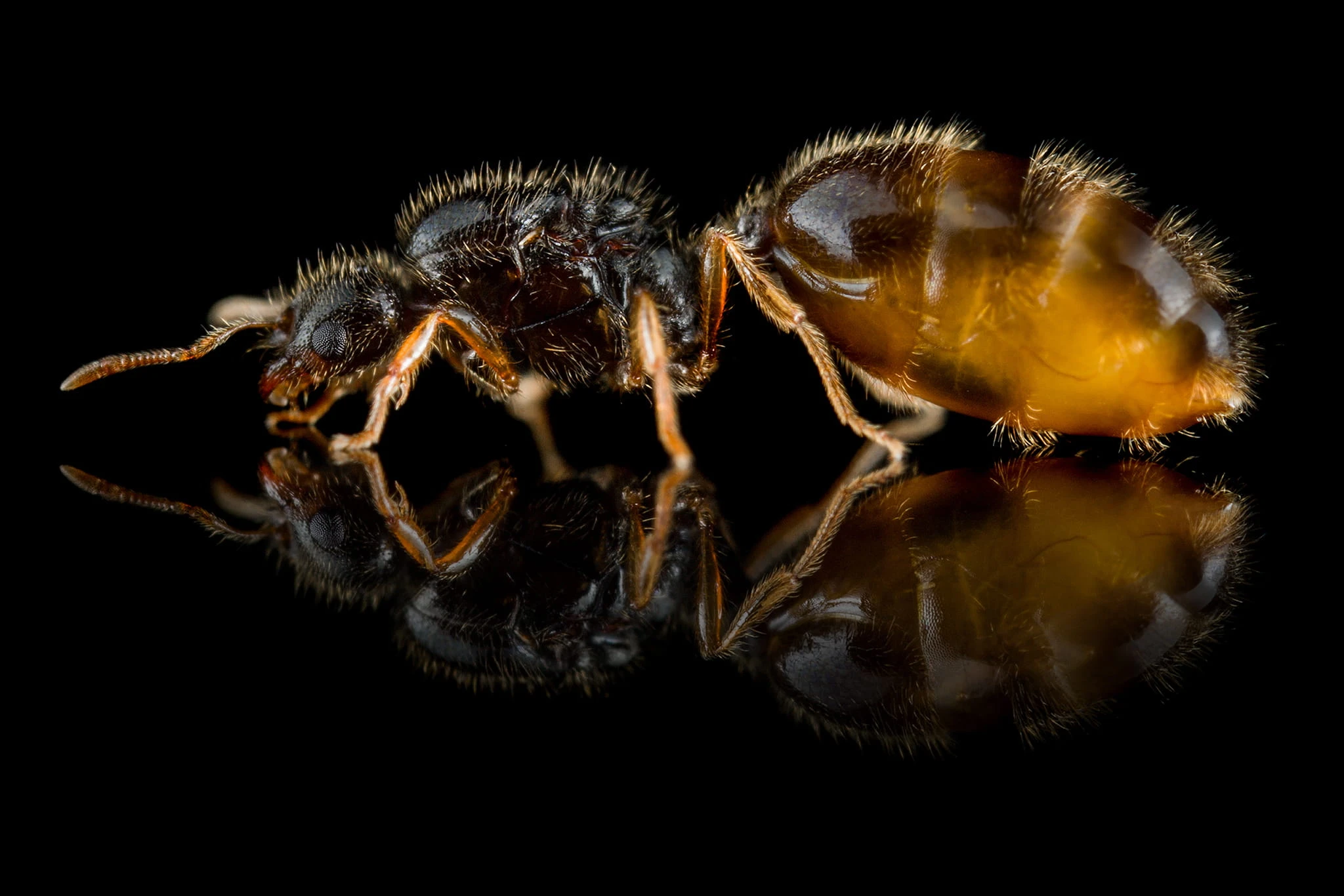


Solenopsis fugax
Leave feedback on the product

Wybierz wariant produktu:
Individual variants may differ in price
Ask about the product

Administratorem danych osobowych jest PHU Krystian Solga. Przetwarzamy je w celu przesłania odpowiedzi na zapytanie. Więcej informacji dotyczących przetwarzania danych osobowych znajduje się w polityce prywatności.
Share the product card



Shipping cost for the selected product
The shipping cost applies to this product (in the selected variant - if applicable). It may change after adding other products to the cart.
Description
Solenopsis fugax (Thief Ant)
Imagine the perfect siege. Under the cover of darkness, an army of microscopic yellow invaders excavates a precise tunnel straight into the brood chamber of a much larger, more powerful neighbor. Before the hosts realize what is happening, the invaders deploy a chemical weapon – a potent repellent that incapacitates the defenders. In panic, the larger ants flee, while the tiny "thieves" ruthlessly plunder the nest, stealing valuable pupae and food supplies. Sounds like a scene from a science fiction movie? This is the everyday life of Solenopsis fugax – the smallest yet one of the most fascinating ant species living in Europe.
Many ant keepers search for spectacular predatory behavior by looking up exotic ants for keeping. However, it turns out that one of the most cunning predators in the insect world can come straight from European meadows. Due to its unique lifestyle known as lestobiosis (a form of kleptoparasitism where ants steal resources from other colonies), this species earned the well-known title of the "thief ant". The offered Solenopsis fugax colonies present a technical challenge, requiring keeper precision and dedicated equipment that you can find in our professional ant shop.
| Trait | Description |
|---|---|
| Latin name | Solenopsis fugax |
| Common name | Thief ant / Yellow thief ant |
| Difficulty level | Physiologically easy, but technically challenging due to extreme escape and drowning risks. Experience required. |
| Queen size | 5.5 - 7.0 mm (dark brown to black) |
| Worker size | 1.5 - 3.0 mm (light yellow to orange, extremely small) |
| Castes | Polymorphic in mature colonies (a "major" subcaste with enlarged heads appears in older colonies). |
| Colony structure | Polygynous (multiple queens per nest). |
| Hibernation | Yes. Mandatory hibernation at 3-8°C (37-46°F) for approx. 3-4 months (refrigerator recommended). |
| Nest temperature | 21 - 26°C (70 - 79°F) (distinctly thermophilic species, recommended approx. 24-26°C (75-79°F)) |
| Outworld temperature | 18 - 30°C (64 - 86°F) |
| Nest humidity | Very high (70-90%+). The nest environment must remain consistently moist! |
| Outworld humidity | 30 - 50% |
XS-Sized Predator (Lestobiosis and Diet)
In nature, Solenopsis fugax frequently nests in close proximity to species of the genus Lasius or Formica. Although their wild survival strategy (lestobiosis) relies on raiding neighbor nests, in captivity they are opportunists with a huge appetite for almost any food provided. A proper diet for ant colonies of this species consists primarily of sugars (e.g., sugar water or honey) and protein in the form of small, pre-killed feeder insects (e.g., fruit flies, cricket hatchlings, mealworm pieces). They thrive on regular protein intake, which, combined with their polygynous nature, leads to a true population boom after the first year.
Extreme Equipment Requirements
Due to the microscopic size of the workers, standard ant nests are completely unsuitable. These workers can squeeze through the smallest silicon imperfections or tiny gaps between enclosure parts. To keep them securely contained, a professional formicarium is strictly required. Given their tendency to escape, we exclusively recommend our 3D printed nests with guaranteed escape-proof tightness. Applying an escape barrier such as talcum powder along the arena rim is also mandatory.
Development Speed and Early Challenges
The initial ant colony development of Solenopsis fugax is relatively slow. Founding queens carry high mortality rates, making the purchase of a colony with first workers the safest option. However, once the colony enters its second year and receives consistent nutrition, growth becomes explosive – growing from several dozen workers to several thousand in just a single season! It is also at this stage, in mature and well-fed colonies, that their unique trait among small European ants appears: "major" workers (soldiers) with noticeably enlarged head capsules.
Common Mistakes and How to Avoid Them
- Why are my ants drowning in liquid food? Workers of Solenopsis fugax are clumsy and extremely prone to drowning, even in the tiniest droplet of honey. Always provide liquids in microscopic micro-drops (pinhead-sized) or use small ant feeders filled with cotton wool (which acts as a safe feeding bridge).
- Why did the queen and brood die in the test tube during the first weeks? The greatest threat to this species (right after nest leaks) is desiccation. These ants demand extremely high humidity (close to 100% in the brood zone). A drying test tube or nest is fatal to the delicate larvae and queen.
- Will these ants really escape from a standard nest? Yes. Their miniature size (often around 1.5 mm) allows them to slip through ventilation slots that are completely secure for species like Lasius niger. Investing in escape-proof setups is essential.
- Can I skip hibernation for this species? No! These ants originate from temperate climates and strictly require a cold diapause. Skipping hibernation drastically shortens the colony lifespan and halts queen egg-laying.
Reviews
If you've added a review and it doesn't appear on the list, it may be pending moderation.
Leave feedback on the product
 Log in with Google
