

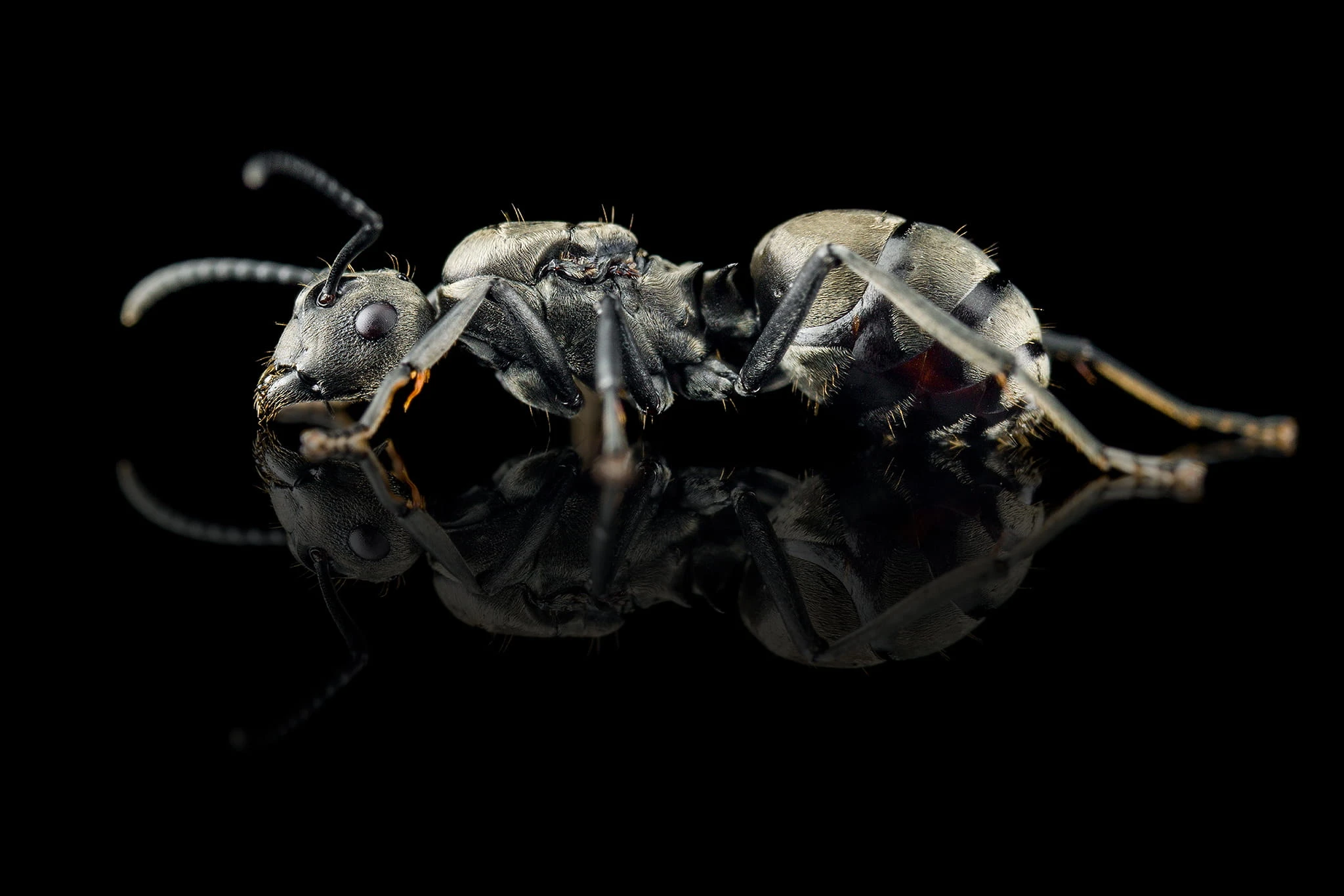


Polyrhachis dives
Leave feedback on the product

Wybierz wariant produktu:
Individual variants may differ in price
Ask about the product

Administratorem danych osobowych jest PHU Krystian Solga. Przetwarzamy je w celu przesłania odpowiedzi na zapytanie. Więcej informacji dotyczących przetwarzania danych osobowych znajduje się w polityce prywatności.
Share the product card



Shipping cost for the selected product
The shipping cost applies to this product (in the selected variant - if applicable). It may change after adding other products to the cart.
Description
Description:
Attention! Currently, all dispatched queens are in their GOLD version, displaying a strong, distinct golden shimmer instead of the silver.
Weaver ants. A fairly popular exotic ant species in captivity. Many ant keepers consider them to be one of the most fascinating ants to keep due to their ability to construct nests using silk produced by their larvae. The worker ant grasps the larva with its mandibles and uses it as a tool for building! They create cocoon-like structures similar to wasps, often applying silk onto branches or shrubs. This phenomenon is incredibly captivating to observe, especially when keeping them in a vivarium. These ants require constant access to water (a test tube with water on the arena will suffice) to ensure proper hydration of their nest.
Under favorable conditions, the colony grows rapidly and consumes a significant amount of food.
There are known cases of queens reproducing within the nest in Poland and the UK (similar to pharaoh ants). I have seen videos of their mating and wing shedding, but until I experience it firsthand, I cannot guarantee anything. I simply share this as an interesting fact.
Species: Polyrhachis dives
Difficulty: low
Soldiers: none
Size: queen approximately 12mm, workers 6-7mm
Coloration: blackish-gray, resembling Formica cinerea
Distribution: South Asia, Australia
Nutrition: honey water and feeder insects
Hibernation: none
Temperature: 26-30°C (78-86°F)
Recommended formicarium: vivarium or any container with soil or peat as a substrate and a test tube with water
Reviews
If you've added a review and it doesn't appear on the list, it may be pending moderation.
Leave feedback on the product
 Log in with Google
