

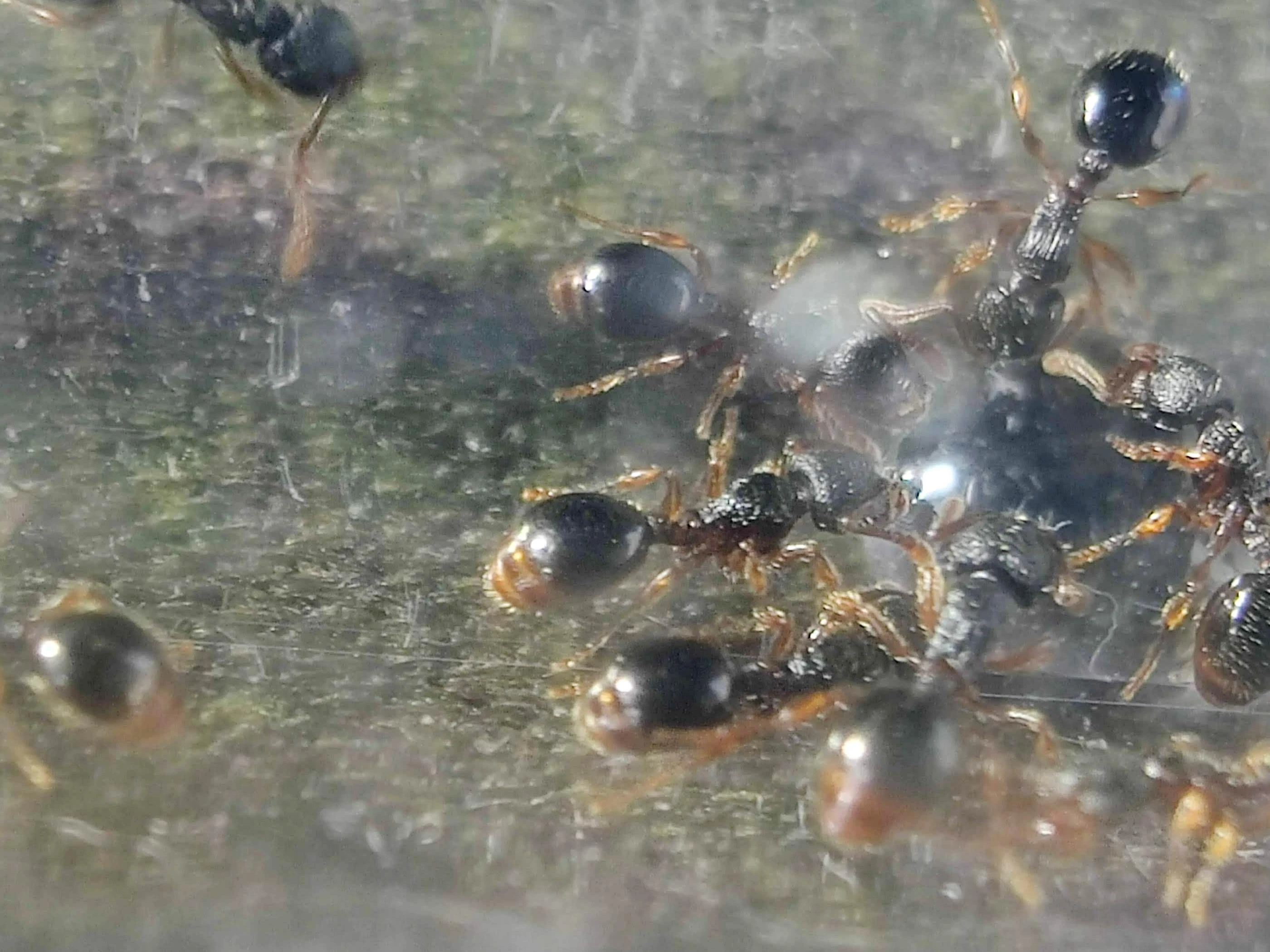
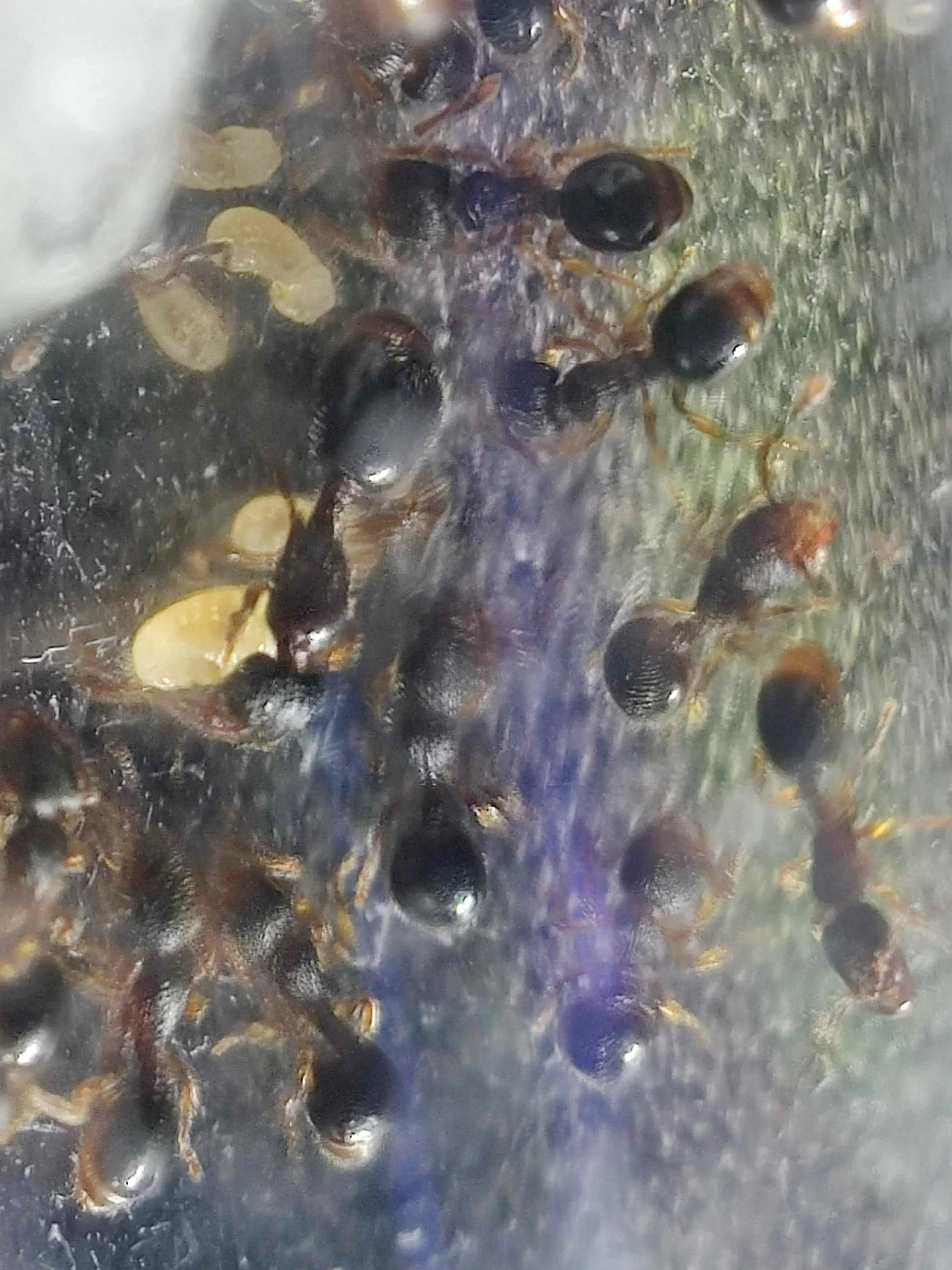
Myrmecina graminicola
Leave feedback on the product

Wybierz wariant produktu:
Individual variants may differ in price
Ask about the product

Administratorem danych osobowych jest PHU Krystian Solga. Przetwarzamy je w celu przesłania odpowiedzi na zapytanie. Więcej informacji dotyczących przetwarzania danych osobowych znajduje się w polityce prywatności.
Share the product card



Shipping cost for the selected product
The shipping cost applies to this product (in the selected variant - if applicable). It may change after adding other products to the cart.
Description
Myrmecina graminicola
Immerse yourself in the dark and fascinating world of the forest floor with one of the most mysterious species in European myrmecology – Myrmecina graminicola. These highly intriguing insects are aimed at experienced and patient keepers who value careful observation and can provide a perfect, stable microclimate. Possessing an incredibly tough armor, unusual defense mechanisms, and an astonishing hunting system, these ants open the door to a microworld of evolutionary adaptations.
| Feature | Description |
|---|---|
| Latin name | Myrmecina graminicola |
| Difficulty level | Medium-hard (3/5) - strictly require iron discipline in hydrating the nest |
| Hibernation | Yes, from late October to late February (5°C - 8°C (41°F - 46°F)) |
| Size | Queen: 4.0 - 5.5 mm, Workers: 3.0 - 3.6 mm |
| Growth rate | Very slow. From egg hatching to worker on average 23 - 55 days |
| Temperature | Outworld: 21°C - 30°C (70°F - 86°F) (heating zone), Nest: 21°C - 26°C (70°F - 79°F) |
| Humidity | Outworld: 30% - 50%, Nest: 60% - 70% (constant presence of a hydration system is required) |
| Diet | Crushed small feeder insects (e.g., hatchling roaches, fruit flies), sugars (e.g., honey water or a bit of maple syrup) |
| Recommended formicariums | 3D printed nests work best, as well as aerated concrete (Ytong), gypsum nests, and soil nests (especially bioactive systems) |
Unique biology and evolutionary waterproof armor
Myrmecina graminicola is a true micro-scale "tank", equipped with a hard and highly sclerotized cuticle with deep, longitudinal grooves, making it extremely difficult for predators to pierce. However, its absolute survival secret is its chemical mantle. Because this species evolved in a deep, moisture-saturated soil microclimate, up to 70% of the hydrocarbons on the ant's armor form an incredibly plastic, semi-liquid layer. It retains moisture, preventing the organism from drying out instantly. It is also an excellent scent trap that captures volatile substances secreted from a hypertrophied venom gland located in the abdomen. Interestingly, this gland does not produce combat venom, but a thick cocktail of esters with a noticeable and phenomenal fruity-raspberry scent!
Fascinating defensive behaviors: Thanatosis and spectacular rolling
Due to their slow pace and stocky build, Myrmecina graminicola workers almost never engage in frontal combat. The main escape mechanism is the so-called thanatosis, which involves falling into perfect stillness and simulating a dead, dry lump of soil. However, if a frightened worker finds itself on a surface with an incline greater than 25 degrees (e.g., on a leaf dropped into the outworld), it activates a rare defensive art: it closes its antennae and legs into a perfectly spherical ball and rolls down gravitationally at an astonishing speed of 40 cm per second, bouncing resiliently off obstacles. This is a unique defensive spectacle rarely found even among vertebrates, giving the ant an instant asylum away from the threat.
Sophisticated hunting system of stenocephalic larvae
In nature, this species specialized in hunting hard oribatid mites (Oribatida). The way they are consumed in the dark depths of the formicarium is breathtaking. A phenomenon known as larval stenocephaly was discovered here. The workers do not crush the entire armored prey – they only bite a miniature hole, and then bring their offspring to it. The larvae of these ants have lost the standard head structure, moving the nervous center all the way to the thorax, freeing up space to create an incredibly long trumpet-like organ. The maggots insert their needle-like head into the mite's crevice, sucking out the nutritious protein. Under home conditions, you will observe the same spectacle when we provide a small, developing colony with cut fragments of small insects (e.g., fruit flies or crushed hatchling roaches).
Most common keeping mistakes and how to avoid them
Because it is a niche species and extremely subtle in its requirements, the following mistakes must be strictly avoided:
- Drying out due to lack of water source: A drop in moisture in the nest poses an immediate, catastrophic threat. The semi-liquid cuticle layer requires constant, lush humidity at a level of 60-70%. Failure to hydrate is a sentence of premature death in a position resembling thanatosis.
- Lethal heating of a solitary queen: A queen founding a kingdom MUST NOT be actively heated with cables or mats (before the first workers appear). A sudden increase in temperature will brutally boost metabolism and instantly "burn" the mother's sparse fat reserves. Up to the worker stage, room temperature (20-22°C (68-72°F)) is sufficient for the insects.
- Improper ventilation and plastic toxins: The aforementioned coating absorbs hydrocarbons from the environment. Keeping the animals in closed jars or plexiglass boxes without forced even the slightest airflow favors a toxic concentration of plasticizers (phthalates). We always recommend safe talc as a barrier, not liquid fluon.
- Lack of manual feeding in the early stage: A queen shedding her wings faces the task of founding a colony in semi-claustral conditions. Devoid of a voluminous abdomen bursting at the seams with food, the mother must actively forage in the nest. Do not forget to regularly serve her carbohydrates and microscopic amounts of crushed protein in the early starting stage.
Palearctic queens in your bioactive system
Tremendous chitinous endurance, slow march, and high moisture requirements make this species a phenomenal elite for bustling terrarium projects. Huge, longitudinal nests covered with foliage, where predatory ants operate alongside springtails escaping from them and safely feeding cleanup crew, will build you a unique fragment of nature with the highest educational level. Properly arranged substrate for live climbers or capillary hydration systems will allow you to enjoy majestic colonization in your own living room.
Join the group of fascinated explorers observing the biology of Myrmecina graminicola. Choose professional equipment, our highest quality live feeder insects for ants, and necessary accessories for keeping them to create a unique environment for this intriguing species today!
Reviews
If you've added a review and it doesn't appear on the list, it may be pending moderation.
Leave feedback on the product
 Log in with Google

