

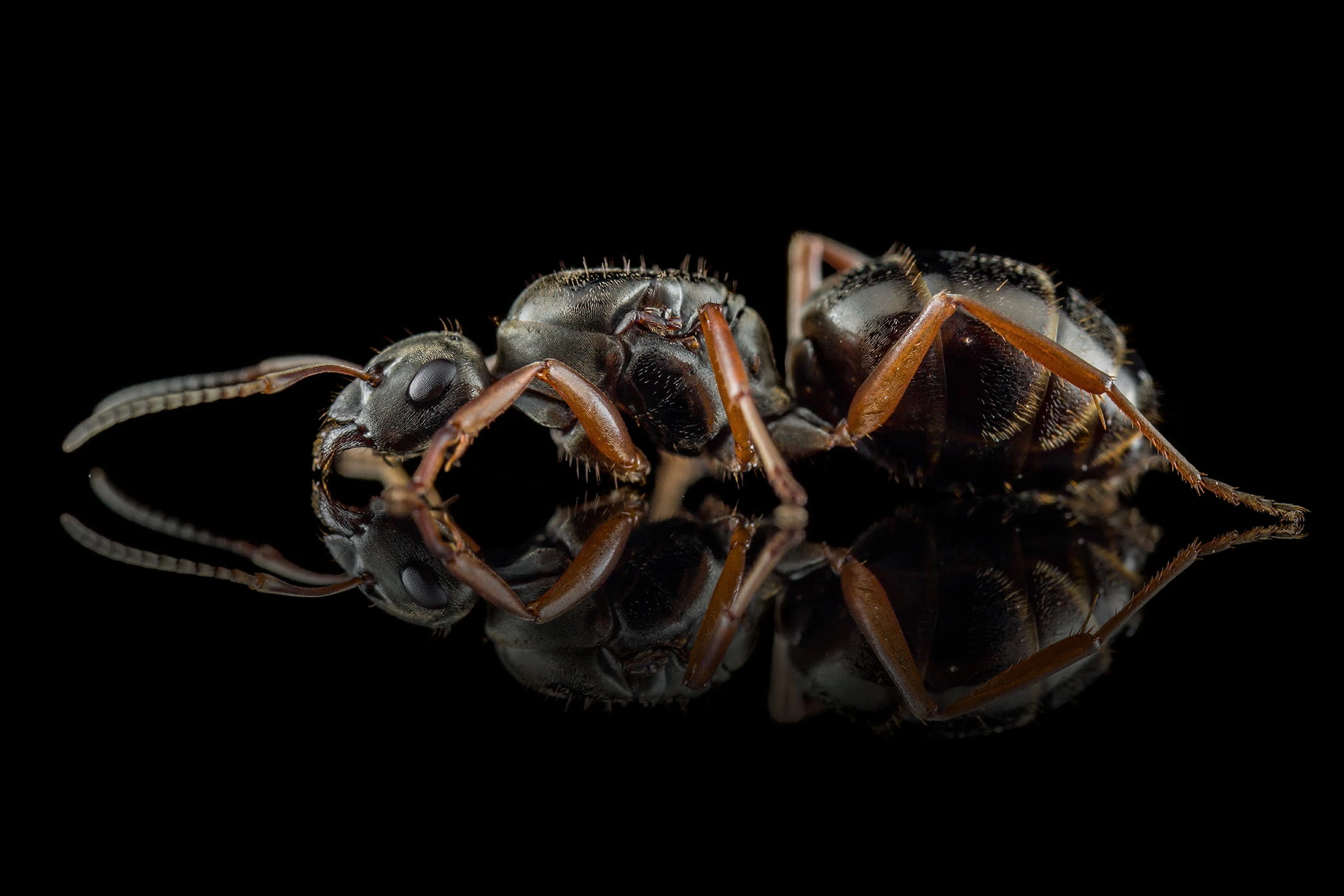


Formica lemani
Leave feedback on the product

Wybierz wariant produktu:
Individual variants may differ in price
Ask about the product

Administratorem danych osobowych jest PHU Krystian Solga. Przetwarzamy je w celu przesłania odpowiedzi na zapytanie. Więcej informacji dotyczących przetwarzania danych osobowych znajduje się w polityce prywatności.
Share the product card



Shipping cost for the selected product
The shipping cost applies to this product (in the selected variant - if applicable). It may change after adding other products to the cart.
Description
Formica lemani
Imagine walking through a crisp mountain meadow, where the air smells of pine needles and damp moss. Somewhere beneath your feet, a hidden empire thrives. Formica lemani is a species with a fascinating secret, which has hidden in the shadow of its ubiquitous relative, Formica fusca, for nearly a century. This mountain specialist stands out clearly with its shiny cuticle and contrasting light brown legs. These are ideal Ants for beginners looking for something unique, which captivate on a daily basis with their gentleness and incredible speed, making them a perfect alternative to standard species.
Starting with a lone queen, you can create a bustling metropolis. F. lemani is facultatively polygynous, which means a developing colony can have anywhere from one to several dozen queens, and eventually reach an impressive size of up to 6000 individuals. Watching their social transformation from timid fugitives to confident rulers of the outworld is one of the most rewarding experiences modern ant keeping has to offer. In an environment lacking natural rivals from the Formica rufa group, a true territorial instinct awakens in these ants.
| Feature | Description |
|---|---|
| Latin name | Formica lemani (Bondroit, 1917) |
| Difficulty level | Low (ideal Ants for beginners) |
| Colony type | Facultatively polygynous (can have multiple queens) |
| Queen size | 10-12 mm |
| Worker size | 3-7 mm |
| Soldier caste | None |
| Hibernation | Mandatory, 2-3 months at 4-8°C |
| Temperature (nest) | 21-24°C |
| Temperature (outworld) | 20-28°C |
| Humidity (nest) | 50-60% |
| Humidity (outworld) | 30-50% |
| Diet | Sugars (e.g. sugar water or honey) + Feeder insects |
| Formicarium type | Highly adaptable (3D printed nest, soil, Gypsum nest, Ytong, Acrylic nest) |
Ecology and habitat - cold mountain specialist
Unlike the generalist Formica fusca, which dominates warmer lowlands, Formica lemani is an eminently mountain and upland species. It prefers cooler climates and is found on heaths, bogs, alpine meadows, and in open coniferous forests. It most often builds nests under stones, which act as natural heat accumulators, as well as in dead stumps, under loose tree bark, and directly in the soil.
The morphological features of F. lemani are no accident - they are evolutionary adaptations to a cold environment. They will surely catch the attention of any keeper equipped with a magnifying glass: the characteristic short, bristly hairs on the dorsal surface of the thorax and protruding hairs on the underside of the femora are diagnostic details that allow distinguishing this species from the bare F. fusca.
Hidden potential - from gentleness to territoriality
In small and medium-sized colonies, F. lemani is gentle and avoids conflicts. However, recent myrmecological studies have revealed a fascinating, hidden potential of this species. In conditions devoid of strong competition, this species can form extensive multi-nest polydomous complexes - one studied complex had over 150 large nests! Within such super-structures, the ants' behavior undergoes a radical transformation. The level of aggression increases significantly, complex territorial behaviors appear, as well as active protection of aphid colonies, and even fighting techniques known from dominant species, including the death grip. It's almost as if you suddenly discovered your quiet neighbor is a martial arts master.
Diet, nutrition and development
Studies on food preferences show that Formica lemani is a true sweet tooth. It chooses carbohydrates almost four times more often than protein food. Sugars (e.g. sugar water or Natural honey for ants) work best as an energy base. Of course, an appropriate portion of protein in the form of killed (or live for large colonies) Feeder insects is absolutely necessary to raise larvae. A balanced diet will make the rapid development cycle from egg to a capable worker take only 4-8 weeks.
Breeding and ecological role
Keeping them does not require highly specialized equipment, which greatly lowers the entry barrier. The species does perfectly well in any type of nest, although due to natural preferences, a 3D printed nest, soil nest, Gypsum nest, or aerated concrete are a bullseye. It's worth mentioning that in nature, F. lemani often acts as a host for social parasites, such as Formica sanguinea. This makes it an excellent starter species for advanced keepers planning dulotic projects.
Most common mistakes and how to avoid them
- Heating a lone queen - one of the most common mistakes. A lone F. lemani queen in a Glass test tube should NEVER be actively heated with cables or mats. Room temperature (20-22°C) is optimal. Overheating at this stage causes enormous stress and often leads to the first brood being eaten.
- Lack of Hibernation - F. lemani is a cold-loving species for which Hibernation is strictly mandatory. Skipping diapause leads to the weakening of the ant's organism, a drop in fertility, and stunted development. They must be provided with 2-3 months of rest at 4-8°C.
- Introducing foreign queens - although it is a polygynous species, peace in the colony is established very early. Attempting to add an adult, foreign queen to an already functioning community almost always ends in bloodshed.
- Lack of a protective barrier in the outworld - these are extremely agile and fast insects. When feeding and opening the Outworld cover, we strictly recommend using a talcum barrier, which will effectively stop them from exploring the room.
Start your breeding today!
Are you fascinated by the hidden potential of Formica lemani? Choose the ideal variant for yourself (from Queen only to Queen + workers) and create perfect conditions for these ants in your home Formicarium. We guarantee that daily observation of their territorial behaviors will provide you with plenty of unforgettable experiences. Add to cart and expand your colony!
Reviews
If you've added a review and it doesn't appear on the list, it may be pending moderation.
Leave feedback on the product
 Log in with Google
