



Claviger testaceus
Leave feedback on the product

Ask about the product

The controller of your personal data is PHU Krystian Solga. We process them to respond to your inquiry. More information regarding personal data processing can be found in our privacy policy.
Share the product card


Shipping cost for the selected product
The shipping cost applies to this product (in the selected variant - if applicable). It may change after adding other products to the cart.
Description
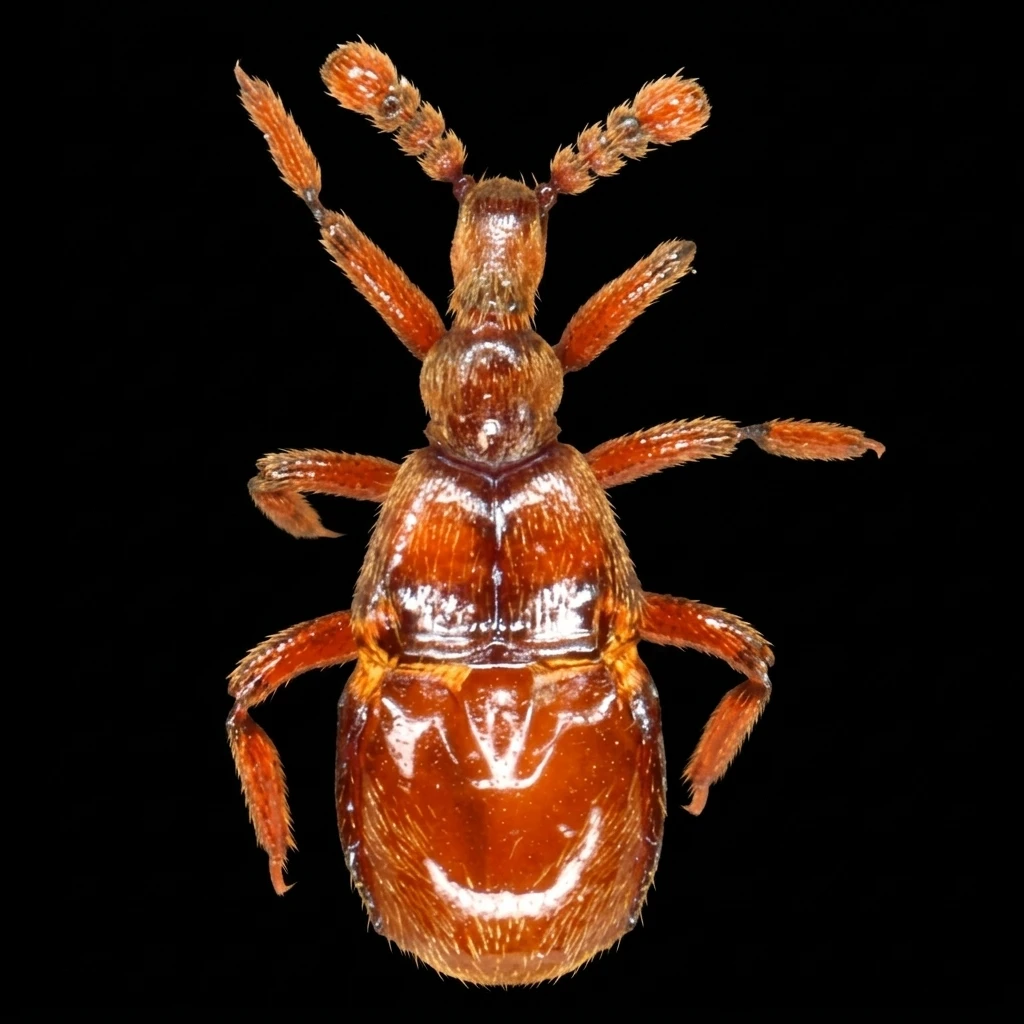
Claviger testaceus - Yellow Guest Beetle, the Ultimate Ant Colony Impostor
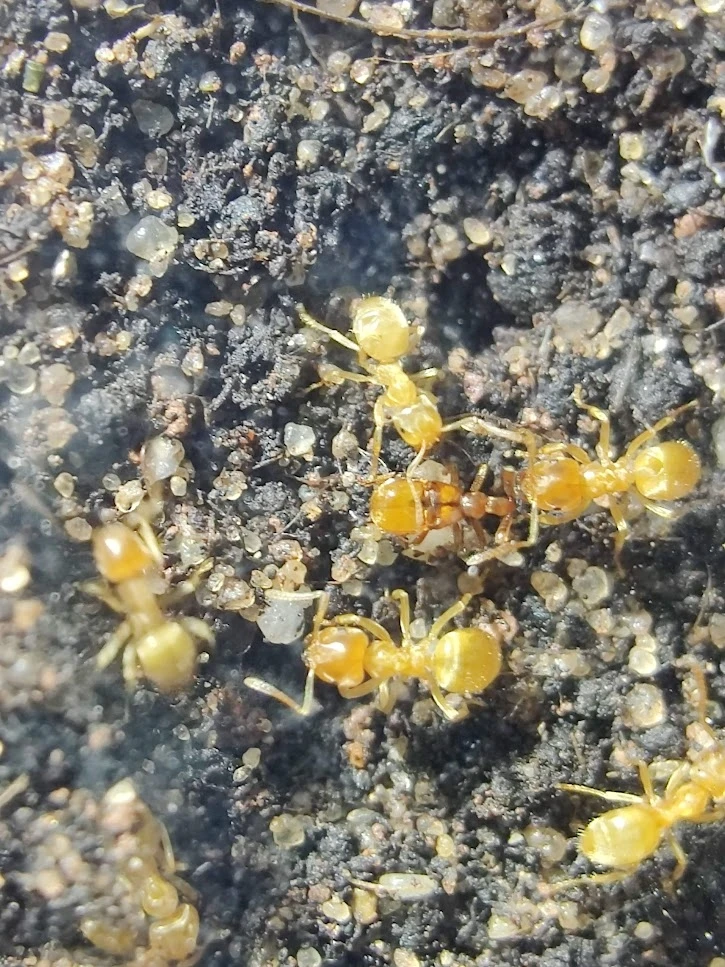
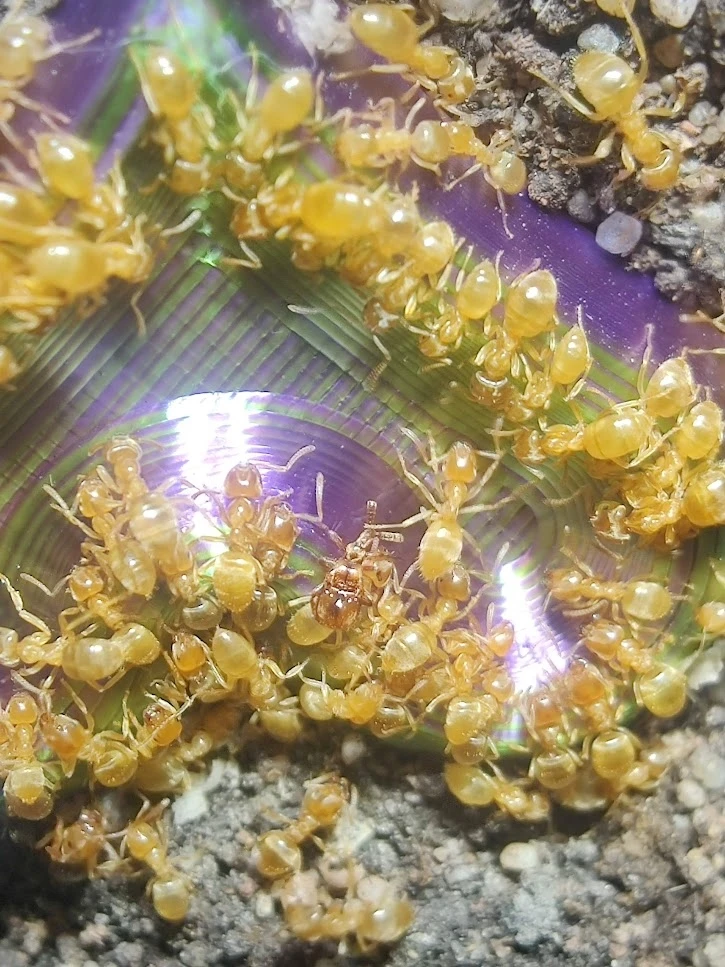
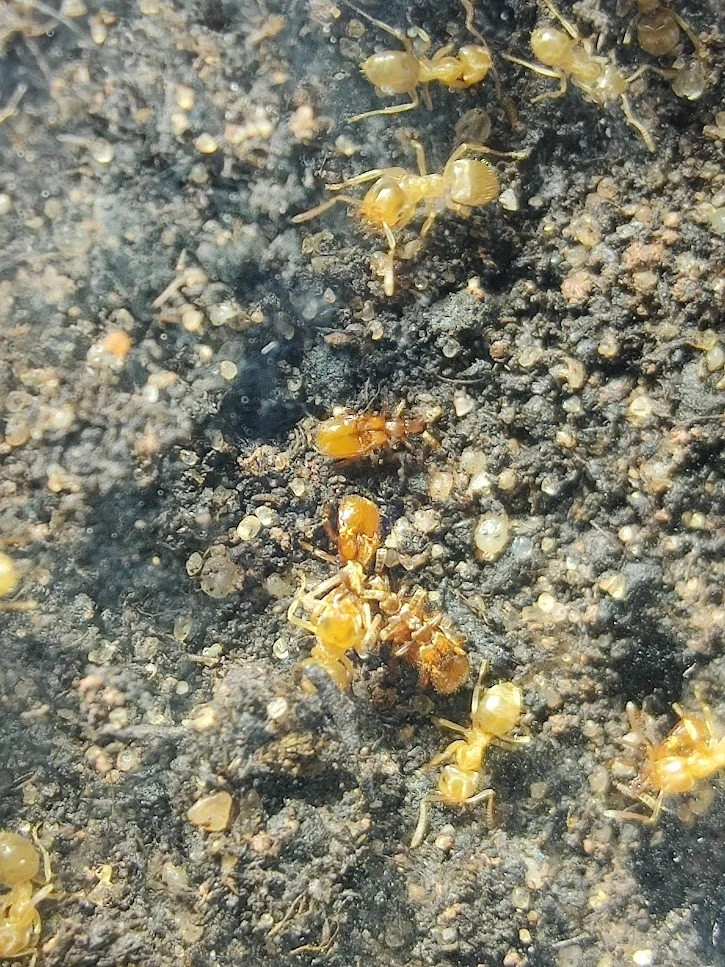
Discover one of the most fascinating evolutionary wonders in the insect world - an obligate myrmecophile that has successfully cracked the chemical codes of the ant nest. Claviger testaceus (the Yellow Guest Beetle) is an insect that requires neither eyes nor wings to dominate the sensory world of ants. By releasing soothing allomones, it compels worker ants to feed it nutrient-rich liquid, groom it, and protect it with higher priority than their own brood.
- Strict host requirement: requires the presence of an ant colony (ideally Lasius flavus with over 50 workers, or other common Lasius species - queenless colonies are also suitable).
- Chemical impostor: Wasmann glands secrete specialized allomones that suppress aggression and trigger immediate trophallactic feeding from worker ants.
- Fascinating biology: complete anophthalmy (eyeless) and aptery (wingless), paired with a specialized sponge-like capillary mouth apparatus.
- Unrivaled observations: resides directly within the brood nursery chambers, actively participating in the subterranean life of the ant nest.
| Scientific name | Claviger testaceus |
| Common name | Yellow Guest Beetle |
| Host species | Ideally Lasius flavus (min. 50 workers, queenless groups work well) or other common Lasius species |
| Dimensions | Approximately 1.8-2.5 mm (glossy amber coloration) |
| Ecological relationship | Obligate symphile, kleptoparasite, and brood predator |
| Feeding habits | Trophallaxis with worker ants, supplemented by feeding on tiny ant eggs and young larvae |
| Temperature | Nest 21-23°C (70-73°F) (standard room temperature) |
| Humidity | Nest 75-85% (the beetle's delicate cuticle is highly sensitive to desiccation) |
| Recommended nest | Ideally an earth formicarium or a tightly sealed 3D-printed nest with soil substrate |
| Lighting conditions | Total darkness or shielded with red foil (strictly subterranean and photophobic species) |
| Hibernation | Recommended diapause alongside host ants for 8-10 weeks at 5-8°C (41-46°F) |
| Difficulty level | Intermediate - requires an established host colony and stable moisture |
Variant Selection and First Steps with Your Claviger testaceus
In our store, we offer healthy, carefully selected specimens of Claviger testaceus, ready for immediate integration into your ant colony. Before ordering, ensure that you have an established group of host ants - preferably the subterranean yellow meadow ant Lasius flavus or other common Lasius species with at least 50 workers. A suitable colony can also be purchased directly in our store. If a colony of this size is temporarily out of stock, feel free to contact us - we will gladly help prepare a tailored starter group. Importantly, the host colony does not strictly require a queen - a queenless group of workers collected from the wild will adopt the beetle just as eagerly.
Upon receiving your parcel, ensure safe acclimation for the beetle by following this step-by-step procedure:
- Step 1: Temperature equalization (acclimation) - allow the transport tube to rest at room temperature for 20-30 minutes without opening it abruptly.
- Step 2: Release exclusively into the outworld - never place the beetle directly inside the nest chambers, as sudden intrusion may trigger panic among the ants. Carefully introduce the beetle into the outworld near the nest entrance.
- Step 3: Calm adoption by scouts - foraging scout ants will quickly locate the beetle, lick the soothing secretions from its golden trichomes, and gently carry it in their mandibles directly into the brood nursery.
Formicarium and Setup Requirements for Claviger testaceus
For Claviger testaceus, an earth formicarium provides the ideal environment, maintaining stable humidity at 75-85% alongside natural darkness. These beetles can also be successfully kept in standard 3D-printed nests filled with soil substrate, provided the nest construction is completely escape-proof and tightly sealed.
To adapt a 3D-printed nest for keeping the Yellow Guest Beetle, simply remove the glass cover, fill the chambers with clean soil, and reassemble the nest securely. However, it is essential to use strictly airtight setups. In standard low-grade nests, ants tend to pack soil particles beneath the cover edges, bending the glass and creating escape crevices. In our proprietary 3D-printed nests, fastening the 8 additional perimeter screws included in the set ensures the pane is firmly pressed down, completely eliminating the risk of escapes or chamber breaches.
For an optimal microclimate, we recommend a modular 3D nest with soil fill. This approach recreates a natural subterranean environment while maintaining full containment, excellent observation visibility, and consistent moisture levels.
Dietary Needs of Claviger testaceus and Feeding the Host Colony
Claviger testaceus does not require dedicated supplemental feeding, as it derives all nutrition directly from its host ants. You only need to feed the ant colony itself, providing continuous liquid carbohydrates such as honey or sugar syrup, alongside fresh, small insect protein necessary for rearing brood.
The beetle receives liquid carbohydrates via trophallaxis - worker ants facing the beetle part their mandibles and regurgitate droplets of sugary fluid, which the beetle sips using its sponge-like capillary mouth apparatus. The second component of its diet is brood predation: the beetle punctures freshly laid ant eggs and young larvae to ingest concentrated protein. To maintain biological balance within the nest, regularly supply the colony with natural honey for ants and small feeder insects, such as flightless fruit flies or springtails.
Common Care Mistakes and How to Avoid Them
- Attempting to keep the beetle without host ants: although capable of lapping liquid drops, the insect cannot survive independently and will perish rapidly without the grooming and care of Lasius worker ants. Always provide a group of at least 50 workers.
- Nest desiccation: the thin cuticle of Claviger testaceus loses moisture extremely fast. Nest humidity must remain consistently at 75-85%, otherwise the beetle can succumb to dehydration within hours.
- Releasing the beetle directly into nest chambers: dropping the beetle abruptly into the center of the nest triggers defensive panic. Always introduce the beetle into the outworld near the nest entrance and let the workers carry out a calm, natural adoption.
- Unsealed earth nests: in their search for space, ants pack soil particles under loose glass edges. Use exclusively sealed 3D-printed nests secured with the complete set of 8 clamping screws, or well-built earth formicaria.
The Biological Phenomenon of Obligate Myrmecophily and Anatomical Adaptations
The Yellow Guest Beetle belongs to the subfamily Pselaphinae within the rove beetle family (Staphylinidae). Its evolutionary ancestors were free-living predators hunting small soil arthropods in leaf litter. Transitioning to permanent life inside ant colonies drove radical anatomical remodeling. The beetle completely lost its compound eyes (full anophthalmy) and wings (aptery), while its mouthparts evolved into a specialized capillary sponge designed to imbibe regurgitated droplets from worker ants. Remarkably, the massive hypertrophy of chemical glands inside its head physically displaced the beetle's brain into its prothorax.
Chemical Manipulation, Wasmann Glands, and Trophallaxis
The key to peaceful coexistence lies in the trichomes - golden tufts of specialized setae located along the sides of the beetle's elytra and abdomen. These trichomes function like capillary wicks, onto which the Wasmann glands secrete volatile, soothing allomones. When an inspecting ant taps the beetle with her antennae, she immediately licks these secretions. This chemical cue triggers an automatic trophallaxis reflex: the ant opens her mandibles and regurgitates nourishing carbohydrate liquid from her crop. The beetle imbibes the fluid using its sponge-like mouthparts. Furthermore, the beetle passively acquires the colony's cuticular hydrocarbon profile, becoming chemically invisible and treated as a privileged nestmate.
Frequently Asked Questions (FAQ)
Can the Yellow Guest Beetle be kept without host ants?
No. While the beetle is capable of lapping liquid sugar from a surface, it cannot sustain itself independently. It relies on continuous grooming, cuticle maintenance, and allomonal exchange with host ant workers.
Do I need to feed the beetle separate food?
No. You only feed the ant colony. Supply the ants with carbohydrates (honey, sugar syrup) and small protein foods. The beetle obtains liquid nourishment from worker ants through trophallaxis and supplements its protein intake by consuming eggs and young larvae in the brood nest.
What type of formicarium is best for keeping them?
An earth formicarium or a sealed 3D-printed nest with soil substrate works best. While academic literature mentions varied setups, our hands-on breeding experience demonstrates that they thrive exceptionally well in soil-filled setups. Conversely, attempting to maintain them in an empty test tube setup quickly fails due to the lack of proper substrate and moisture buffering.
Do I need a complete ant colony with a queen?
No, a queen is not strictly required to maintain the beetle. A group of 50-100 worker ants of Lasius flavus or other common Lasius species, easily collected from under a stone in a meadow, is sufficient. However, an established colony with an egg-laying queen provides a much richer observation experience, as the beetles will actively feed on freshly laid ant eggs and young brood.
Can the Yellow Guest Beetle fly or escape the formicarium?
No. This species is completely wingless (apterous) and blind (anophthalmic). It moves slowly on foot and stays strictly within the dark, moist tunnels of the subterranean nest.
What is the lifespan of an adult beetle in captivity?
Under stable humidity conditions, with constant access to host workers and seasonal diapause, adult beetles typically live from several months up to over a year.
Ready to witness this extraordinary biological marvel in your own formicarium? Select your preferred quantity, add them to your cart, and complete your setup with a colony of Lasius flavus and proven natural honey for ants to observe a true master of chemical espionage at work in the heart of the ant nest.
We used the macro photograph of this remarkable beetle thanks to the kind, free permission of Christoph Benisch from kerbtier.de. We warmly encourage every invertebrate enthusiast to visit his website, where you will find truly magnificent entomological galleries from across Europe.
Shipping and Live Arrival Guarantee
During cold weather, we include a professional HeatPack warming pad to maintain the proper transit temperature.
Live animals are shipped exclusively Monday through Thursday to prevent parcels from being held over the weekend.
We take full responsibility for safe transit, guaranteeing that your animal arrives healthy and in top condition.
Reviews
If you've added a review and it doesn't appear on the list, it may be pending moderation.
Leave feedback on the product

