


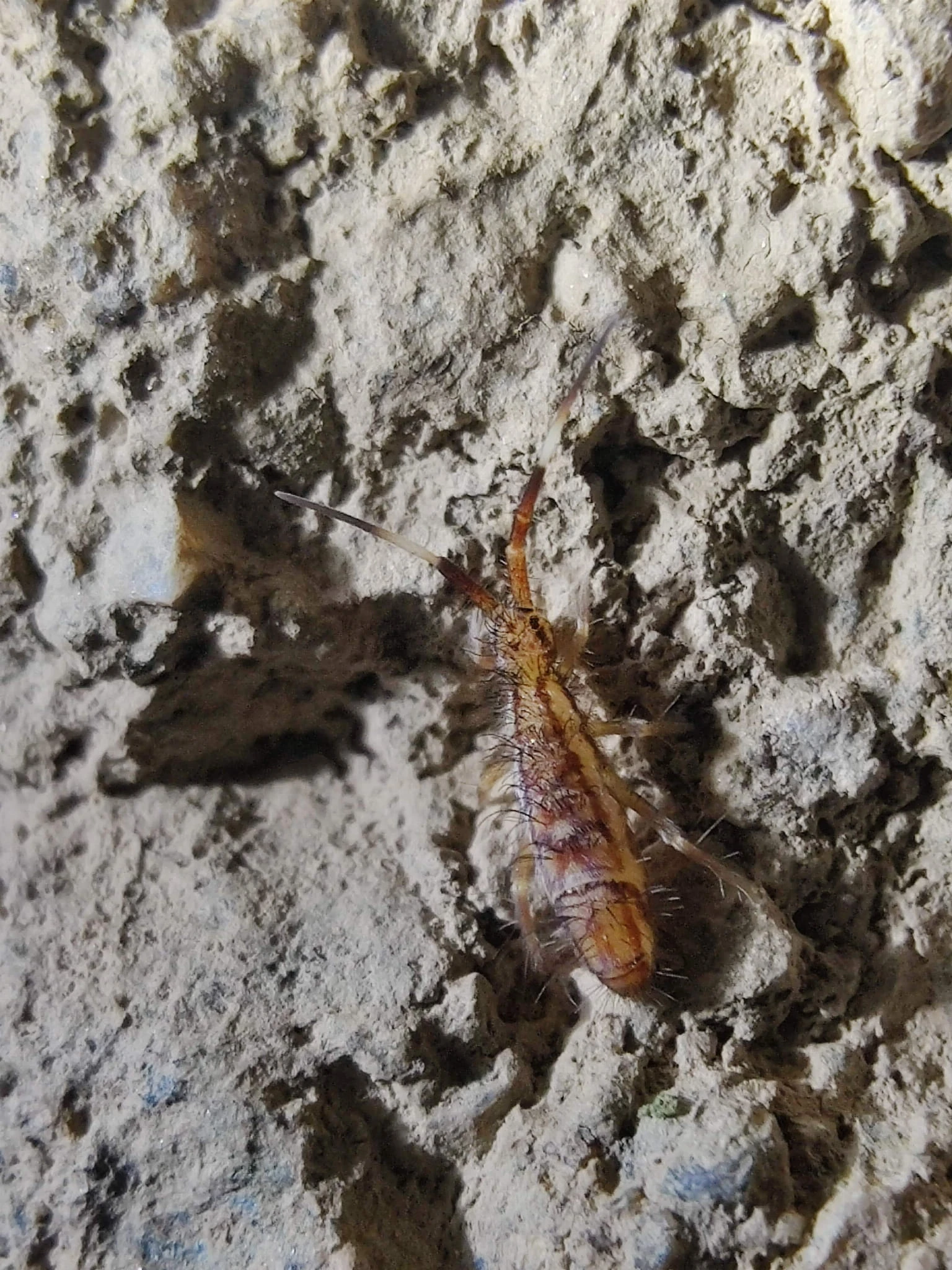
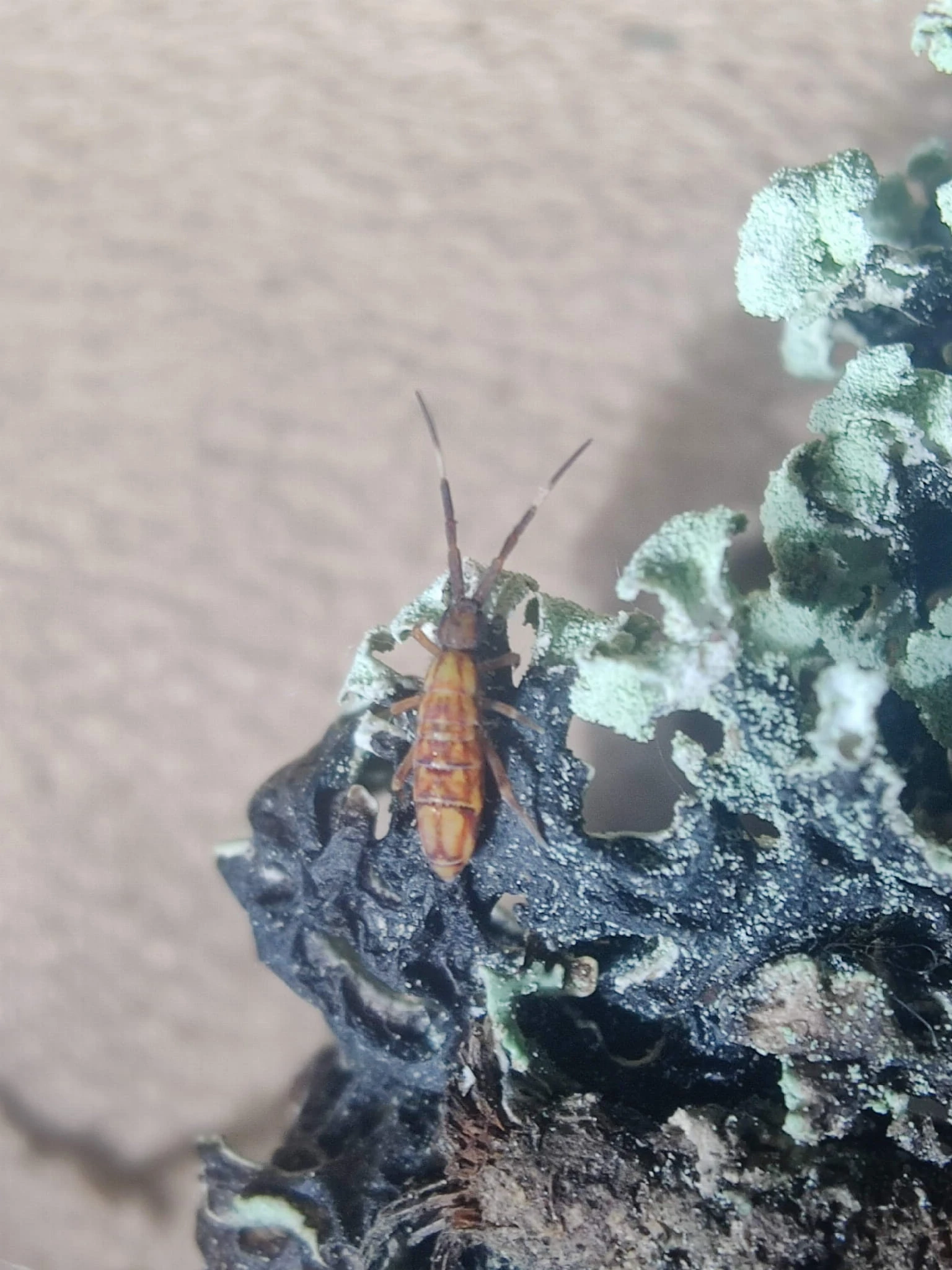


Orchesella flavescens
Leave feedback on the product

Select product variant:
Individual variants may differ in price
Ask about the product

Administratorem danych osobowych jest PHU Krystian Solga. Przetwarzamy je w celu przesłania odpowiedzi na zapytanie. Więcej informacji dotyczących przetwarzania danych osobowych znajduje się w polityce prywatności.
Share the product card



Shipping cost for the selected product
The shipping cost applies to this product (in the selected variant - if applicable). It may change after adding other products to the cart.
Description
Orchesella flavescens (Yellowish Elongate Springtail) – "The Most Magnificent Springtail" in Your Terrarium
Are you looking for more than just an ordinary clean-up crew? Do you want your terrarium to be teeming with life that you can admire? Meet Orchesella flavescens – rare, large springtails that the eminent naturalist H. Womersley acclaimed as "the most magnificent springtails" back in 1924. These aren't just another batch of small, white critters hidden in the substrate. This is a true gem and a living decoration for any bioactive ecosystem.
The Yellowish Elongate Springtail is a species with a fascinating history. In Great Britain, after the last observation in 1925, it was considered extinct. Its rediscovery more than 80 years later caused a sensation. By owning them, you bring into your home not only a useful creature but also a living piece of natural history – a species that is a true rarity on the market.
Why is Orchesella flavescens the Best Choice for the Demanding?
- Size and Beauty You Can See with the Naked Eye: Forget about springtails whose existence you have to guess. O. flavescens is one of the largest European species, reaching an impressive 4-5 mm in length. Their beautiful, yellow-brown or orange body is adorned with distinct, dark stripes running along the entire body. They are perfectly visible as they actively patrol leaves, bark, moss, and especially pieces of bark with lichens, which they love. These are true ornamental springtails.
- Reliable and Efficient Clean-up Crew: Beauty isn't everything. The Yellowish Elongate Springtail is a tireless worker. It voraciously devours mold spores, preventing its growth, and also breaks down all organic waste – animal droppings, uneaten food, or fallen leaves. Additionally, by moving through the substrate, it naturally aerates it, which supports the health of plant roots.
- A Biological Curiosity: This is a species full of surprises. It has unique, six-segmented antennae that are often... asymmetrical. Observing an individual with one antenna longer than the other is a fascinating experience that highlights the uniqueness of this culture.
How to Recognize Orchesella flavescens? An Identification Guide
To be sure you have the right species, it's worth knowing the key differences between it and its close cousins. The table below will make identification easier.
| Feature | Orchesella flavescens | Orchesella cincta | Orchesella villosa |
|---|---|---|---|
| Size | 4–5 mm | approx. 4 mm | >5 mm |
| Main Pattern | Distinct, longitudinal, dark stripes running the entire length of the body. | A single, wide, dark "band" on the third abdominal segment. | A complex, irregular pattern of discontinuous, dark spots and patches. |
| Antennae | 6-segmented, often asymmetrical. | 6-segmented, third segment is dark. | 6-segmented. |
| Distinguishing Feature | Stripes reach the end of the abdomen. A black transverse band on the second tergite distinguishes it from O. cincta. | The characteristic single "band" is the dominant feature. | The pattern is mottled and broken, not linear. |
Color Morphs
Several color morphs occur in nature, which you will also find in our cultures:
- melanocephala form: With a black head and contrasting segments, very striking.
- Pale individuals: With a very light, almost white coloration.
Ideal Application: Where Will These Unique Springtails Thrive?
O. flavescens is a specialist that feels best in conditions mimicking its natural environment – the leaf litter of a moist deciduous forest. They are an ideal choice for:
- "Temperate forest" type terrariums: They blend perfectly with biotopes for European amphibians and reptiles.
- Large enclosures and paludariums: Their size means they won't get lost in the mass of substrate and will work effectively over a large area.
- Display terrariums: If you want your clean-up crew to be a visible and attractive element of the display.
- As supplementary food: Their larger size makes them a nutritious morsel for small lizards, amphibians, or other insectivorous inhabitants.
Simple Springtail Breeding – A Guide for Beginners and Experts
Running your own breeding culture of Orchesella flavescens is extremely simple and satisfying, allowing you to ensure a constant source of this clean-up crew for your terrariums!
- Container and Substrate: A sealed container works best. Ventilation can be provided by opening it every few days, or by cutting a larger hole (e.g., 5x5 cm) and securing it with a dense steel mesh or several layers of paper towel to prevent escapes. A handful of moist soil is sufficient as a substrate – our professional isopod substrate is ideal – along with a few oak or beech leaves, which will serve as natural shelter and a food source.
- Feeding: The basis of the diet can be dried brewer's yeast, however, our colony thrives like crazy on our proprietary springtail food, which provides them with all the necessary ingredients for rapid growth and reproduction. Remember the key rule: never overfeed! Excess food can lead to a mite infestation and the collapse of the culture. Only provide a new portion when the previous one is gone.
- Conditions: This species requires constant, high humidity and a typical room temperature 18-27°C (64-81°F). The substrate should be kept constantly very moist, but it is important that the upper zone of the container is relatively dry. This will provide the animals with a humidity gradient and prevent problems with surface mold.
What Do You Get in Our Offer?
Our offer is for a starter culture containing a mix of different color morphs. This provides a unique opportunity to observe the natural diversity of the species, and for advanced keepers, it is excellent starting material for their own selective breeding and stabilization of lines with desired traits, e.g., fully black-headed (melanocephala) or exceptionally pale.
Species Comparison: Orchesella flavescens vs. Common White Springtails
| Feature | Orchesella flavescens (The Golden Giant) | Common White Springtails (e.g., Folsomia) |
|---|---|---|
| Size | Large (4–5 mm) | Small (approx. 1–2 mm) |
| Visibility in terrarium | Very high, a display species | Very low, hidden in the substrate |
| Reproduction rate | Moderate, stable population | Very fast, can overrun the enclosure |
| Best environment | Temperate terrariums, deciduous forests | Universal, but sensitive to drying out |
| Main advantage | Aesthetics + Functionality | Purely functionality |
Summary: An Investment in the Beauty and Health of Your Ecosystem
By choosing Orchesella flavescens from the Ants Invasion springtail shop, you are investing in more than just a clean-up crew. You receive rare, large springtails that are simultaneously a beautiful decoration, an efficient worker, and a fascinating subject of observation. This is the choice for the conscious hobbyist who values quality, uniqueness, and biological balance.
Add Orchesella flavescens to your cart and see for yourself why they are considered "the most magnificent springtails" in the world!
Reviews
If you've added a review and it doesn't appear on the list, it may be pending moderation.
Leave feedback on the product
 Log in with Google

