

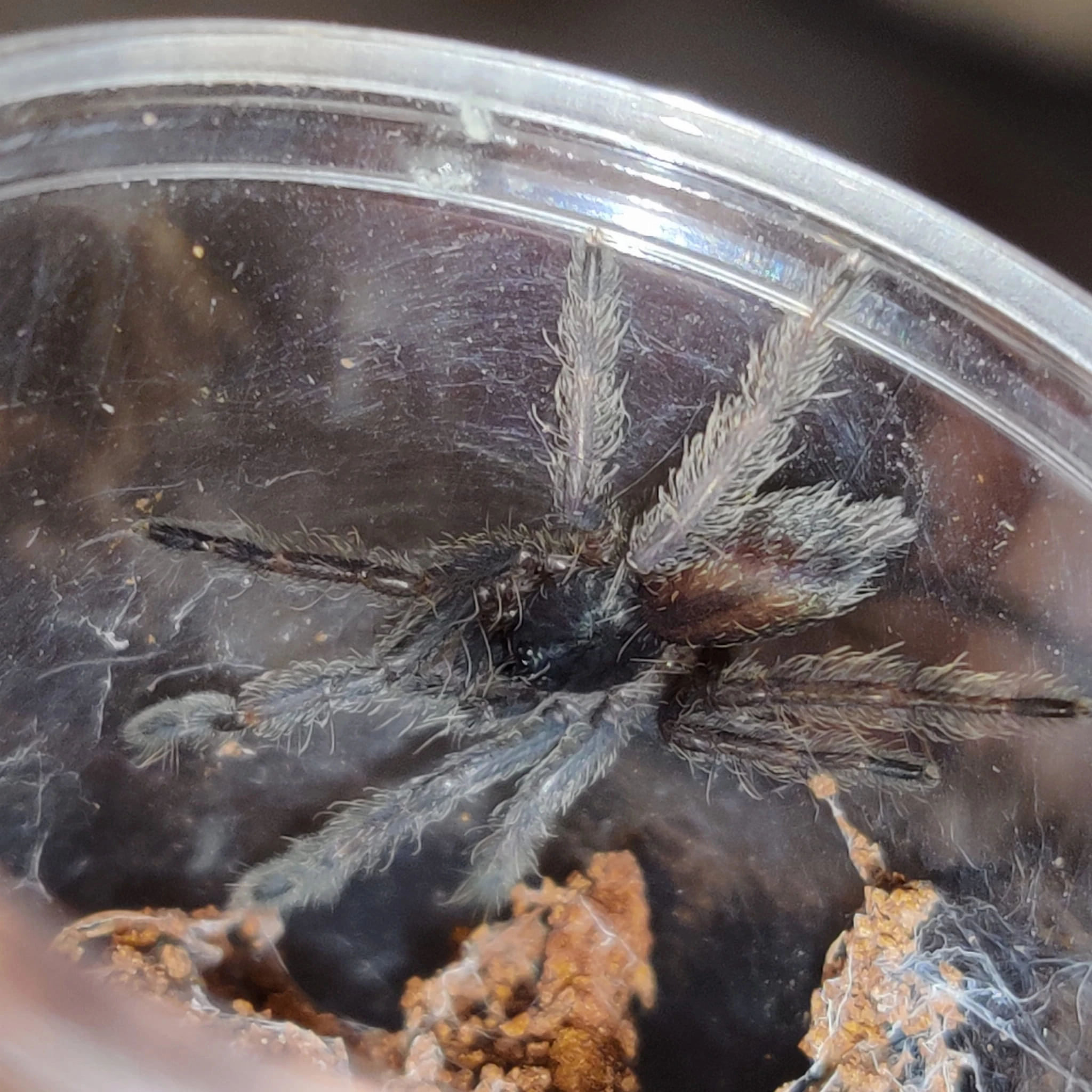
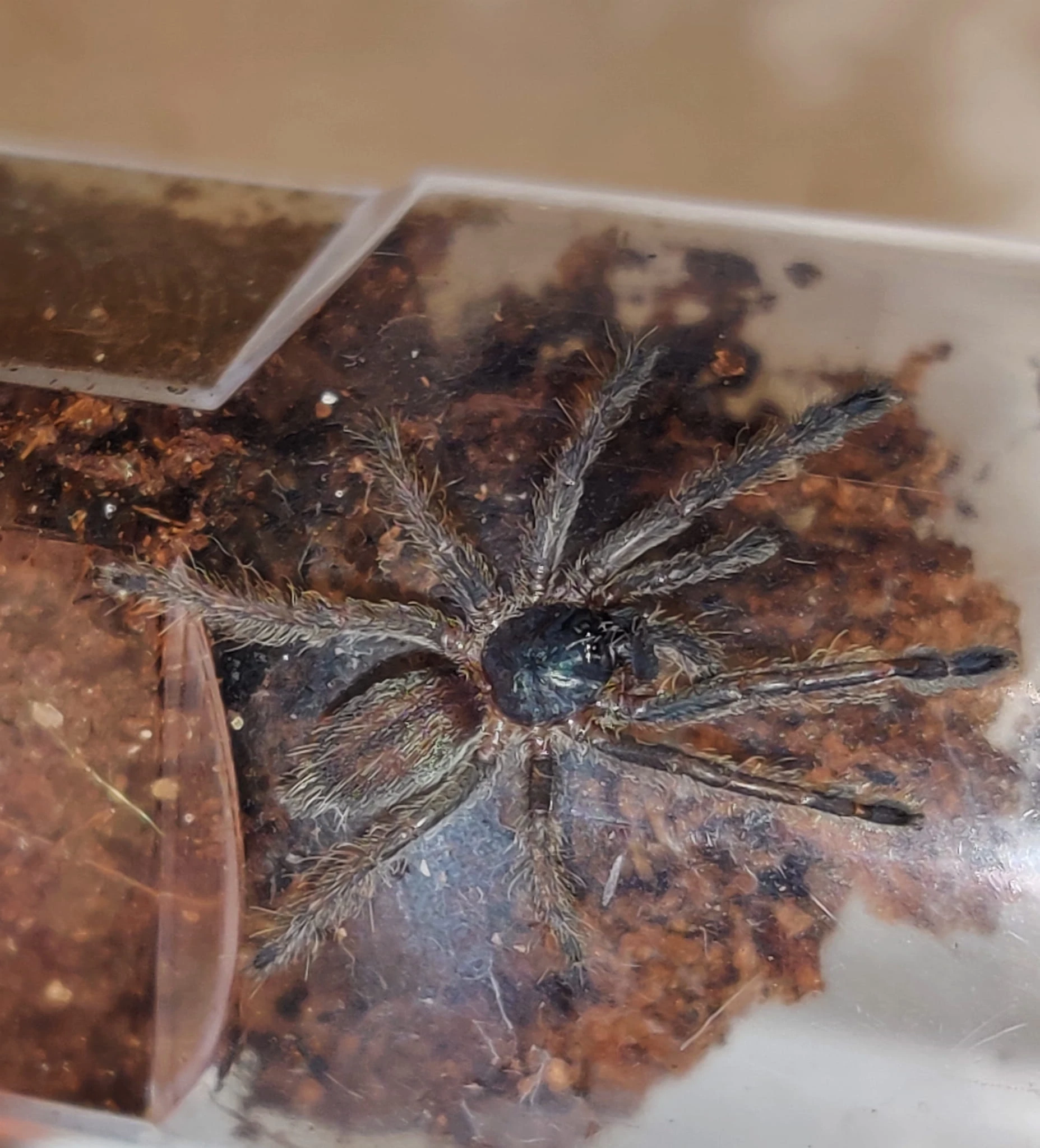


Tapinauchenius plumipes
Leave feedback on the product

Select product variant:
Individual variants may differ in price
Ask about the product

Administratorem danych osobowych jest PHU Krystian Solga. Przetwarzamy je w celu przesłania odpowiedzi na zapytanie. Więcej informacji dotyczących przetwarzania danych osobowych znajduje się w polityce prywatności.
Share the product card



Shipping cost for the selected product
The shipping cost applies to this product (in the selected variant - if applicable). It may change after adding other products to the cart.
Description
Tapinauchenius plumipes – Arboreal Tarantula with Beautiful Coloration
Tapinauchenius plumipes, also known as Tapinauchenius violaceus, is a beautifully colored arboreal spider species that enjoys great popularity among both beginner and advanced keepers. Originating from the tropical forests of Brazil and French Guiana, this tarantula stands out not only for its appearance but also for its interesting behaviors.
Appearance and Size
Females
Adult females reach a body length of about 5 cm, with a leg span of up to 10 cm. They are characterized by a beautiful, violet-navy blue coloration that opalesces under the right light, giving the spider a unique and original look.
Males
Significantly smaller than females, adult males are about 3 cm in body length. Their coloration is less spectacular, presenting in shades of gray, which contrasts with the vibrant colors of the females.
Juveniles
Young spiders differ from adults in coloration. With age, their coloration gradually changes, taking on hues similar to adult specimens.
Habitat and Lifestyle
Tapinauchenius plumipes is an arboreal species that prefers to live in crevices and cracks of tree trunks. It particularly likes citrus trees, which may influence the choice of captive environment. In its natural habitat, it inhabits moist, densely forested tropical areas where it has access to numerous hiding places.
Keeping Conditions
Terrarium
Ideal dimensions are a minimum of 20x20x30 cm, preferably 20x20x40 cm (length, width, height). The terrarium should be equipped with numerous hiding spots, such as cork tubes, branches, or pieces of bark, so the spider has a place to hide. Adding plants is possible because Tapinauchenius plumipes is less destructive to plants than terrestrial species.
Substrate
Use a substrate that maintains high humidity, e.g., coconut fiber or leaf compost. Regular misting is essential, but avoid overwatering, which can threaten the spider's health.
Decorations
Pieces of bark, cork tubes, and other decorative elements provide the spider with places to hide. Avoid sharp objects that could injure the spider.
Temperature
The optimal temperature is around 28°C (82°F) during the day, with a slight drop to 24-25°C (75-77°F) at night. Constant room temperature is also suitable due to the species' resilience.
Humidity
High humidity is crucial for the proper development of the spider. Regular misting of the substrate will help maintain an appropriate humidity level.
Diet
Tapinauchenius plumipes is undemanding in terms of feeding:
Juveniles
Fed fruit flies, Turkestan cockroach (Shelfordella lateralis) hatchlings, or small crickets.
Adults
Females can prey on larger cockroaches, such as Madagascar hissing cockroaches, and locusts. Regular feeding promotes rapid growth and spider health.
Behavior
Aggression
Tapinauchenius plumipes usually does not exhibit excessive aggression. In threatening situations, it may shoot feces at an attacker as a form of defense, but this is rare and not its primary defense mechanism.
Activity Level
This species is very agile, fast, and prone to jumping, which can be a challenge for keepers, especially beginners. However, the lack of excessive aggression makes it relatively easy to handle.
Breeding
Breeding Tapinauchenius plumipes is relatively simple, making it an attractive choice for breeders:
- Preparing the female: Ensure the female is at least 4-4.5 cm in body length. Feed her abundantly.
- Introducing the male: Place the male in the female's terrarium. Copulation usually occurs quickly and without problems.
- Post-copulation care: The female should be well-fed and provided with peace.
- Egg care: The egg sac is incubated for about a month, after which first instar nymphs appear. Females must be generously fed and watered after the egg sac is removed.
Lifespan
Females: Average lifespan is 10-12 years, though frequent breeding may slightly shorten this period.
Males: Live shorter lives, usually about 6 months after their final molt.
Advantages of Tapinauchenius plumipes
- Attractive coloration: The beautiful, opalescent colors of females and interesting color changes in juveniles make this species exceptionally beautiful.
- Easy to keep: Simple keeping requirements, moderate cost, and easy availability make it ideal for beginner keepers.
- Calm demeanor: Low aggression and a calm nature facilitate interaction with the keeper.
- Fast growth: The tarantula grows quickly, and juveniles molt frequently, which is satisfying to observe.
- Spectacular hunts: The agility and speed of this spider make its hunts spectacular and provide many thrills.
Summary
Tapinauchenius plumipes is an excellent choice for spider enthusiasts looking for a beautiful, agile, and relatively easy-to-keep species. Its attractive coloration, ease of breeding, and calm demeanor make it a tarantula worth considering for both beginner and more experienced keepers. Thanks to its rapid growth and interesting behaviors, Tapinauchenius plumipes is a valuable addition to any collection of exotic arachnids.
Reviews
If you've added a review and it doesn't appear on the list, it may be pending moderation.
Leave feedback on the product

