

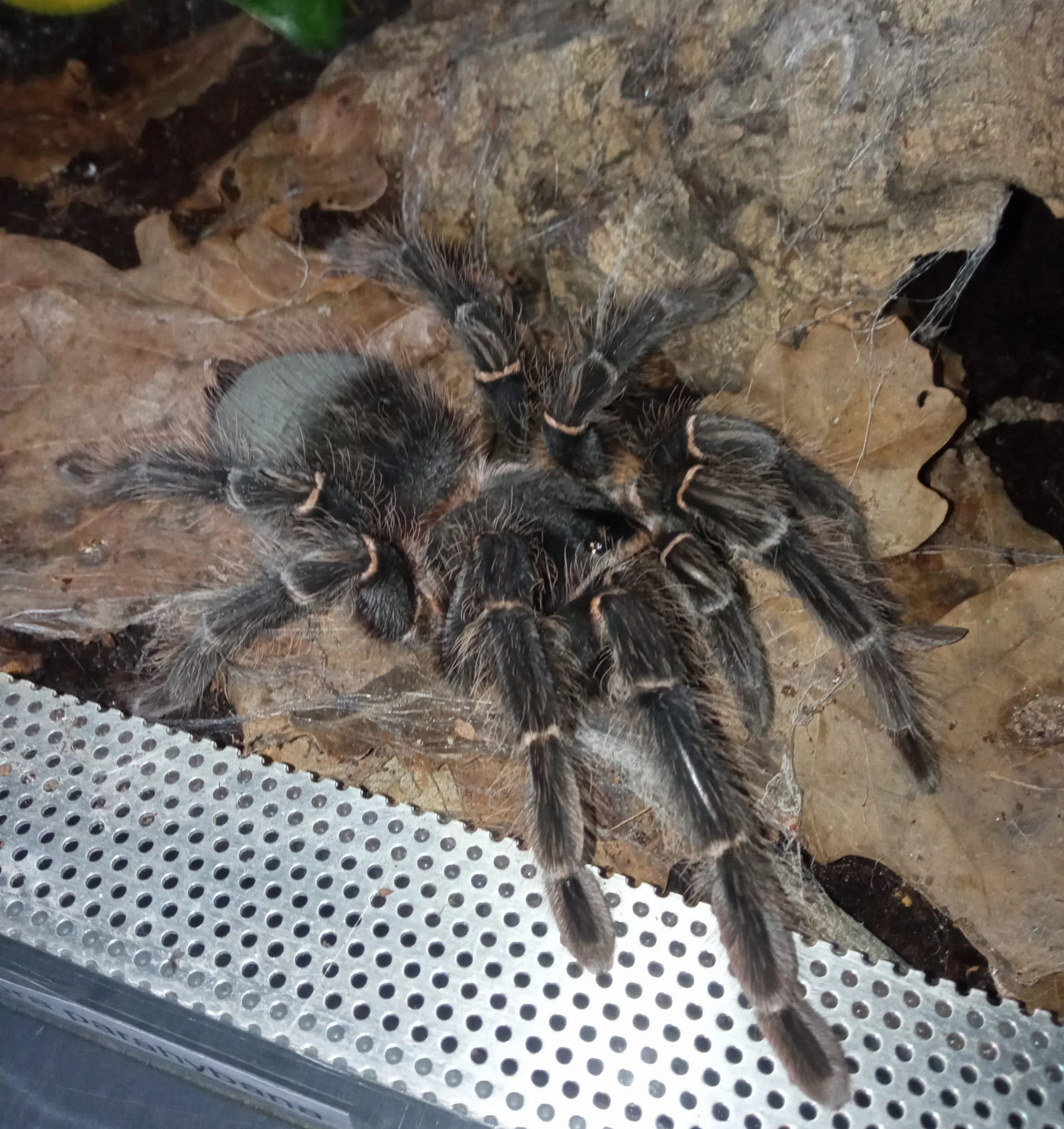


Lasiodora parahybana
Leave feedback on the product

Select product variant:
Individual variants may differ in price
Ask about the product

Administratorem danych osobowych jest PHU Krystian Solga. Przetwarzamy je w celu przesłania odpowiedzi na zapytanie. Więcej informacji dotyczących przetwarzania danych osobowych znajduje się w polityce prywatności.
Share the product card



Shipping cost for the selected product
The shipping cost applies to this product (in the selected variant - if applicable). It may change after adding other products to the cart.
Description
Lasiodora parahybana - Brazilian Salmon Pink Birdeater with Spectacular Size and Voracious Appetite
Lasiodora parahybana, known worldwide as the Brazilian Salmon Pink Birdeater, is a true colossus and one of the three largest spiders on Earth. Its majestic, velvety black body contrasting with dense, salmon-pink setae creates a predator of unmatched presence. Exceptional voracity, rapid growth rate, and calm temperament make this Brazilian giant the crown jewel of any display enclosure.
- Monumental size: adult females typically reach a 22-25 cm leg span (record specimens up to 28 cm) and an impressive body mass exceeding 100 g.
- Rapid growth rate: unlike slow-growing tarantulas, this species doubles its biomass in leaps and bounds, reaching massive proportions in just 2-3 years.
- Superb display species: a bold and confident terrestrial tarantula that readily stays out in the open, proudly showcasing its impressive appearance.
- Outstanding hardiness: remarkable ecological adaptability allows it to thrive at typical room temperatures and easily forgive minor beginner mistakes.
| Scientific name | Lasiodora parahybana |
| Common names | Brazilian Salmon Pink Birdeater, Salmon Pink Tarantula, LP |
| Origin | Brazil (endemic to Paraíba state, Atlantic Forest Mata Atlântica) |
| Type and lifestyle | Terrestrial tarantula, opportunistic burrower |
| Target size | Leg span 22-25 cm (up to 28 cm record), body length 9-10.5 cm |
| Lifespan | Females 15-20 years, males 3-5 years (up to 1-1.5 years after maturity) |
| Temperature | 24-27°C (75-81°F) during the day, 20-23°C (68-73°F) at night (tolerates room temperature very well) |
| Humidity | 65-75% (maintained as a gradient in the water dish corner) |
| Substrate | Coco fiber, peat, or clay mix, minimum depth 10-15 cm |
| Minimum enclosure size | 40x30x30 cm horizontal enclosure (50x40x30 cm recommended for adult female) |
| Defensive potential | Mild venom (medically insignificant), defense: kicking urticating setae (types I and III) |
| Legal status | Non-CITES species, exempt from mandatory official registration |
Choosing a Variant and Acclimating Your New Tarantula
We offer various developmental stages of this magnificent species to suit every keeper's experience and preference. Young spiderlings feature light pink coloration and require small, secure containers, while juveniles, subadults, and adults display the iconic high-contrast adult coloration and impressive proportions. Regardless of the chosen stage, introducing your new tarantula to its home should follow this simple protocol:
Step 1: Calm thermal acclimation - after unboxing, place the unopened shipping container in the target room for 24 hours at room temperature 20-22°C (68-71°F) without artificial heating, allowing the tarantula to stabilize its metabolism and recover from transit stress.
Step 2: Safe rehousing - keep young spiderlings in a well-ventilated vial or small container with moist substrate. For larger juveniles and adults, rehouse them using 25-30 cm feeding tongs or a soft brush, gently guiding the tarantula directly toward its pre-made hide.
Step 3: First meal after transit - offer the first meal 24-48 hours after rehousing, selecting a feeder insect sized to match the length of the spider's abdomen (tiny 2-3 mm hatchlings for spiderlings, appropriately sized roaches for juveniles).
Enclosure and Substrate Setup for Lasiodora parahybana
For an adult female, a horizontal enclosure measuring 40x30x30 cm or 50x40x30 cm with solid perforated stainless steel mesh ventilation is optimal. The single most important parameter is a deep layer of substrate (10-15 cm), which cushions potential falls of this heavy spider and accommodates burrowing behavior.
Due to the massive body weight of adult specimens, vertical fall distance from the substrate surface to the enclosure ceiling must not exceed 15-18 cm, completely eliminating the risk of abdominal rupture if the spider slips from the walls. A partially buried piece of natural cork bark makes an ideal sturdy shelter, accompanied by a heavy water dish in the corner. Maintain humidity at 65-75% by overflowing the water dish or dampening the substrate in one corner, allowing the rest of the enclosure to stay dry. Adding a bioactive cleanup crew such as white springtails helps break down food boluses and protects the enclosure from mold.
Feeding Guidelines and Diet Management
The diet of this predator consists exclusively of live feeder insects, sized between 50% and 100% of the tarantula's abdomen length. Feed spiderlings every 2-4 days with small nymph roaches, juveniles every 5-7 days, and adults every 10-14 days with adult roaches or locusts.
Ideal staple feeders include Turkish roaches, Dubia roaches, crickets, mealworms, and migratory locusts. While this species boasts a legendary appetite and attacks prey enthusiastically, body condition must be monitored carefully. The abdomen width should roughly match the carapace width, never exceeding 1.3-1.5 times its outline. Strictly avoid vertebrate prey such as rodents, which overload the digestive tract and cause obesity. When the spider enters premolt, darkens, and refuses food, remove uneaten insects immediately. After molting, wait 4-5 days for spiderlings and 10-14 days for adults before offering food again to ensure the fangs are completely hardened.
Common Husbandry Mistakes and How to Avoid Them
- Excessive enclosure height and hard decor: A fall from just a few inches onto hard stones or sharp edges can rupture the abdomen, causing fatal hemorrhage. Provide at least 10-15 cm of soft substrate and keep vertical drop height down to 15-18 cm.
- Overfeeding and offering vertebrates: Despite their voracious appetite, feeding rodents or overfeeding causes severe visceral obesity and impaction. Monitor abdomen girth and feed only nutritious feeder insects.
- Handling attempts: Tarantulas are display animals intended solely for hands-off observation. Handling poses a fatal drop risk to the spider and exposes the keeper to defensive urticating setae. Perform all enclosure maintenance using 25-30 cm tongs.
- Exposure to household neurotoxins (DKS prevention): Tarantulas are exceptionally sensitive to household airborne chemicals that trigger Dyskinetic Syndrome (DKS). Protect your spider from aerosol sprays, plug-in air fresheners, and topical flea treatments used on domestic pets.
- Leaving live feeders during molting: Live crickets or roaches left inside the enclosure during a molt can chew on and kill the soft, defenseless tarantula. Always remove uneaten prey promptly if the spider refuses food.
Taxonomic Framework, Etymology, and Mata Atlântica Habitat
Lasiodora parahybana was scientifically described in 1917 by renowned Brazilian arachnologist Cândido Firmino de Mello-Leitão. The genus name derives from ancient Greek, combining lasios (densely hairy) and dora (skin or hide), perfectly characterizing the dense, velvety covering of setae across the tarantula's body. The specific epithet refers to the Brazilian state of Paraíba, where natural populations concentrate around the Borborema plateau near Campina Grande. In the wild, this predator inhabits humid Atlantic rainforests (Mata Atlântica) bordering the dry Caatinga biome. Living in this ecotone has equipped the species with remarkable physiological tolerance to seasonal shifts in humidity and temperature.
Frequently Asked Questions (FAQ)
Is Lasiodora parahybana venom dangerous to humans?
The venom of this tarantula is mild and considered medically insignificant for individuals without severe allergies. Bite symptoms are typically limited to localized pain and minor swelling comparable to a bee or wasp sting. The primary defensive asset of this species is its massive chelicerae, reaching 2-2.5 cm in length, which can inflict painful mechanical puncture wounds. All maintenance should be performed using 25-30 cm feeding tongs, completely avoiding direct physical contact.
How should you handle urticating setae from this species?
The primary defense mechanism of Lasiodora parahybana is flicking a cloud of microscopic urticating setae (types I and III) from its abdomen. Type III setae feature barbed harpoon-like edges that cause intense itching on skin contact and severe irritation if exposed to the eyes or respiratory tract. When doing full enclosure cleans or changing substrate, wear gloves, avoid sudden air drafts, and mist dry substrate lightly before disposal.
Does Lasiodora parahybana require official registration or CITES permits?
No, Lasiodora parahybana is not listed under CITES or European wildlife annexes. Keeping and purchasing this species is 100% legal without mandatory registration, official fees, or breeder certificates required.
Looking for a spectacular giant that impresses with its appetite and monumental size? Select your preferred Lasiodora parahybana variant from the dropdown, add it to your cart, and enjoy keeping one of the world's most impressive tarantulas in your collection!
Shipping and Live Arrival Guarantee
During cold weather, every parcel is protected with a professional HeatPack warmer to maintain optimal travel temperature.
Live animals are dispatched exclusively Monday through Thursday to eliminate the risk of packages sitting in depots over the weekend.
We take full responsibility for safe transit. We guarantee your animal will arrive safe and healthy.
Reviews
If you've added a review and it doesn't appear on the list, it may be pending moderation.
Leave feedback on the product
