

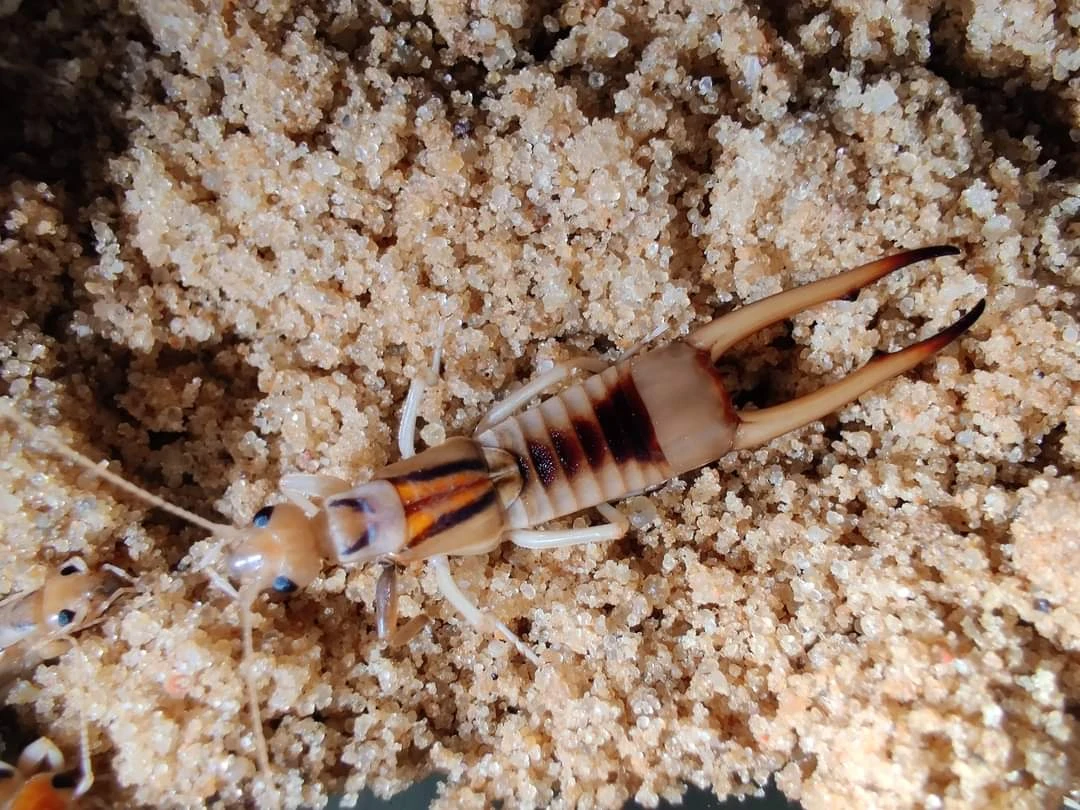
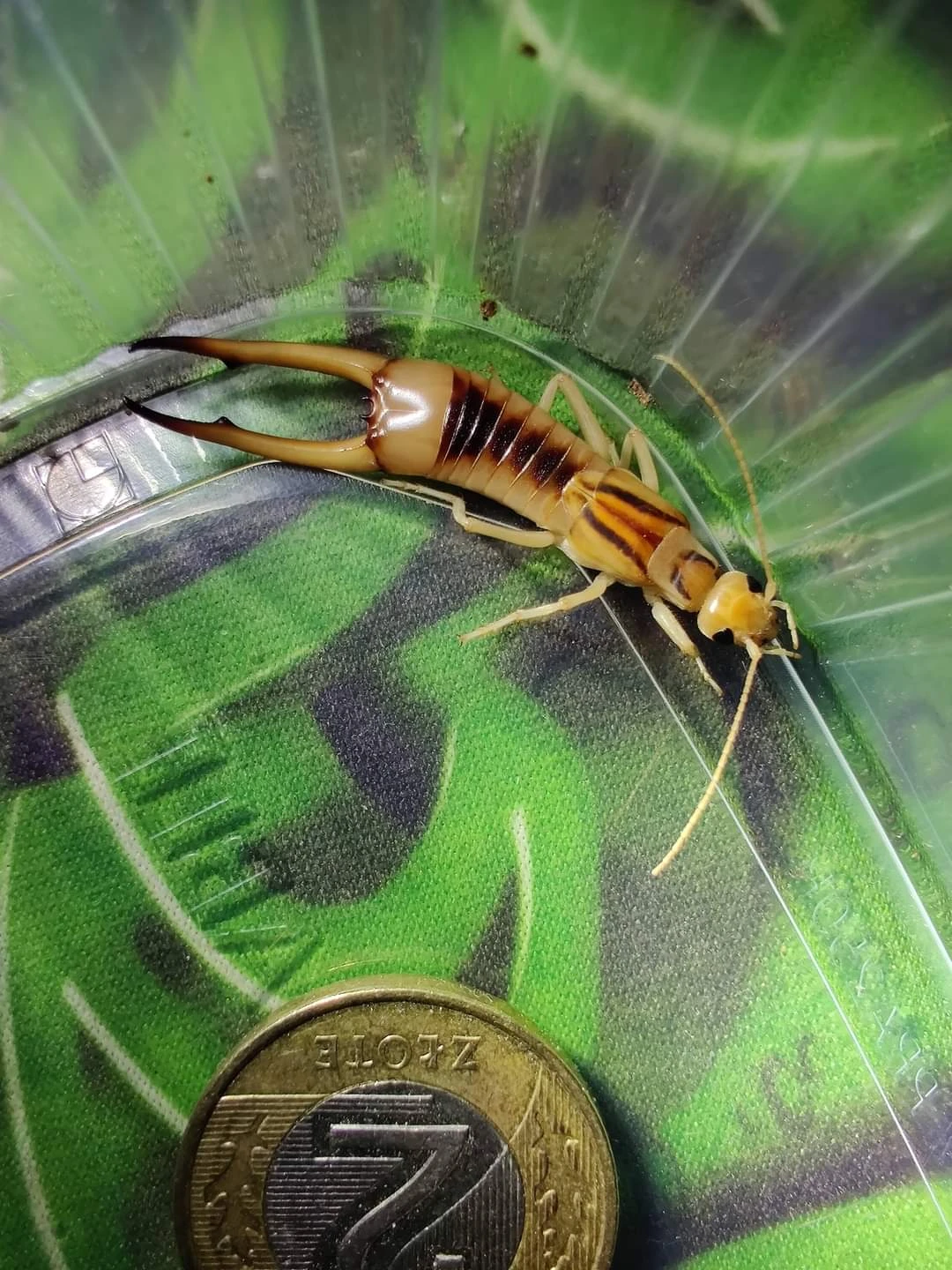
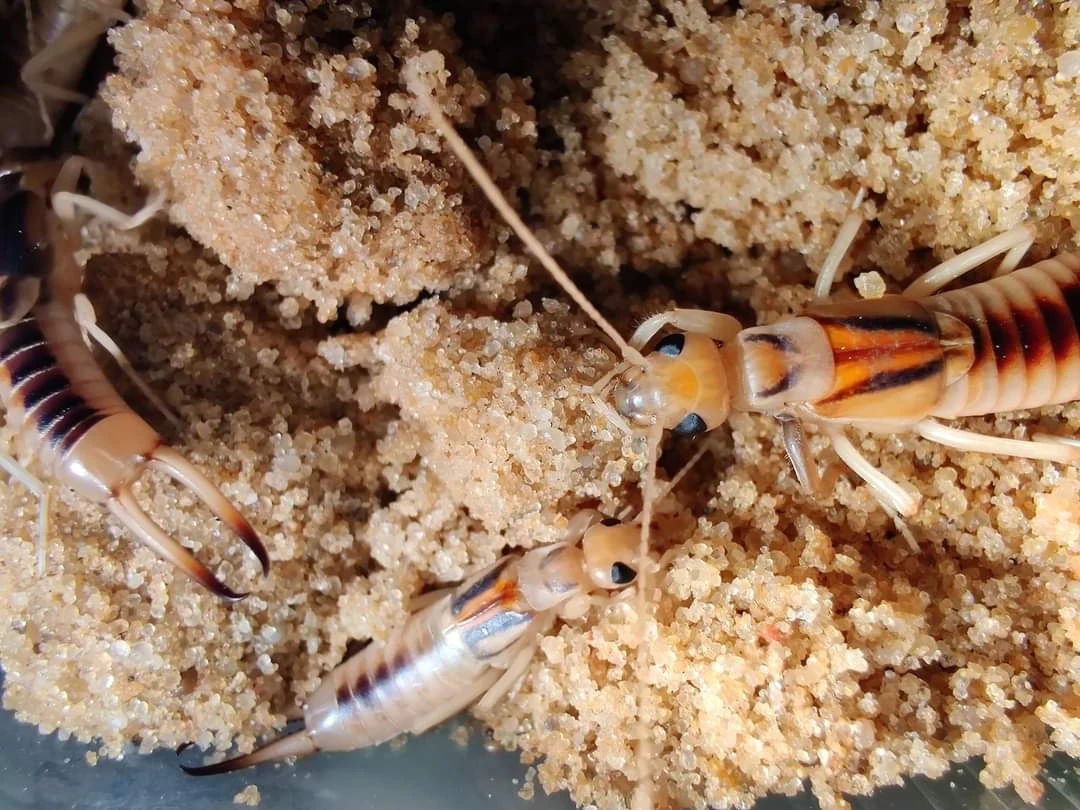


Labidura riparia
Leave feedback on the product

Select product variant:
Individual variants may differ in price
Ask about the product

Administratorem danych osobowych jest PHU Krystian Solga. Przetwarzamy je w celu przesłania odpowiedzi na zapytanie. Więcej informacji dotyczących przetwarzania danych osobowych znajduje się w polityce prywatności.
Share the product card



Shipping cost for the selected product
The shipping cost applies to this product (in the selected variant - if applicable). It may change after adding other products to the cart.
Description
Labidura riparia, also known as the shore earwig, tawny earwig, riparian earwig, or the striped earwig. It is the largest earwig species in Poland. According to various sources, it can reach up to 26 or even up to 30 millimeters (1.02 or 1.18 inches) in size. There is noticeable sexual dimorphism, with males being larger and having more curved pincers with an additional "tooth" in the middle. Females grow to around 22 millimeters (0.87 inches), are slimmer, and have straight pincers without the "tooth". These earwigs are thermophilic, active at night in the wild, and also active during the day in captivity. They live in and on sand, where they dig tunnels in moist sand. The female lays a dozen or even several dozen eggs, which she cares for until they hatch into larvae and then protects the young larvae from aggressive or hungry males for some time. This earwig is a predator that mainly preys on eggs and larvae of invertebrates, but when hungry, it will attack and often overcome opponents larger than itself. Interestingly, according to several sources, these earwigs can fly! Personally, no one from Ants Invasion has witnessed such behavior, but who knows.
In captivity, these earwigs with a huge appetite will consume all kinds of fresh or dried feeder insects, as well as other sources of protein such as cat or dog food, fish food in the form of flakes or krill tablets, and even a piece of meat from a meal. Our earwigs particularly love dried gammarus.
Our earwigs are kept in 4.5-liter containers (approximately 1.2 gallons), with about 1.9 liters (0.5 gallons) of sand, several pieces of cork bark (link), and 13-15 adult earwigs. And of course, a cleanup crew. Due to the relatively low humidity, these springtails (link) are perfect for them. They are fed and provided with water once a week. We haven't observed any cases of cannibalism; instead, in every container we have lots of young ones. We often observe short, not very intense fights for dominance near a particular burrow. We assume that a 1-liter container may be sufficient for 5-10 individuals, but we have not tested it in the long run.
Several people (including several members of the Ants Invasion team) have already successfully bred these earwigs from a single pair, so 2 individuals should be enough to start a colony.
When purchasing earwigs, you can choose an option with a setup kit. The variants are:
Small - 1-liter container, approximately 400 ml of sand, several dozen springtails and a piece of cork bark for them, 10 g of gammarus.
Medium - 4.5-liter container, approximately 1.7 liters of sand, several dozen springtails and two pieces of cork bark for them, 10 g of gammarus.
Large - 12-liter container, approximately 4 liters of sand, several dozen springtails and three pieces of cork bark for them, 25 g of gammarus.
The sand in the kit has not been processed or sterilized, but it comes from the same sand source as our earwigs - we use it ourselves. If you want to be 100% sure that nothing else lives in it, pour boiling water over it or boil it for a few minutes.
Below are some great videos:
Females with a massive clutch of eggs, recorded in our breeding facility.
Several dozen wild-caught adults and dozens of young earwigs, having an abundance of food probably for the first time in their lives. Best watched with sound on - you can hear the crunching! :)
An earwig dragging an adult antlion imago into its burrow, nibbling it on the move.
An adult earwig eating another earwig. Likely a victim of cannibalism, as the carcass was fresh. From the 10th second of the video, you can also see an adorable tiny baby earwig eating something very small.
And finally, an earwig dragging a bee, which decided to eat it on the spot after hitting an obstacle. The last seconds of the recording provide a nice close-up.
Reviews
If you've added a review and it doesn't appear on the list, it may be pending moderation.
Leave feedback on the product
 Log in with Google

