

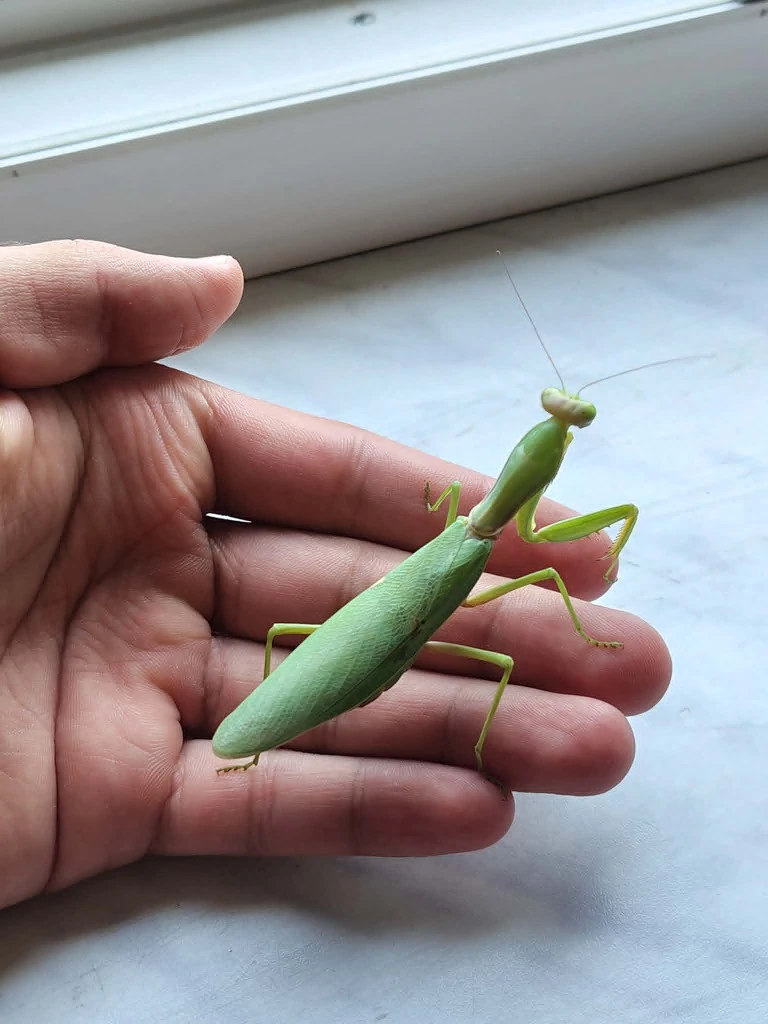
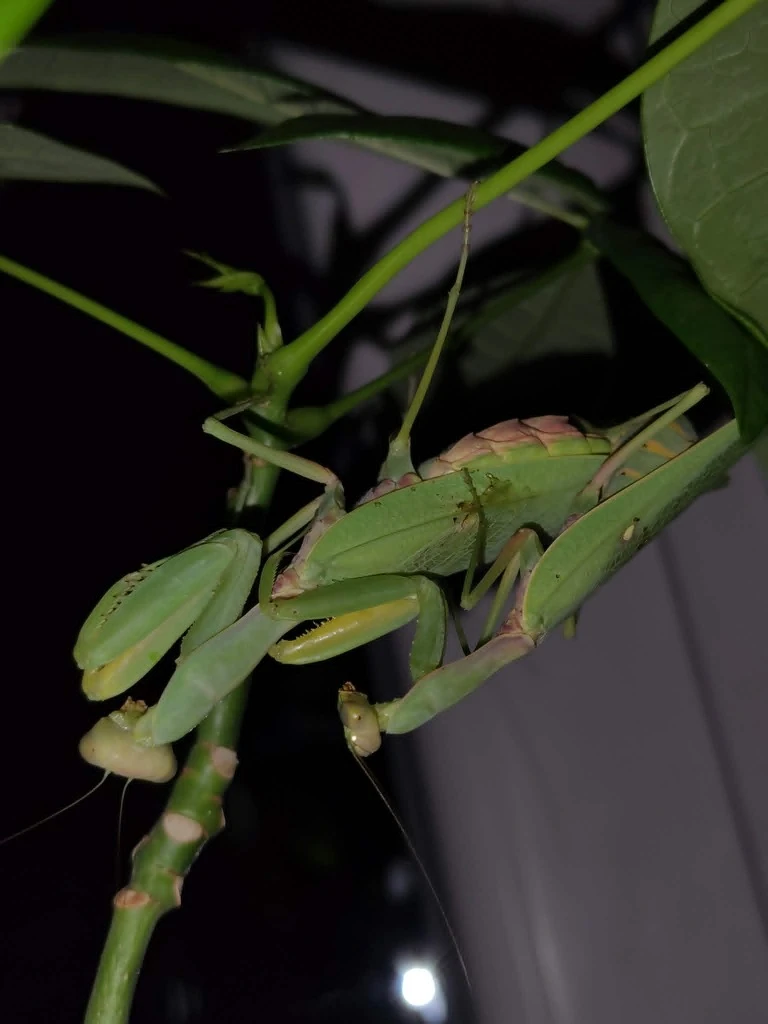


Hierodula tenuidentata
Leave feedback on the product

Wybierz wariant produktu:
Individual variants may differ in price
Ask about the product

Administratorem danych osobowych jest PHU Krystian Solga. Przetwarzamy je w celu przesłania odpowiedzi na zapytanie. Więcej informacji dotyczących przetwarzania danych osobowych znajduje się w polityce prywatności.
Share the product card



Shipping cost for the selected product
The shipping cost applies to this product (in the selected variant - if applicable). It may change after adding other products to the cart.
Description
Hierodula tenuidentata - Majestic Transcaucasian mantis and a ruthless hunter with phenomenal hardiness
Majestic, powerful, and endowed with the mesmerizing gaze of mobile eyes - Hierodula tenuidentata is the undisputed aristocrat among arboreal hunters of the Old World. This impressive mantis combines a monumental silhouette, armored physiological resilience, and lightning-fast reflexes that make it one of the most effective predators in the invertebrate world. As it freezes motionless among the foliage, patiently calculating the distance to its prey using three-dimensional binocular vision, it resembles a precision biological machine engineered to dominate tree and shrub canopies.
Modern terrarium keeping has fallen in love with this species not only for its spectacular appetite and impressive size, but also for its remarkable ecological plasticity and adaptability to diverse ambient conditions. Hierodula tenuidentata is a creature that delights beginners and seasoned entomologists alike, representing a living chronicle of evolutionary triumph and fascinating range expansion. Here is a comprehensive guide to walk you through all the nuances of biology, ecology, and responsible care for this extraordinary insect.
| Feature | Description |
|---|---|
| Scientific name | Hierodula tenuidentata (Saussure, 1869) |
| Taxonomic synonym | Hierodula transcaucasica (Brunner von Wattenwyl, 1878) |
| Common name | Transcaucasian mantis, Asian mantis |
| Geographic origin | Central Asia, Caucasus, Middle East, dynamically expanding invasive alien species in Europe |
| Adult size | Females approx. 70-85 mm (2.8-3.3 in), males approx. 60-70 mm (2.4-2.8 in) |
| Lifespan | Females up to 10-12 months (including 6-8 months as adults), males approx. 6-8 months (including 2-3 months as adults) |
| Daytime temperature | 24-28°C (75-82°F) (optimal temperature for activity and metabolism) |
| Nighttime temperature | 18-20°C (64-68°F) (standard room temperature, natural nighttime drop) |
| Air humidity | 40-60% (moderate, light misting of enclosure wall every 2-3 days) |
| Enclosure dimensions | Minimum 20x20x30 cm (8x8x12 in) for an adult female (vertical setup, 3xL height rule) |
| Ceiling mesh | Soft synthetic tulle or nylon mesh (protects the arolium and provides secure footing during molting) |
| Primary diet | Appropriately sized live feeder insects (fruit flies, blow flies, roaches, waxworms) |
| Social structure | Strictly solitary (obligate cannibalism from L2 stage onward) |
| Difficulty level | Very easy (hardy, bulletproof species, ideal for beginners) |
Taxonomy and the resolved synonymy puzzle
For decades in entomological literature and the pet trade, this charismatic mantis existed under two competing names: Hierodula tenuidentata Saussure, 1869 and Hierodula transcaucasica Brunner von Wattenwyl, 1878. The breakthrough came with modern morphometric research and taxonomic revisions conducted by European researchers. Detailed analyses of male genitalia, pronotal shield proportions, and the micro-structure of raptorial leg spines revealed that characteristics previously considered distinct for Hierodula transcaucasica fall well within the natural range of intra-specific clinal variation.
According to the International Code of Zoological Nomenclature (ICZN), the principle of priority prevails. The name Hierodula tenuidentata published by Henri de Saussure in 1869 takes chronological precedence, which means that Hierodula transcaucasica is its junior taxonomic synonym. For anyone passionate about professional exotic insect keeping, clarifying this nomenclature holds substantial practical value, allowing seamless navigation of both historical Caucasian literature and the latest European monographs.
Diagnostic morphology and sexual dimorphism
The adult silhouette of Hierodula tenuidentata commands immediate respect. Females reach an impressive body length of 70 to 85 mm (2.8 to 3.3 in), characterized by a robust, stocky build and a capacious abdomen. Males are somewhat more slender, typically measuring 60 to 70 mm (2.4 to 2.8 in), but compensate with agility and well-developed wings. Coloration in this species exhibits remarkable plasticity. Most specimens display a vibrant, emerald-green hue, yet depending on humidity levels and lighting during nymphal development, adults can turn yellowish, olive, or light brown.
The pronotum is broad, rhomboidally dilated in its anterior third, with delicately denticulated lateral margins. The most definitive diagnostic feature distinguishing this species from the European mantis (Mantis religiosa) lies on the inner side of the forecoxae on the raptorial legs. In Hierodula tenuidentata, the coxae feature pale, yellowish or orange callous tubercles, while the large black spot with a white center inside the coxal fossa is completely absent, which is the hallmark trait of Mantis religiosa. In addition, the first pair of wings (tegmina) bears a distinct, opaque, milky-white spot known as the stigma.
Sexing this species relies on reliable morphological criteria:
- Number of abdominal sternites: When viewing the underside of the abdomen against light, adult females show only 6 broad visible sternites, the last of which forms a massive subgenital plate protecting the ovipositor. In males, one can count 8 narrower, closely spaced segments.
- Antennae and sensory organs: Males possess noticeably longer, thicker antennae and proportionally larger compound eyes, which aid them in detecting receptive females among foliage.
- Flight apparatus and proportions: The wings of the male extend noticeably beyond the tip of the abdomen, making him a capable flier. In mature females, the wings cover the abdomen almost exactly to its tip, and due to their substantial body mass, females rarely fly, preferring arboreal climbing instead.
Invasive success across Europe and ecophysiology
The original native range of Hierodula tenuidentata encompasses arid scrublands, river valleys, and oases of Central Asia (Kazakhstan, Uzbekistan, Turkmenistan, Tajikistan), the Caucasus region, and parts of the Middle East. Over the past two decades, this species has become the protagonist of one of Europe's most dramatic biogeographical phenomena. Capitalizing on climate warming and anthropogenic transport, the Transcaucasian mantis undertook a rapid westward and northward expansion, colonizing the Balkan Peninsula, Italy, Crimea, Ukraine, Romania, Hungary, Austria, Germany, and southern Poland, where stable reproducing populations have been documented.
Currently, this species is treated in Central Europe as a potential invasive alien species (IAS candidate). The colonizing success of Hierodula tenuidentata rests on remarkable ecophysiological adaptations:
- Frost resistance of oothecae: Females produce compact, foamy egg masses with superb thermal insulation. Ecophysiological studies have confirmed that eggs enclosed within the ootheca readily withstand winter drops down to -5°C (23°F), and even short cold spells reaching -10°C (14°F), enabling them to successfully overwinter in temperate climates.
- Fatal attraction phenomenon: Females of Hierodula tenuidentata release sex pheromones with a chemical profile very similar to that of the native, strictly protected European mantis (Mantis religiosa). This lures native males, which approach the non-native female guided by scent. Given her substantial size and strength advantage, the female Hierodula tenuidentata treats these native suitors merely as easy prey, killing and consuming them on the spot. This phenomenon exerts serious pressure on local Mantis religiosa populations by removing males from the reproductive pool.
- Predation on vertebrates: As an apex predator among terrestrial invertebrates, an adult female does not limit her diet to insects alone. In the wild, confirmed predation events include small lizards, tree frogs, nestlings of small songbirds, and tiny rodents.
Strict keeper responsibility: Because Hierodula tenuidentata possesses substantial invasive potential and thrives in temperate climates, releasing any specimens, nymphs, or oothecae into the wild is strictly prohibited. Keeping this species indoors requires escape-proof enclosures. A conscious enthusiast enjoys observing this magnificent creature at home while safeguarding native biodiversity.
Biomechanical rules and enclosure setup
When designing a living space for this mantis, one must strictly follow the laws of physics and molting biomechanics. Mantises are hemimetabolous insects that shed their old exoskeleton while hanging vertically upside down. During this critical process, the insect literally slides out of its old cuticle and pumps hemolymph into expanding wings and abdomen. For this reason, an unbreakable spatial rule applies: the enclosure height must measure at least three times the insect's body length (3xL), and the width and depth at least twice its body length (2xL). For an adult female, this translates to an enclosure of at least 20x20x30 cm (8x8x12 in) with a vertical orientation.
The ceiling construction is a decisive safety element. Smooth glass or bare plastic surfaces make it impossible for the insect to achieve a reliable foothold. Worse still, conventional metal mesh vents pose a lethal hazard. Stiff wire edges sever delicate pretarsal claws and the arolium (the adhesive pad situated between claws), causing sudden loss of grip and fatal drops mid-molt. The only safe solution is covering the ceiling with soft synthetic tulle or dense nylon mesh, allowing the mantis to securely anchor its walking legs with ease.
The interior should reflect the arboreal lifestyle of this species. A few clean, dry twigs of varying thickness along with sturdy artificial or real plants are all that is required. The central vertical space directly beneath the ceiling must remain free of sharp obstacles so that the molting insect has unobstructed clearance. The enclosure needs effective cross-ventilation (vents positioned at the bottom and top) ensuring steady air exchange without cold drafts. When putting together your first terrarium starter kit, simplicity and function remain paramount. When choosing exotic insects for home, few creatures balance spectacular presence with modest space needs so perfectly, making them ideal for terrarium vertical enclosures.
Microclimatic parameters and immune health
For those seeking an impressive companion, mantises of this species represent completely safe terrarium pets that possess no venom, exhibit no aggression toward humans, and can be calmly observed up close. Their resilience to environmental variations stems directly from the habitats in which they evolved. As native inhabitants of dry gallery forests, orchards, and scrub steppes, they thrive under typical room conditions without requiring complex climate controllers.
During the day, the optimal temperature ranges from 24 to 28°C (75 to 82°F). In a home setting, placing the enclosure in a warm room or installing a low-wattage heat mat on one side panel provides sufficient warmth. A natural nighttime drop to 18-20°C (64-68°F) is essential. Diurnal temperature fluctuations slow nocturnal metabolic rates, extend overall lifespan, and recreate the natural rhythm of continental climates.
Relative humidity should remain at a moderate 40-60%. Hierodula tenuidentata is by no means a rain forest dweller. Excessively high humidity combined with stagnant air poses a serious health risk, promoting fungal infections and gut bacterial blooms. To provide drinking water, gently mist one side of the enclosure with lukewarm water every 2 to 3 days. The mantis will readily lap up water droplets to quench its thirst. Avoid spraying directly onto the insect with a harsh mist jet.
Feeding strategy and prey schedule
As an ambush predator equipped with stereoscopic binocular vision, Hierodula tenuidentata responds almost exclusively to movement. Its appetite is legendary, and its hunting technique relies on silently stalking prey before launching a strike with raptorial forelegs in a fraction of a second. The captive diet must remain diverse and tailored to the developmental stage:
- L1-L2 instars: Flightless fruit flies (Drosophila melanogaster) serve as the staple diet, offered every 1-2 days in quantities of a few flies.
- L3-L4 instars: Larger fruit flies (Drosophila hydei), freshly hatched Turkestan roach nymphs (red runners), and small houseflies.
- L5-Subadult instars: Green bottle flies (Lucilia sericata), medium-sized red runners, small locusts, and occasional wax moth larvae as an energy-dense treat.
- Adults (imago): Large blue bottle flies (Calliphora vomitoria), adult red runner roaches, dubia roaches, banana crickets, and locusts. Flying prey is particularly recommended because it triggers natural hunting behaviors and encourages physical exercise.
When offering prey or managing live insects, using dedicated insect feeding tools such as long tweezers helps present food safely and prevents sudden escapes. The golden rule of safe feeding lies in continuous visual assessment of abdominal fullness rather than blindly following a calendar schedule. A flattened, concave abdomen indicates it is time to feed. A moderately rounded, tear-drop shape signals healthy satiety. If the abdomen appears heavily distended and tense, pause feeding immediately. This caution is especially vital before an upcoming molt, when an overfed insect faces heightened risk of abdominal rupture or dropping from the ceiling.
Ethology, motion camouflage, and deimatic behavior
Observing the daily life of this insect reveals truly fascinating predator behavior unique to invertebrates. One of its most distinctive ethological phenomena is the so-called wind dance, or motion camouflage (swaying). When walking along branches or locking onto prey, the mantis performs rhythmic lateral swaying motions with its entire body. In doing so, it flawlessly mimics a leaf stirred by a breeze, blurring its outline against visual detection by prey and concealing it from sharp-eyed predatory birds.
When facing imminent danger or feeling cornered, it unleashes a dramatic threat display (deimatic display). The mantis rears its forebody vertically on its mid and hind legs, fans its powerful raptorial forelegs outward to display the bright callous patches on its coxae, and spreads its wings into a wide fan that visually doubles its apparent size. This posture is accompanied by audible hissing produced by friction between wing margins and abdominal segments combined with rapid air expulsion through abdominal spiracles. Should this show of force fail to deter an intruder, the mantis will strike decisively with spine-armed tibiae.
Solitary lifestyle and obligate cannibalism
Unlike certain mantis species within the family Empusidae, Hierodula tenuidentata is an uncompromisingly solitary predator. Territorial instinct and an unyielding predatory drive dictate that any attempt at cohousing multiple individuals in a shared enclosure inevitably ends in bloodshed.
From the second nymphal instar (L2) onward, siblings abandon all inhibition and actively hunt each other. Consequently, each individual must be housed in a strictly separate enclosure. Even overabundant feeding cannot suppress intra-specific aggression. A solitary existence is the biological norm for this species, and isolation ensures complete safety, zero stress, and uninterrupted development.
Safe breeding protocol and ootheca incubation
Breeding Hierodula tenuidentata in captivity is exceptionally rewarding, yet requires careful precautions due to the pronounced risk of sexual cannibalism. Males reach sexual maturity approximately 2-3 weeks after their final adult molt, whereas females require at least 3-4 weeks for complete ovarian development. A receptive female can be identified by downward flexing of her abdominal tip, exposing her pheromone glands.
To ensure a safe pairing for the male, follow this reliable protocol:
- For several days prior to mating, feed the female generously with large feeder insects (such as locusts or crickets) until her abdomen is well-rounded. A satiated female displays virtually no predatory aggression.
- Introduce the male into a spacious pairing enclosure behind the feeding female. The male stalks forward with extreme caution, freezing at her slightest movement, before making a sudden leap onto her back.
- Copulation typically lasts between 6 and 12 hours. Once mating concludes and the male dismounts, remove him promptly back to his own enclosure.
Within 2 to 4 weeks after successful fertilization, the female constructs an ootheca. She deposits it on a sturdy branch or ceiling mesh as a frothy, cream-white protein mass that rapidly hardens upon air contact into a tough, brownish capsule. Unlike the European mantis, eggs of Hierodula tenuidentata in captivity do not require an obligatory cold diapause. Incubate the ootheca at 25-27°C (77-81°F) with 50-60% humidity, lightly misting once a week. After 4 to 6 weeks, between 150 and up to 250 tiny, highly active L1 nymphs hatch simultaneously.
Common husbandry mistakes and how to avoid them
Although these are remarkably hardy creatures, long-term success relies on avoiding a few common pitfalls:
- Insufficient vertical height: Failing to provide enough vertical clearance (less than three times the body length) prevents proper hanging during ecdysis, causing crippled wings or fatal entrapment in the old skin. Always maintain at least 3xL in vertical headroom.
- Metal mesh ceiling: Sharp metal wire edges injure the tarsal pads (arolium), leading to loss of purchase and fatal drops mid-molt. Soft synthetic tulle or mesh is strictly essential.
- Leaving live crickets unattended overnight: Uneaten, hungry crickets can gnaw on and kill a freshly molted, soft mantis. Always remove feeder insects that are not caught within a few hours.
- Overly damp, stagnant conditions: Overwatering substrate without adequate airflow invites fatal bacterial and fungal infections. Maintain moderate humidity and allow periods of drying out.
- Overfeeding immediately before ecdysis: When a mantis refuses prey and wing buds (pterothecae) on subadults swell noticeably, pause all feeding until the molt is successfully completed.
Summary - why this is the perfect starter mantis
Hierodula tenuidentata stands as a genuine jewel of the entomological world. It unites majestic beauty, impressive size, gripping hunting behaviors, and generous tolerance for beginner learning curves. Exceptional physiological hardiness toward minor environmental fluctuations makes these truly easy to keep insects that readily forgive modest newcomer missteps.
As captivating and low-maintenance micropets, these mantises bring daily encounters with untamed nature without occupying valuable living space. Observing their hypnotic ambush strategies, rapid growth, and the birth of a new generation from an ootheca delivers memorable moments for any invertebrate keeper. Provide a tall enclosure with a soft tulle ceiling, balanced humidity, and varied prey, and you will gain an extraordinary arboreal hunter to take pride of place in your terrarium collection.
Reviews
If you've added a review and it doesn't appear on the list, it may be pending moderation.
Leave feedback on the product
 Log in with Google

