

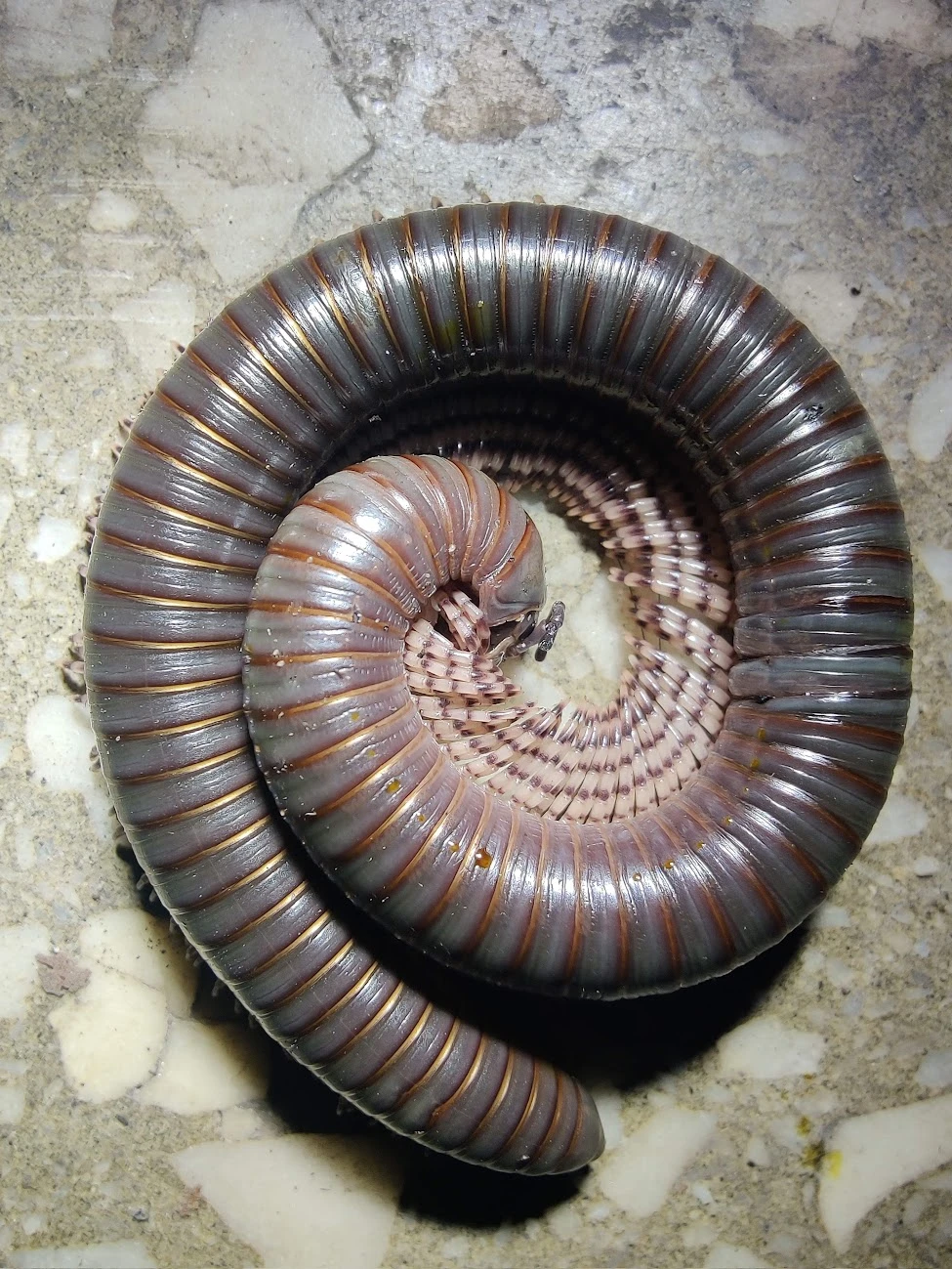
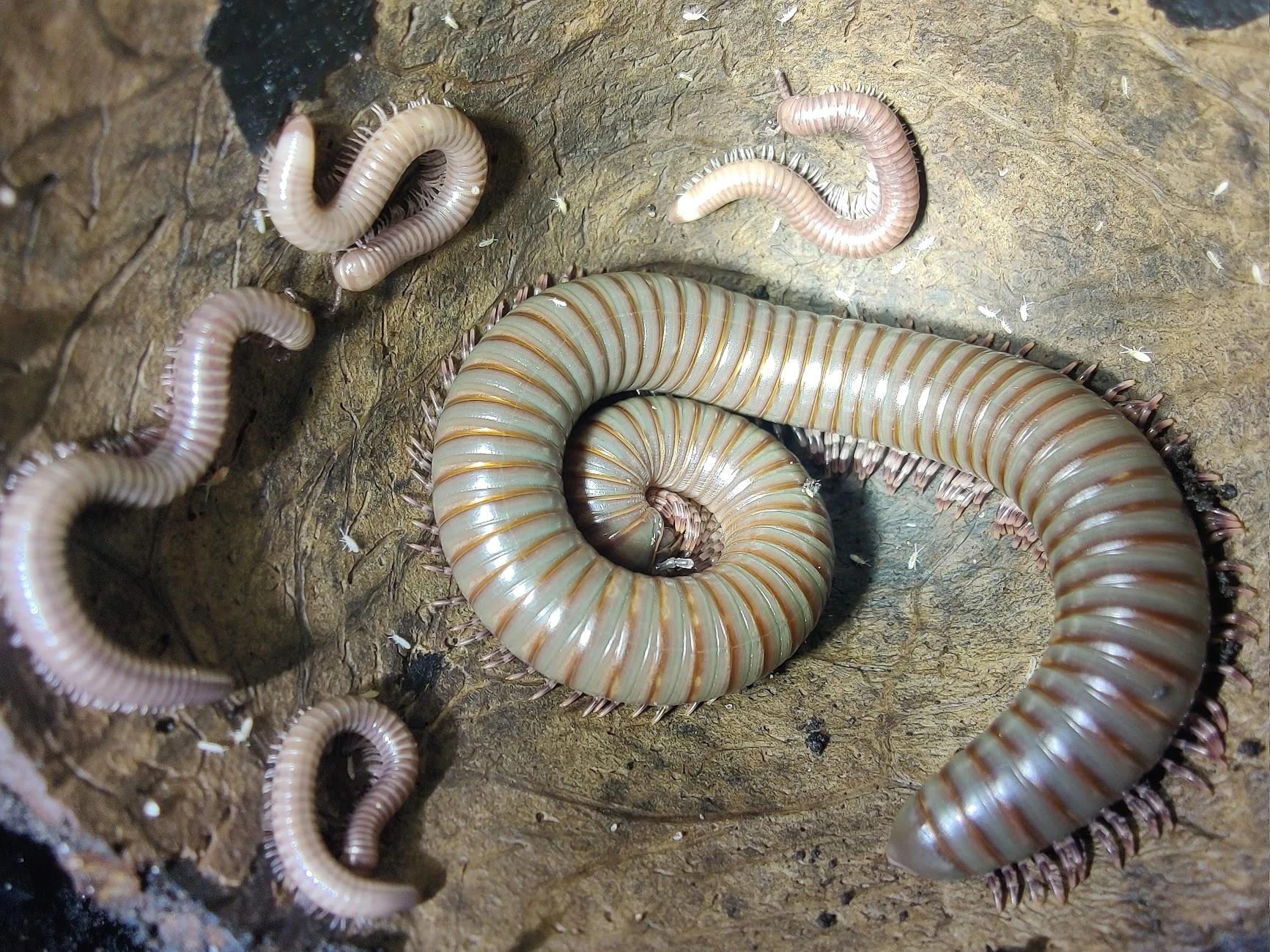


Telodeinopus aoutii
Leave feedback on the product

Wybierz wariant produktu:
Individual variants may differ in price
Ask about the product

Administratorem danych osobowych jest PHU Krystian Solga. Przetwarzamy je w celu przesłania odpowiedzi na zapytanie. Więcej informacji dotyczących przetwarzania danych osobowych znajduje się w polityce prywatności.
Share the product card



Shipping cost for the selected product
The shipping cost applies to this product (in the selected variant - if applicable). It may change after adding other products to the cart.
Description
Telodeinopus aoutii - Giant Olive Speckled Leg Millipede
Imagine the African savannah bathed in twilight, where on the forest floor, among decaying leaves and decomposing logs, one of our planet's most beneficial detritivores slowly roams. Telodeinopus aoutii, commonly known as the Giant Olive Millipede or Speckled Leg Millipede, is a true ecosystem engineer that has spent millions of years mastering the breakdown of dead organic matter. These fascinating micropets captivate observers with the hypnotic, wave-like motion of hundreds of patterned legs moving in perfect metachronal synchrony.
Bringing a piece of African nature into your home is an exceptionally rewarding experience. Millipedes are exceptionally safe terrarium animals, completely non-aggressive towards keepers, and observing them allows you to explore the fascinating mechanics of bioactive symbiosis. This comprehensive care guide covers everything you need to know to ensure a long, healthy life for this gentle giant in your care.
| Feature | Description |
|---|---|
| Scientific name | Telodeinopus aoutii |
| Common name | Giant Olive Millipede, Speckled Leg Millipede |
| Origin | Sub-Saharan Africa (Kenya, Tanzania, Ghana, Mozambique) |
| Adult size | 16-20 cm (record specimens up to 25-30 cm) |
| Lifespan | 5-7 years (up to 10 years in optimal conditions) |
| Temperature | Day: 22-28°C (72-82°F), Night: 20-22°C (68-72°F) (heat from side only, never from bottom) |
| Humidity | 70-90% (regular zoned misting) |
| Required substrate | White rot hardwood flake soil, decayed oak/beech leaves, organic soil (strictly no coco coir or conifers) |
| Diet | Rotting hardwood and leaf litter (primary food), soft fruits and vegetables, continuous cuttlebone supply, occasional protein |
| Difficulty | Easy (ideal for beginners) |
| Activity | Crepuscular and nocturnal, semi-arboreal (actively climbs branches and bark) |
Evolutionary Marvel and Speckled Leg Locomotion
The body of Telodeinopus aoutii is a perfectly cylindrical marvel of biomechanics, allowing it to burrow effortlessly through dense forest soils. The glossy exoskeleton boasts rich olive-green and chestnut hues. Its most distinctive visual feature is its legs, marked with contrasting dark and light bands that create an optical illusion as they propel the millipede forward in coordinated metachronal waves.
The Holobiont and Substrate Architecture – Why Substrate Is Food
For millipedes of the order Spirostreptida, substrate is far more than a walking surface – it is their home, shelter, and continuous food source. Telodeinopus aoutii functions as a holobiont, relying on trillions of specialized anaerobic gut bacteria to ferment cellulose from rotting wood into bioavailable fatty acids.
Because of this, building a bioactive enclosure requires a deep layer (10-15 cm) of fermented white rot hardwood flake soil, decomposing oak and beech leaves, and rich organic compost. The substrate must be as deep as the adult animal's length to allow proper burrowing.
The Lethal Danger of Coconut Coir and Coniferous Resins
A common beginner mistake is housing millipedes on commercial coconut coir. Millipedes continuously ingest their substrate. Indigestible coconut fibers expand in the gut, causing fatal impactions. Additionally, pine, spruce, and other coniferous woods contain toxic resins and essential oils that are lethal to myriapods. Use only hardwood materials!
The Golden Rule of Molting – Strictly No Digging
Millipedes grow by shedding their rigid exoskeleton (ecdysis). When ready to molt, Telodeinopus aoutii burrows deep into the substrate and constructs a sealed molting chamber. The process of shedding and hardening the new cuticle can take weeks to several months.
During this period, follow a strict zero-intervention rule: never dig up the substrate! Breaking the chamber causes sudden moisture loss, cuticle drying, and severe limb deformities that are almost always fatal. Be patient and wait for the millipede to emerge naturally.
Enclosure Setup, Semi-Arboreal Habits, and Safe Heating
A single adult needs at least 40 liters (e.g., 30x30x30 cm), while a breeding group thrives in a 60x40x40 cm terrarium. They enjoy climbing; provide diagonally placed oak branches and cork bark tubes.
- Temperature: Maintain 22-28°C (72-82°F) during the day, dropping to 20-22°C (68-72°F) at night.
- Heating: Mount heat mats or cables strictly on the side or back outside glass. Never heat from the bottom, as burrowing millipedes will overheat while seeking cool soil.
- Humidity: Keep at 70-90% by covering 50-75% of screen ventilation with acrylic or glass. Mist 1-2 times weekly on one side to provide a moisture gradient.
Defensive Biochemistry and Keeper Safety
Telodeinopus aoutii is entirely non-venomous and lacks biting mouthparts. When threatened, it coils into a tight spiral. Under extreme stress, lateral ozopores may exude a brownish fluid containing benzoquinones. This fluid has natural antiseptic properties protecting the animal from soil pathogens. While harmless to humans, it can temporarily stain skin yellowish-brown. Wash hands thoroughly with soap after handling and avoid rubbing your eyes.
Balanced Nutrition – Calcium for Shell Growth and Protein
- Vegetables & Fruits: Offer slices of zucchini, pumpkin, cucumber, sweet potato, ripe banana, or melon on a small dish 1-2 times weekly. Remove uneaten food after 24-48 hours.
- Calcium: Provide constant access to cuttlebone (sepia) or feed lime. This is essential for building a robust, mineralized exoskeleton.
- Protein: Supplement with a pinch of fish flakes, dried daphnia, or pre-killed feeder insects every two weeks to prevent companions from nibbling molting individuals.
Cohabitation Rules – The Danger of Isopods
Never house millipedes with isopods! Isopods are opportunistic protein-seekers that will attack and devour defenseless, molting millipedes underground. The only safe and effective cleanup crew for millipede enclosures are springtails (Collembola), which efficiently consume mold spores and food waste without harming the host.
Common Keeper Mistakes
- Heating from underneath: Causes fatal overheating of burrowing animals. Always heat from the side!
- Using coconut coir or pine bark: Causes fatal gut impaction or toxic resin poisoning.
- Digging up molting specimens: Leads to catastrophic cuticle collapse and limb loss.
- Lack of dietary calcium: Results in fragile, deformed shells during molts.
- Mixing with isopods: Puts molting millipedes at severe risk of predation.
Reviews
If you've added a review and it doesn't appear on the list, it may be pending moderation.
Leave feedback on the product
 Log in with Google

