

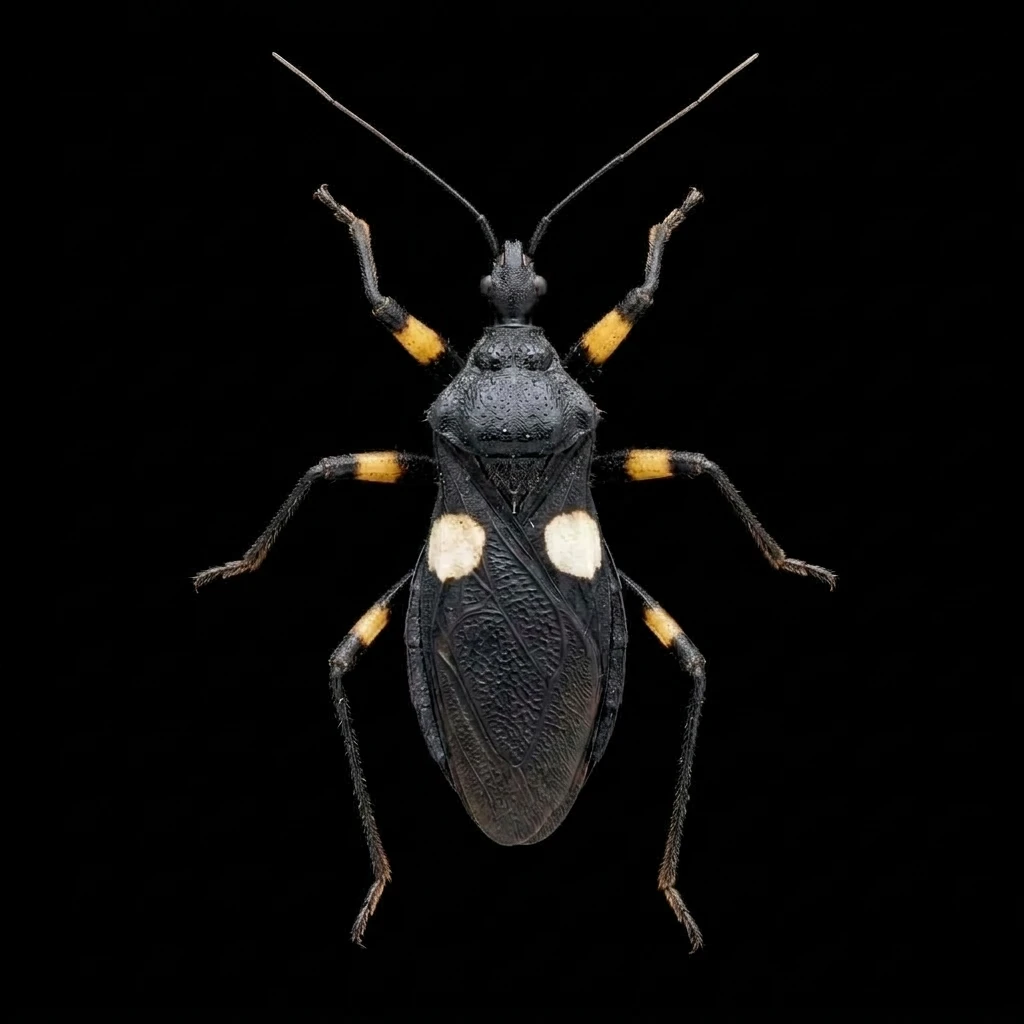
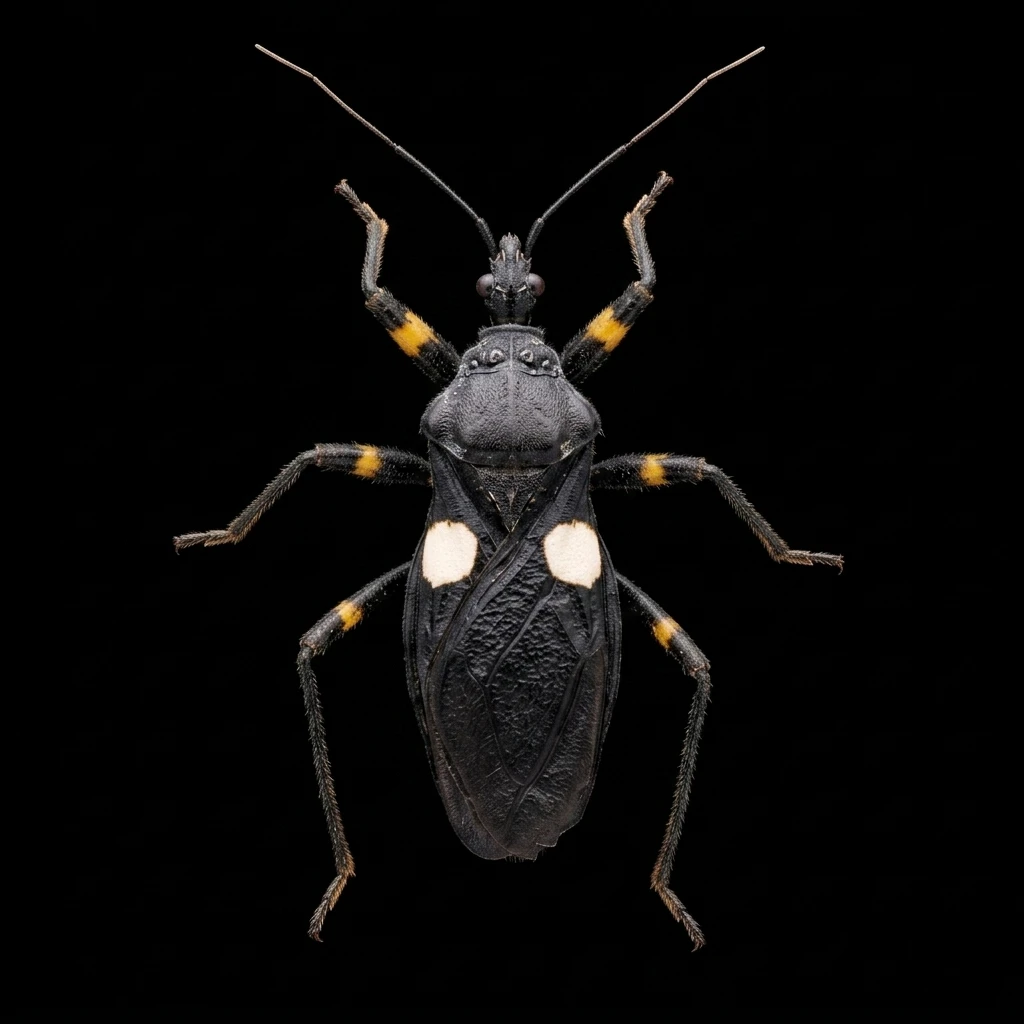


Platymeris biguttatus
Leave feedback on the product

Wybierz wariant produktu:
Individual variants may differ in price
Ask about the product

Administratorem danych osobowych jest PHU Krystian Solga. Przetwarzamy je w celu przesłania odpowiedzi na zapytanie. Więcej informacji dotyczących przetwarzania danych osobowych znajduje się w polityce prywatności.
Share the product card



Shipping cost for the selected product
The shipping cost applies to this product (in the selected variant - if applicable). It may change after adding other products to the cart.
Description
Platymeris biguttatus - Ruthless Hunter of the African Savanna
As the African twilight casts long shadows across the sun-scorched savannas and the heated air gradually surrenders its accumulated warmth to the night, a creature perfected in its dark anatomy emerges from the deepest fissures of ancient baobabs and cracked acacia bark. Platymeris biguttatus, commonly known as the two-spotted assassin bug or white-eyed assassin bug, is true aristocracy among predatory invertebrates. Its pitch-black chitinous exoskeleton stands in striking contrast to two snow-white spots on its wings, which create the uncanny illusion of vigilant, luminous eyes in the dim light. Every movement is deliberate, majestic, and completely devoid of unnecessary haste—marking an apex predator in miniature that fears no rival.
For keepers of extraordinary terrarium species, this African hunter represents the pinnacle of evolutionary precision. It combines an uncompromising predatory drive, sophisticated biochemical weaponry, and an ability to cooperate in packs that is exceptionally rare in the insect world. Observing a group of these magnificent true bugs during a coordinated hunt against prey several times their own size provides a genuine thrill for any enthusiast. Below is a comprehensive guide delving into the anatomy, behavior, and responsible husbandry of this remarkable predator.
| Characteristic | Description |
|---|---|
| Scientific name | Platymeris biguttatus (Linnaeus, 1767) |
| Common name | Two-spotted assassin bug, White-eyed assassin bug |
| Origin | Sub-Saharan Africa – savannas, dry acacia shrublands, and gallery forests |
| Target size | Imago: males 32-33 mm, females 34-40 mm; hatchlings (L1 nymphs) approx. 7 mm |
| Lifespan | Imago: 8-24 months; egg to adult development: 6-9 months |
| Daytime temperature | 25-28°C (77-82°F) (optimal range for metabolic activity and hunting) |
| Nighttime temperature | 21-24°C (70-75°F) (natural diurnal temperature drop of the savanna) |
| Humidity | 50-60% (substrate 90% dry, one misted corner at approx. 70%) |
| Terrarium dimensions | Min. 20x20x25 cm for a single individual; 30x30x30 cm or 40x30x30 cm for a group of 6-12 specimens |
| Diet | Live feeder insects (Turkestan roaches / red runners, Dubia roaches, crickets; for L1 nymphs, flightless fruit flies Drosophila hydei) |
| Social behavior | Communal keeping possible, cooperative pack hunting; cannibalism risk occurs strictly during starvation or molting |
| Difficulty level | Moderate / for responsible keepers (strictly display species, strict no-handling doctrine) |
Natural Biotope and Behavior: African Savanna and Cryptozoic Lifestyle
The native homeland of Platymeris biguttatus spans broad expanses of Sub-Saharan Africa, stretching from Senegal and The Gambia in the west to Kenya and Tanzania in the east. In this demanding environment dominated by prolonged dry seasons and blistering sunshine, this assassin bug has mastered survival in highly specific ecological niches. It exhibits a distinctly cryptozoic—or secretive—lifestyle. During daylight hours, it shuns open spaces, seeking refuge in deep, sheltered crevices within the trunks of ancient baobabs (Adansonia digitata), beneath the peeling bark of mature acacias, in rock fractures, and inside abandoned termite mounds.
Understanding this microhabitat is the cornerstone of captive breeding success and explains the exact environmental parameters required in captivity. Why must 90% of the substrate remain bone dry while the air humidity is kept around 50-60%? Because the African savanna is an exceptionally arid biotope where damp substrate quickly causes mold, bacterial rot, and lethal respiratory infections. Concurrently, inside the deep bark crevices where the bugs cluster during the day, a stable microclimate with faint residual humidity persists. Providing one slightly damp, misted corner within an otherwise dry terrarium perfectly mirrors this balance, offering essential hydration and an optimal oviposition medium for gravid females. The same logic applies to diurnal temperature fluctuations: allowing temperatures to drop from 25-28°C (77-82°F) during the day to 21-24°C (70-75°F) at night simulates the natural nocturnal cooling of the savanna, boosting immune resilience and extending adult lifespan.
For any enthusiast captivated by professional invertebrate keeping, welcoming this African predator into your collection is an extraordinary lesson in natural ecology. Watching true bugs of the genus Platymeris emerge from their hiding places at dusk, raise their bodies high on spindly legs, and explore their surroundings with sensory antennae brings the authentic ambiance of the African wilderness right into your room.
Hunting Physiology and Venom Biomechanics: Precision Piercing-Sucking Mouthparts
The predatory mechanics of Platymeris biguttatus represent a masterpiece of evolutionary engineering. At rest, the powerful, three-segmented rostrum (proboscis) remains tucked beneath the head, resting neatly in a specialized prosternal groove known as the stridulitrum. This groove features microscopic transverse ridges; when disturbed or alarmed, the insect rubs the tip of its rostrum against these ridges to produce an audible, raspy squeaking sound as an aposematic warning. When attacking, the rostrum is thrust forward with lightning speed and the concussive force of a pneumatic lance. Its rigid, needle-like stylets easily pierce even the toughest chitinous armor of beetles and heavily sclerotized roaches.
The secret behind this hunter's extraordinary efficiency lies in its sophisticated venom cocktail. Instead of wrestling with tough exoskeletons or laboriously chewing prey, the assassin bug injects a potent blend of neurotoxins and digestive enzymes directly into the victim's body. These biochemical agents act almost instantly: within seconds, the prey is entirely paralyzed, and internal tissue breakdown commences.
Remarkably, the venom also contains potent anticoagulants that prevent the prey's hemolymph and bodily fluids from clotting. Over the course of several minutes, the victim's internal organs are liquefied into a rich, nutrient-dense broth that the predator extracts through its narrow proboscis much like drinking through a straw. This process is known as extra-oral digestion. Once the meal is finished, nothing remains of the prey except an immaculate, hollow exoskeleton—resembling an empty shed skin.
Cooperative Hunting and Interspecific Dynamics: The Pack-Hunting Phenomenon
In the arthropod kingdom, predatory habits almost invariably coincide with solitary, aggressive lifestyles. Mantises and arachnids promptly eliminate any conspecific that ventures into their territory. Assassin bugs of the genus Platymeris, however, represent a remarkable exception to this rule. They display distinctive gregarious behavior—a tendency to form stable social groups whose members not only tolerate each other's presence but actively cooperate.
The most spectacular manifestation of this sociality is cooperative pack hunting. When an adult or older nymph locates an imposing prey item—such as an adult Madagascar hissing cockroach or a large migratory locust—it initiates the initial strike. The struggling prey generates substrate vibrations and distress signals that immediately alert and rally other members of the group. Within fractions of a second, additional hunters join the fray. Multiple bugs drive their rostrums into different parts of the victim, delivering a massive, concentrated dose of lytic enzymes. Prey many times the size of an individual assassin bug is fully incapacitated in under a minute. Once subdued, the pack feeds in complete harmony without a trace of intraspecific rivalry, peacefully sharing the single food source.
Watching these social interactions in the terrarium reveals some of the most intricate and captivating behaviors among predatory invertebrates, where predatory ferocity meets surprising communal solidarity. However, keepers must remain mindful of the darker aspect of their biology: the risk of cannibalism. Assassin bugs of the genus Platymeris demonstrate no conspecific aggression provided two strict criteria are met: an uninterrupted supply of live food and adequate physical space. Cannibalism emerges swiftly under prolonged starvation, water deprivation, or during molting. An insect undergoing ecdysis is soft, defenseless, and emits a scent of fresh cuticle that, under food scarcity, provokes cagemates to feed. Regular feedings and an abundance of hiding spots eliminate this hazard entirely.
Demystifying the Parthenogenesis Myth: What Modern Research Reveals
For years across terrarium literature, hobby forums, and older care guides, a widespread myth persisted claiming that Platymeris biguttatus was capable of parthenogenesis (asexual reproduction). This misconception originated because virgin adult females kept in strict isolation from males continue to regularly lay dozens or even hundreds of well-formed, seemingly intact eggs. Many beginning hobbyists anticipated the emergence of fertile nymphs, leading to erroneous assumptions and unverified rumors.
Rigorous contemporary entomological research has definitively dispelled this myth. Female true bugs of the genus Platymeris possess a strong physiological imperative to clear their oviducts of mature oocytes. Without fertilization by a male, they deposit strictly trophic eggs—completely unfertilized and sterile. While these eggs maintain a dark coloration and a glossy cap (operculum) for the first few days, after 2-4 weeks they inevitably collapse inward, desiccate, or succumb to mold. Not a single nymph will ever hatch from unfertilized eggs.
Achieving a viable generation requires standard mating with a mature male. Distinguishing sexes in adult specimens is straightforward for an observant keeper: females are conspicuously larger (up to 40 mm) with a broad, rounded abdomen bearing a distinct ovipositor plate on the underside. Males reach approximately 32-33 mm, exhibit a noticeably slender build, and possess longer wings that extend slightly past the abdominal tip. If your goal is captive breeding and observing the complete life cycle, your breeding colony must contain specimens of both sexes.
Terrarium Setup: Vertical Architecture and Savanna Microclimate
Designing an enclosure for Platymeris biguttatus demands careful consideration of their specialized morphology and locomotion. These insects possess long, slender ambulatory legs; while capable runners across flat terrain, their natural environment centers on vertical tree trunks and deep bark fissures. Consequently, the terrarium should follow a vertical or balanced cubic configuration. A 20x20x25 cm enclosure is sufficient for a single specimen, whereas an established communal group of 6-12 individuals thrives in a 30x30x30 cm or 40x30x30 cm enclosure.
The foundational interior decor consists of thick slabs of natural virgin cork bark positioned vertically and diagonally. Properly selected, tall pieces of natural cork bark are ideal for enclosures housing this species, creating vertical crevices that closely mimic savanna tree crevices. Incorporating cork bark is far more than an aesthetic preference; it is a critical matter of survival. Assassin bugs of the genus Platymeris molt exclusively while hanging vertically head-down. The rough, porous texture of cork bark offers their tarsal claws an unshakable grip. As the bug sheds its old skin, gravity assists in pulling the delicate legs, antennae, and wings free from the exuviae. The absence of suitable vertical perches causes molting complications, irreversible limb deformities, or fatal falls to the substrate.
Proper enclosure ventilation is equally vital. Terrariums should feature effective passive airflow protected by fine mesh (preferably stainless steel), ensuring steady, draft-free air exchange. The optimal substrate consists of a dry 2-3 cm layer of sand mixed with peat or coconut coir.
⚠️ STRICT PROHIBITION AGAINST UNDERTANK HEAT PADS: In nature, insects seeking relief from ambient heat instinctively burrow downward into cooler soil layers. Installing a heating mat underneath the bottom glass inverts this thermal gradient. Confused bugs attempting to escape high temperatures will retreat downward directly onto hot glass, leading to rapid dehydration, thermal shock, and death. Supplementary heating must EXCLUSIVELY be provided via heat mats or heat cables mounted on the outside rear or side wall, governed at all times by a reliable digital thermostat.
The No-Handling Doctrine and Ironclad Safety Rules
Keeping Platymeris biguttatus requires strict adherence to unwavering safety protocols. While they are not docile, touchable terrarium pets suitable for handling, they are predictable and straightforward display subjects when kept under a disciplined no-handling regimen. A strict no-contact policy is essential: under no circumstances should these insects be handled with bare fingers, held, or manipulated without protective gear.
The primary hazard presented by these insects is not merely their mechanical bite, but their unique capacity for active chemical projectile defense at a distance. When experiencing severe distress, physical compression, or a sudden burst of air, this predator can forcefully spray a jet or droplets of irritating venomous fluid from its rostrum over distances of up to 30 centimeters (approx. 12 inches). This fluid is packed with potent enzymes that cause intense irritation upon contact with mucous membranes.
⚠️ CRITICAL EMERGENCY PROTOCOL FOR VENOM EXPOSURE: If defensive secretions contact human eyes, they cause immediate, excruciating pain, intense burning, severe conjunctival swelling, and temporary blurred vision. Without rapid decontamination, corneal ulceration and ocular damage can occur. In the event of eye exposure, immediately flush the eye copiously with cool running water or sterile saline solution for a minimum of 15 minutes, then promptly consult an ophthalmologist or emergency medical physician.
A defensive puncture to bare human skin is extraordinarily painful, far exceeding the severity of a wasp or hornet sting. Injected digestive enzymes cause intense localized inflammation, swelling, and a persistent wound that can take several weeks to heal. For this reason, maintenance, waste removal, and feeding should always be conducted using dedicated equipment. Long 25-30 cm feeding tweezers are an indispensable tool for every responsible keeper. Protective safety glasses are strongly advised during major enclosure cleaning. The enclosure must remain securely locked and out of reach of small children or individuals unaware of the risks.
Most Common Keeping Mistakes and How to Avoid Them
Although Platymeris biguttatus is a remarkably hardy insect with broad physiological resilience, husbandry errors stemming from inadequate knowledge can result in the loss of an entire colony. Below are the most critical mistakes and how to prevent them:
- Leaving aggressive live feeders in the enclosure overnight: Unconsumed crickets or large cockroaches left roaming the tank pose a fatal threat to an assassin bug undergoing ecdysis. Soft and helpless while shedding its exoskeleton, the predator becomes easy prey for omnivorous crickets. Always remove uneaten feeder insects within 2-3 hours after feeding.
- Heating the terrarium from below: As emphasized, installing a heat mat beneath the tank induces fatal overheating in bugs instinctively burrowing downward to escape warmth. Heat must be applied solely to the vertical side or rear panels.
- Lack of vertical molting structures: A bare, horizontal enclosure devoid of vertical cork bark slabs prevents successful molting. Hanging head-down is a non-negotiable biological requirement. Furnish the terrarium with multiple tall, stable cork shelters.
- Excessive substrate moisture: Over-misting, swampy peat, and stale air create an ideal breeding ground for mites and mold, which asphyxiate the insects by clogging their spiracles. Keep 90% of the substrate bone dry, misting only a single compact corner.
- Handling insects with bare hands: Disregarding safety distances and attempting to catch specimens with fingers inevitably invites severe bites or defensive venom spray aimed at the keeper's face. Long tweezers are your essential protective barrier.
Why Choose Platymeris biguttatus for Your Collection
Welcoming these remarkable exotic insects into your home brings a captivating slice of the wild African ecosystem into your living space, commanding the fascination of every visitor. Platymeris biguttatus is truly in a class of its own, blending dark, predatory elegance with complex social dynamics that continually astonish experienced entomologists. With adult lifespans reaching up to two years, they offer long-lasting companionship compared to many other short-lived arthropods.
Setting up an appropriate starter terrarium for this species ensures that, with basic safety discipline and proper vertical cork architecture, your pack will reward you with spectacular hunting displays and steady colony growth. This is a predator for discerning keepers—one that instills appreciation, responsibility, and deep respect for the power of evolution. Order healthy, robust Platymeris biguttatus specimens from Ants Invasion and welcome an uncompromising African apex hunter into your collection!
Reviews
If you've added a review and it doesn't appear on the list, it may be pending moderation.
Leave feedback on the product
 Log in with Google

