

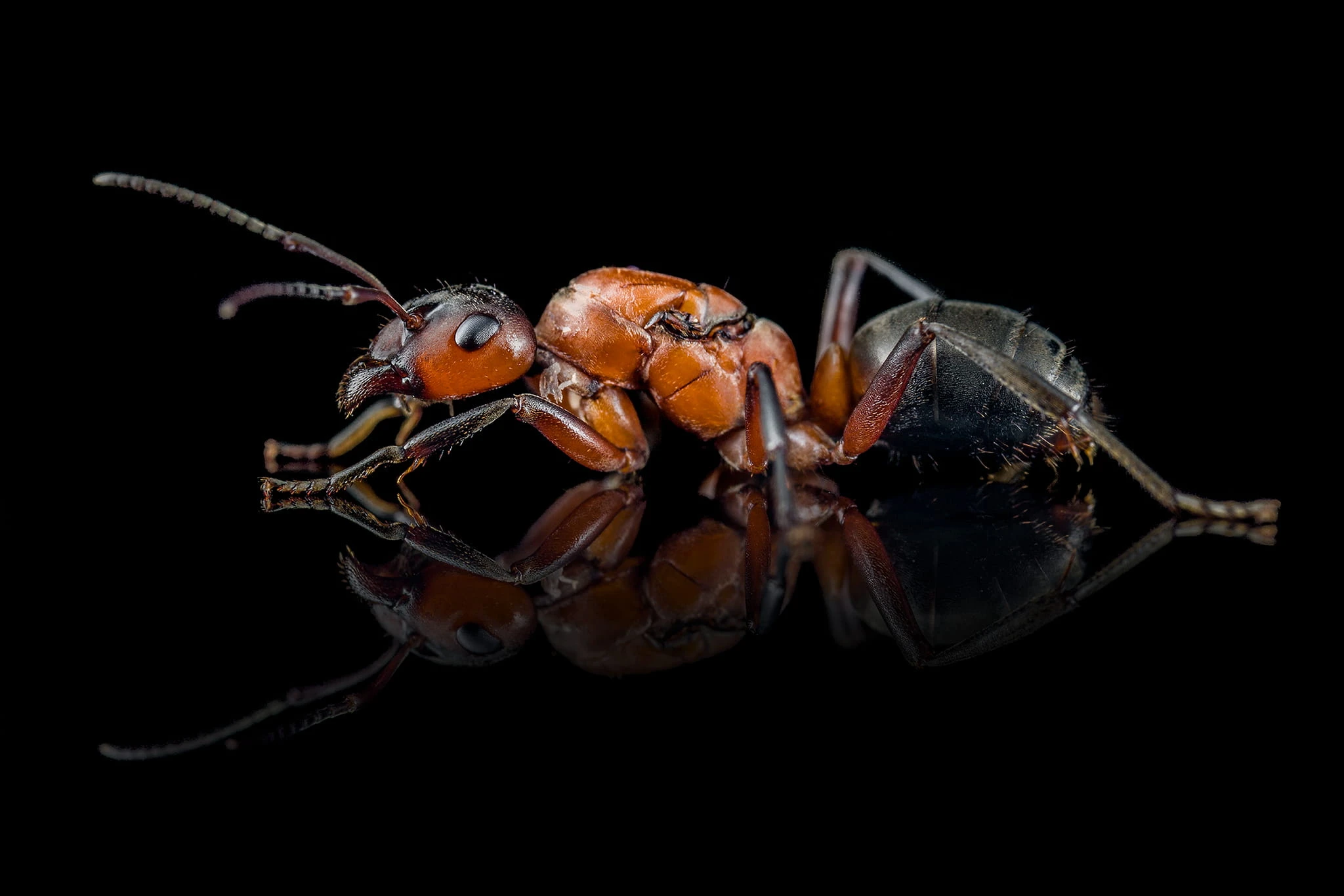


Formica sanguinea
Leave feedback on the product

Wybierz wariant produktu:
Individual variants may differ in price
Ask about the product

Administratorem danych osobowych jest PHU Krystian Solga. Przetwarzamy je w celu przesłania odpowiedzi na zapytanie. Więcej informacji dotyczących przetwarzania danych osobowych znajduje się w polityce prywatności.
Share the product card



Shipping cost for the selected product
The shipping cost applies to this product (in the selected variant - if applicable). It may change after adding other products to the cart.
Description
Description:
It is commonly known as the blood-red slave-making ant or robber ant. It occurs almost everywhere in Europe and Asia. Ants of this species are most commonly found in sandy meadows and forest edges. They nest in the ground, decay, under stones, and larger litter. They often form mounds at the entrance to the nest, which can easily be mistaken for mounds created by other ant species (e.g. Formica rufa, polyctena, truncorum).During relocation, worker ants pair up, with one curling up into a ball while the other carries it in front. They are primarily active during the day, even in full sunlight.
Sanguinea feeds on invertebrates and small vertebrates, and a large colony can kill a small frog or rodent. Additionally, these ants cultivate vast numbers of aphids, most commonly on pine trees.
Colonies are established in two ways. The simpler method involves queens mating near their natal nest with males from distant nests, after which they return to the nest and eventually leave with a group of workers to start a colony through budding. The second method involves taking over a Serviformica nest. The queen infiltrates a Serviformica nest (usually Formica fusca, but not exclusively) and attempts to eliminate the resident queen(s) she finds there. If successful, over time, the resident workers become accustomed to her scent, feed her, raise her offspring, and gradually get replaced by her offspring.
It is believed that if a colony has multiple queens, only one of them lays eggs, although my observations suggest that the number of eggs in captivity increases with the number of queens.
Formica sanguinea practices slavery on a massive scale. They regularly conduct raids on other Formica species, primarily Serviformica, although they occasionally raid even small Formica colonies. Sanguinea workers gather near the enemy nest, regroup, and then pour inside, causing chaos among the native ants using chemical weaponry that triggers a strong desire to flee. Generally, there is no resistance, as the residents simply disperse and allow the attackers to take their offspring at any stage of development, from eggs to pupae. The thief ants consume as much offspring as they need, while raising the rest as their own, resulting in the presence of workers from other species in the colony, usually comprising about 5% of the total population. Occasionally, raids are also conducted to exterminate competing colonies of more aggressive Formica species.
Fun fact: The workers have such excellent vision that if they are sitting on a tree, they typically react vividly to a person passing by over one and a half meters away.
- Species: Formica sanguinea
- Difficulty: low
- Soldiers: none
- Size: Queen 8-10mm, Workers 3-8mm
- Coloration: Red or reddish-brown thorax, matte black abdomen
- Distribution: Europe, Asia
- Nutrition: honey water and feeder insects
- Hibernation: yes, around 4-8 °C (39-46 °F)
- Temperature: 23-27 °C (73-81 °F)
- Recommended formicarium: any
Reviews
If you've added a review and it doesn't appear on the list, it may be pending moderation.
Leave feedback on the product
 Log in with Google
