

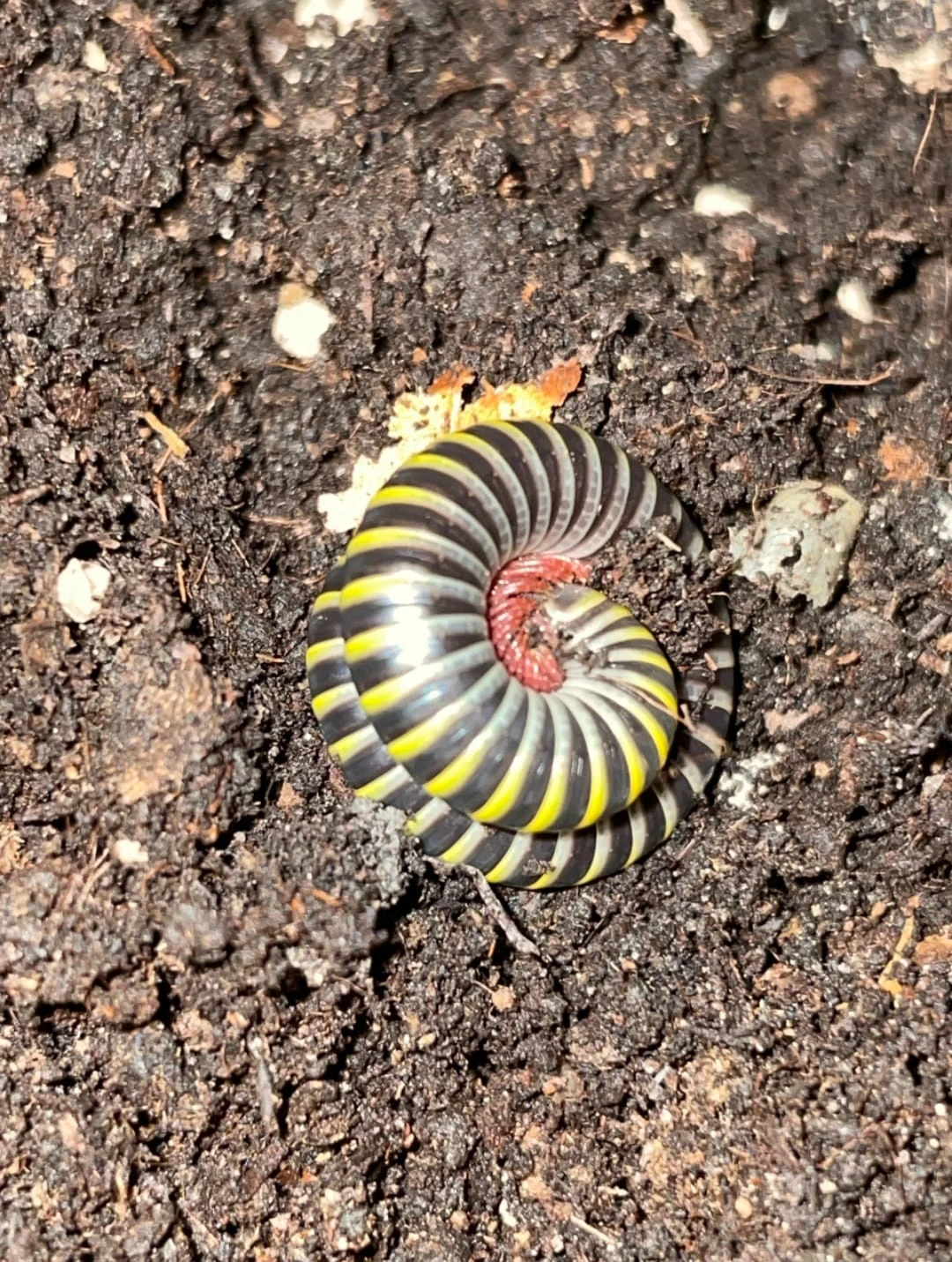
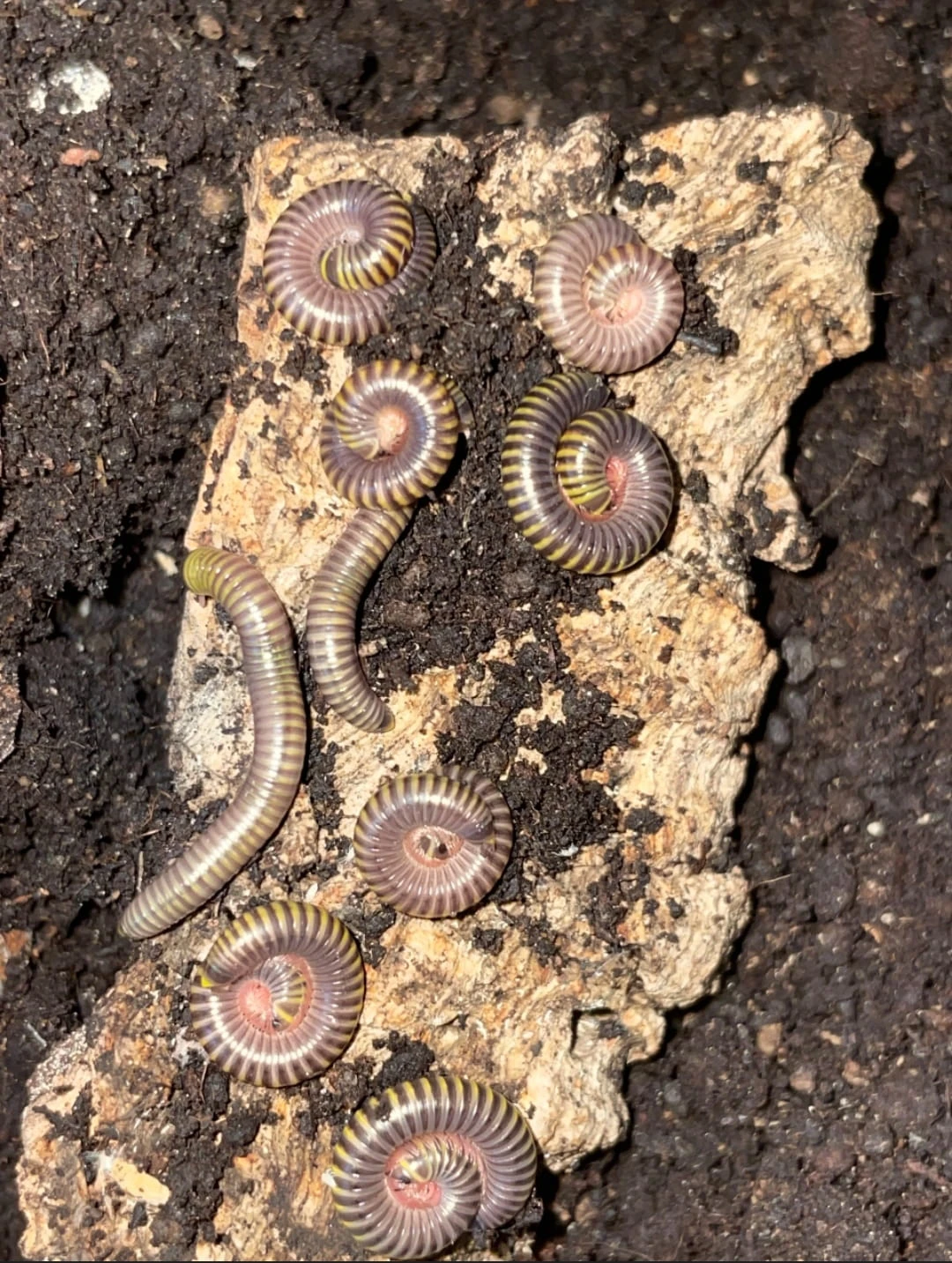
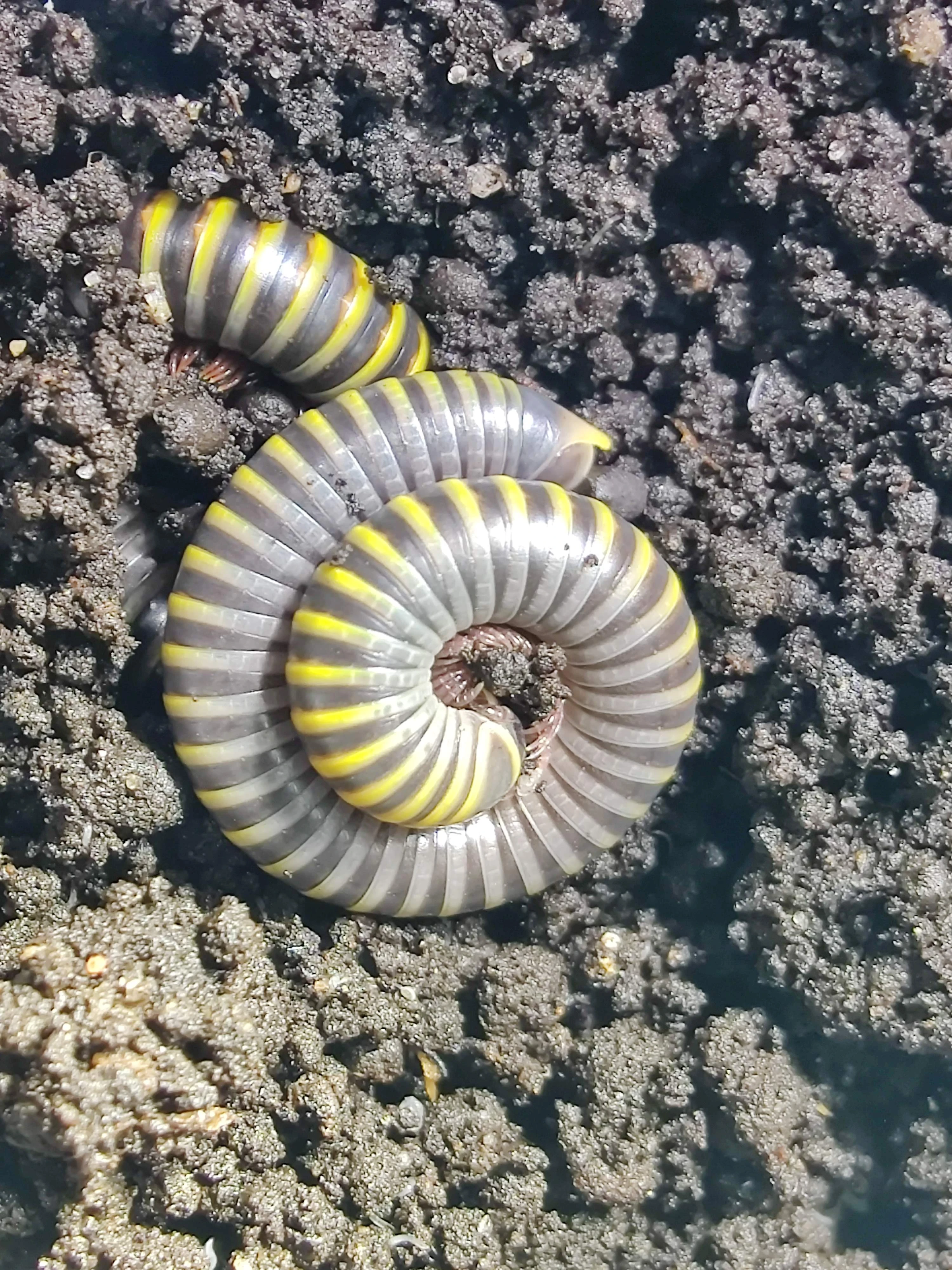


Anadenobolus monilicornis
Leave feedback on the product

Select product variant:
Individual variants may differ in price
Ask about the product

Administratorem danych osobowych jest PHU Krystian Solga. Przetwarzamy je w celu przesłania odpowiedzi na zapytanie. Więcej informacji dotyczących przetwarzania danych osobowych znajduje się w polityce prywatności.
Share the product card



Shipping cost for the selected product
The shipping cost applies to this product (in the selected variant - if applicable). It may change after adding other products to the cart.
Description
Anadenobolus monilicornis - Bumblebee millipede, a living jewel of the Caribbean
Meet a creature that will completely change your perspective on home ecosystems. Anadenobolus monilicornis, commonly known as the Bumblebee millipede, Caribbean millipede or Caribbean Jewel Millipede, is a stunning inhabitant of the tropical forests of the Caribbean. It owes its charming nickname to its phenomenal warning (aposematic) coloration, where the deep black of its exoskeleton intertwines with bright yellow rings, resembling the abdomen of a bumblebee or a wasp. The contrast is complemented by coral-red or pink walking legs and antennae with a glassy sheen. Reaching 2 to 3.1 inches (5 to 8 cm) in length, these vivarium millipedes are an excellent choice for any nature enthusiast. Although biologically they belong to the millipedes (Diplopoda), they are commonly considered incredibly easy-to-keep insects that will forgive your initial mistakes. If you are interested in stress-free breeding of exotic insects, this species will surely steal your heart.
The Bumblebee millipede is a completely peaceful and harmless herbivore and macro-decomposer. Its gentle disposition makes these millipedes absolutely safe terrarium animals, perfect for a start. Unlike strictly subterranean species, Anadenobolus monilicornis exhibits strong climbing behaviors (a semi-arboreal species), passionately exploring the upper parts of the tank after dusk and after misting. Their presence in the substrate is a pure benefit, as they make up the best bioactive clean-up crew. By processing organic matter into fertile soil, they support the proper development of plants and help maintain impeccable cleanliness. Regardless of whether you want to introduce fascinating exotic insects to your home or you are just planning to build a bioactive environment from scratch, the Caribbean millipede is a creature simply perfect for a terrarium.
| Feature | Description |
|---|---|
| Latin name | Anadenobolus monilicornis |
| Common names | Bumblebee millipede, Caribbean millipede, Caribbean Jewel Millipede |
| Origin | Caribbean Islands (Jamaica, Puerto Rico, Haiti), introduced to Florida (USA) |
| Body length | 2 - 3.1 inches (5 - 8 cm, rarely up to 4 inches / 10 cm), exoskeleton diameter 0.15 - 0.23 inches (4 - 6 mm) |
| Disposition | Very gentle, gregarious, prone to active climbing |
| Lifespan | 3 - 5 years (in optimal conditions up to 7 years) |
| Temperature | 22 - 26 °C (72 - 79 °F), additional heating only on the side |
| Air humidity | 70 - 80 % (constantly moist deeper layers of the substrate) |
| Substrate depth | Minimum 2.3 - 4 inches (6 - 10 cm) of rich organic mix |
| Basic food | White-rot wood, decomposed oak/beech leaves, flake soil |
| Supplementation | Constant access to calcium (cuttlebone / CaCO3), fresh vegetables, occasionally protein |
Natural environment and climbing nature of the Bumblebee millipede
Anadenobolus monilicornis naturally inhabits humid, evergreen rainforests of the Caribbean basin, including Jamaica, Puerto Rico, and the Dominican Republic. Thanks to its enormous adaptive capabilities, this species has also been successfully introduced and naturalized in the subtropical zone of southern Florida. In their native biotope, these millipedes function in a microclimate of constant shade and high humidity.
Unlike their strictly subterranean relatives, the Bumblebee millipede exhibits clear semi-arboreal behavior. When dusk falls or after heavy rainfall, individuals eagerly leave the litter and climb tree trunks, rotting branches, and clumps of moss, where they look for algae, lichens, and soft plant matter. For this reason, your terrarium should absolutely include vertical elements: cork oak bark tubes, porous branches of deciduous trees, and clumps of Sphagnum moss. Observing their unhurried wanderings along the branches provides an amazing visual experience.
Substrate as the basis of the diet - why coco coir is forbidden
For millipedes, the substrate is not only a mechanical ground under their feet - it is the foundation of their daily diet, accounting for over 85% of their total energy balance. A properly composed substrate determines health, growth rate, and molting survival. The mixture should consist of four key fractions:
- White-rot wood: Soft, spongy wood of oak or beech, eaten through by mycelium, which is an irreplaceable source of digestible cellulose and lignin.
- Flake soil: Fermented deciduous sawdust, enriched with bacterial protein.
- Decomposed leaves of deciduous trees: Dry, mineralized oak and beech leaves.
- Humus base: Deacidified leaf mold stabilizing humidity.
⚠️ Categorical ban on using coco coir: Coco coir is a completely sterile and indigestible material for millipedes. A foraging millipede fills its digestive tract with it, which leads to mechanical intestinal blockage (impaction) and irreversible death by starvation. Absolutely avoid soil with chemical fertilizers as well as pine needles and bark of coniferous trees, whose resins and essential oils are highly toxic to arthropods.
Microclimate, temperature and golden rules of heating
The optimal thermal point for the Bumblebee millipede is in the range of 22 - 26 °C (72 - 79 °F). Although this species tolerates standard room temperature of 20 - 21 °C (68 - 70 °F), gentle heating clearly stimulates metabolism, reproductive activity, and the growth rate of young individuals. Relative humidity should constantly be 70 - 80 %. The deep layers of the substrate must remain noticeably moist, but never soaked in standing water. The top layer of leaves can dry out slightly between successive mistings.
⚠️ Heating mat exclusively on the side wall: It is strictly forbidden to place heat sources under the bottom of the terrarium. When millipedes are too hot, they instinctively burrow deep into the substrate in search of coolness and moisture. In the case of a heated bottom, they run straight onto the hot glass, which leads to rapid dehydration and death of the animals. Always install the heating mat with a thermostat on the side or back wall of the terrarium, above the level of the thick layer of the substrate.
Balanced nutrition: calcium and protein supplementation
Supplementing the diet with fresh ingredients and minerals guarantees the beautiful shine of the exoskeleton and the vitality of the colony:
- Calcium (the foundation of the exoskeleton): Millipedes need a constant, unlimited source of calcium carbonate to build and mineralize their skeleton after molting. There should always be a piece of cuttlebone on the surface of the litter, or the substrate should be regularly sprinkled with pure pharmaceutical calcium carbonate (CaCO3) without added vitamin D3.
- Fresh vegetables and fruits (1-2 times a week): Zucchini slices, butternut squash, sweet potatoes, peeled carrots, mushrooms, and a ripe banana or apple. All soft leftovers must be absolutely removed 24 hours after serving, which effectively protects against mites and mold.
- Animal protein (1-2 times a month): Small portions of dried Gammarus, daphnia, aquarium fish flakes, or beetle jelly. A moderate supply of protein protects molting individuals from cannibalism.
Molting physiology, underground chambers and reproduction
The growth of millipedes involves cyclical shedding of the exoskeleton (ecdysis). Approaching the molt, the individual stops feeding, becomes lethargic, and descends into the deepest layers of the substrate, where it molds a safe underground molting chamber from soil and feces. The molting process takes from a few days to 3 weeks.
⚠️ Strict ban on digging up the substrate: A newly molted millipede has an extremely soft, light exoskeleton that is susceptible to crushing. Digging through the soil in search of hidden individuals leads to their mechanical crushing and death. After the exoskeleton hardens, the millipede eats its molt, recovering the calcium stored in it. During ecdysis, full regeneration of previously lost legs or antenna segments also occurs.
This species breeds without any problems in terrarium conditions. Males equipped with gonopods on the seventh segment transfer sperm packets to females, which lay from 20 to over 100 eggs carefully coated with a soil-fecal mass. After 2-4 weeks, transparent-white larvae hatch, which grow together with adults in the same tank.
Bioactive cohabitation: perfect commensals and deadly threats
Bumblebee millipedes are highly gregarious creatures, presenting the highest activity in a group. In bioactive tanks they play an irreplaceable role:
- Springtails (Collembola) - The perfect commensal: Completely safe, they remove mold spores and food remnants, posing no threat to eggs, larvae, or molting millipedes.
- ⚠️ Large isopods (Porcellio, Armadillidium) - A deadly threat: Large, voracious isopods with a high demand for protein and calcium can break into molting chambers, eating defenseless millipedes during molting and destroying egg clutches. The only acceptable commensal from this group is the miniature, slow dwarf white isopod (Trichorhina tomentosa), provided there is a constant surplus of protein food on the surface.
Defense strategies and breeder safety
In the face of danger, Anadenobolus monilicornis curls into a tight spiral, protecting its head and legs with hard dorsal tergite plates. When irritated more strongly, it activates defensive glands (ozadenes), secreting an allomone based on alkylated benzoquinones with a characteristic smell. This substance effectively deters predators in nature (where wild birds and monkeys even use it to anoint their bodies as a natural parasite repellent). The secretion is harmless to humans, but it can leave orange-brown spots on the skin that come off on their own after a few days. After handling the tank, it is recommended to wash your hands with warm water and soap.
Why you should choose the Bumblebee millipede for your collection
Anadenobolus monilicornis is a complete species: it delights with its bright, bumblebee coloration, intrigues with its climbing lifestyle, and plays a key sanitary role in every bioactive terrarium. The slow, majestic movement of their hundreds of legs has a very relaxing effect, and their low susceptibility to stress makes them dream pets. Introduce this Caribbean jewel to your vivarium and enjoy a fascinating spectacle of nature every day!
Reviews
If you've added a review and it doesn't appear on the list, it may be pending moderation.
Leave feedback on the product
 Log in with Google

