

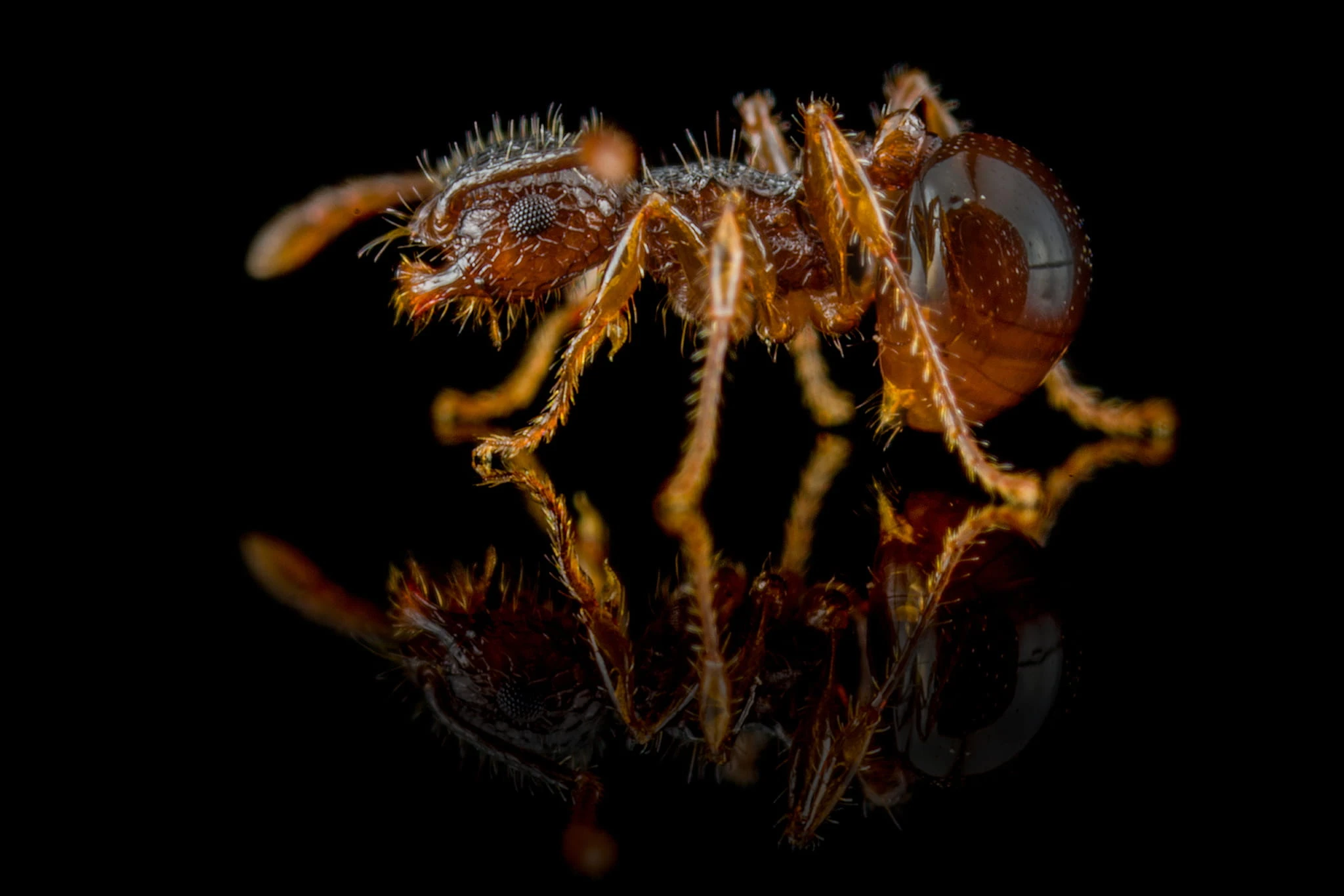


Pristomyrmex punctatus (aka Pristomyrmex pungens)
Leave feedback on the product

Wybierz wariant produktu:
Individual variants may differ in price
Ask about the product

Administratorem danych osobowych jest PHU Krystian Solga. Przetwarzamy je w celu przesłania odpowiedzi na zapytanie. Więcej informacji dotyczących przetwarzania danych osobowych znajduje się w polityce prywatności.
Share the product card



Shipping cost for the selected product
The shipping cost applies to this product (in the selected variant - if applicable). It may change after adding other products to the cart.
Description
Description:
A distinctive feature of these ants is telotoky (a form of parthenogenesis), which makes them potentially invasive. Young workers lay unfertilized eggs, from which more workers are produced. Older workers are responsible for foraging for food.
Occasionally, males and ergatoid queens are found in the colonies, but no mating occurs. The queen lays unfertilized eggs like the workers, with the difference that she does so regardless of her age. There is no observed dominance hierarchy among the workers, and they lay eggs even when a queen is present in the colony.
Colonies lead a nomadic lifestyle and in nature can grow to several thousand workers before a portion separates and establishes a new nest. They nest in various locations, including dead wood, leaf litter, and soil. They cultivate aphids. These ants are perfect for a vivarium because they reproduce without the presence of a queen or a dominant worker, eliminating the concern about the queen's survival.
Pristomyrmex punctatus prefers high humidity in the nest and consumes significantly more protein than honey.
In Europe, this species is rather rare in ant keeping. It is often mistakenly sold under the old name (pungens), which is mentioned in the description, but the current name for the species is Pristomyrmex punctatus.
Species: Pristomyrmex punctatus (aka Pristomyrmex pungens)
Difficulty: low
Soldiers: none
Size: 4 mm
Coloration: dark brown
Distribution: Southeast Asia
Nutrition: mainly feeder insects, small amounts of water with honey
Hibernation: none
Temperature: 25-30 °C (77-86 °F)
Recommended formicarium: test tube for as long as possible, then any high-humidity nest
Reviews
If you've added a review and it doesn't appear on the list, it may be pending moderation.
Leave feedback on the product
 Log in with Google
