

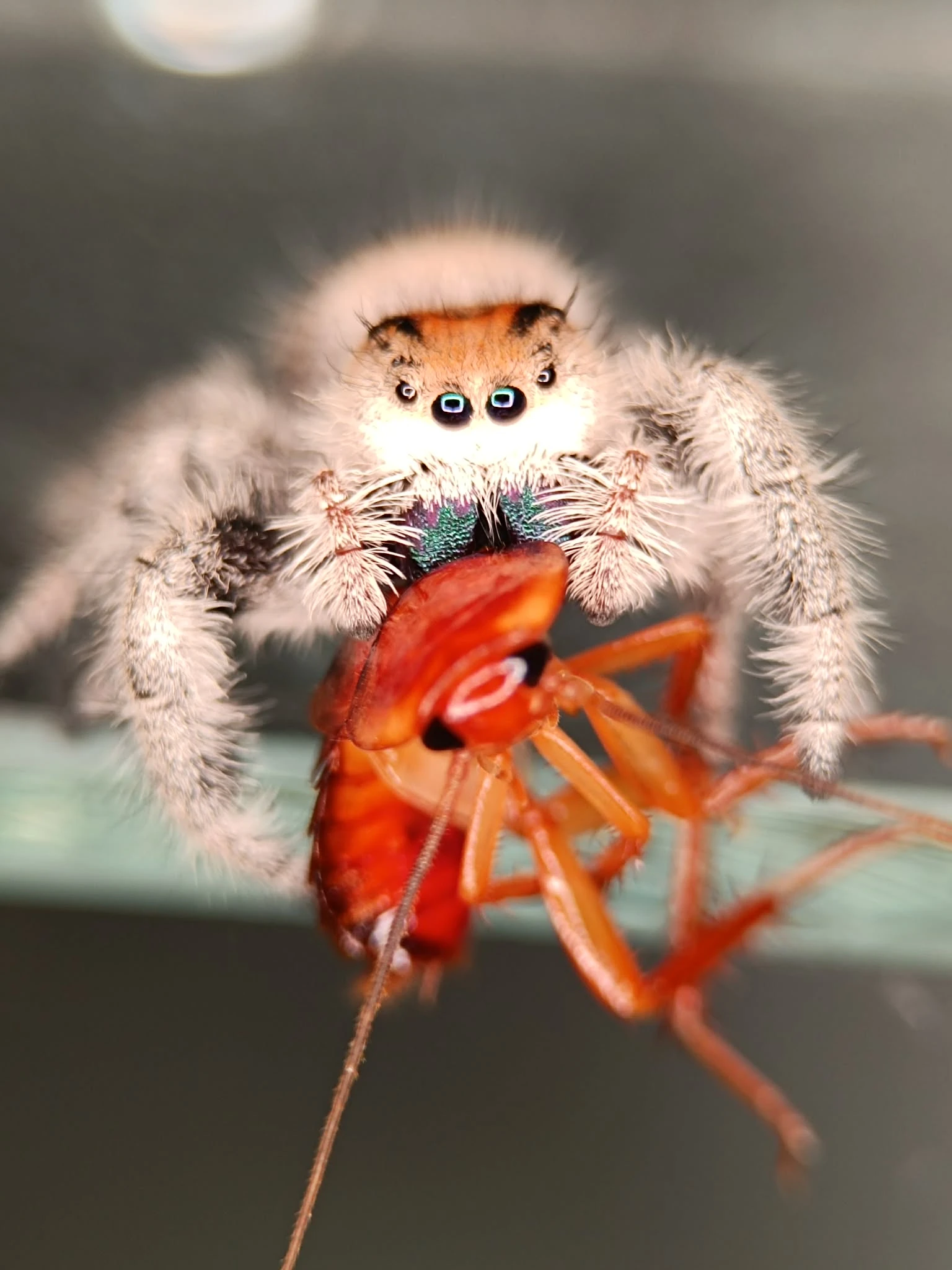
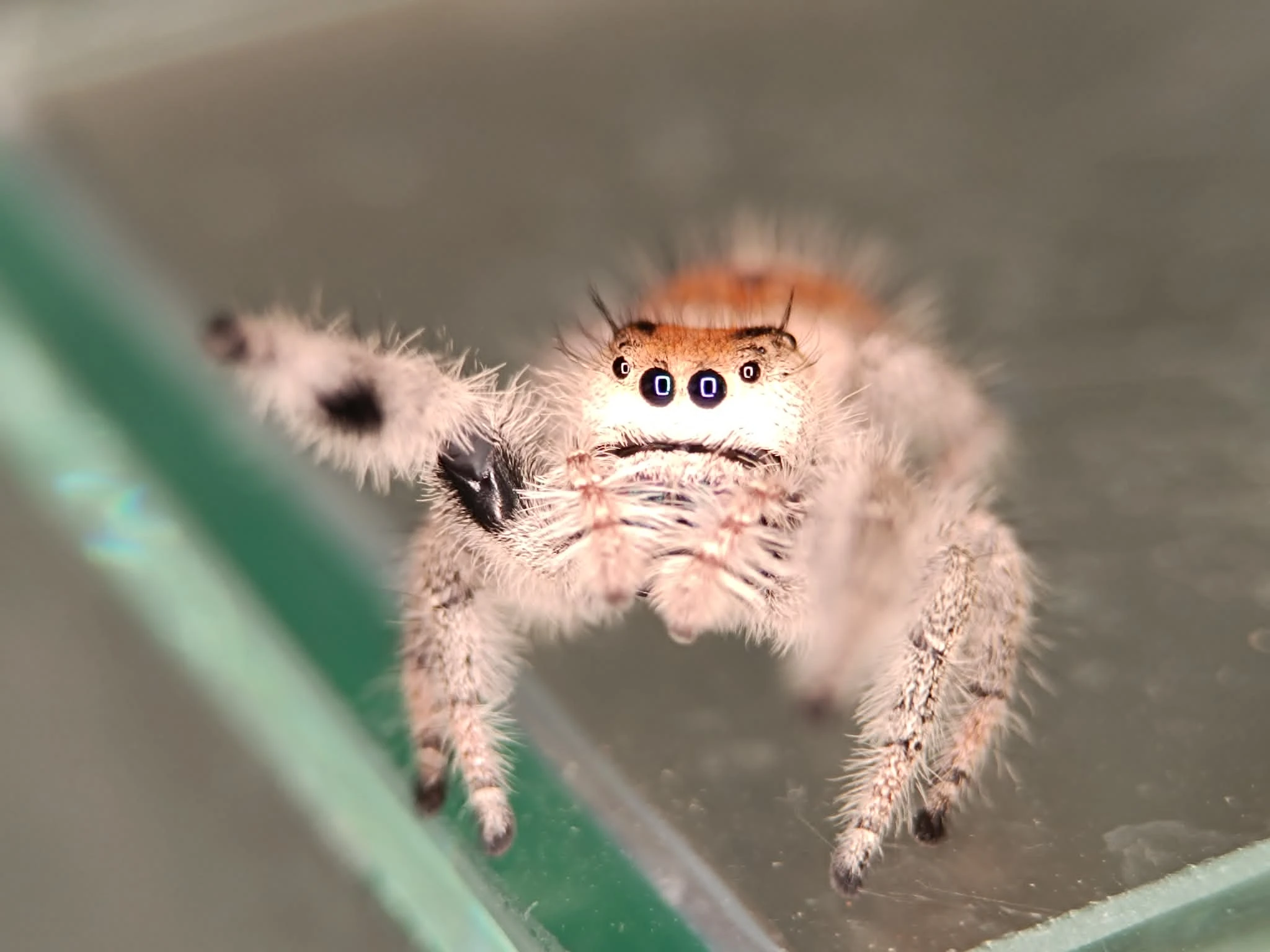
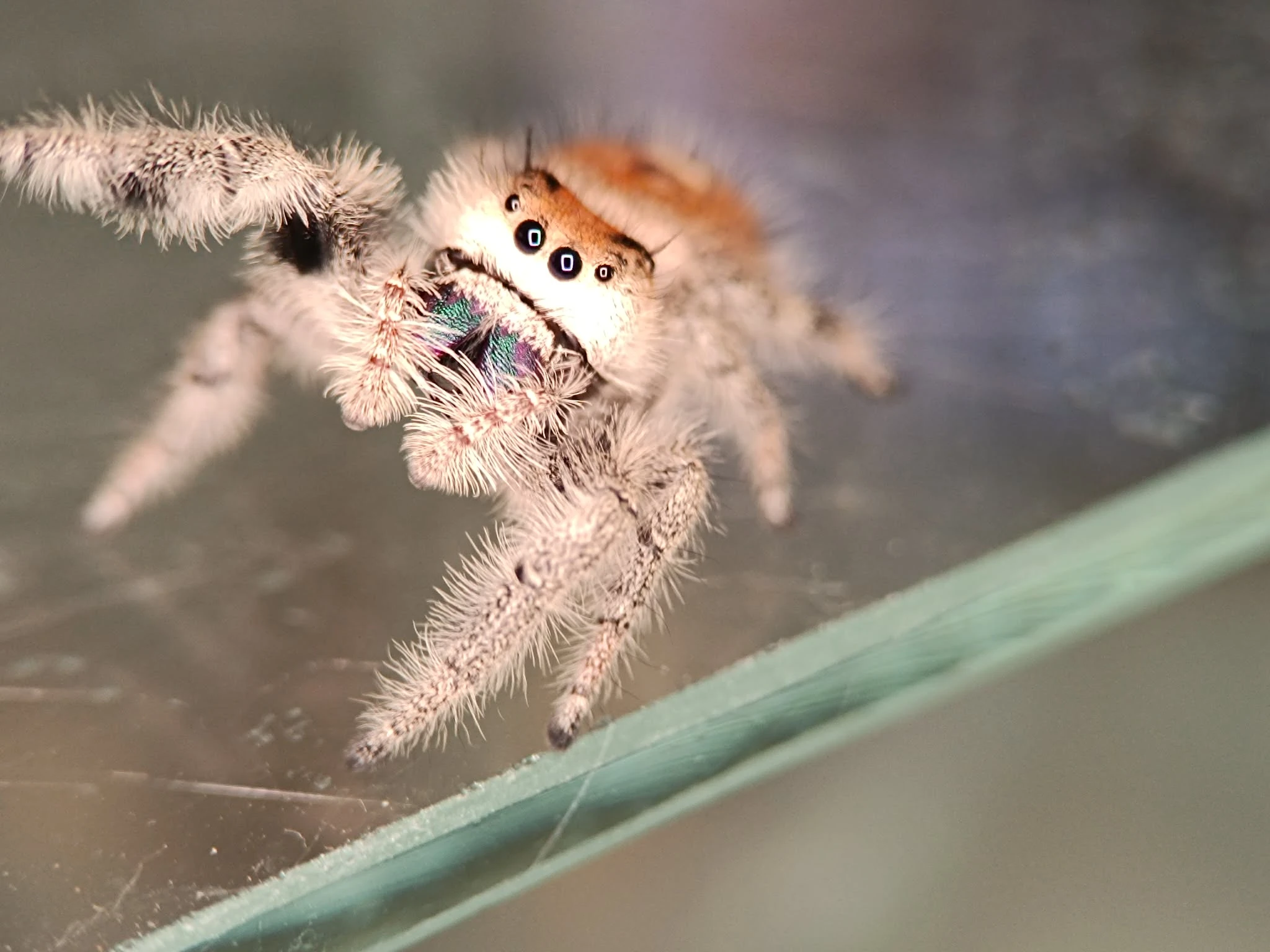


Phidippus regius Florida
Leave feedback on the product

Select product variant:
Individual variants may differ in price
Ask about the product

Administratorem danych osobowych jest PHU Krystian Solga. Przetwarzamy je w celu przesłania odpowiedzi na zapytanie. Więcej informacji dotyczących przetwarzania danych osobowych znajduje się w polityce prywatności.
Share the product card



Shipping cost for the selected product
The shipping cost applies to this product (in the selected variant - if applicable). It may change after adding other products to the cart.
Description
Phidippus regius Florida (Regal Jumping Spider)
Phidippus regius Florida is undeniably one of the most fascinating and charming predators you can invite into your home collection. This extraordinary representative of the jumping spider family originates from the sunny Florida Peninsula and has quickly won the hearts of hobbyists around the world. Its impressive size goes hand in hand with incredible charisma and a unique appearance. This attracts the attention of both experienced terrarium keepers and complete novices.
The regal jumping spider completely breaks with the stereotypical image of a spider. This animal does not build sticky hunting webs in the corners of rooms. Instead, it relies on its perfect eyesight and extraordinary jumping ability. The behavior of this arachnid resembles the thoughtful hunting tactics of predatory mammals. It can precisely calculate distance and execute spectacular leaps onto its prey while demonstrating impressive cognitive abilities.
This species is an ideal choice for a first exotic pet. Its gentle disposition and huge eyes staring at its keeper effectively help to overcome the fear of spiders. Daily observation of its active lifestyle brings incredible joy.
| Feature | Description |
|---|---|
| Latin name | Phidippus regius (Florida locale) |
| Common name | Regal jumping spider |
| Male body length | From 6 to 18 mm (average about 12 mm), slender build |
| Female body length | From 7 to 22 mm, noticeably more massive abdomen |
| Lifespan | Males about a year, females can live up to 2 years |
| Activity type | Exclusively diurnal animal |
| Optimal temperature | From 26°C to 28°C (79-82°F) with the possibility of night drops |
| Required humidity | From 50% to 70% without creating mud |
| Terrarium dimensions | Vertically oriented enclosures (e.g., 15x15x20 cm) |
Appearance and beautiful color contrast
Regal jumping spiders exhibit strong sexual dimorphism. This allows for efficient sex identification in grown individuals. The Florida variety is characterized by a beautiful color contrast. In females, shades of orange, gray, and white dominate. They are noticeably larger than males and their bodies are covered with a thick layer of soft scales. They also possess characteristic tufts of long bristles around their dorsal eyes that closely resemble thick eyelashes.
Males, on the other hand, delight with an extremely elegant and classic coloration. They are usually black and white with metallic green or blue chelicerae. The first pair of their legs is long and equipped with dense, charming fringes used during the courtship dance. Observing their development and subsequent molts provides wonderful aesthetic impressions and builds a strong emotional bond with the pet.
Breeding conditions and space design
The key to success in keeping a jumping spider is understanding its vertical lifestyle. This spider instinctively seeks the highest vantage points. The terrarium must therefore be taller than it is wide. An absolute design requirement is the way the enclosure opens. Because Phidippus regius weaves its sleeping hammock right under the ceiling, top-opening containers will destroy its home every day. Always choose terrariums that open from the front or bottom.
Proper cross ventilation is also essential for the spider's survival. Holes secured with fine mesh must be located on two opposite walls. This is the only way to avoid dangerous stuffiness, which quickly leads to the development of fungi and molds that are deadly to arachnids. It is worth enriching the terrarium space with oak bark and empty exotic nut shells. These animals use hard elements for sensory communication by receiving and sending seismic vibrations.
Rules of proper feeding
The dynamic metabolism of the regal jumping spider requires a strict feeding schedule. Very young spiders in the L1 and L2 stages are best fed with flightless forms of the Drosophila melanogaster fruit fly, or possibly medium-sized springtails or other feeder insects of similar dimensions. Grown individuals easily hunt large flies, small roach hatchlings, and crickets. We provide food to adult spiders once or twice a week, basing their diet on captive-bred flies, roaches, and wax moths.
Observing a hunting jumping spider is an amazing experience. The spider carefully analyzes the target, sneaks behind covers, and then executes a flawless jump supported by hydraulic pressure in its legs. Remember, however, to avoid massive overfeeding, as it drastically shortens the lifespan of your spider.
Important warnings and most common mistakes
The biggest mistake made by beginners is leaving live insects in the terrarium. If a dropped cricket or roach is not eaten within a few dozen minutes, you must catch it immediately. Ignoring food is the main signal that your spider is preparing to molt. In this state, its exoskeleton becomes soft, and a predatory insect left behind will easily kill your pet.
You must also properly manage humidity. Regal jumping spiders cannot drink from large bowls and can simply drown in them. Water should be provided exclusively by gently misting one of the terrarium walls every few days. The spider will drink the microscopic droplets, which will fully satisfy its thirst.
Reviews
If you've added a review and it doesn't appear on the list, it may be pending moderation.
Leave feedback on the product

