

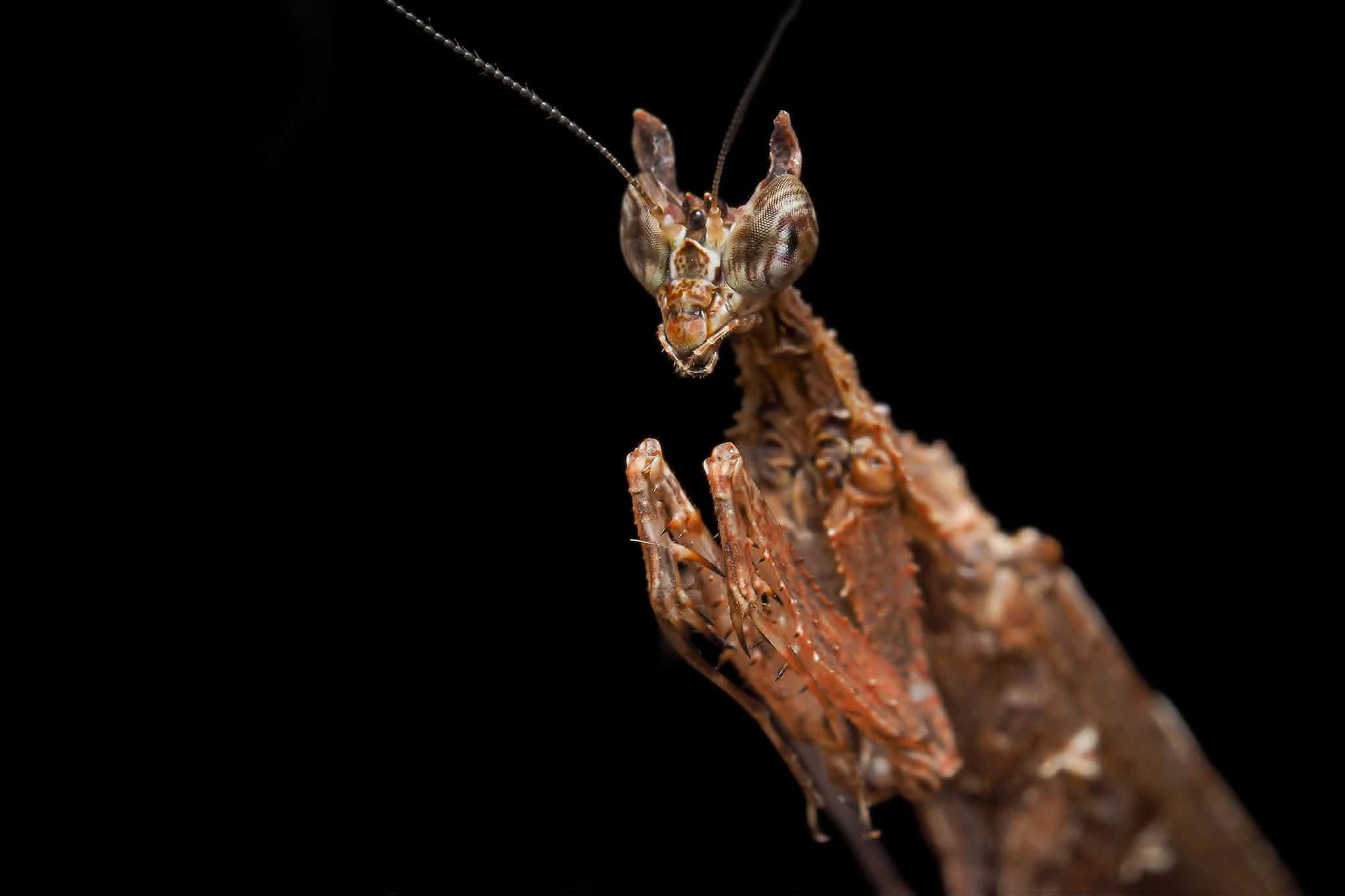
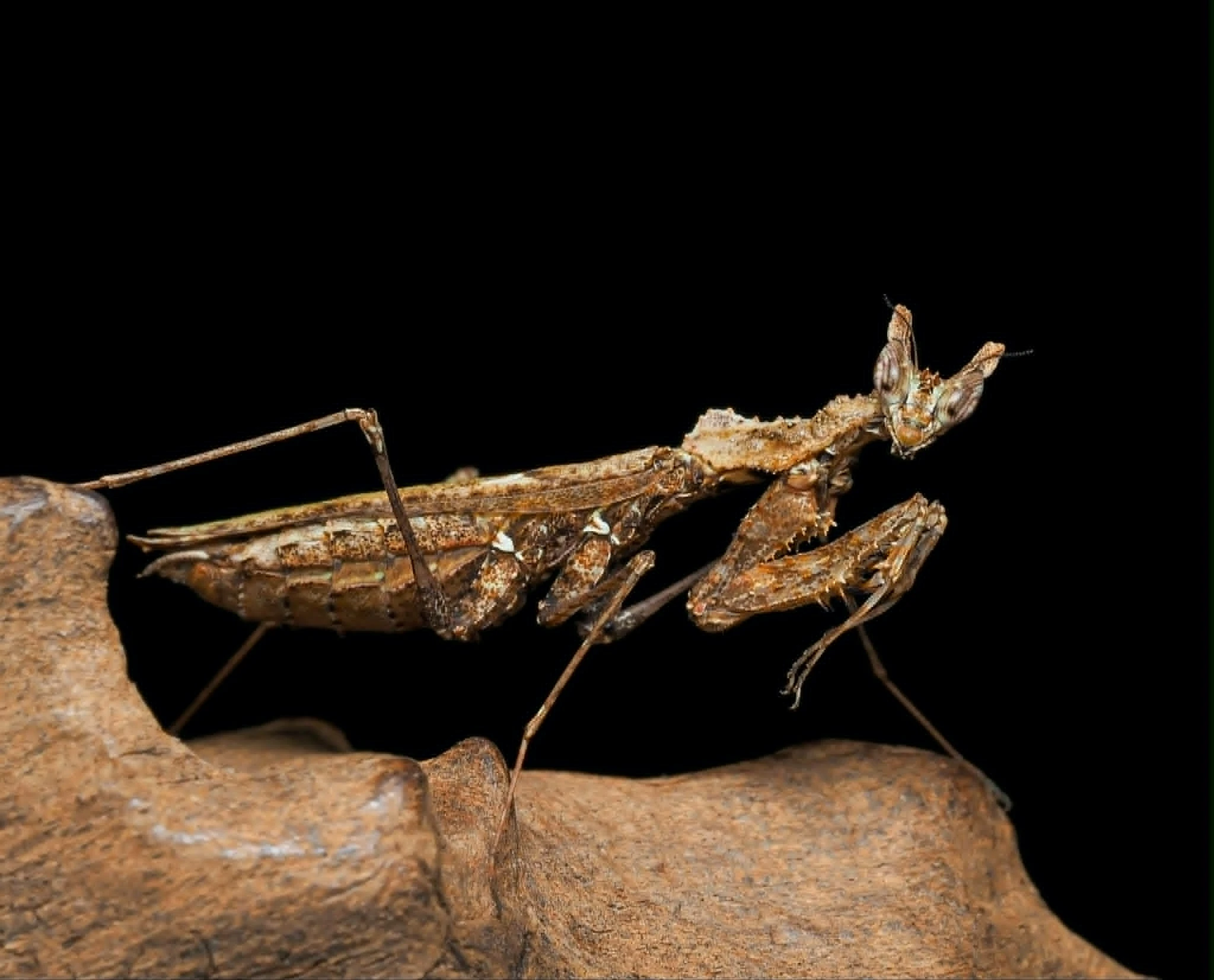


Haania orlovi
Leave feedback on the product

Wybierz wariant produktu:
Individual variants may differ in price
Ask about the product

Administratorem danych osobowych jest PHU Krystian Solga. Przetwarzamy je w celu przesłania odpowiedzi na zapytanie. Więcej informacji dotyczących przetwarzania danych osobowych znajduje się w polityce prywatności.
Share the product card



Shipping cost for the selected product
The shipping cost applies to this product (in the selected variant - if applicable). It may change after adding other products to the cart.
Description
Haania orlovi - Invisible Hunters of the Mossy Forests
Imagine a humid equatorial rainforest where every moss-covered branch and lichen-grown bark teems with hidden life. It is in such conditions that Haania orlovi evolved, a phenomenal mantis that has mastered the art of crypsis to perfection. Its body is nature's masterful illusion – olive, brown and gray cuticular appendages make this insect literally disappear against the background of living moss. If you are interested in exotic insects for your home, this fascinating species stands out not only with its brilliant camouflage but above all with a ballistic attack mechanism unique in the invertebrate world.
However, perfect camouflage is just a prelude to the real spectacle. Haania orlovi is a miniature biological marvel that instead of classically grasping prey in the pincers of its legs, impales it at blinding speed like a microscopic harpoon. Although these creatures require efficient air circulation, they are very gentle and easy to breed insects that can be kept in multi-individual groups with great success. These captivating micropets are practically made for a bioactive vivarium where they will build a harmonious microcosm on your desk. Below you will find a comprehensive compendium of knowledge thanks to which your breeding of these extraordinary creatures will be a string of successes.
| Trait | Description |
|---|---|
| Latin name | Haania orlovi (Anisyutkin, 2005) |
| Breeding identifier | IGM-302 (Insect Growers Mantis) |
| Adult size | 2.5-3.5 cm (females), 2.0-2.5 cm (males) |
| Daytime temperature | 26-28°C / 79-82°F (locally under a gentle radiant heater up to 30°C / 86°F) |
| Nighttime temperature | 20-23°C / 68-73°F (nighttime drop stimulates metabolism) |
| Relative humidity | 70-85% (effective gravitational ventilation required) |
| Minimum vivarium (group of 6) | 20x20x20 cm (bioactive mossarium) |
| Social behavior | Communal (very low aggression, safe group breeding) |
| Lifespan | Several months (males develop 1-2 molts shorter, protandry phenomenon) |
Nomenclature and origin from Asian rainforests
Scientifically described in 2005 by entomologist Leonid Anisyutkin, Haania orlovi represents a highly specialized family Haaniidae within the superfamily Haanioidea. In the international terrarium trade, this strain functions under the standardized code IGM-302. Its natural range covers humid tropical and subtropical zones of Southeast and East Asia, including Vietnam, Thailand, Malaysia and the southern provinces of China (including Hainan Island). In its natural habitat, this insect primarily inhabits the undergrowth and lower parts of trunks in primary rainforests, dwelling on vertical surfaces of bark, lianas and boulders covered with a dense layer of mosses and epiphytes. In our store, we offer insects from carefully managed breeding lines, making your own exotic insect breeding a pure pleasure and a wonderful experience.
Revolutionary LaMSA hunting mechanism and tibial harpoon
What distinguishes this taxon most against the background of almost all other mantises are the extraordinary and interesting predator behaviors at the moment of hunting. While a standard mantis grasps its prey with a direct contraction of muscles closing the tibia on the femur (grasping strike), Haania orlovi evolved a ballistic impaling mechanism (impaling hunting strategy) based on the phenomenon of elastic energy accumulation – the LaMSA (Latch-Mediated Spring Actuation).
In the preparatory phase, the leg muscles slowly deform the flexible cuticle of the trochanter, storing potential energy. The movement is mechanically blocked by a microscopic cuticular latch in the coxo-trochanteral joint. Releasing the latch unleashes the energy violently, generating specific power in the range of 30,000 to 60,000 W/kg. The strike movement itself takes only 1.6 milliseconds (0.0016 s), reaching a linear velocity of about 5 m/s. Instead of grasping the prey, the mantis instantly pierces its body with a sharpened, reinforced tibial spine (anterior tibial spine – ats), acting with the precision of a miniature harpoon.
Camouflage and structural crypsis
The external morphology of Haania orlovi is a textbook example of mimicry and structural crypsis. The insect's entire body is covered with numerous tubercles, irregular lobes and appendages that optically break up the outline of the silhouette, making the mantis resemble a piece of bark covered with moss thallus. The coloration is dominated by shades of olive green, brown, beige and gray with darker masking spots. In a naturally arranged terrarium, even a seasoned observer needs a long moment to visually locate the motionless predatory lurker.
Sexual dimorphism and biometrics
Differences between the sexes become apparent in the subimago and imago stages:
- Females: They reach 2.5-3.5 cm in length, are characterized by a wider, more massive abdomen adapted to the production of oothecae and shortened, flightless wings. They go through 7-8 molts to reach maturity.
- Males: They are smaller and more slender (2.0-2.5 cm in body length), and their fully developed, functional wings protrude about 5 mm beyond the tip of the abdomen, which allows them efficient nuptial flight. They exhibit the phenomenon of protandry – they go through 6-7 molts, reaching sexual maturity faster than females from the same clutch.
Dream mossarium: step-by-step miniature vivarium arrangement
If your goal is to build a bioactive environment from scratch, the miniature Haania orlovi will be an unrivaled choice to populate a small vivarium. A stable group of 6 individuals (e.g. 3 pairs) requires only an aesthetic glass or acrylic cube measuring 20x20x20 cm.
At the bottom, we pour 2-4 cm of slightly moist substrate composed of acidic peat, coconut fiber and shredded Sphagnum moss. The most important element of the decor are vertical climbing surfaces: thick patches of natural cork oak bark, branches covered with lichens and fresh tufts of living sphagnum moss. Such an arrangement provides an optimal microclimate, facilitates the insects' molting and creates a spectacular scenery for daily observations.
Life in a group: safe coexistence without cannibalism
Most known mantis species are ruthless loners exhibiting strong cannibalism. Haania orlovi is a delightful exception to this rule. These insects are characterized by a negligible level of intraspecific aggression and do not treat their conspecifics as potential prey. Nymphs and adults can safely stay on the same branch, passing each other without any attempt to attack. The lack of intraspecific aggression makes them extremely safe terrarium animals, simply perfect for conducting multi-individual herd breeding. The only condition for harmonious coexistence is ensuring constant access to appropriately small food.
The principle of biological cleanliness: why springtails YES, and isopods NO?
Maintaining high humidity in the terrarium requires the presence of sanitary microfauna. In the case of Haania orlovi, however, the correct selection of organisms is crucial:
- Springtails (Collembola) – MANDATORY: Properly selected springtails for the terrarium are not only perfect devourers of mold and organic residues, but also a constant, safe reservoir of the finest food for newly hatched nymphs.
- Isopods (e.g. Porcellio, Armadillidium) – STRICTLY PROHIBITED: Due to their considerable size, strength and opportunistic omnivory, large terrestrial crustaceans pose a deadly threat to defenseless mantises during ecdysis (molting). A properly selected bioactive cleaning crew based on Collembola will guarantee cleanliness in the tank and complete safety of molting mantises.
Detailed nutritional protocol in the developmental cycle
Due to the ballistic grasping apparatus and the presence of the ats spine, the diet of Haania orlovi must consist exclusively of arthropods with a soft cuticle, actively moving on decor elements and walls. We strictly avoid hard insects (e.g. mealworms, superworms) and forms burying in the substrate.
- L1 Stage: Springtails (Collembola) and flightless fruit flies Drosophila melanogaster. Small food should be constantly available in the breeding container.
- L2 – L3 Stages: Drosophila melanogaster, larger fruit fly Drosophila hydei and freshly hatched firebrats (Thermobia domestica), fed every 1-2 days.
- L4 – L5 Stages: Drosophila hydei, firebrats and small micro-hatchlings of soft roaches (e.g. Shelfordella lateralis), served every 2-3 days.
- L6 Stage – Imago: Firebrats, adult flies (e.g. Lucilia sericata, Calliphora vicina), small lesser wax moths (Achroia grisella) and young roaches, fed every 2-3 days until full.
Microclimate, watering and double ventilation
The foundation of successful breeding is a precise balance between elevated humidity (70-85%) and efficient air circulation. The tank must strictly have double gravitational ventilation (inlet at the bottom, outlet at the top), which eliminates air stagnation conducive to the development of fungal pathogens. We keep the substrate constantly slightly moist. We spray the terrarium regularly with a fine-mist sprayer, creating a delicate mist. Mantises eagerly drink water drops settling on moss and leaves. We always avoid directing a strong stream of water directly at molting insects.
Reproduction and ootheca incubation
Males reach reproductive maturity 10-14 days after the imaginal molt, while females after 14-21 days of abundant feeding. In group breeding, mating occurs spontaneously, and the risk of female aggression towards the partner is negligible. The fertilized female lays small, elongated, brown oothecae directly on rough bark or branches. Incubation of cocoons at a temperature of 25-28°C and humidity of 75-85% usually takes from 4 to 6 weeks. A single ootheca yields a hatch of over a dozen to about 30 very small L1 stage nymphs, which immediately upon leaving the cocoon begin feeding on springtails present in the tank.
Most common breeding mistakes and how to avoid them
- Air stagnation at high humidity: Leads to the death of nymphs during molting. Always use tanks with double mesh ventilation.
- Feeding too hard food: Can lead to mechanical damage to the precise ats tibial spine.
- Introducing large isopods into the tank: Large isopods can attack and devour a defenseless mantis during molting.
- Overdrying the youngest L1-L2 stages: Young nymphs have a small mass and easily succumb to dehydration. Ensure constant substrate humidity and the presence of micro-drops of water.
Summary
Haania orlovi is one of the most fascinating and aesthetic invertebrate species available in modern terrarium keeping. The combination of arboreal camouflage, a mesmerizing ballistic attack and the possibility of completely peaceful group breeding in a small mossarium makes this mantis a real gem in any collection. In our ant shop, we take care of providing the highest quality animals and reliable biological knowledge, so you can safely start your adventure with this delightful micro-predator.
Reviews
If you've added a review and it doesn't appear on the list, it may be pending moderation.
Leave feedback on the product
 Log in with Google

