

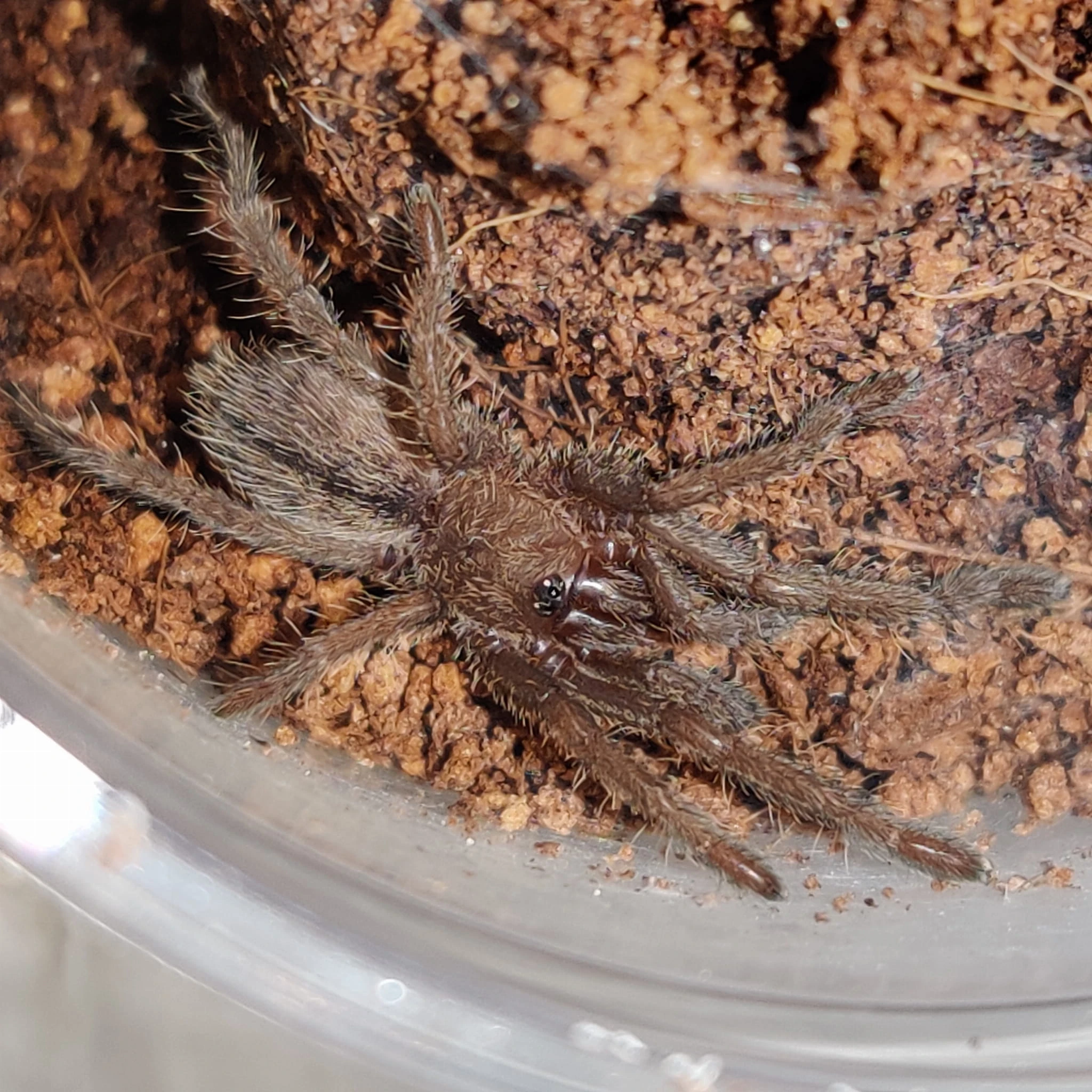


Cyriopagopus lividus
Leave feedback on the product

Select product variant:
Individual variants may differ in price
Ask about the product

Administratorem danych osobowych jest PHU Krystian Solga. Przetwarzamy je w celu przesłania odpowiedzi na zapytanie. Więcej informacji dotyczących przetwarzania danych osobowych znajduje się w polityce prywatności.
Share the product card



Shipping cost for the selected product
The shipping cost applies to this product (in the selected variant - if applicable). It may change after adding other products to the cart.
Description
Cyriopagopus lividus (formerly Haplopelma lividum) – Fascinating Cobalt Blue Tarantula from Asia
Cyriopagopus lividus is one of the most attractively colored tarantulas, inhabiting the moist, tropical areas of Thailand and Burma. Its medium-sized females grow up to 7 cm in body length (leg span up to 15 cm), and males are noticeably smaller.
Coloration and lifestyle
- Intense colors: adult specimens display a mesmerizing, metallic blue sheen on their legs.
- Fossorial lifestyle: in nature, these tarantulas dig deep burrows and spend most of their time underground.
Terrarium conditions
- Enclosure height: providing a sufficient amount of substrate (even a dozen or so centimeters) allows for digging a deep burrow.
- Temperature: around 28°C (82°F) during the day, with a nighttime drop to 24–25°C (75–77°F).
- Humidity: high, maintained by regular misting of the substrate.
- Decor: plants, roots, cork tubes – however, the spider usually chooses a self-dug habitat.
Behavior and feeding
- Aggression and venom: typical for Asian tarantulas – potent venom and a tendency to attack. C. lividum rarely jumps, which makes handling easier.
- Voracity: eagerly hunts various feeder insects, exhibiting high hunting efficiency.
Breeding
- Demanding: courtship can be long, and females often eat their partners.
- Egg sac: females may delay laying it or eat it, making it difficult to obtain offspring.
- Clutch size: successful clutches can yield 100–150 nymphs, which are quite large and fast-growing with proper care.
Cyriopagopus lividus captivates with its beautiful blue coloration and specific fossorial lifestyle. Although it may be rarely seen by keepers due to its reclusiveness, its unusual presence and intense colors certainly compensate for any difficulties related to observation or breeding.
Reviews
If you've added a review and it doesn't appear on the list, it may be pending moderation.
Leave feedback on the product
