

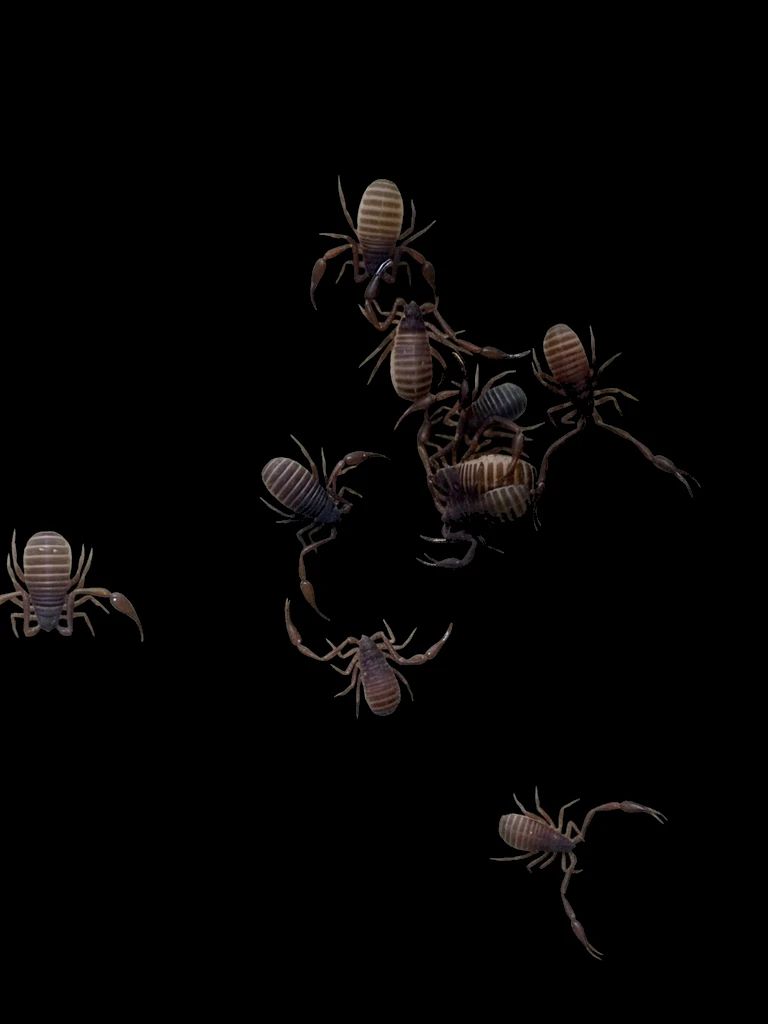
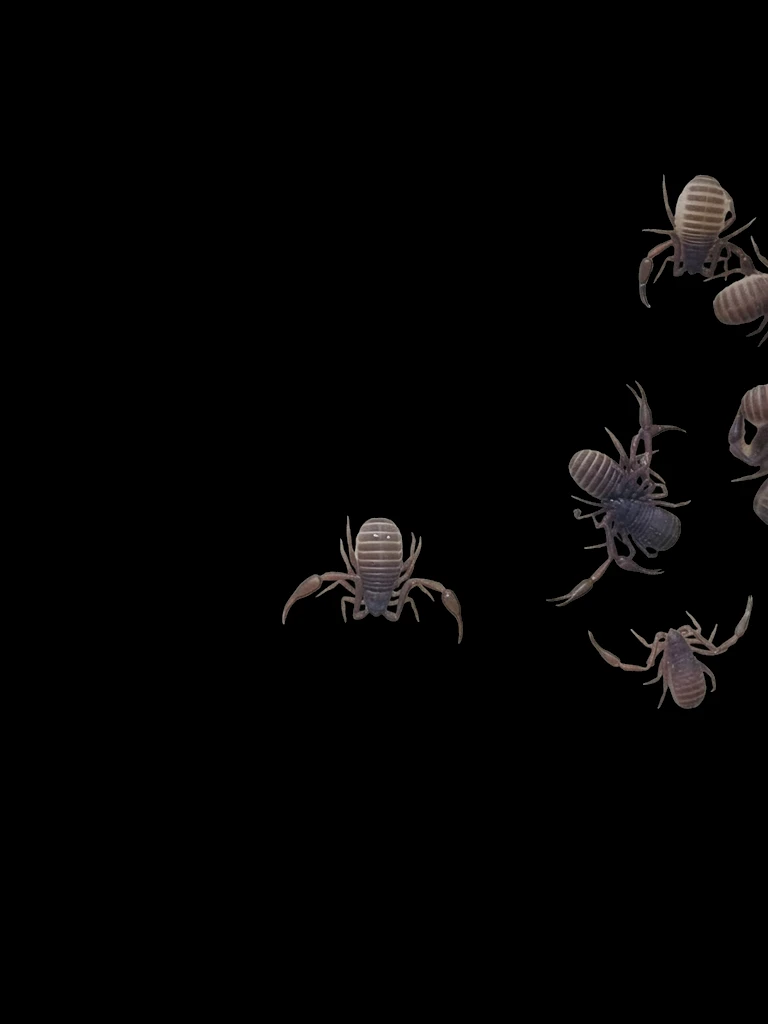


Chelifer cancroides - book scorpion
Leave feedback on the product

Select product variant:
Individual variants may differ in price
Ask about the product

The controller of your personal data is PHU Krystian Solga. We process them to respond to your inquiry. More information regarding personal data processing can be found in our privacy policy.
Share the product card


Shipping cost for the selected product
The shipping cost applies to this product (in the selected variant - if applicable). It may change after adding other products to the cart.
Description
Chelifer cancroides - Book Scorpion, Miniature House Pseudoscorpion and Mite Predator
Chelifer cancroides (the book scorpion, also known as the house pseudoscorpion, false scorpion, book pseudoscorpion, house chelifer, or hive guardian) is one of the most extraordinary miniature predators you can observe in a home setup. Although its strongly flattened body measures just 2.5-4.5 mm, it carries powerful pedipalps tipped with venomous pincers spanning 7-9 mm, which it uses with surgical precision to seize mites (including the honeybee parasite Varroa destructor), springtails, booklice, and tiny insect larvae. This living fossil from an evolutionary lineage dating back roughly 390 million years is 100% safe for humans and pets, and inside a compact 1-liter container it displays fascinating behaviors - from crab-like backward sprints to intricate courtship dances and nursing its brood with maternal milk.
Why choose Chelifer cancroides?
- Miniature hunter with venomous pincers: despite measuring only a few millimeters in length, it wields massive chelae equipped with venom glands in both fingers, instantly seizing, paralyzing, and lifting tiny arthropods into the air.
- Maternal milk nursing and silk igloos: the female constructs a domed silk igloo beneath bark and carries a brood pouch under her abdomen, nourishing embryos with a nutrient-rich secretion before the newly hatched nymphs ride on her back.
- Crab-like backward gait and bloodless male wrestling: it scuttles sideways and darts backward like a crab, climbs vertical glass with ease, and males engage in ritualized pincer wrestling matches and vibrational courtship dances without using venom.
- Long-lived and remarkably resilient: adult specimens live for 2 to 4 years, thrive in a dry, compact 1-liter enclosure, and can survive for months without food.
- Living fossil with a 390-million-year lineage: in the fossil record, pseudoscorpions appear as early as the Middle Devonian, roughly 390 million years ago (Dracochela gilboa from the United States).
| Scientific name | Chelifer cancroides |
| Common names | Book scorpion, house pseudoscorpion, false scorpion, book pseudoscorpion, house chelifer, hive guardian |
| Origin and distribution | Cosmopolitan species native to Europe (beneath tree bark, in tree hollows, apiaries, and human dwellings) |
| Size | 2.5-4.5 mm (open pincer span 7-9 mm) |
| Lifespan | 2-4 years as an adult (nymph development to adulthood takes approx. 6-12 months) |
| Temperature | 18-28°C (64-82°F), optimal 22-26°C (72-79°F), overwintering 8-16°C (46-61°F) |
| Humidity | 50-65% (dry enclosure with a single lightly moistened corner - no misting) |
| Enclosure and decor | Tightly sealed approx. 1 L container with micro-mesh ventilation, a thin layer of dry sand, and stacked dry bark |
| Diet | Live microfauna: springtails (white, grey, lilac), flightless fruit flies, booklice, newly hatched firebrat nymphs |
| Care difficulty | Easy and 100% safe for humans, household pets, and honeybees |
Choosing Your Pack and First Steps Upon Arrival
Whether you select a single specimen to observe this remarkable predator in a desktop micro-enclosure, a starter pack of 5, or a breeding group of 10 specimens to establish a self-sustaining colony (or to introduce into a beehive), preparing the enclosure before unpacking the animals is the key to success. Pseudoscorpions are territorial and love tight crevices - in communal breeding groups, peaceful coexistence and rapid reproduction depend on stacking flat bark pieces in multiple tiers so that every individual can claim its own territory of a few square centimeters.
- Step 1: Prepare a dry 1 L container with micro-ventilation and sand. Before opening the transport vial, prepare a tightly sealed container with a volume of around 1 liter and ventilation holes covered with ultra-fine ventilation mesh with a pore size below 0.1 mm. Pour a 1.5-3 cm layer of completely dry substrate on the bottom, such as fine quartz sand or dry coco fiber - tiny sand grains are essential building blocks that pseudoscorpions weave into the silk walls of their igloos and moulting chambers.
- Step 2: Stack dry bark layers and transfer the pseudoscorpions. On top of the dry sand, arrange flat pieces of dry cork bark, oak bark, or pine bark in overlapping tiers to create narrow horizontal crevices 1-3 mm wide. Transfer the pseudoscorpions directly onto the bark - the arachnids will immediately sense the wood texture and retreat into the dark crevices within seconds.
- Step 3: Create a moist corner buffer and introduce live springtails. In one corner of the enclosure, place a small water-filled test tube plugged with a tight cotton ball, or use a plastic pipette every few days to apply a few drops of water into that single corner of sand while keeping the rest of the container bone-dry. Immediately release a starter culture of live white springtails, grey springtails, or slow-moving, non-jumping Ceratophysella lilac into the moist corner and keep the enclosure at room temperature (20-26°C (68-79°F)).
Why does Chelifer cancroides look and move like a miniature tailless scorpion?
Although the book scorpion looks at first glance like a miniature scorpion stripped of its tail and stinger, it belongs to a distinct, ancient order of arachnids (Pseudoscorpiones). Its paper-thin, mahogany-brown, teardrop-shaped body allows it to slip effortlessly into millimeter-wide cracks beneath tree bark, between the pages of old books, or inside the wooden joints of beehives. Most striking of all are its massive pedipalps - more than twice as long as its body and spanning 7-9 mm - which it holds wide open in front of itself like radar arms while exploring.
The locomotion of Chelifer cancroides is mesmerizing to watch. Not only does this arachnid walk forward and sideways, but in a split second it can dart backward just like a crab, and thanks to microscopic adhesive pads (arolia) between its claws, it walks effortlessly up vertical glass and upside down across the enclosure lid. While walking, it repeatedly freezes for a fraction of a second (100-200 ms) - silencing the air turbulence generated by its own movement to listen to its surroundings through 12 long sensory hairs (trichobothria) on its pincers, which detect the faintest air vibrations of a passing springtail or mite in pitch darkness.
Unlike true scorpions, the house pseudoscorpion conceals its weapon directly inside its pincers: both the fixed and movable fingers of each pedipalp house venom glands. Its venom contains unique antimicrobial peptides that not only paralyze prey on contact but also disinfect the meal during feeding. Meanwhile, the tips of its small chelicerae right next to the mouthparts bear silk glands - the pseudoscorpion spins dense silk threads to construct protective chambers beneath bark for moulting, overwintering, and raising its brood.
How to set up a 1 L enclosure and maintain proper humidity?
Keeping Chelifer cancroides is remarkably simple and takes up minimal space, provided you follow one golden rule: book scorpions prefer moderate ambient humidity (50-65%), but their bark hides must remain completely dry at all times. Misting the enclosure directly with a spray bottle is fatal to them, as a 3-millimeter arachnid easily gets trapped in water droplets by surface tension and drowns, while wet bark quickly develops mold.
For a group of 10-30 specimens, a tightly sealed container with a capacity of around 1 liter and ventilation openings covered with ultra-fine ventilation mesh (pore size under 0.1 mm, preventing both adults and 1-millimeter nymphs from escaping) works best. Spread a 1.5-3 cm layer of dry fine quartz sand or coco fiber across the bottom, and fill the center with several stacked layers of flat, dry cork bark to form narrow crevices 1-3 mm high. This multi-tiered structure multiplies the usable surface area and keeps territorial males from clashing.
Provide moisture strictly as a localized point source in one bottom corner of the enclosure - either by placing a small water-filled test tube plugged with dense cotton or by using a plastic pipette to add about 2-3 ml of water into that single sandy corner every few days, ensuring that at least 80% of the substrate and the entire bark stack remain dry. That slightly moist corner is the ideal spot to establish live springtails, which serve as both a 24/7 live buffet and a cleanup crew. Combining multiple springtail species in the enclosure works exceptionally well - for example, pairing classic white springtails and grey springtails with slower, non-jumping springtails such as Ceratophysella lilac, which are effortless prey for newly hatched pseudoscorpion nymphs.
Common Mistakes in Keeping and How to Avoid Them
- Spraying the bark and enclosure walls with a mister: this is the number one cause of colony loss. Water droplets act like glue traps for tiny pseudoscorpions, block their spiracles, and trigger lethal mold growth on their silk moulting chambers. Never use a spray bottle - hydrate only one corner of the substrate with a pipette or a cotton-plugged water tube.
- Coarse ventilation mesh or a loose-fitting lid: their flat bodies allow adults to squeeze through gaps under 1 mm, while 1-millimeter protonymphs climb smooth vertical glass with ease. Always cover ventilation holes with ultra-fine micro-mesh (under 0.1 mm) and use containers with tight-fitting lids.
- Co-housing with isopods or releasing into wet tropical terrariums: in humid, waterlogged terrariums pseudoscorpions quickly perish, while in isopod enclosures they get eaten alive during their 10-14-day moulting period when they lie completely immobilized inside their silk chambers. Keep them in a dedicated, dry enclosure.
- Lack of live springtails and stacked bark hides: in a bare container without multi-layered crevices and constant access to micro-prey, pseudoscorpions will resort to cannibalism and newly emerged nymphs will starve.
What to feed book scorpions and what do they hunt in homes and apiaries?
Book scorpions hunt exclusively live, moving prey - they will not touch dead insects or artificial food. The strike itself is spectacular to observe: as soon as prey comes within a few millimeters, Chelifer cancroides snaps it up with its pincers, injects venom, and often transfers the victim to its chelicerae while hoisting it high above the substrate. Deprived of leverage against the ground, the prey cannot break free, leaving the pseudoscorpion's pincers free for defense while it calmly sucks out the liquefied insides over 45-60 minutes until only an empty exoskeleton remains.
In home culture, the most convenient method is maintaining a permanent population of springtails (white, grey, and non-jumping Ceratophysella lilac) in the moist corner of the container. This gives both adult specimens and 1-millimeter nymphs round-the-clock access to food and virtually eliminates cannibalism. In addition to springtails, at room temperature of 18-25°C (64-77°F) you can offer a few flightless fruit flies, small aphids, booklice, or freshly hatched firebrats once every 7-14 days (or every 2-3 days in warmer setups kept at 26-30°C (79-86°F)).
In nature as well as inside human homes, libraries, and apiaries, this species acts as a beneficial micro-predator. Among old book collections and apartments, it hunts down booklice (psocids), house dust mites, young silverfish, clothes moth larvae, and carpet beetle larvae without ever damaging paper or wood. In traditional wooden beehives, pseudoscorpions prey on the destructive honeybee parasite - the Varroa mite (Varroa destructor), consuming up to 9 mites per day, while also attacking young wax moth larvae and small hive beetle larvae.
Courtship dance, silk igloos, and females nursing brood with maternal milk
The courtship and family life of Chelifer cancroides resemble a miniature theater. Adult males establish small territories measuring 2-3 cm across beneath the bark and mark them with pheromones. When two males meet at a territorial boundary, they engage in bloodless wrestling matches - locking pincers and pushing back and forth like wrestlers without ever injecting venom. When a female enters a male's territory, however, he initiates a spectacular courtship dance: vibrating his body rhythmically, he everts a pair of remarkable ram's-horn-shaped scent organs from beneath his abdomen, deposits a stalked sperm droplet (spermatophore) onto the substrate, and grasps the female by her pincers to guide her precisely over the sperm packet.
Inside a bark crevice, the fertilized female spins a domed silk nest (igloo) measuring 8-15 mm in diameter, camouflaging its exterior with sand grains and wood particles. She lays 20 to 40 eggs into a specialized brood pouch attached beneath her abdomen and over the next 3-4 weeks nourishes the developing embryos with nutrient-rich maternal "milk" secreted by her reproductive tract - the growing embryos inside the pouch even develop a miniature pumping organ to actively drink this fluid, remarkably similar to mammalian lactation.
Upon hatching, 5 to 30 nymphs (protonymphs) measuring around 1 mm emerge from the pouch, spending their first days safely inside the silk igloo and riding on the female's back and pincers. Before reaching adulthood, they pass through three juvenile instars - prior to each moult, the young pseudoscorpion seals itself inside a silk moulting chamber where it remains completely motionless for 10-14 days. At 26-30°C (79-86°F) with abundant feeding, full development from egg to adult takes roughly 6-8 months, while adult specimens never moult again and live for 2 to 4 years in captivity.
Taxonomic history, microscopic anatomy, and sexual dimorphism of Chelifer cancroides
This species belongs to the class Arachnida, order Pseudoscorpiones (syn. Pseudoscorpionida), suborder Iocheirata, infraorder Panctenata, superfamily Cheliferoidea, and family Cheliferidae, representing one of the oldest terrestrial arthropod lineages - in the fossil record, pseudoscorpions appear as early as the Middle Devonian, roughly 390 million years ago (Dracochela gilboa from the United States), while representatives of the clade of modern pseudoscorpions (the crown group, sometimes referred to as Chelonethi) are known from about 100 million years ago. It was first described by Carl Linnaeus in the 10th edition of Systema Naturae (1758) and expanded in Fauna Suecica (1761) as Acarus cancroides, transferred by Linnaeus in 1767 to the genus Phalangium, and moved by Johann Christian Fabricius in 1775 to the genus Scorpio. The distinct genus Chelifer was erected in 1762 by Etienne Louis Geoffroy (from Greek chele - claw and Latin ferre - to bear, with the specific epithet cancroides meaning crab-like). Following modern taxonomic revisions by Mark Harvey (2014) and the World Pseudoscorpiones Catalog (2025), which transferred or synonymized over 300 historical taxa (including Chelifer cancroides orientalis Morikawa, 1954), the genus Chelifer is now strictly monotypic (with 14 nomina dubia and 11 nomina nuda). In English literature it is known as the house pseudoscorpion, book scorpion, false scorpion, house chelifer, and book chelifer. Phylogeographic research (Just et al., 2023) revealed identical mitochondrial haplotypes in specimens from Czechia and Canada separated by 6837 km, confirming global dispersal across at least 58 countries via human-mediated synanthropy and phoresy (hitchhiking on dipterans, beetles, harvestmen, moths, bees, and bats). In the wild, it inhabits dry subcortical spaces beneath the bark of decaying oaks, pines, and willows, tree hollows, caves, and bird nests (documented in 94 nests of the boreal owl Aegolius funereus alongside the woodland species Dinocheirus panzeri and Chernes cimicoides).
Weighing roughly 3 mg (the largest gravid females reach 5-6 mm), the body is divided into two tagmata: the cephalothorax (prosoma) covered by a triangular, coarsely granulated carapace bearing setose tubercles and 1 pair of lensed eyes, and the abdomen (opisthosoma) composed of 12 segments (10 visible dorsally) protected by dorsal tergites and ventral sternites, lacking a tail-like metasoma and telson. The two-segmented chelicerae carry exactly 4 setae on the hand (seta sbs is absent) and 1 subdistal seta on the movable finger (seta bs is shorter and denticulate), an external lamina (lamina exterior), a comb-like cleaning organ (serrula exterior) with 17 blades in both sexes, a rallum of 3 blades (the most distal one denticulate), and a spinneret (galea) with 5 terminal rami. The pedipalps feature a coarsely granulated trochanter, femur, and patella alongside smooth chelae armed with 49-50 fine marginal teeth on the fixed finger and 48-52 on the movable finger (lacking accessory teeth), while the venom ducts in both fingers terminate in a nodus ramosus (located between trichobothria et and est on the fixed finger and between t and st on the movable finger). Neuroanatomical studies (Stemme and Pfeffer, 2022) confirmed a dedicated chemomechanosensory pathway in the pedipalps linked to the trichobothria, whose count increases across ontogeny: the protonymph (development 2-4 months) has 4 trichobothria (3+1), the deutonymph (3-6 months) has 8 (6+2), the tritonymph (4-10 months) has 10 (7+3), and the adult imago has 12 (8: eb, esb, ib, ist, est, isb, et, it on the fixed finger and 4: b, sb, st, t on the movable finger). All four pairs of walking legs feature denticulate subterminal setae, bilobed adhesive pads (arolia), and claws bearing a latero-ventral process (except on the modified first pair of legs in males). Sexual dimorphism is pronounced: males are darker, possess more slender pedipalps (length-to-width ratio of femur 5.67, patella 4.2, chela with pedicel 4.61 compared to 5.18, 3.87, and 4.3 in females), sharp lateral keels on the carapace and tergites I-VII/VIII, strongly arched fourth coxae (coxa IV) with a lateral process and coxal sacs lacking a distinct atrium, and eversible ram's-horn organs supported by a sclerotic rod, whereas females have a broader abdomen without lateral keels, straight fourth coxae, and paired spermathecae with cribriform plates beneath the genital operculum. Embryological studies from the University of Wroclaw (Dr. Izabela Jedrzejowska and Dr. Arnold Garbiec, 2013, 2020) demonstrated that on the surface of the unpaired, tubular, grape-like ovary, stalked oocytes are covered by follicular cells arranged like flower petals, and during gestation the ovary secretes a nutritive fluid rich in proteins, lipids, and polysaccharides.
Prague respiratory cycles (PRC), Checacin1 peptides, prey spectrum, and Varroa research
The respiratory physiology of Chelifer cancroides was described in 1995 by Karel Sláma as Prague respiratory cycles (PRC). In dry environments, the two pairs of tracheal spiracles on abdominal segments III and IV remain closed most of the time, expelling carbon dioxide every 2.93-4.93 minutes in brief pulses lasting an average of 0.9 minutes (approx. 22.8 nl CO2 per pulse, averaging 4.16 nl/min or 99.8 microliters CO2/g/h) at an oxygen consumption of 5.7-6 nl/min (approx. 136 microliters O2/g/h) and a respiratory quotient (RQ) near 0.7 (pure lipid metabolism enabling survival for up to a year of starvation during winter diapause inside silk chambers at 8-16°C (46-61°F), when feeding stops or is reduced to once every 4-8 weeks). Under saturated humidity, the spiracles remain continuously open and gas exchange rises to 100-200 microliters O2 and 70-140 microliters CO2/g/h (RQ = 0.72-0.73). Proteomic and transcriptomic venom analyses (Krämer et al., 2022) identified 29 peptide sequences encoded by 7 checacin genes (Checacin1 through Checacin7), including the dominant peptide Checacin1 and its shorter natural fragments Checacin1_1-11 and Checacin1_12-25, which destroy Gram-positive and Gram-negative bacteria (including methicillin-resistant Staphylococcus aureus, MRSA), fungi, and aphids (such as the pea aphid Acyrthosiphon pisum), disinfecting prey and venom glands while natural fragments show zero cytotoxicity toward mammalian cells even at 100 uM.
In synanthropic household, museum, and storage habitats, the documented prey spectrum includes booklice (Psocoptera, including Trogium pulsatorium and Liposcelis bostrychophila), house dust mites (Dermatophagoides spp.) and storage mites (Acarus siro), juvenile silverfish (Lepisma saccharina), larvae of clothes moths (Tineola bisselliella), carpet beetles (Anthrenus spp.), fur beetles (Attagenus pellio), drugstore beetles (Stegobium paniceum), spider beetles (Ptinus fur), flea larvae, small ants, bedbugs (Cimex lectularius), and in poultry houses and pigeon lofts the poultry red mite (Dermanyssus gallinae). In apiculture (documented since Alfonsus 1891 and Dr. Max Beier, and investigated between 2013 and 2026 by Torben Schiffer, Ronald van Toor, Sam Read, and Prof. Sebastian Spiewok), book scorpions prey on the Varroa mite (Varroa destructor - even exhibiting surplus killing), larvae of the greater wax moth (Galleria mellonella) and lesser wax moth (Achroia grisella), the bee louse (Braula coeca), and larvae of the small hive beetle (Aethina tumida). PCR gut-content assays in New Zealand (van Toor and Read, Plant & Food Research, Journal of Apicultural Research 2013-2026) confirmed Varroa destructor DNA in 9 out of 14 pseudoscorpions collected from beehives (DNA remains detectable for up to 4 weeks post-feeding), while chemical ecology trials (Thoma et al., 2026) demonstrated recognition of honeybee cuticular hydrocarbons (CHCs) and active removal of mites from worker bees. However, field trials by van Toor (April 2026) explained that while raising laboratory temperatures from 26°C (79°F) to 30°C (86°F) doubles fecundity (from 2.3 to 4.7 offspring per female), reintroduction into modern polystyrene and polyurethane hives with screened bottom boards fails due to the absence of 1-3 mm micro-crevices, arachnids falling through the mesh floor, lethal conditions in the center of the summer brood nest (35-36°C (95-97°F) and 61.1-66.1% RH, resulting in only 1 F2 generation individual across 1 of 3 test hives on cool hive peripheries in 2026), and the application of lethal synthetic acaricides (amitraz, pyrethroids), organic acids (formic, oxalic), and thymol. Successful establishment requires chemical-free apiaries, log hives, straw skeps, SchifferTree designs, or wooden hives with solid bottom boards and refuge cassettes featuring 1-3 mm crevices (designs by Schiffer 2013, Ratsch et al. 2018) positioned along the brood nest periphery in the 26-30°C (79-86°F) zone.
Frequently Asked Questions (FAQ)
Is the book scorpion (Chelifer cancroides) dangerous to humans, children, pets, or honeybees?
No, Chelifer cancroides is 100% safe and harmless to humans, dogs, cats, birds, and adult honeybees. Although it possesses venom glands in the fingers of its pincers, its microscopic pedipalps are designed solely to capture mites or springtails and are physically incapable of piercing human skin or the cuticle of an adult bee. This species transmits no diseases and never damages books, wood, or food - on the contrary, it eliminates household micro-pests.
Is keeping and purchasing Chelifer cancroides in the European Union completely legal?
Yes, keeping and trading this species in Poland and across the European Union is 100% legal and requires no environmental agency authorizations or registration. Under Polish species protection regulations (Journal of Laws 2022, item 2380), only the rare woodland species Neobisium polonicum (item 531) is partially protected, whereas the synanthropic Chelifer cancroides is completely exempt from species protection restrictions.
Does releasing book scorpions into a beehive completely replace Varroa mite treatments?
In standard modern polystyrene or polyurethane hives equipped with screened bottom boards, simply releasing a dozen pseudoscorpions will not replace Varroa management, because the arachnids fall through the mesh floor, cannot penetrate capped brood cells, and avoid the hot center of the summer brood nest (35-36°C (95-97°F)). For Chelifer cancroides to successfully colonize a hive and assist bees in suppressing Varroa destructor and wax moth larvae, the hive must feature a solid bottom board, rough wooden surfaces or refuge cassettes with 1-3 mm crevices along the brood nest periphery (in the 26-30°C (79-86°F) zone), and be managed without synthetic acaricides or organic acids.
Which springtail species are best to introduce into a pseudoscorpion enclosure?
The best results come from combining several springtail species at once in the lightly moistened corner of the enclosure - for instance, pairing classic white and grey springtails with slow-moving, non-jumping species such as Ceratophysella lilac. This provides a continuous, varied live buffet for both adult pseudoscorpions and 1-millimeter nymphs while keeping the substrate clean.
Can Chelifer cancroides be released into a humid tropical terrarium or an isopod enclosure?
We strongly advise against co-housing book scorpions with isopods or placing them inside wet tropical terrariums. Under high condensation humidity, pseudoscorpions perish from spiracle blockage, while omnivorous isopods chew through silk moulting chambers and devour defenseless moulting nymphs. Keeping them in a dedicated, dry 1 L container with stacked cork bark yields the best results.
Ready to start your own colony of this fascinating micro-predator and observe its extraordinary behaviors up close? Choose your preferred pack size, add Chelifer cancroides to your cart, and create the ideal micro-enclosure for it today!
Shipping and Live Arrival Guarantee
During cold weather, we include a professional HeatPack warming pad to maintain the proper transit temperature.
Live animals are shipped exclusively Monday through Thursday to prevent parcels from being held over the weekend.
We take full responsibility for safe transit, guaranteeing that your animal arrives healthy and in top condition.
Reviews
If you've added a review and it doesn't appear on the list, it may be pending moderation.
Leave feedback on the product

