

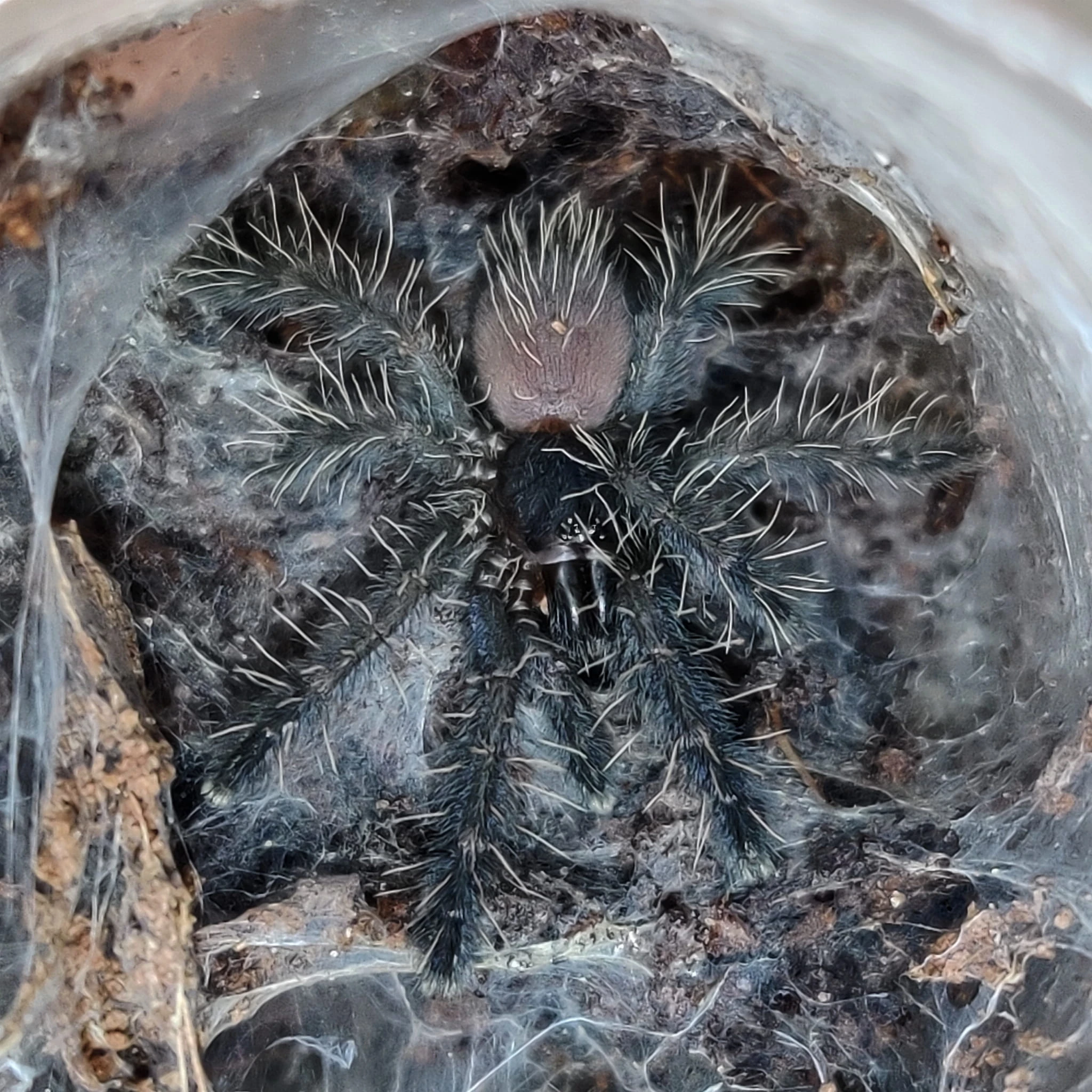


Aspinochilus (ex. Phormingochilus) rufus
Leave feedback on the product

Select product variant:
Individual variants may differ in price
Ask about the product

Administratorem danych osobowych jest PHU Krystian Solga. Przetwarzamy je w celu przesłania odpowiedzi na zapytanie. Więcej informacji dotyczących przetwarzania danych osobowych znajduje się w polityce prywatności.
Share the product card



Shipping cost for the selected product
The shipping cost applies to this product (in the selected variant - if applicable). It may change after adding other products to the cart.
Description
Aspinochilus (ex. Phormingochilus) rufus - Spectacular Peach Earth Tiger Tarantula with Extraordinary Coloration and Insatiable Appetite
Aspinochilus (ex. Phormingochilus) rufus is an exceptionally rare and underrated arboreal Old World tarantula, captivating with its copper-peach coloration and unique red halo of dense setae on its legs. This endemic gem from the volcanic rainforests of Java combines rapid growth and an insatiable appetite with spectacular ambush hunting. It is a prized rarity in the hobby and a fascinating challenge for experienced keepers of Asian arboreal tarantulas.
- Stunning coloration: Copper-peach body color, contrasting chevron pattern on the abdomen, and a characteristic red halo of long setae on the legs.
- Dynamic ontogenetic shift: Spiderlings lead a semi-fossorial lifestyle digging burrows in the substrate, while juveniles and adults transition arboreally, constructing expansive web tunnels.
- Rapid growth and voracity: Grows exceptionally fast, feeds eagerly, and explosive ambush attacks target feeder insects right at the retreat entrance.
- Prized Old World rarity: Distinctive defensive temperament and absence of urticating hairs make it a mesmerizing display species for seasoned hobbyists.
| Scientific name | Aspinochilus rufus (Müller et al., 2024) |
| Trade synonyms | Phormingochilus sp. "Rufus", Phormingochilus sp. "Peach", Omothymus sp. "Rufus" |
| Common name | Peach Earth Tiger, Rufus Earth Tiger, Javan Tree Tiger |
| Origin | Indonesia, East Java (Mount Argopuro volcanic massif, rainforest around 900 m a.s.l.) |
| Lifestyle | Arboreal (spiderlings and juveniles L1-L5 exhibit semi-fossorial burrowing behavior) |
| Target size | Females: 14-16 cm leg span (body length 3.8-5.8 cm, rarely up to 18 cm) Males: 10-13 cm leg span (body length 2.7-3.9 cm) |
| Daytime temperature | 24-27°C (75-81°F), briefly up to 28°C (82°F) |
| Nighttime temperature | 20-22°C (68-72°F) (natural nighttime drop in mountain habitats) |
| Humidity | 70-80% with efficient cross-ventilation |
| Enclosure type | Vertical (arboreal), minimum 20x20x30 cm (recommended 20x20x40 cm or 30x30x45 cm) |
| Substrate | Coco fiber or peat mixed with humus soil and moss, 10-15 cm deep layer |
| Urticating hairs | None (Old World species) |
| Venom potency | Potent, medically significant (maintenance exclusively with 25-30 cm feeding tongs) |
| Lifespan | Females 8-12 years (up to 15 years in optimal conditions), males 2-3 years (about 1 year after ultimate molt) |
| Care level | Advanced keepers only (exceptionally fast, defensive, and agile species) |
| Legal status and CITES | Not CITES listed, no registration required |
Choosing a Developmental Stage and First Steps with Your New Tarantula
At Ants Invasion, we offer various developmental stages of this extraordinary tarantula, from spiderlings to juveniles and adults. Select the option that matches your experience and breeding preferences from the dropdown menu. Each life stage features distinct care requirements and unique behaviors:
- Spiderlings (L1-L3): Display a dark brownish-gray coloration and lead a secretive, semi-fossorial lifestyle, digging burrows at the base of enclosure decor.
- Juveniles (L4-L8): Develop intense reddish-peach hues and the red halo of setae, gradually shifting higher into the arboreal zone.
- Adults: Boast the full glory of copper coloration and construct impressive, dense silk tubular retreats in the upper reaches of the enclosure.
Safe acclimation and proper introduction of the tarantula to its new enclosure are vital for its health and a stress-free start. Follow the procedure below:
Step 1: Post-transit rest - Upon receiving the package, place the ventilated shipping container in a quiet, shaded spot for 24 hours at room temperature of 20-22°C (68-72°F). Strictly avoid supplementary heating with a heat mat immediately after transit to prevent a sudden metabolic spike in a stressed tarantula.
Step 2: Preparing the appropriate enclosure - Match the container size to the current developmental stage. For a spiderling, prepare a ventilated vial or small container of 50-200 ml capacity filled at least halfway with moist, compacted substrate and a small piece of bark as an anchor point. House juveniles progressively in intermediate enclosures of 1-2 liters capacity, while adults should be introduced directly into a vertical terrarium measuring at least 20x20x30 cm.
Step 3: Safe transfer using the catch-cup method - Due to the exceptional agility and speed of this tarantula, carry out all rehousing procedures in an enclosed, secure space. Gently cover the spider with a clear catch cup, slide a rigid piece of card underneath, and transfer the spider into its enclosure, using 25-30 cm long feeding tongs for backup.
Step 4: The first meal - Offer the first feeder insect 24-48 hours after settling into the new enclosure. The size of the prey should match 50-100% of the tarantula's abdomen length. Offer hatchling red runner roaches measuring 2-3 mm to spiderlings, and appropriately larger feeder insects to juveniles and adults.
What Enclosure and Conditions to Provide for Aspinochilus rufus?
For an adult specimen, choose a vertical enclosure measuring at least 20x20x30 cm with efficient cross-ventilation. Maintain a daytime temperature of 24-27°C (75-81°F) with a nighttime drop to 20-22°C (68-72°F) and 70-80% humidity. Provide 10-15 cm of moist substrate and a vertically positioned cork bark slab.
The optimal setup for an adult female is a vertical arboreal enclosure measuring 20x20x40 cm or an Exo Terra Mini Tall 30x30x45 cm terrarium. A crucial furnishing element is a vertically positioned cork bark slab extending almost to the top rim of the enclosure. It provides a natural foundation upon which the tarantula constructs a dense, tubular silk retreat with multiple escape exits.
This species originates from humid rainforests covering the slopes of Mount Argopuro at an elevation of around 900 m a.s.l. In this montane microclimate, air circulation is constant, so the enclosure must feature efficient cross-ventilation with vents at both the bottom and top. Stagnant air and lack of airflow quickly encourage mold growth and pose a severe hazard to the spider.
Add 10-15 cm of absorbent substrate consisting of coco fiber mixed with humus soil at the base of the enclosure. For a natural moisture buffer, sphagnum moss works exceptionally well by retaining water and preventing deeper layers from drying out. To protect the humid microclimate from mold and organic decay, introducing beneficial bioactive custodians such as white springtails is highly recommended.
Maintain moisture by adding water to the substrate along one corner or wall of the enclosure and lightly misting every 2-3 days. Ensure that the surface of the bark and enclosure walls slightly dries out between mistings. Place a shallow water dish with clean water at the base of the enclosure, as adult specimens drink regularly.
What to Feed Aspinochilus rufus and How to Schedule Feeding?
Aspinochilus rufus is an ambush predator fed on feeder insects sized 50-100% of its abdomen length. Offer hatchling red runner roaches to spiderlings every 3-5 days, while juveniles and adults should receive Dubia roaches or banana crickets every 7-14 days. Remove any uneaten prey with feeding tongs within 24 hours.
This tarantula is famous for its voracious appetite and explosive strikes, darting out from its silk retreat to seize passing prey in the blink of an eye. In the hobby, it has even earned the humorous nickname "Mr Stretchy Pants" due to its flexibility and capability of overpowering surprisingly large insects. Nevertheless, always adhere strictly to the prey size guidelines to avoid causing undue stress to the tarantula.
For early instars (L1-L3), the best food consists of micro red runner roach nymphs, pinhead crickets, and flightless fruit flies. Offer medium red runner roaches, banana crickets, or small mealworms to juveniles (L4-L8) every 5-7 days. Feed adult females every 7-14 days with larger feeder roaches and insects such as Dubia roaches, adult red runner roaches, crickets, or locusts.
In premolt, the tarantula seals off the entrance to its silk tube with webbing, darkens in color, and refuses food for up to 2-3 weeks. During this period, never introduce feeder insects into the enclosure or disturb the animal. After a successful molt, wait a few days for spiderlings or 1-2 weeks for adult spiders until their chelicerae have fully hardened and turned jet black before offering the next meal.
Common Care Mistakes and How to Avoid Them
- Stagnant air and lack of cross-ventilation: Combining high humidity with insufficient airflow leads to stuffiness and rapid mold outbreaks. Use exclusively containers and terrariums with true cross-ventilation featuring lower and upper vents.
- Excessively large enclosure for young spiderlings: Placing a sling directly into an adult terrarium makes it difficult for the spider to locate prey and complicates humidity monitoring. Rehouse progressively, starting with a small nursery container.
- Overwatering substrate and creating mud: Despite high humidity requirements, substrate must never become swampy or waterlogged. Moisten substrate locally in one corner, allowing the surface layer and decor to dry slightly between mistings.
- Handling without feeding tongs: Given the extraordinary speed, leaping ability, and medically significant venom of this Asian tarantula, always perform maintenance and feeding using 25-30 cm long feeding tongs.
Taxonomic Revision and Description of the Genus Aspinochilus
This species was officially described in December 2024 in the scientific journal Integrative Systematics by a research team consisting of Müller, Fardiansah, Schneider, Wanke, von Wirth, and Wendt. For many years, it circulated in the tarantula hobby under informal trade names such as Phormingochilus sp. "Rufus", Phormingochilus sp. "Peach", and Omothymus sp. "Rufus". Morphological analysis revealed unique anatomical characteristics warranting the erection of the new genus Aspinochilus within the subfamily Ornithoctoninae, with Aspinochilus rufus designated as the type species.
The generic name originates from Greek, where the prefix a- signifies absence, spina means thorn or spine, and cheilos translates to lip or margin. This refers to the lack or strong reduction of retrolateral spines on the tibiae of legs and pedipalps, distinguishing this taxon from the related genus Phormingochilus. The specific epithet rufus derives from Latin, meaning reddish or rufous, referencing the spectacular coloration of adult females. Taxonomic studies also documented the distinctive female spermathecal morphology, featuring two well-separated clavate receptacles terminating in spherical bulbs, alongside a stridulatory apparatus positioned between the chelicerae and the pedipalp coxae.
Geographic Origin and Natural Habitat on Mount Argopuro
Numerous myths surrounded the geographical origin of this species, with earlier hobby reports erroneously suggesting Borneo or even Panama. In reality, Aspinochilus rufus is strictly endemic to the Indonesian island of Java. The only confirmed wild localities are located in the primary rainforests cloaking the eastern volcanic complex of Mount Argopuro (Gunung Argopuro) at elevations around 900 m a.s.l.
This montane environment dictates a unique microclimate characterized by cooler temperatures than lowland equatorial jungles, consistent nocturnal temperature drops, and continuous movement of humid air driven by mountain mists. In the wild, adult females inhabit tree hollows and bark crevices of mature trees at heights of 1.5-2 meters above the ground, weaving extensive silk retreats. Because this habitat faces anthropogenic pressures and deforestation for agricultural land, dedicated captive breeding plays an essential role in preserving genetic lineages and biological knowledge of this taxon.
Reproductive Biology and Breeding in Captivity
Females reach sexual maturity at a body length of approximately 4 cm, although maximum breeding success occurs when they reach 5-6 cm in body length. Prior to pairing, condition the female generously with frequent feedings for 3-4 weeks. When introduced into the female enclosure, the mature male initiates courtship by drumming with his pedipalps and first pair of legs, to which a receptive female responds with distinct body tremors. During copulation, the male engages tibial apophyses on his first legs to secure the female chelicerae, followed by a swift escape after sperm transfer.
A reliable stimulus for egg sac production is providing a simulated cooling or resting period lasting roughly 30 days, featuring a temperature drop of 2-3°C (4-5°F) and a decrease in humidity to around 60%, followed by a gradual increase to 80% to mimic the onset of the monsoon season. The female constructs an egg sac 2-4 months after successful mating. An egg sac typically yields 80 to 150 spiderlings, with large, mature females producing up to 200 slings. Spiderlings develop rapidly, with males reaching maturity within 14-24 months.
Frequently Asked Questions (FAQ)
Is the venom of Aspinochilus rufus dangerous to humans?
The venom of this species is potent and medically significant, characteristic of Old World arboreal tarantulas. While a bite is not considered life-threatening to a healthy adult, it causes intense local pain, substantial swelling, and severe muscle cramping that can persist for several days. For this reason, direct physical contact is strictly avoided, and all maintenance should be conducted using long 25-30 cm feeding tongs.
Does this species require CITES paperwork or official registration?
No, Aspinochilus rufus is not listed under CITES (Washington Convention) appendices or European wildlife protection annexes. You receive a 100% legally sourced animal requiring no government permits or registry notifications, as non-CITES invertebrates are entirely exempt from registration.
Does Aspinochilus rufus possess urticating hairs?
No, as an Old World tarantula belonging to the subfamily Ornithoctoninae, this species completely lacks urticating hairs on its abdomen and cannot flick irritating bristles. When disturbed, its primary defense is retreat into its silk tube - if cornered, it throws an impressive threat posture with raised front legs and can produce audible hissing sounds using its stridulatory organ.
Is the Peach Earth Tiger tarantula suitable for beginners?
Definitely not, this species is suited exclusively for advanced keepers with hands-on experience handling fast and defensive Old World tarantulas. Extreme speed, jumping agility, and potent venom demand composure, confident handling techniques, and strict adherence to safety protocols during enclosure maintenance.
Ready to observe an extraordinary arboreal predator in your collection? Select your preferred developmental stage, add Aspinochilus rufus to your cart, and experience the mesmerizing spectacle of copper hues and fascinating arboreal behavior in your vertical terrarium!
Shipping and Live Arrival Guarantee
During colder periods, we secure your shipment with professional HeatPack warmers to maintain a safe temperature in transit.
Live animals are dispatched exclusively Monday through Thursday to eliminate the risk of weekend delays in courier transit hubs.
We take complete responsibility for safe delivery. We guarantee that your tarantula arrives alive, safe, and healthy.
Reviews
If you've added a review and it doesn't appear on the list, it may be pending moderation.
Leave feedback on the product
