

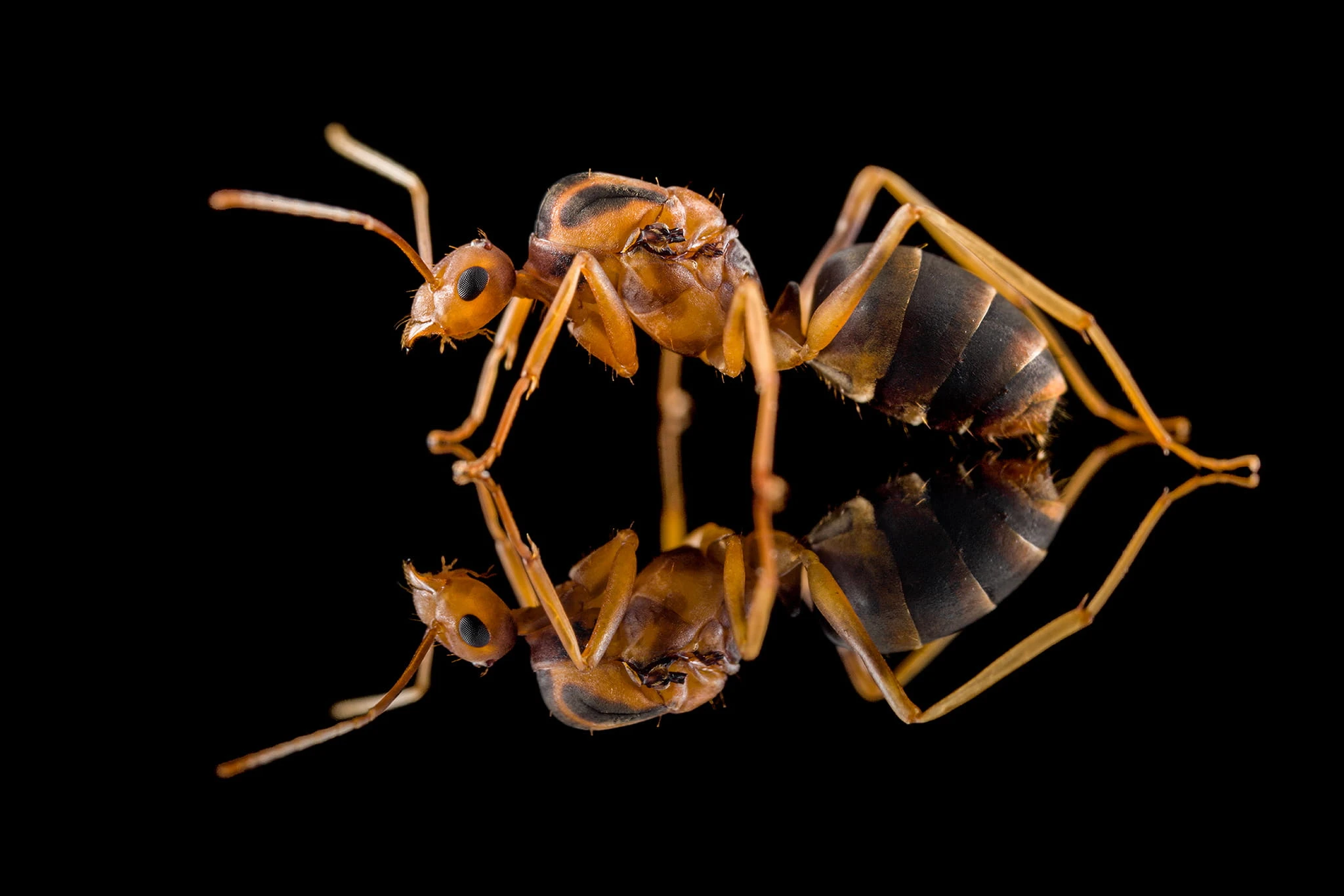
Anoplolepis gracilipes (Yellow crazy ants)
Leave feedback on the product

Wybierz wariant produktu:
Individual variants may differ in price
Ask about the product

Administratorem danych osobowych jest PHU Krystian Solga. Przetwarzamy je w celu przesłania odpowiedzi na zapytanie. Więcej informacji dotyczących przetwarzania danych osobowych znajduje się w polityce prywatności.
Share the product card



Shipping cost for the selected product
The shipping cost applies to this product (in the selected variant - if applicable). It may change after adding other products to the cart.
Description
Description:
Species from the top 5 invasive ant species in the world and top 100 most invasive organisms overall according to the IUCN, the largest known invasive ant species to humans. In my opinion, one of the most fascinating ant species and the most beautifully colored invasive ant in the world.
The term "crazy" in the English name comes from their way of movement. These ants run very fast and sometimes in random directions, not necessarily in the direction they are facing. They have very long legs and large eyes. They somewhat resemble yellow Formica ants in appearance, especially the queens, which look like yellow-filtered Formica rufibarbis. These ants are highly aggressive towards other ants and small animals but completely ignore humans and other large animals.
Like most invasive species, YCA (Yellow Crazy Ants) travel around the world using human transportation methods such as trucks, buses, or ships, and then settle in a new location, wreaking havoc among local ant species and many other animals. Additionally, they have a diverse diet, consuming nectar, seeds, grains, arthropods, carrion. They even mass kill crabs. When a crab encounters a YCA worker while walking on the beach, it gets sprayed with acid. As it flees, it encounters more workers and gets sprayed with increasing amounts of acid until it suffocates and dies. YCA also kill crabs when taking over their burrows. When a crab starts to rot, it is then consumed. One of the largest YCA colonies in the world reportedly consumes millions of crabs annually, significantly impacting the local ecosystem. Crabs serve several important functions, including burrowing, fertilizing the soil with their excrement, and consuming weed seeds and seedlings. Uncontrolled growth of weeds, due to the absence of crabs, leads to massive changes in forest structure. Aphids and other insects cultivated by YCA also pose a significant problem to the local flora and contribute to changes in forest biodiversity.
In the colony, there is a special caste of workers with more developed ovaries and a much larger abdomen. They make up about 10-11% of the population, and their sole task is to lay trophic eggs, which serve as a protein storage for the colony during lean times. When the ants don't have access to food, they don't need to reduce the number of larvae - they can feed them with trophic eggs, ensuring steady growth for the colony.
It is difficult to find certain information on this topic, but it is believed that the queens reproduce within the nest, similar to what happens in pharaoh ants - there have been cases of reproduction reported in Poland and Germany! There is also the possibility that the method of reproduction depends on the population.
Depending on the population, these ants can form a supercolony or not. The largest known supercolony has been expanding its range by 1 km in every direction annually for many years!
Due to the increase in the number of queens, their large size, bright coloration, and excellent adaptability, they are perfectly suited for a spacious vivarium.
- Species: Anoplolepis gracilipes (Yellow crazy ant)
- Difficulty: low for stable colonies, very high for solitary queens or colonies with a few workers
- Soldiers: none
- Size: Queen around 10 mm, workers around 4 mm
- Coloration: yellow
- Distribution: mainly South Asia and Australia
- Nutrition: honey water and feeder insectslarger colonies may also consume dead mice, seeds, or your lunch
- Hibernation: none
- Temperature: 25-30 °C (77-86 °F)
- Recommended formicarium: any
Reviews
If you've added a review and it doesn't appear on the list, it may be pending moderation.
Leave feedback on the product
Recommended
-
Price €0.90
-
Price €1.16
-
Price €0.93
-
Price €0.35
-
Price €0.23


 Log in with Google
