

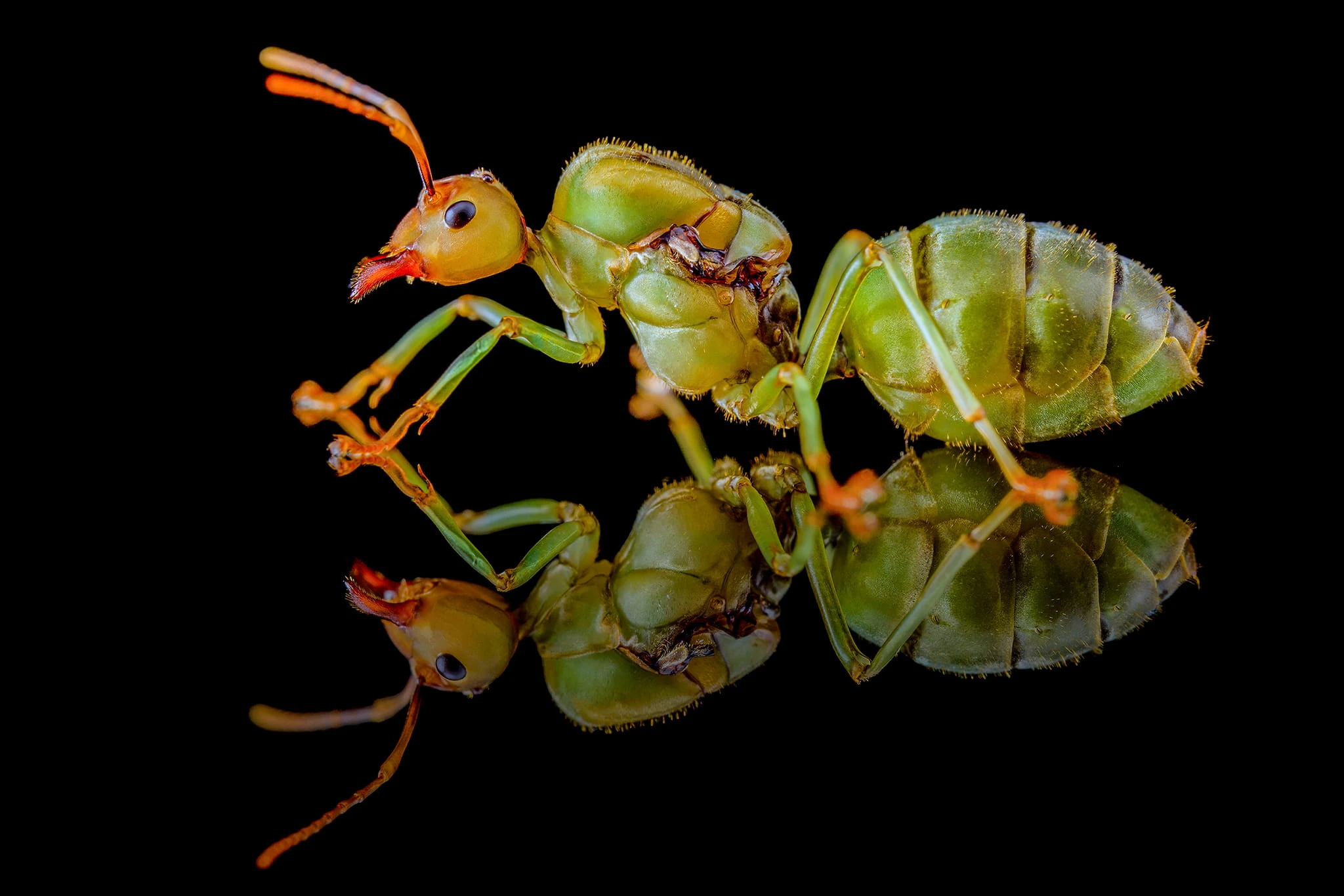


Oecophylla smaragdina
Feedback zum Produkt hinterlassen

Wybierz wariant produktu:
Einzelne Varianten können preislich abweichen
Nach Produkt fragen

Administratorem danych osobowych jest PHU Krystian Solga. Przetwarzamy je w celu przesłania odpowiedzi na zapytanie. Więcej informacji dotyczących przetwarzania danych osobowych znajduje się w polityce prywatności.
Produktkarte teilen



Versandkosten für das ausgewählte Produkt
Für dieses Produkt fallen Versandkosten an (in der ausgewählten Variante – falls zutreffend). Dies kann sich ändern, falls Sie weitere Produkte in den Warenkorb hinzufügen.
Description
Oecophylla smaragdina (Asiatische Weberameise)
Oecophylla smaragdina, allgemein bekannt als Asiatische Weberameise, ist eine der faszinierendsten und evolutionär am weitesten entwickelten Ameisenarten. Sie zeichnet sich nicht nur durch ihre weltweit einzigartige Methode des Nestbaus mithilfe von Larven („lebende Webstühle“) aus, sondern auch durch eine bemerkenswert komplexe soziale Organisation. Diese baumbewohnende Art stammt aus den tropischen Regionen Asiens und Australiens und fungiert in ihrem natürlichen Lebensraum als räuberischer und dominanter Herrscher der Baumkronen.
Schwierigkeitsgrad: Mittel. Entgegen weit verbreiteten Mythen über extreme Schwierigkeiten ist die Haltung dieser Ameisen eine sehr lohnende Herausforderung im mittleren Segment, auch wenn sie in der Anfangsphase der Koloniegründung durch eine recht hohe Sterblichkeit gekennzeichnet sein kann. In der Natur benötigt diese Art eine baumbewohnende Umgebung und bevorzugt laut einigen Quellen große Vivarien. In der Praxis gedeiht eine Ameisenkolonie jedoch hervorragend, wenn sie einfach in Reagenzgläsern in der Ameisenarena gehalten wird (solange ein ständiger Zugang zu Wasser gewährleistet ist). Auch wenn man dann auf die Beobachtung des Webens verzichtet, macht diese Lösung die Haltung wesentlich einfacher!
Oecophylla smaragdina (wie alle exotischen Ameisen für die Haltung aus diesem Bereich) ist ein aktiver Räuber, der in hohem Maße auf die Versorgung mit Futterinsekten angewiesen ist. Diese Art eignet sich hervorragend als originelles Geschenk für Ameisenliebhaber, vorausgesetzt, die beschenkte Person ist bereit für dynamische, räuberische Insekten. Der Artname „smaragdina“ bezieht sich vor allem auf die grünlich-braune Färbung der imposanten Königinnen – je nach Herkunftsregion weisen die Arbeiterinnen meist Farbtöne in Gelb, Orange oder Rotbraun auf.
| Merkmal | Beschreibung |
|---|---|
| Wissenschaftlicher Name | Oecophylla smaragdina |
| Trivialname | Asiatische Weberameise |
| Schwierigkeitsgrad | Mittel |
| Größe der Königin | 20 - 25 mm |
| Größe der Arbeiterinnen | Minor: 5 - 7 mm; Major: 8 - 14 mm |
| Winterruhe | Keine Winterruhe (benötigt ganzjährig hohe Temperaturen) |
| Färbung | Königin – grünlich-braun („smaragdfarben“); Arbeiterinnen – gelb, orange oder rötlich-braun |
| Ernährung | Kohlenhydrate (z. B. Zucker- oder Honigwasser) sowie reichlich Proteine (Lebendfutter für Ameisen – bevorzugen Fluginsekten und Silberfischchen) |
| Benötigtes Nest | Großes Vivarium/Paludarium bevorzugt, sie können jedoch problemlos in Reagenzgläsern in der Ameisenarena leben |
| Ausbruchsschutz | Dichter Deckel oder eine sehr wirksame Barriere (z. B. Talkum an den Rändern) erforderlich |
| Optimale Nesttemperatur | Tag: 28°C / Nacht: 24°C (kommen jedoch auch bei Raumtemperatur sehr gut zurecht) |
| Optimale Arenatemperatur | Tag: 35°C / Nacht: 21°C (kommen jedoch auch bei Raumtemperatur sehr gut zurecht) |
| Luftfeuchtigkeit | Optimal im Nest: 60-70% / Ameisenarena: 40-50%, kommen jedoch überraschend gut mit nahezu jeder Luftfeuchtigkeit zurecht |
Erstaunlicher Architekt: Das Phänomen der „lebenden Webstühle“
Die außergewöhnliche Methode des Nestwebens macht die Weberameisen zu einem weltweiten Phänomen. Wenn Sie sich für die Haltung in einem baumbewohnenden Vivarium entscheiden (z. B. auf einem Ficus), können Sie beobachten, wie die Arbeiterinnen lebende Ketten bilden, indem sie sich gegenseitig an den Mandibeln festhalten und mit der vereinten Kraft des gesamten Teams die Blätter der Pflanze zusammenbiegen! Während des Baus trägt die Arbeiterkaste ihre eigenen Larven in den Kiefern herbei. Durch sanftes Antippen stimulieren sie die Larven dazu, Seidenfäden abzusondern, mit denen sie die Blattränder wie mit biologischem Klebstoff zusammennähen. Erleben Sie selbst, wie die Larven zu lebenden Werkzeugen werden und ihre Seide selbstlos für das Wohl der gesamten Ameisenkolonie spenden!
Lebendige Geschichte und aktiver Räuber
Mit dem Kauf von Oecophylla smaragdina erwerben Sie ein lebendiges Stück Menschheitsgeschichte. Sie gilt als das älteste dokumentierte biologische Pflanzenschutzmittel der Welt – bereits im Jahr 304 n. Chr. setzten Landwirte in China Weberameisen in Zitrusplantagen zur Schädlingsbekämpfung ein, eine Tradition, die dort bis heute fortbesteht. Diese Ameisen sind außergewöhnlich aktive Gruppenjäger mit einem sehr hohen Aggressionspotenzial. Sie lieben die Jagd (nehmen lebende Futterinsekten mit großer Begeisterung an) und verteidigen ihr Territorium entschlossen mit schneidenden Bissen, kombiniert mit dem Versprühen schmerzhafter Ameisensäure. Phänomenal koordinierte Angriffe und das gemeinsame Überwältigen von Beutetieren im eigenen Formicarium sind ein faszinierender Anblick, für den Halter diese Art so schätzen! Darüber hinaus verfügen die Major-Arbeiterinnen über eine enorme physische Kraft – sie können Beutetiere, die das 100-Fache ihres eigenen Körpergewichts wiegen, in den Kiefern halten, während sie kopfüber am Glas hängen.
Soziale Komplexität und Kasten
Die Art zeigt einen ausgeprägten Polymorphismus und eine klare Kastenteilung: Neben der imposanten Königin leben im Nest kleine Minor-Arbeiterinnen, die sich vorwiegend im Inneren aufhalten, um die Brut zu pflegen und sich um honigtauerzeugende Insekten zu kümmern. Die Nahrungssuche, der Nestbau und die Verteidigung der Außengrenzen werden von den größeren (bis zu 14 mm erreichenden) Major-Arbeiterinnen übernommen. Aufgrund der ausgeprägten Territorialität dieser Art raten wir strikt davon ab, Arbeiterinnen und Königinnen aus verschiedenen fremden Nestern zusammenzusetzen, da dies ausnahmslos zu sofortigen Kämpfen führt.
Nestgestaltung und die Schlüsselrolle der Ernährung
Eine Ameisenkolonie von Oecophylla smaragdina bietet große Flexibilität bei den Haltungsbedingungen. Die Haltung in einem großen Vivarium mit lebenden Pflanzen (z. B. Ficus benjamina oder Pachira aquatica) ist überaus spektakulär, aber auch anspruchsvoller. Unter solchen Bedingungen ist eine sorgfältige Quarantäne von Pflanzen aus dem Handel unerlässlich (Chemikalien und Pestizide führen zum sofortigen Absterben der gesamten Ameisenkolonie!). Andererseits können diese Ameisen unter weitaus einfacheren Bedingungen leben – eine passende Ameisenarena mit einem System aus Reagenzgläsern mit Wasseranschluss genügt völlig. Traditionelles Ameisenhaltungszubehör, wie etwa Korknester oder ein modulares Acrylnest, ist in diesem Fall nicht geeignet und wird von der Art nicht besiedelt. In unserem Ameisenshop erhalten Sie ausschließlich Königinnen aus geprüften Quellen. Wir möchten jedoch nochmals auf den wichtigsten Punkt hinweisen – die Ernährung! Ameisen der Gattung Oecophylla lieben und bevorzugen Fluginsekten (z. B. Fliegen) und Silberfischchen. Dies spielt eine entscheidende Rolle, insbesondere in den Anfangsphasen der Entwicklung. Eine frühzeitige Fütterung der einzelnen Königin und die anschließende regelmäßige Fütterung der jungen Ameisenkolonie (besonders mit Silberfischchen und Fliegen) steigert die Überlebensrate drastisch und sorgt für einen erfolgreichen Koloniestart!
Reviews
Wenn Sie eine Bewertung hinzugefügt haben und diese nicht in der Liste angezeigt wird, wird sie möglicherweise noch bearbeitet.
Feedback zum Produkt hinterlassen
 Mit Google anmelden
