

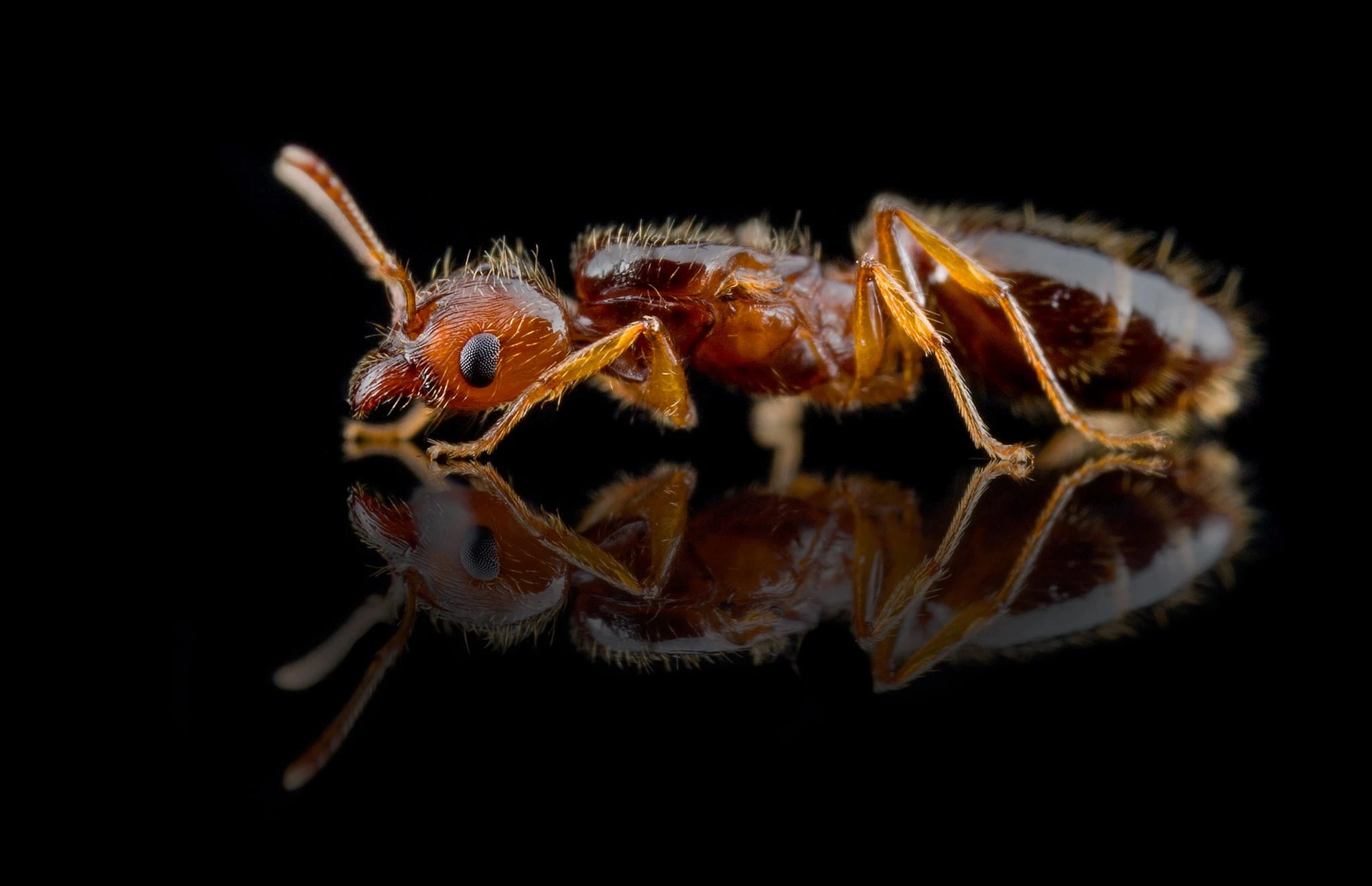


Pheidole pallidula
Leave feedback on the product

Wybierz wariant produktu:
Individual variants may differ in price
Ask about the product

Administratorem danych osobowych jest PHU Krystian Solga. Przetwarzamy je w celu przesłania odpowiedzi na zapytanie. Więcej informacji dotyczących przetwarzania danych osobowych znajduje się w polityce prywatności.
Share the product card



Shipping cost for the selected product
The shipping cost applies to this product (in the selected variant - if applicable). It may change after adding other products to the cart.
Description
Pheidole pallidula (Mediterranean Big-Headed Ant / Soldier Ant)
The species Pheidole pallidula, one of the most iconic ants of the Mediterranean basin, is an absolute classic in ant keeping. Belonging to the subfamily Myrmicinae, it represents a textbook example of evolutionary success based on advanced caste polymorphism. Although treated as a single taxon in hobbyist breeding, modern phylogenetic studies show that it is in fact a fascinating cryptic species complex. This results in beautiful color variation - from honey-light brown individuals to forms with darker, yellowish, or distinctly reddish heads.
Looking for dynamic inhabitants for your dream terrarium setup? These are without doubt ideal ants for beginners seeking constant activity, as well as for experienced keepers looking for spectacular predatory behavior. In the wild, their nuptial flights occur in June and July, nesting primarily in sun-warmed soil, under stones, or in wall crevices where entrances are small and perfectly camouflaged. They are fierce, territorial, and remarkably active insects that captivate keepers with their organized division of labor. Their hallmark is the spectacular soldier (major) caste, equipped with massive mandibles capable of slicing through insect exoskeletons and cracking seeds. Keep in mind the species' primary challenge: due to the tiny size of minor workers, a professional formicarium must be completely escape-proof. Once a secure setup is provided, Pheidole pallidula quickly rewards you with a massive, thriving army whose development under optimal conditions is exceptionally rapid.
| Feature | Description |
|---|---|
| Difficulty level | Low (Requires escape-proof 3D nests and regular feeding) |
| Queen size | 7 - 8 mm (occasionally up to 10 mm, darker than workers) |
| Worker size (Minor) | 2 - 4 mm (agile nurses and foragers) |
| Soldier size (Major) | 3.5 - 6 mm (massive, heart-shaped head) |
| Temperature (Outworld) | 20 - 30°C (68 - 86°F) |
| Temperature (Nest) | 24 - 28°C (75 - 82°F) |
| Humidity (Outworld) | 30 - 50% |
| Humidity (Nest) | 60 - 80% |
| Diet | Feeder insects, sugars (e.g. sugar water or honey water), fruits, seeds, raw meat |
| Hibernation | Recommended, late November/December to March at 10-15°C (50-59°F) |
Biology and Caste Hyperdiversity
The evolutionary success of this species relies on advanced age polyethism and division of labor. Morphological differences between castes are stark. The queen, living up to 10 years, features an enlarged thorax and gaster dedicated to continuous egg production. Minor workers live relatively short lives (2-4 months) due to high metabolic rates, managing brood care, tunnel building, and foraging.
The true highlight is the soldier (major) caste. Majors possess disproportionately large heads housing powerful mandibular muscles. Nanobiomechanical research reveals that the cutting edges of Pheidole soldier mandibles are enriched with biomineral zinc, vastly increasing hardness and wear resistance. This enables crushing tough insect cuticles and cracking hard seeds. Ant colony development in this species is exceptionally fast - high protein intake triggers increased insulin and juvenile hormone levels in larvae, rapidly scaling up major soldier production.
Granivory, Diet, and Advanced Communication
In nature, Pheidole pallidula acts as a versatile generalist opportunistic forager. While capable of granivory (storing small seeds for reserves), their dietary core is animal protein. Offer feeder insects, small pieces of raw chicken, sweet fruits, and larger colonies can even process nuts. Constant access to liquid carbohydrates is crucial: depriving workers of sugar water for even a few days can induce severe lethargy.
Their spatial orientation and foraging mechanics function like a biological recruitment algorithm. When a scout finds bulky food, it runs back to the nest laying a potent trail of alkylpyrazine pheromones. This triggers mass recruitment, turning foraging trails into bustling highways. While larger colonies handle live prey with ease, small colonies should be fed pre-killed, cut feeder insects to avoid unnecessary stress.
Husbandry Requirements and "Warp-Speed Growth"
Originating from warm, arid Mediterranean habitats, environmental parameters must be kept precise. The outworld should remain relatively dry (30-50% humidity) with good ventilation to simulate sun-baked soil and prevent mold. Inside the nest, humidity must stay high and stable (60-80%) to prevent brood desiccation. Heating a section of the nest unlocks rapid brood development ("warp-speed growth"), quickly expanding the colony toward its full potential of 20,000 workers.
Because workers are very small and agile escape artists, we strictly recommend our precision 3D printed nests with guaranteed tightness. Gypsum and natural soil nests also perform well, whereas standard acrylic nests (due to potential micro-gaps between sheets) and soft cork or wood nests should be avoided. Use talcum powder barrier along the upper outworld rims for dependable containment.
Advanced Bioactive Vivariums
Housing Pheidole pallidula in naturalistic bioactive setups or potted plants provides an authentic slice of Mediterranean nature. Soil setups with a drainage layer create a natural vertical moisture gradient, while plant root systems (such as common ivy) structurally reinforce subterranean tunnels. Springtails in such terrariums act as the first line of defense against mold, while a cleanup crew like isopods handles larger organic debris. Adult isopods' armored carapaces protect them against soldier aggression, creating a stable, balanced miniature ecosystem.
Diapause and Founding Care
While colonies can survive skipped winters in the short term, regular diapause (10-15°C / 50-59°F from December to March) is essential to preserve the queen's fertility and longevity. Queens found claustral colonies independently, raising the first generation of nanitic workers purely from wing muscle histolysis reserves. Choosing an ant queen with workers provides the safest, most rewarding start.
Common Mistakes and How to Avoid Them
1. Heating a founding queen: A solitary queen before first workers appear should never be actively heated. High temperatures drain her metabolic reserves prematurely. Keep her in a quiet, dark spot at room temperature (20-22°C / 68-72°F).
2. Inadequate containment: Minor workers slip through microscopic gaps in poorly fitted enclosures. Always use tested 3D printed nests and apply talc along the outworld edges.
3. Dehydration: Never let sugar water feeders run dry; prolonged deprivation causes heavy worker mortality.
4. Feeding overly large live prey to small colonies: Aggressive live feeder insects stress young colonies. Always provide pre-killed, cut insects until worker numbers grow significantly.
Choose Pheidole pallidula for your setup and watch a highly organized, ferocious empire thrive before your eyes! Build their habitat and order today from our ant shop, where your passion and satisfaction always come first.
Reviews
If you've added a review and it doesn't appear on the list, it may be pending moderation.
Leave feedback on the product
 Log in with Google
